Branding and Graphic Design Services: A Practical Guide
Most companies do not buy branding and graphic design services because they want a new logo. They buy them because something is leaking: sales decks that look like three different companies made them, packaging that gets overlooked on a shelf, a website that converts worse than the ad spend justifies. Branding and graphic design services are the paid work of defining what a company stands for and then rendering that meaning consistently across every surface a customer touches. The branding half sets the rules. The graphic design half executes them. When a studio sells you one and quietly skips the other, you end up with either a beautiful logo nobody knows how to apply, or a pile of attractive files with no shared logic holding them together.
Quick Answer: Branding services define strategy, positioning, naming, voice and visual identity rules. Graphic design services produce the applied assets: logos, packaging, decks, social templates, signage and web visuals. Buy them together when you need a coherent system, and buy design alone only when the brand rules already exist and are documented.
What Branding and Graphic Design Services Actually Include
Branding is a decision-making exercise before it is a drawing exercise. A proper branding engagement produces answers to questions the business can otherwise argue about forever: who exactly are we for, what do we promise, what are we deliberately not, and how do we sound when we say it. The deliverables that come out of that are usually a positioning statement, an audience definition, a messaging framework with a primary claim and supporting proof points, a tone-of-voice guide with do-and-don't examples, and naming or tagline work where relevant. None of those are pictures, and all of them determine what the pictures should look like.
Graphic design services are the applied layer. That is logo systems including responsive and single-colour variants, a typographic scale, a colour palette with accessible contrast pairings, iconography, photography or illustration direction, layout grids, and then the actual artefacts: packaging dielines, pitch decks, one-pagers, trade-show graphics, social templates, email headers, app icons, ad units. The honest test of whether a studio is doing graphic design or just decoration is whether a second designer could pick up the guidelines and produce a new asset that looks like it belongs. If every new piece requires the original designer, you bought art, not a system.
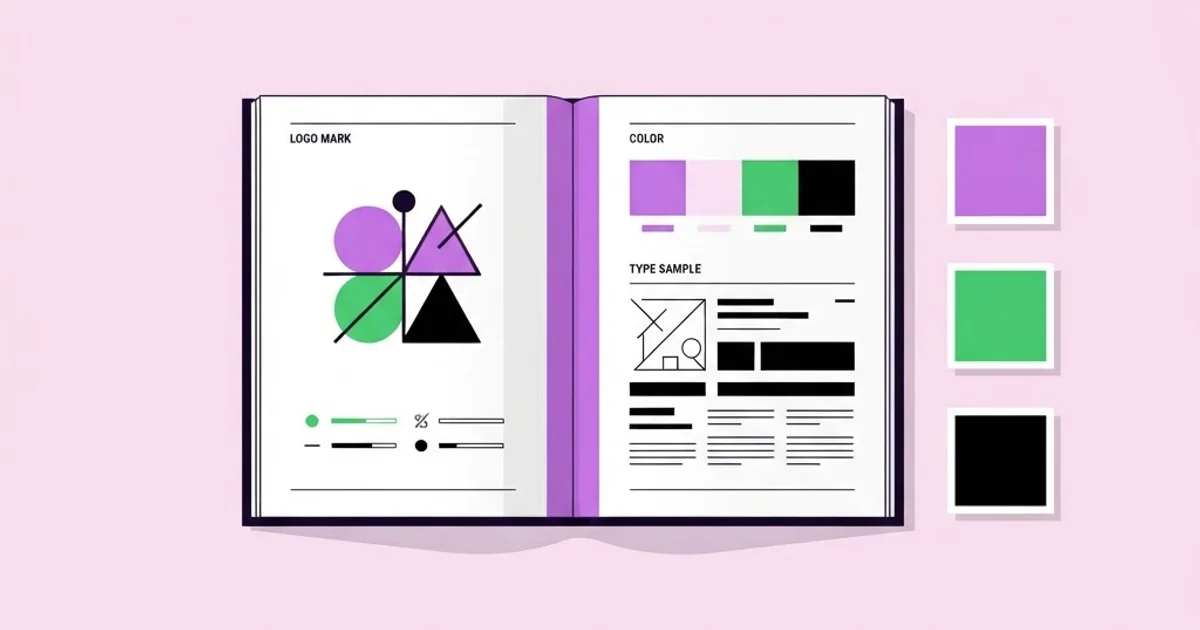
The two halves overlap in a document usually called brand guidelines or a brand book. Treat that document as the actual product of the engagement. A good one is operational: clear spacing rules, minimum sizes, misuse examples, file naming conventions, and a handoff of editable source files plus exports in the formats your team genuinely uses. Specialist work like apparel graphic design work then plugs into that system instead of reinventing it, which is exactly why merch produced two years later still looks like it came from the same company.
One more distinction worth holding onto: branding is strategic and changes rarely; graphic design is productive and runs continuously. That is why many organisations buy branding as a one-off project and graphic design as an ongoing retainer. Mixing up the cadence of the two is the single most common reason budgets feel wrong.
The Seven Service Tiers You Will Be Quoted
Agencies package their work differently, but almost every proposal you receive maps onto one of seven tiers. Knowing which tier you actually need stops you from paying strategy prices for production work, or worse, production prices for a problem that is strategic.
- Logo-only design. A mark, a wordmark, maybe two lockups and colour variants. Suitable for pre-revenue founders who need something credible fast. Not suitable when you already have sales collateral, because a logo cannot reconcile inconsistent existing assets.
- Visual identity. Logo plus palette, type system, basic iconography, and a short usage guide. This is the most commonly mis-sold tier: it looks complete in a presentation and reveals its gaps the first time someone builds a 40-slide deck.
- Brand identity system. Visual identity plus grids, layout principles, photography direction, motion basics and a real guidelines document. This is the level where a marketing team can operate independently.
- Brand strategy and identity. Adds research, positioning, messaging and voice. Choose this when internal teams disagree about who the customer is, or when you are entering a new category.
- Applied design production. Packaging, decks, campaign assets, signage, exhibition graphics. Scoped per asset or per hour. Best bought after the system exists.
- Design retainer. A fixed monthly block of hours or a request queue. Good for companies shipping weekly. The value is continuity: the designer stops re-learning your business every brief.
- Brand refresh or rebrand. An audit of everything currently in market, then either an evolution or a full replacement plus a rollout plan. The rollout plan is the part people underestimate.
Read every proposal against this ladder. If the quote says brand identity but the deliverables list stops at a logo and three colours, you are being quoted tier one at tier three prices, and that mismatch shows up six months later as rework.
Comparing Engagement Models Side by Side
The delivery model matters as much as the deliverables. Each model has a failure mode, and matching the model to how your organisation actually makes decisions is more predictive of a good outcome than the studio's portfolio is.
| Model | Best for | Typical scope control | Main failure mode |
|---|---|---|---|
| Fixed-scope project | One-off identity or rebrand work | Defined deliverables list and revision rounds | Change requests become paid extras and stall momentum |
| Monthly retainer | Teams shipping campaigns continuously | Hour bank or capped request queue | Unused hours in quiet months, backlog in busy ones |
| Hourly or day rate | Unclear or exploratory briefs | Timesheet plus rolling estimate | Budget drift with no natural stopping point |
| Freelance specialist | Single discipline needs such as packaging | Per-asset quote | No coverage for holidays, illness or scale-ups |
| In-house hire | Constant high-volume output | Salary plus tooling budget | Narrow stylistic range and slow ramp-up |
Most mid-sized companies get the best results from a hybrid: a fixed-scope project to build the system, then a small retainer to keep it alive. The retainer is what prevents the guidelines from becoming a PDF nobody opens.
How to Judge Value Without Relying on Vanity Metrics
Resist the temptation to evaluate proposals on portfolio beauty alone. Portfolios are curated, and a studio's best work usually reflects their best client rather than their average process. A more reliable evaluation is procedural. Ask to see a full brand guidelines document from a past project, redacted if necessary. Ask who does the work, not who presents it. Ask how many revision rounds are included and what constitutes a round. Ask what happens if the internal stakeholder who approved direction leaves halfway through. The answers reveal operational maturity faster than any case study.
From practitioner experience, the strongest predictor of a successful identity project is the number of decision-makers in the approval chain, and it moves in the wrong direction. Projects with one accountable owner and a small advisory group tend to land on schedule. Projects with committee sign-off tend to converge on the safest option, which is usually the one that looks most like the category average, which then defeats the purpose of paying for differentiation in the first place. If you cannot reduce the committee, at least sequence it: get strategy signed off before any visual work is shown, because otherwise every strategic disagreement resurfaces as an argument about colour.
Value also depends heavily on what you can execute internally. A comprehensive system is wasted on a two-person team with no design capacity; a thin system is a bottleneck for a twelve-person marketing department. Be honest about your production capability before choosing a tier. It is also worth understanding the economics on the other side of the table, since studio rates reflect real labour costs; if you are curious about what design work actually pays, that context makes suspiciously cheap quotes much easier to interpret.
Common Mistakes and How to Avoid Them
The first mistake is briefing with adjectives. Words like modern, clean, premium and bold mean nothing operationally because every stakeholder pictures something different. Replace adjectives with comparisons and constraints: name three brands you admire and say specifically what you admire about each, name two you want distance from, and list the hard constraints such as regulatory text, minimum print sizes, or an existing product colour you cannot change.
The second mistake is skipping the audit. Before designing anything, someone should inventory every asset currently in market: website, decks, packaging, vehicle livery, uniforms, email signatures, trade materials. Teams routinely discover twice as many assets as they expected, and that inventory is what turns a rollout plan from a guess into a schedule.
The third mistake is approving work on a single screen. A logo reviewed only at full width on a designer's calibrated monitor will fail at 32 pixels in a browser tab, embroidered on a cap, or printed one-colour on a shipping box. Insist on seeing applications at real size in real contexts before sign-off.
The fourth mistake is treating guidelines as the finish line. Publish them somewhere the team already works, run a short internal session walking people through the rules, and nominate an owner who answers application questions. Without that, drift starts within a quarter.
The fifth mistake is underfunding rollout. A rebrand is not complete when files are delivered; it is complete when the old assets are out of circulation. Budget for reprints, signage, templates, and the unglamorous work of updating hundreds of small touchpoints. Studios that raise rollout cost early are being responsible, not padding the quote.
A Realistic Six-Week Identity Engagement, Step by Step
Here is how a well-run mid-size identity project actually unfolds, so you can compare it against what you are being sold.
Week one is discovery. Stakeholder interviews with sales, support and leadership, a competitor and category scan, and an audit of existing assets. Output: a short findings document and an agreed problem statement. If a studio skips straight to moodboards, they are guessing.
Week two is strategy. Positioning, audience priorities, messaging hierarchy and voice. Output: a strategy deck that the client signs off in writing. This signature is the most valuable artefact in the whole project because it becomes the objective standard for later design critiques.
Week three is direction. Two or three distinct territories, each presented as a small set of applied examples rather than logos floating on white. Applied examples force a real decision. The client picks one direction, not a mix of three.
Week four is refinement. The chosen direction is developed: logo variants, type scale, palette with contrast checks, iconography, grid. Review happens at real sizes and in at least one physical mock-up.
Week five is application. Priority assets are built: website key pages, primary deck template, social set, business stationery or packaging. This is where systems break, and finding the break now is much cheaper than finding it later.
Week six is documentation and handoff. Guidelines, organised source files, exports, a template library, and a walkthrough session. A rollout schedule with owners and dates should be attached, along with a named internal owner for application questions. Without that owner, guidelines decay quietly within a single quarter.
Key Takeaways
- Branding defines the rules and graphic design applies them, so buying only one of the two predictably produces inconsistency or paralysis.
- The real deliverable of an identity engagement is an operational guidelines document a second designer could work from unaided.
- Match the engagement model to your decision-making structure, because approval chain length predicts project outcomes more reliably than studio reputation.
- Brief with comparisons and constraints rather than adjectives, since adjectives hide disagreement until the expensive stage.
- A rebrand ends when legacy assets leave circulation, so rollout must be scheduled and funded as part of the original budget.
Frequently Asked Questions
What is the difference between branding and graphic design?
Branding is the strategic work of deciding what a company means, who it serves and how it sounds. Graphic design is the craft of expressing those decisions visually across specific assets. Branding sets the constraints; graphic design produces the artefacts within them. Strong projects deliver both, documented together in usable guidelines.
How long do branding and graphic design services usually take?
A focused identity project for a small business commonly runs four to six weeks, while a strategy-led rebrand for an established company often spans three to six months because of research and stakeholder alignment. Applied design production runs continuously afterwards. Delays almost always come from approval cycles rather than design time.
Do I need a full rebrand or just a refresh?
Choose a refresh when the positioning still holds and only the execution feels dated, such as weak typography or a palette that fails accessibility. Choose a full rebrand when the audience, business model or category has changed, or when the current name and story actively misdescribe what you now sell.
What should be included in brand guidelines?
Expect logo variants with clear space and minimum sizes, colour values for screen and print with contrast pairings, a typographic scale, grid and layout principles, iconography and imagery direction, tone-of-voice examples, misuse cases, file naming conventions, and links to editable source files and templates the team can actually open.
Can a freelancer deliver the same quality as an agency?
Yes for focused scopes such as a visual identity or packaging range, provided the freelancer has documented systems experience. Agencies earn their premium on multi-workstream projects needing research, copy, motion and rollout coordination simultaneously. The deciding factor is scope complexity and your tolerance for single-person availability risk.
How do I keep the brand consistent after the project ends?
Assign one accountable owner, store guidelines and templates where the team already works, run a short onboarding session for new hires, and review assets quarterly against the rules. Lock core template files so contributors edit content rather than structure, and keep a small design retainer for exceptions.
Conclusion
The most important decision in any branding and graphic design engagement is made before a single visual is produced: decide who holds final approval and get the strategy signed off in writing before design begins. Everything expensive that goes wrong later, from endless revision rounds to a rollout that never finishes, traces back to that one unresolved point. Treat strategy sign-off as a gate, not a formality, and the design phase becomes dramatically calmer and faster.
Your next step is concrete: spend an afternoon building an inventory of every branded asset currently in market, with owner and update cost noted against each one. That single spreadsheet tells you whether you need a refresh or a rebrand, what rollout will really cost, and which tier of service to request. If your next move is building the internal team to maintain the system rather than outsourcing it, start by defining the role you are hiring for and what strong candidates look like, using remote junior design roles as a reference point for realistic expectations.