Best AI Tools for Customer Sentiment Analysis in 2027
Explore the best AI tools for customer sentiment analysis in 2027. Compare deep NLP platforms, aspect-based emotion extraction, and automated churn prevention.

Key takeaways
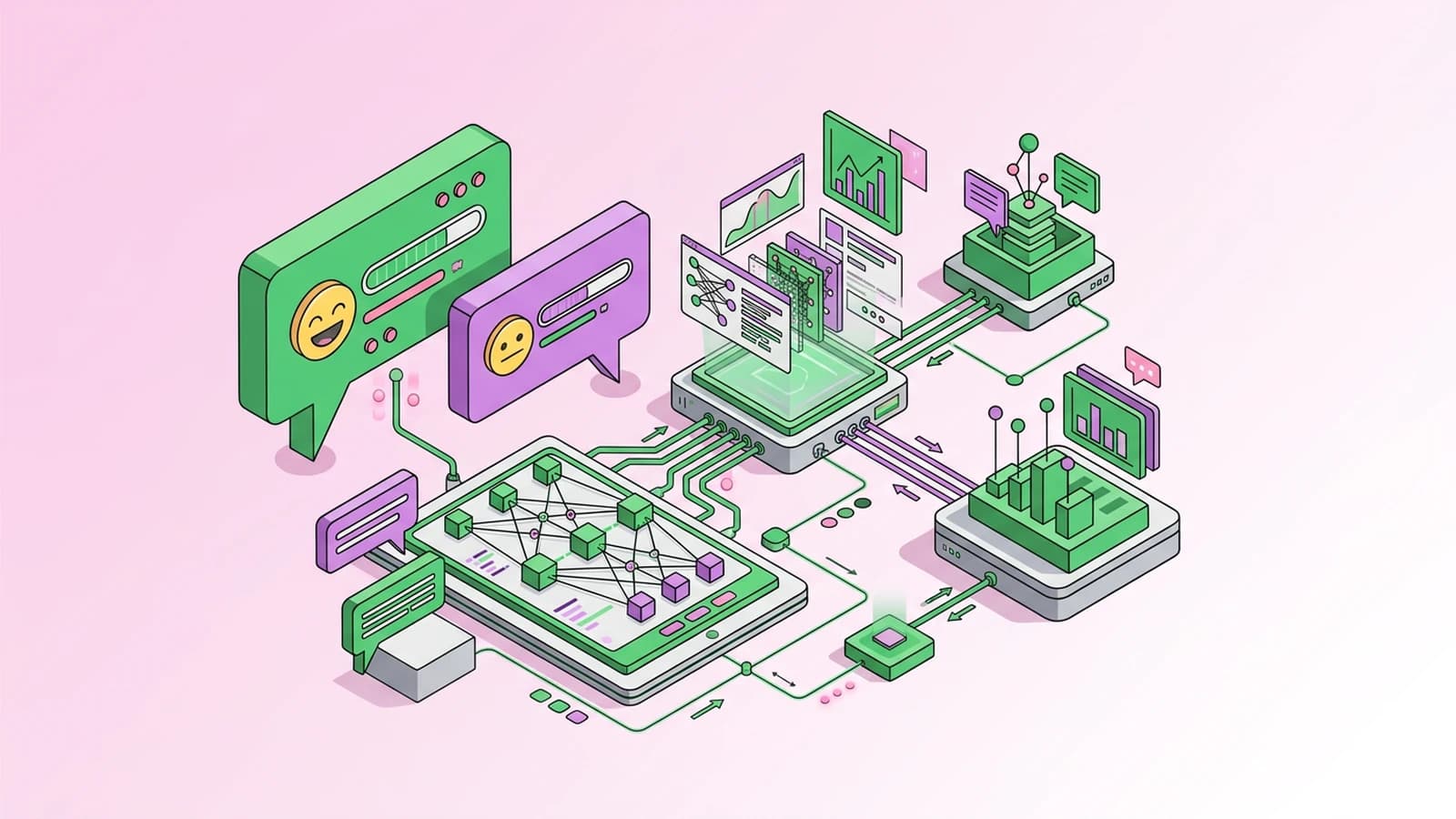
Executive Summary- Multilingual Emotional Intelligence: Modern transformer models analyze emotional tone, subtle context, and industry-specific idioms across dozens of global languages simultaneously.
- Omnichannel Voice of Customer (VoC): Leading platforms aggregate feedback across support tickets, public review sites, social channels, and community forums into a centralized dashboard.
- Aspect-Based Sentiment Extraction: Rather than assigning a generic positive or negative label, AI isolates sentiment regarding specific product attributes, such as pricing, onboarding, or UI speed.
- Automated Churn Intervention: Predictive engines alert customer success teams the instant high-value accounts exhibit negative sentiment trajectory, allowing immediate proactive outreach.
Understanding how customers truly perceive your brand across digital touchpoints has become the ultimate competitive battleground for modern enterprises. Identifying the best ai tools for customer sentiment analysis in 2027 allows businesses to decode emotional tone, detect emerging customer frustration, and preemptively resolve churn risks before they damage bottom-line revenue. Natural language processing models now interpret nuance, sarcasm, and intent across millions of customer reviews, support tickets, and social mentions in real time.
In previous eras, customer feedback analysis relied on cumbersome periodic surveys and static Net Promoter Score (NPS) questionnaires. Unfortunately, by the time quarterly survey results were compiled and presented to leadership, unhappy customers had already cancelled their subscriptions and switched to competitors. Modern artificial intelligence transforms feedback analysis from a reactive historical audit into an active predictive engine.
When integrated alongside advanced predictive analytics services, sentiment intelligence software enables brands to track brand perception dynamically, identify product defects the moment they occur, and optimize customer lifetime value with surgical precision. Below is an exhaustive review of the premier sentiment platforms operating in the market today.
Key Takeaways: Customer Sentiment Analysis in 2027
- Multilingual Emotional Intelligence: Modern transformer models analyze emotional tone, subtle context, and industry-specific idioms across dozens of global languages simultaneously.
- Omnichannel Voice of Customer (VoC): Leading platforms aggregate feedback across support tickets, public review sites, social channels, and community forums into a centralized dashboard.
- Aspect-Based Sentiment Extraction: Rather than assigning a generic positive or negative label, AI isolates sentiment regarding specific product attributes, such as pricing, onboarding, or UI speed.
- Automated Churn Intervention: Predictive engines alert customer success teams the instant high-value accounts exhibit negative sentiment trajectory, allowing immediate proactive outreach.
The Strategic Advantage of Aspect-Based Sentiment Analysis
Early sentiment analysis software relied on rudimentary keyword matching dictionaries. If a customer review contained the word 'great', the algorithm labeled it positive; if it contained 'bad', it was labeled negative. This simplistic approach produced massive classification errors when encountering complex human phrasing, sarcasm, or mixed reviews.
Consider a customer statement such as: 'The software features are remarkably powerful, but the mobile app crashes constantly and billing support is atrocious.' A primitive tool would struggle with this conflicting text. Modern deep learning models, by contrast, execute aspect-based sentiment analysis. They correctly categorize product functionality as highly positive, while flagging mobile app stability and customer support as severely negative.
This granular intelligence empowers cross-functional teams to take immediate corrective action. Engineering teams receive alerts regarding app stability, support leaders retrain billing representatives, and marketing teams highlight powerful features in upcoming campaigns.
In-Depth Evaluation of the Best AI Tools for Customer Sentiment Analysis in 2027
We tested the leading enterprise and mid-market customer feedback platforms against rigorous linguistic accuracy and data integration benchmarks. Here are the top five software solutions:
1. Qualtrics XM Discover (formerly Clarabridge)
Qualtrics XM Discover represents the pinnacle of enterprise conversational analytics. Built on decades of linguistic research, its natural language understanding engine processes structured and unstructured feedback across call transcripts, support chats, review portals, and social channels.
The platform excels at identifying root causes of customer dissatisfaction, detecting subtle emotional signals, and calculating effort scores. Enterprise organizations leverage Qualtrics to orchestrate real-time customer recovery workflows across global contact centers.
2. Thematic AI Feedback Intelligence
Thematic is engineered specifically for product and customer experience teams seeking to understand what drives customer satisfaction without manual tagging. Its unsupervised machine learning models discover emerging themes in customer feedback automatically.
Rather than forcing users to pre-define taxonomy keywords, Thematic dynamically groups feedback into evolving thematic clusters. Product managers can instantly quantify how specific product updates influence user sentiment over time.
3. Medallia Experience Cloud Voice & Text Analytics
Medallia is an industry benchmark in enterprise customer experience governance. Its AI-powered text and speech analytics engine captures real-time customer signals from physical retail locations, digital web interactions, and contact center calls.
Medallia predicts customer churn probability and lifetime value impact based on sentiment trends. It delivers personalized action recommendations to frontline employees, empowering them to resolve customer complaints immediately.
4. MonkeyLearn No-Code Machine Learning
MonkeyLearn democratizes natural language processing by providing a clean, accessible interface that allows non-technical teams to build custom sentiment analysis models. Users can upload customer support tickets or NPS comments and train custom classifiers in hours.
With seamless native integrations for Zendesk, Google Sheets, and Zapier, MonkeyLearn enables growing mid-market companies to automate sentiment tagging and support ticket routing without hiring dedicated machine learning engineers.
5. Brandwatch Consumer Intelligence Platform
Brandwatch provides unmatched global coverage for public brand perception and social sentiment analysis. By ingesting public discussions from across social media, blogs, news publications, and online forums, Brandwatch tracks brand health in real time.
Its proprietary AI, Iris, automatically surfaces anomalies in consumer conversation volume and sentiment shifts, alerting corporate PR and marketing leaders to emerging crises before they reach mainstream news coverage.
Customer Sentiment Analysis Software Comparison Matrix
Compare the leading sentiment analysis platforms across primary data sources, machine learning capabilities, and ideal deployment environments:
tbody>| Software Platform | Primary Data Ingestion | Linguistic Capabilities | Primary Target Market | Deployment Complexity |
|---|---|---|---|---|
| Qualtrics XM Discover | Omnichannel (Calls, Chats, Social, Surveys) | Deep NLP, emotion detection & effort scoring | Global Enterprise | Enterprise (6-12 weeks) |
| Thematic AI | Customer feedback, NPS, app reviews | Unsupervised theme discovery & impact analysis | Mid-Market & SaaS | Moderate (2-4 weeks) |
| Medallia Cloud | Contact centers, digital journeys, retail | Predictive churn modeling & frontline alerts | Large Enterprise | Enterprise (8-16 weeks) |
| MonkeyLearn | Zendesk tickets, CSVs, customer surveys | Custom no-code classifiers & topic extractors | Growing B2B & E-commerce | Very Easy (1-3 days) |
| Brandwatch | Social media, blogs, news forums, web | Public brand sentiment & crisis anomaly alerts | Consumer Brands & Agencies | Easy to Moderate (1-2 weeks) |
Step-by-Step Implementation Framework for Sentiment Analysis
Deploying an automated sentiment intelligence engine requires structured data consolidation and cross-departmental alignment. Follow this proven five-stage deployment roadmap:
- Aggregate Disparate Feedback Channels: Connect support helpdesks (Zendesk/Freshdesk), app store reviews, survey tools, and social channels into your centralized sentiment platform.
- Define Industry-Specific Taxonomy: Calibrate language models by uploading historical customer data, teaching the algorithm to recognize your industry's specific jargon, acronyms, and product names.
- Configure Aspect-Based Sentiment Categories: Establish key operational buckets such as 'Pricing', 'Customer Support', 'Product Usability', and 'Delivery Speed' to track granular sentiment drivers.
- Establish Automated Real-Time Escalation Rules: Configure instant alerts that notify customer success leaders whenever high-value enterprise accounts log severe negative sentiment on support tickets.
- Close the Loop with Product and Operations Teams: Schedule monthly sentiment review briefings where product managers and operational heads review top customer frustration themes and allocate development resources.
Forward-thinking e-commerce and SaaS brands frequently connect sentiment insights to website personalization tools, dynamically modifying landing page messaging or offering special retention discounts to users who have previously expressed hesitation.
Case Study: How an E-Commerce Platform Slashed Churn by 32%
A subscription box e-commerce company with 250,000 active subscribers faced an unexpected spike in monthly cancellation rates. Traditional post-cancellation surveys yielded generic answers such as 'too expensive' or 'no longer needed', which failed to explain why users were suddenly leaving in droves.
The leadership team integrated Thematic to analyze 45,000 recent support chat transcripts and app reviews. The AI engine instantly discovered that a recent logistics carrier change had resulted in a 400% surge in complaints regarding melted perishable items during summer shipping. Armed with this precise root-cause data, the company switched back to refrigerated shipping within two weeks, rescuing an estimated $1.8 million in recurring revenue and reducing customer churn by 32%.
Marketing teams looking to expand their technological toolkit can discover additional practical software in our AI productivity tools directory, which showcases cutting-edge solutions for business automation.
Common Pitfalls in Sentiment Analysis Implementations
Organizations frequently encounter technical and operational obstacles when interpreting customer sentiment data. Protect your strategy by avoiding these frequent errors:
- Relying Exclusively on Overall Sentiment Scores: A company-wide sentiment score of 78% sounds reassuring but conceals critical negative spikes within specific product modules or regional customer cohorts.
- Ignoring Unsolicited Feedback: Survey responses reflect only the opinions of customers motivated to fill out forms. Ingesting unsolicited support chats and public reviews provides a vastly more accurate picture.
- Failing to Take Visible Action: Analyzing feedback is meaningless if customer suggestions are ignored. Always close the feedback loop by announcing product improvements inspired by customer input.
- Overlooking Organic Search Best Practices: When publishing public customer knowledge bases and feedback summaries, follow standard guidelines like the Google Search Central SEO starter guide to ensure your helpful documentation ranks effectively for searching customers.
Best Practices for Sustainable Customer Sentiment Governance
Combine quantitative sentiment metrics with qualitative customer interview sessions. When your AI engine flags an emerging negative topic, schedule brief discovery calls with affected customers to explore emotional nuances deeply.
Empower frontline customer support agents with real-time sentiment indicators on their helpdesk dashboards. When an agent knows in advance that an incoming caller is highly frustrated, they can adjust their tone and de-escalate the situation effectively.
Moreover, establish clear benchmark comparisons against direct industry competitors. Analyzing sentiment trends for peer brands across public review portals and social channels reveals competitive vulnerabilities you can exploit in your own product development and marketing positioning.
Finally, tie executive performance incentives to aspect-based sentiment improvements. When product and operational leaders are held accountable for customer satisfaction in their specific domains, organizational responsiveness accelerates dramatically.
Conclusion: Listen, Understand, and Adapt in Real Time
Deploying the best ai tools for customer sentiment analysis in 2027 represents a transformative capability for customer-centric organizations. By listening to the authentic voice of your customer across all digital touchpoints, your business uncovers hidden operational bottlenecks, protects customer loyalty, and drives sustainable enterprise value.
Evaluate your current customer feedback channels, pilot an AI sentiment platform this quarter, and turn unstructured customer conversations into your organization's greatest strategic asset. True market leadership belongs to those who listen and adapt.
Frequently asked questions
Modern deep learning transformer models achieve 85% to 92% accuracy in sentiment classification, matching or exceeding human consistency. Unlike human reviewers, AI evaluates millions of comments simultaneously without cognitive bias or fatigue.
Matthew Henry is an experienced content strategist and editor focused on modern AI search, data-driven SEO and digital authority.