Best AI Calendar Scheduling Platforms for Agencies
A strategic agency guide comparing the best AI calendar scheduling platforms, detailing collective multi-host scheduling, white-label CNAME portals, and CRM syncing.

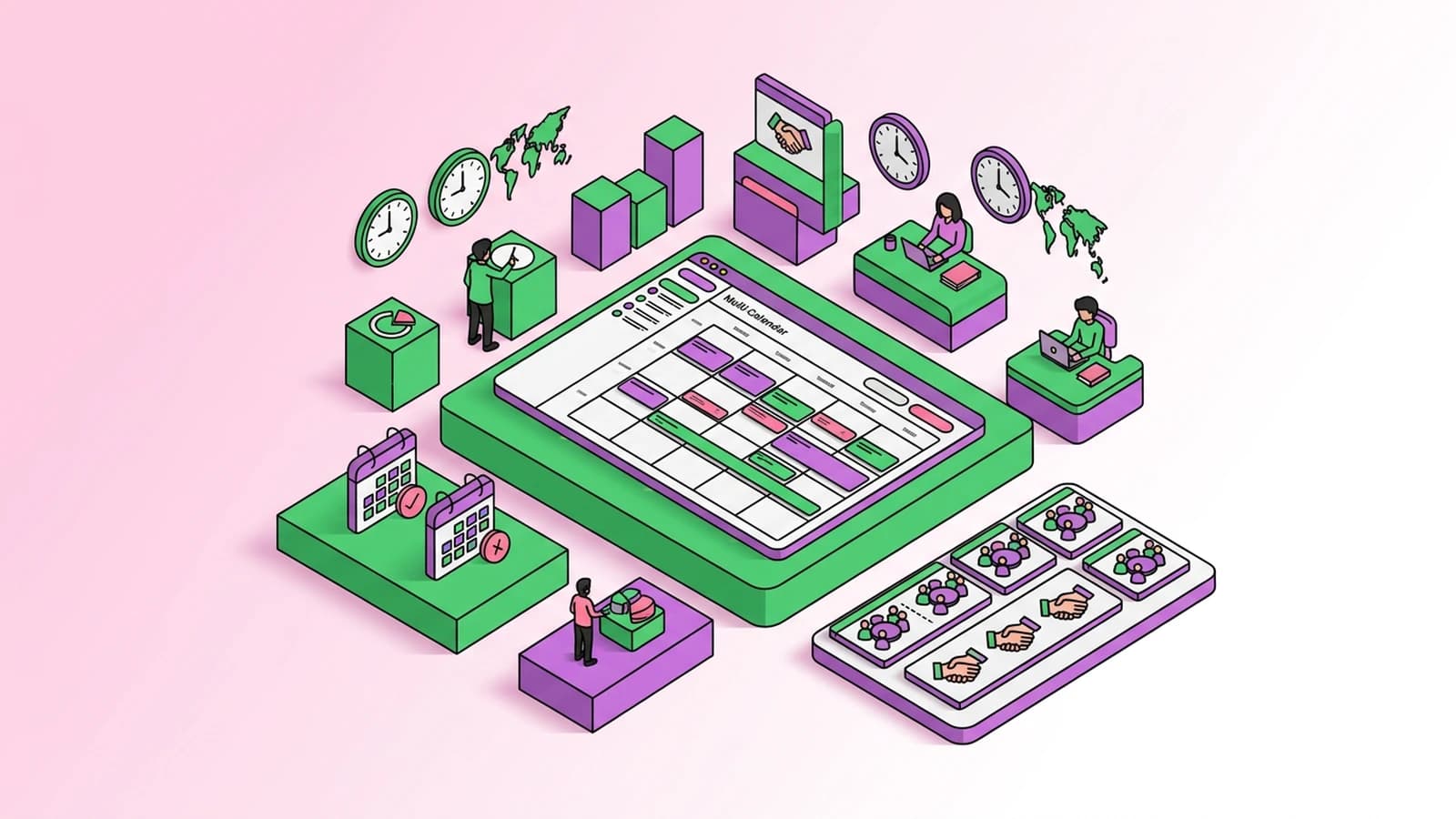
Key takeaways
Executive Summary- Collective multi-host scheduling coordinates multi-attendee agency client pitches instantly.
- White-label CNAME subdomains eliminate third-party vendor watermarks on client booking pages.
- Automated CRM lead routing matches prospect inquiries to specific agency practice leads.
- Dynamic capacity modeling balances weekly meeting loads across account management pods.
Identifying the best ai calendar scheduling platforms for agencies is a strategic requirement for digital marketing agencies, creative studios, and management consultancies seeking to streamline multi-client appointment logistics, maximize billable resource utilization, and deliver white-glove client experiences. In high-velocity agency environments, coordinating pitch presentations, weekly client status reviews, and creative sprint reviews across dozens of external stakeholder accounts creates massive operational drag.
Agency-grade calendar scheduling requires advanced architectural capabilities that individual scheduling links cannot satisfy. Multi-tenant client branding, multi-host availability pooling, dynamic lead qualification routing based on client retainer size, and automated CRM pipeline synchronization are non-negotiable foundations for modern agency operations. Leading firms rely on intelligent calendar automation to accelerate sales cycles and protect billable consultant hours.
In this comprehensive agency guide, we evaluate the premier enterprise-ready calendar platforms. We analyze multi-client governance, team dispatching rules, calendar privacy walls, and examine how high-performing agencies pair scheduling automation with specialized digital marketing services to drive recurring retainer expansion.
Key Takeaways for Agency Directors and Operations Leads
- Multi-host collective scheduling pools calendars across account executives, creative directors, and technical leads to book multi-attendee client pitches instantly.
- White-label custom domains and branding preserve agency prestige, eliminating third-party software watermarks from high-value client interactions.
- Automated CRM lead routing matches prospective clients with the exact industry practice lead or account director based on intake form criteria.
- Privacy partitioning ensures external clients see available appointment slots without gaining visibility into confidential internal client project codes.
Why the Best AI Calendar Scheduling Platforms for Agencies Protect Billable Margins
In the agency business model, billable time represents inventory. When expensive agency directors and strategists lose thirty to forty-five minutes negotiating pitch call schedules, firm margins deteriorate directly. Adopting the best ai calendar scheduling platforms for agencies automates logistical friction, enabling senior talent to focus exclusively on billable client consulting and high-margin creative execution.
Moreover, intelligent scheduling systems dramatically improve agency pitch conversion rates. High-value prospective clients expecting institutional excellence are unimpressed by chaotic scheduling exchanges. Presenting an elegant, branded booking experience that instantly coordinates four agency executives establishes professional credibility before the first pitch deck slide is presented.
Agencies seeking to evaluate their operational staffing capacity and cross-client resource allocation often consult our in-depth agency meeting platform review to align calendar scheduling with post-call documentation workflows.
Agency teams can design customized client onboarding flows and test automated scheduling response scripts using our free online text editor to standardize client-facing communication templates across all account management pods.
Essential Architecture: What Agencies Must Demand in Scheduling AI
Agencies cannot operate with tools designed for solo service providers. Sophisticated agency operations demand five core structural capabilities:
Multi-Host Collective and Round-Robin Scheduling
Agency pitch meetings frequently require the presence of three specific individuals: an Account Executive, a Creative Director, and a Technical Architect. Collective scheduling algorithms scan all three calendars simultaneously, displaying only the overlapping slots where all required agency leads are free.
White-Label Custom Subdomains and Brand Isolation
Agencies pride themselves on brand sophistication. Premium scheduling platforms support custom CNAME subdomains (e.g., schedule.youragency.com), custom CSS styling, and zero third-party vendor branding on client-facing booking pages.
Granular Multi-Tenant Account Permissions
Account teams managing competing brand portfolios require strict internal data firewalls. Scheduling software must allow agencies to partition teams into dedicated client divisions, preventing team members from viewing calendar details of non-assigned accounts.
Top 5 Agency-Grade Calendar Scheduling Platforms Evaluated
We tested the leading software contenders across complex agency workflows, multi-stakeholder pitching, and enterprise CRM integrations.
1. Calendly Enterprise: The Agency Gold Standard
Calendly Enterprise provides comprehensive team governance, single sign-on (SSO), advanced audit logs, and deep Salesforce and HubSpot syncing. Its routing forms allow agencies to qualify inbound prospective clients based on company size or budget and route them to the appropriate practice head immediately.
With collective scheduling, round-robin distribution, and automated reminder workflows, Calendly Enterprise easily accommodates agencies scaling from twenty to over five hundred employees.
2. Chili Piper: Best for High-Velocity B2B Agency Sales Funnels
Chili Piper is purpose-built for revenue-driven agency sales teams. Its Form Concierge feature enables prospective clients to book an introductory discovery call immediately upon submitting a website contact form, increasing inbound conversion rates by up to 50%.
Its automated lead re-assignment logic ensures that if an assigned account executive does not confirm a booking within ten minutes, the meeting automatically re-routes to an alternate available rep.
3. Cal.com Enterprise: Best for White-Label Customization and Privacy
Cal.com Enterprise offers unparalleled customization for boutique and mid-sized agencies. Its open-source core allows engineering teams to host the platform on private infrastructure or customize booking workflows through comprehensive API endpoints.
With full white-label capabilities, agencies can completely eliminate third-party branding, presenting a proprietary booking portal that reinforces agency technical sophistication.
4. OnceHub for Teams: Best for Complex Consultative Client Discovery
OnceHub excels in complex consultative workflows where multi-step intake screening is required. Its conversational chatbots engage website visitors, ask targeted budget and timeline questions, and schedule qualified prospects with the correct specialist.
Its pooled availability features ensure clients can easily find time with cross-functional agency teams without scheduling delays.
5. HubSpot Sales Hub Scheduling: Best for Native CRM Unified Operations
For agencies whose client operations run on HubSpot, the native Sales Hub meeting scheduler provides flawless data synchronization. Every booked appointment immediately creates deals, logs contacts, and triggers automated email nurture workflows without requiring third-party integration tools.
Agency Scheduling Platform Feature and Capability Matrix
The following matrix summarizes key operational specifications across the five evaluated agency platforms.
| Platform | Collective Scheduling | Custom Subdomain (CNAME) | CRM Routing Depth | Best Agency Profile |
|---|---|---|---|---|
| Calendly Enterprise | Yes (Advanced) | Yes (Enterprise) | Deep (Salesforce/HubSpot) | Mid to Large Global Agencies |
| Chili Piper | Yes (Real-Time) | Yes (Dedicated) | Instant Inbound Concierge | High-Velocity Inbound Sales Agencies |
| Cal.com Enterprise | Yes (Full API) | Yes (100% White-Label) | Webhooks & REST API | Boutique Creative & Tech Agencies |
| OnceHub Teams | Yes (Rule-Based) | Yes (Custom Domain) | Multi-Step Qualification | Consultative Strategy & PR Agencies |
| HubSpot Sales Hub | Yes (Native) | Yes (HubSpot Hosted) | Native CRM Synchronization | HubSpot-Centric Marketing Agencies |
Enterprise Security and Cross-Client Confidentiality Governance
Agencies handle proprietary client data, NDA-governed product launches, and confidential strategic campaigns. Exposing internal calendar details or mixing client meeting data creates severe legal and reputational risks.
In accordance with security standards published by the Cybersecurity and Infrastructure Security Agency (CISA), enterprise service organizations must enforce multi-factor authentication, principle-of-least-privilege access controls, and strict audit logging across all cloud collaboration endpoints.
Top agency scheduling software allows administrators to enforce domain-wide privacy rules, ensuring external attendees view busy blocks without seeing appointment titles, attendee rosters, or internal project codes.
Step-by-Step Agency Rollout and Change Management Protocol
Deploying centralized scheduling across an agency requires careful coordination between business development, client services, and IT leadership. Follow this structured five-step rollout plan:
- Step 1: Standardize Meeting Types and Durations: Establish agency-wide definitions for discovery calls (30 mins), creative presentations (45 mins), and executive reviews (60 mins).
- Step 2: Connect Agency SSO and Multi-Calendar Sync: Enforce single sign-on across all staff and configure synchronization between Google Workspace and Microsoft 365.
- Step 3: Build Multi-Host Booking Pods: Group personnel into functional pods (e.g., Pitch Pod Alpha: AE + Creative Lead + Strategist) with collective availability logic.
- Step 4: Integrate CRM Pipeline Automations: Configure automated stage progression in your CRM so that booking a discovery call automatically moves prospect deals to 'Demo Scheduled'.
- Step 5: Audit Monthly Lead Velocity and Attendance: Review monthly scheduling conversion reports to identify drop-off points and refine intake form questions.
Packaging Dedicated Client Scheduling Portals into Retainers
Leading agencies monetize scheduling infrastructure by packaging dedicated client booking portals into high-tier retainer agreements. Rather than forcing enterprise clients to send calendar invites to individual staff members, the agency provides the client executive team with a private, branded VIP booking link.
This VIP link grants priority access to senior agency strategists with accelerated 2-hour booking notice windows, turning scheduling ease into a tangible, premium client retainer differentiator.
Common Agency Operational Mistakes to Avoid
Avoid these frequent operational errors when managing agency calendar scheduling systems:
- Using Generic Booking Links for Enterprise RFPs: High-stakes enterprise prospects should receive tailored, high-touch booking invitations rather than generic self-service links.
- Failing to Audit Timezone Adjustments: Always verify that international client bookings automatically display converted times in both calendar invitations and email confirmations.
- Neglecting Buffer Rules Between Client Pitches: Schedule at least fifteen minutes between external client presentations to allow account teams to debrief and reset.
- Permitting Unregulated Calendar Access: Ensure junior coordinators cannot modify company-wide round-robin routing rules without operations approval.
Algorithmic Resource and Capacity Modeling for Account Pods
One of the most persistent operational headaches in agency management is maintaining balanced workloads across account management pods. When one pod is overwhelmed with prospective client discovery calls while another sits idle, client response times suffer and team burnout escalates.
Advanced agency scheduling engines solve this by analyzing calendar density in real time. Rather than routing meetings based purely on rigid sequential order, the algorithm assesses current weekly meeting volume across all available account directors, routing new prospect consultations to team members with the highest available bandwidth.
This dynamic load balancing protects senior staff from meeting fatigue, ensures rapid customer turnaround times, and provides agency leadership with transparent visibility into internal staffing utilization.
Enterprise Compliance Logs and Audit Trail Monitoring
For agencies serving institutional corporate clients, security compliance requires maintaining immutable logs of all booking and scheduling interactions. If a client disputes meeting notification timing or cancellation notice windows, administrative teams must have access to definitive audit logs.
Leading enterprise scheduling platforms log every transaction timestamp, IP address, recipient email delivery receipt, and user modification. These detailed logs protect agencies against unfounded claims of missed commitments and demonstrate compliance with international corporate governance standards.
Conclusion: Scaling Agency Growth Through Operational Scheduling Excellence
In a hyper-competitive agency market, operational discipline separates flourishing firms from those struggling with administrative drag. Deploying the best AI calendar scheduling platforms for agencies protects valuable billable hours, accelerates inbound pitch conversion, and projects polished institutional authority across every client touchpoint. Select the platform that matches your agency's scale and elevate your client operations today.
Frequently asked questions
Calendly Enterprise is the leading choice for general agency governance and CRM routing, while Chili Piper is premier for high-velocity inbound B2B sales teams requiring instant form-to-meeting scheduling.
Justin edits and fact-checks articles, keeping every post accurate, readable and consistent with the house style.