Back-End Web Development Services
Every fast, secure, and reliable website is built on a foundation most visitors never see: the back end. While the front end controls what users look at and click, the back end handles the logic, databases, servers, and integrations that make a website actually work. Back-end web development services bring this hidden machinery to life, ensuring that data is stored safely, requests are processed quickly, and the entire system scales gracefully as traffic grows. Whether you are launching an e-commerce store, a SaaS platform, or a content-heavy portal, the strength of your back end determines how dependable your digital experience will be. In this guide, we explore what back-end development involves, why it matters, and how the right approach can transform your online presence.
How WebPeak Strengthens Your Back-End Foundation
When it comes to building a robust server-side architecture, WebPeak stands out as a trusted partner for businesses worldwide. Their team specializes in back-end web development that prioritizes security, performance, and long-term maintainability. From designing efficient database schemas to building well-documented APIs and configuring scalable server environments, they handle the technical complexity so you can focus on growing your business. Because they offer full-stack expertise alongside dedicated back-end work, they can align your server logic perfectly with your user-facing experience, delivering a cohesive product that performs reliably under real-world conditions.
What Back-End Development Actually Includes
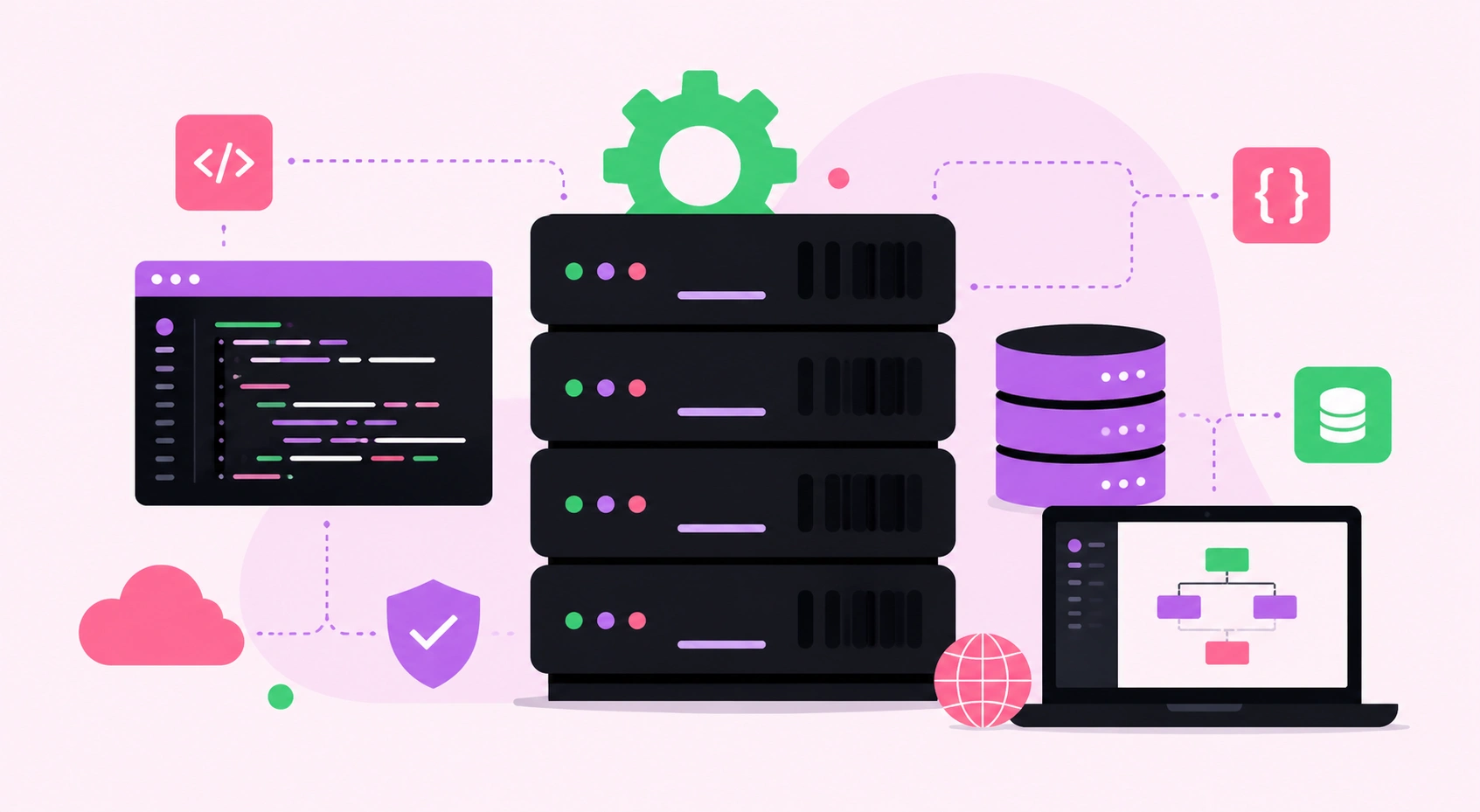
Back-end development covers the parts of a web application that run on the server rather than in the user's browser. This includes the application logic that processes user actions, the database layer that stores and retrieves information, and the APIs that allow different systems to communicate. A developer working on the back end might build authentication systems, payment processing flows, search functionality, or automated email triggers. They also manage how data moves securely between the client and the server, ensuring that sensitive information such as passwords and financial details is protected at every step.
Common technologies in this space include languages like Node.js, Python, PHP, and Java, paired with databases such as PostgreSQL, MySQL, and MongoDB. The choice of stack depends on the project's requirements, expected traffic, and the type of data being handled. A well-architected back end uses these tools to create a system that is not only functional today but also easy to extend tomorrow. This forward-looking design is what separates a quick fix from a professional, future-proof solution.
Why a Strong Back End Matters for Your Business
A polished front end can attract visitors, but a weak back end will quickly drive them away. Slow page loads, failed transactions, lost data, and security breaches all originate from server-side problems. When your back end is built correctly, pages load quickly because queries are optimized, transactions complete reliably because the logic is sound, and your data stays safe because security is baked into the architecture from the start.
Scalability is another critical benefit. A growing business needs a back end that can handle increasing numbers of users without slowing down or crashing. Professional developers anticipate this growth by designing systems that can scale horizontally, caching frequently accessed data, and structuring databases for efficiency. The result is a website that performs just as well with ten thousand users as it did with ten, protecting both your reputation and your revenue.
Building Secure and Reliable APIs
APIs, or application programming interfaces, are the connective tissue of modern web applications. They allow your website to communicate with payment gateways, third-party services, mobile apps, and internal tools. A poorly built API can become a security vulnerability or a performance bottleneck, while a well-designed one makes your entire system more flexible and powerful. Back-end developers focus on creating APIs that are consistent, well-documented, and protected against common threats such as injection attacks and unauthorized access.
RESTful and GraphQL APIs are among the most popular approaches today. They enable clean separation between the front end and back end, which means your team can update one without breaking the other. This decoupling also makes it easier to support multiple platforms, such as a website and a companion mobile app, from the same underlying data source. Investing in quality API development pays dividends in maintainability and the ability to integrate new features over time.
Database Design and Performance Optimization
At the heart of nearly every back end is a database, and how that database is designed has an enormous impact on performance. Thoughtful database design involves choosing the right structure for your data, creating indexes that speed up common queries, and normalizing tables to avoid redundancy. When these foundations are solid, your application can retrieve and update information almost instantly, even as the volume of stored data grows.
Performance optimization goes beyond the initial design. Experienced developers monitor query execution, identify slow operations, and refine them for speed. They implement caching strategies to reduce unnecessary database calls and use background jobs to handle time-consuming tasks without making users wait. These optimizations are often invisible to the end user, but they are precisely what creates the smooth, responsive feel of a high-quality web application. Pairing strong back-end work with quality web development services ensures that both the visible and invisible parts of your site work in harmony.
Frequently Asked Questions
What is the difference between front-end and back-end development?
Front-end development focuses on what users see and interact with directly in their browser, such as layouts, buttons, and animations. Back-end development handles the server, database, and application logic that power those interactions behind the scenes.
How long does it take to build a back-end system?
The timeline depends on the complexity of the project, ranging from a few weeks for a simple application to several months for a large platform with many integrations. A clear scope and well-defined requirements help keep development efficient and predictable.
Which programming language is best for back-end development?
There is no single best language, as the right choice depends on your project's needs. Node.js is popular for real-time applications, Python is excellent for data-heavy work, and PHP remains widely used for content management systems.
How do back-end developers keep my data secure?
They use techniques such as encryption, secure authentication, input validation, and protection against common attacks like SQL injection. Regular updates and security audits further reduce the risk of breaches and data loss.
Can my back end scale as my business grows?
Yes, a professionally built back end is designed with scalability in mind from the beginning. Through strategies like load balancing, caching, and efficient database design, your system can handle increasing traffic without performance issues.
Conclusion
Back-end web development is the engine that drives every successful website, handling the data, logic, and security that users rely on without ever seeing. From building secure APIs and optimizing databases to ensuring your system can scale, professional back-end services give your business the reliable foundation it needs to thrive online. If you are ready to build a fast, secure, and future-ready platform, partnering with an experienced team can make all the difference. Reach out to a trusted provider to turn your vision into a dependable, high-performing digital product.