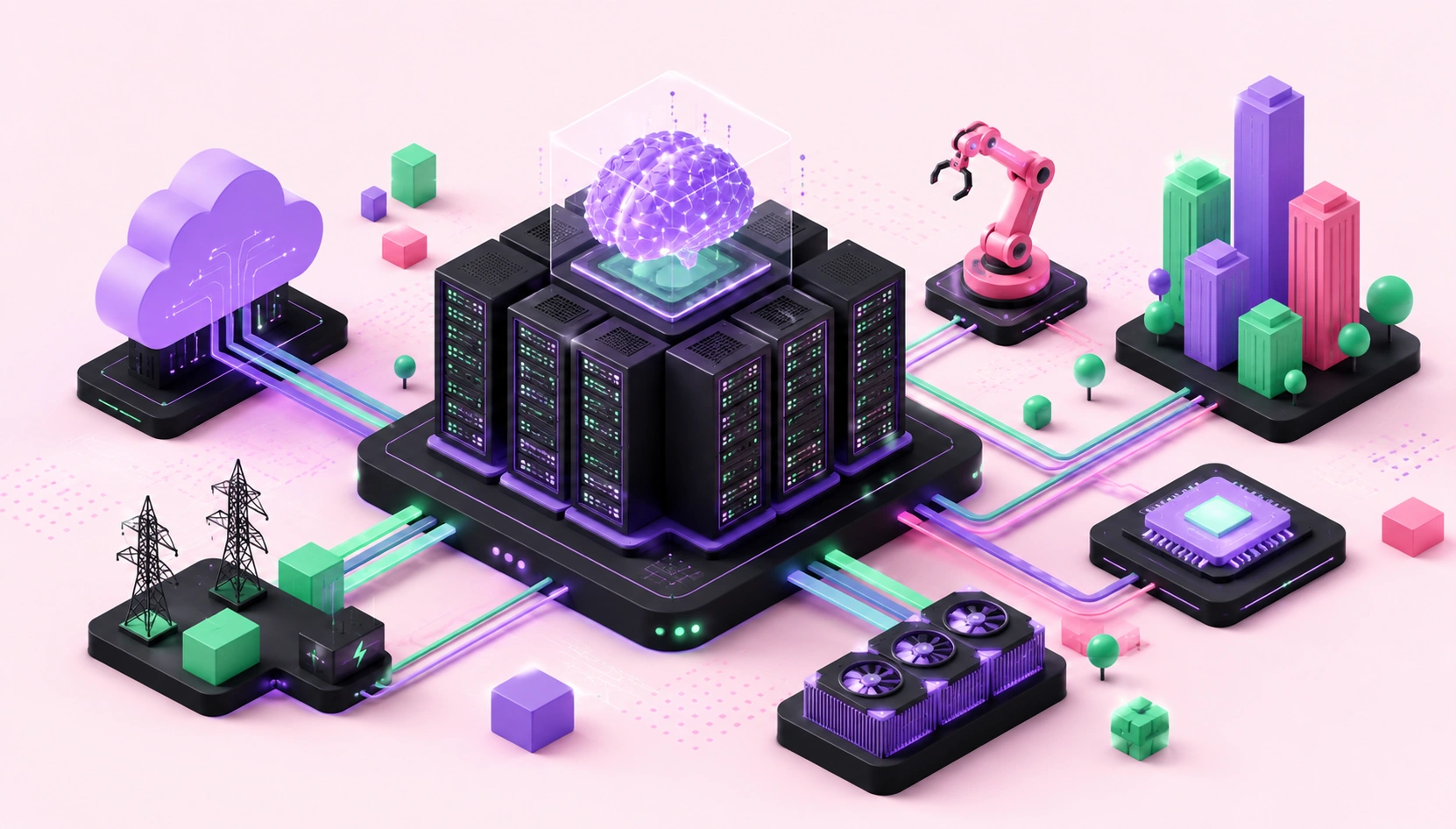
Why Artificial Intelligence Infrastructure Companies Are the Backbone of the AI Economy
Artificial intelligence is no longer a futuristic concept — it is the engine driving business decisions, product development, healthcare breakthroughs, and global economies. But behind every AI model, every chatbot, every recommendation engine, and every autonomous system lies something most people never see: the infrastructure. Artificial intelligence infrastructure companies are the unsung architects of the AI economy, quietly building the roads, bridges, and power grids that allow AI to function at scale.
Understanding what these companies do, why they matter, and how they shape the future of technology is essential for any business, investor, or entrepreneur who wants to compete in today's digital landscape.
What Is AI Infrastructure?
AI infrastructure refers to the foundational hardware, software, networking, and data systems that make artificial intelligence possible. It includes everything from the physical chips inside data centers to the platforms that manage machine learning workflows, data pipelines, model training environments, and deployment systems.
Think of it this way: if AI applications are the cars on a highway, then AI infrastructure is the highway itself — along with the fuel stations, traffic systems, and engineering teams keeping everything moving. Without robust infrastructure, even the most sophisticated AI models cannot function reliably or at scale.
The major components of AI infrastructure include:
- Hardware: GPUs, TPUs, and specialized AI chips that handle intensive computational workloads
- Cloud platforms: Scalable computing environments where AI models are trained and deployed
- Data storage and pipelines: Systems for collecting, cleaning, storing, and delivering massive datasets
- Networking: High-speed data transfer systems that ensure low latency between AI components
- MLOps platforms: Tools that help teams manage the full lifecycle of machine learning models
Why AI Infrastructure Companies Are the Backbone of the AI Economy
Every AI product you interact with — from a smart search engine to a fraud detection system — depends entirely on the infrastructure underneath it. Artificial intelligence infrastructure companies provide the picks and shovels of the AI gold rush. While headlines celebrate the latest AI models and applications, it is the infrastructure layer that enables those innovations to exist in the first place.
They Enable Scalability
One of the most critical roles AI infrastructure companies play is enabling scale. Training a large language model or processing real-time video analysis requires enormous computing power. Without specialized data centers, distributed cloud infrastructure, and high-performance chips, scaling AI from a proof-of-concept to a production-ready system is simply not possible.
Companies like NVIDIA, which produces the GPUs that power most AI training workloads, or cloud providers like Amazon Web Services, Microsoft Azure, and Google Cloud, provide the raw computational muscle that AI developers rely on every single day. Their infrastructure is not optional — it is mandatory for serious AI development.
They Power Data-Driven Decision Making
AI is only as good as the data it learns from. Infrastructure companies that specialize in data storage, processing, and management — such as Snowflake, Databricks, and Cloudera — make it possible for organizations to collect and leverage vast amounts of structured and unstructured data. Without this foundational layer, building any meaningful AI model would be impossible.
Businesses that invest in strong data infrastructure are the ones that extract real value from AI. The infrastructure layer is where raw data is transformed into intelligence, making these companies indispensable partners for any organization pursuing AI-driven growth.
They Ensure Reliability and Security
As AI systems are increasingly deployed in sensitive industries — healthcare, finance, defense, and critical public services — reliability and security become non-negotiable. AI infrastructure companies build the fault-tolerant, encrypted, and monitored environments that keep these systems running safely.
Cybersecurity is deeply embedded within AI infrastructure. A weak infrastructure layer can expose AI models to adversarial attacks, data poisoning, or unauthorized access. This is why enterprises looking to build trustworthy AI systems cannot afford to cut corners at the infrastructure level.
The Economic Impact of AI Infrastructure
The global AI infrastructure market is growing at an extraordinary pace. According to multiple industry reports, spending on AI infrastructure — including hardware, cloud services, and software platforms — is projected to reach hundreds of billions of dollars over the next few years. This spending is not frivolous; it reflects a fundamental economic reality: AI is now a core driver of competitive advantage across virtually every industry.
From small startups leveraging cloud-based AI tools to multinational corporations building proprietary AI platforms, the demand for capable, secure, and scalable infrastructure is universal. Infrastructure companies sit at the center of this demand curve, generating massive revenues while simultaneously enabling trillions of dollars in economic activity across the broader AI ecosystem.
Job Creation and Talent Development
AI infrastructure companies are also significant contributors to job creation. They employ hardware engineers, data scientists, cloud architects, machine learning engineers, security experts, and operations professionals. The ecosystem they create — through APIs, developer tools, and open-source contributions — supports an even larger workforce of developers and technologists who build on top of their platforms.
This talent flywheel is a critical component of the AI economy. When infrastructure companies invest in education, certifications, and developer communities, they accelerate the growth of the broader AI workforce, compounding the economic value they generate.
How Businesses Can Leverage AI Infrastructure
For businesses that want to compete in the AI economy, understanding and investing in AI infrastructure is no longer optional — it is strategic. Whether a company is building its own AI tools or integrating third-party AI services, the infrastructure decisions made today will determine how effectively AI can scale tomorrow.
Choose the Right Cloud and Compute Partners
Selecting the right cloud platform and compute resources is foundational. Businesses should evaluate their AI workloads — whether they require real-time inference, large-scale model training, or edge computing — and choose infrastructure partners that align with those requirements. Cost, latency, geographic availability, and compliance features should all factor into this decision.
Invest in Data Infrastructure Early
Before deploying any AI model, businesses must have clean, well-organized, and accessible data. Investing in data pipelines, warehouses, and governance frameworks early in the AI journey saves enormous time and cost down the line. Poor data infrastructure is one of the most common reasons AI projects fail to deliver expected results.
Partner with Experienced AI Service Providers
Not every business needs to build its AI infrastructure from scratch. Working with specialized partners who understand both the technical and strategic dimensions of AI deployment can significantly accelerate time-to-value. Agencies and technology companies that offer comprehensive AI services can help businesses navigate the complex infrastructure landscape, identify the right tools, and implement solutions that are both scalable and cost-effective.
At WebPeak, we help businesses harness the full potential of artificial intelligence by aligning cutting-edge tools with strategic business goals — ensuring every infrastructure decision supports long-term growth.
Challenges Facing AI Infrastructure Companies
Despite their critical importance, AI infrastructure companies face significant challenges that could shape the future of the AI economy.
Energy Consumption
Training large AI models is extraordinarily energy-intensive. Data centers that power AI workloads consume enormous amounts of electricity, raising serious concerns about environmental sustainability. Infrastructure companies are under increasing pressure to develop more energy-efficient chips, adopt renewable energy sources, and reduce their carbon footprints without sacrificing performance.
Supply Chain Constraints
The global shortage of advanced semiconductors highlighted just how fragile AI infrastructure supply chains can be. Geopolitical tensions, manufacturing bottlenecks, and surging demand have created significant challenges for hardware companies. Governments and private sectors alike are now investing heavily in domestic chip manufacturing to reduce dependency on single-source suppliers.
Talent Shortages
The demand for skilled professionals in AI infrastructure — particularly hardware engineers, MLOps specialists, and cloud architects — far outpaces supply. Companies are competing fiercely for a limited talent pool, driving up costs and slowing development cycles. Addressing this challenge requires investment in education, training programs, and immigration policies that attract global talent.
The Future of AI Infrastructure
Looking ahead, AI infrastructure is poised to evolve in several important directions. Custom silicon — chips designed specifically for AI workloads — will become increasingly common, offering better performance and energy efficiency than general-purpose processors. Edge computing will bring AI processing closer to where data is generated, reducing latency and enabling new real-time applications in manufacturing, healthcare, and transportation.
Quantum computing, while still in early stages, holds transformative potential for AI infrastructure by solving certain categories of problems exponentially faster than classical computers. As these technologies mature, AI infrastructure companies will remain at the frontier, translating scientific advances into practical, deployable solutions.
The convergence of AI with other transformative technologies — including 5G networks, Internet of Things devices, and advanced robotics — will further deepen the importance of robust infrastructure. Every connected system, every autonomous device, and every intelligent application will depend on the infrastructure layer to function reliably and securely.
Conclusion
Artificial intelligence infrastructure companies are not peripheral players in the AI story — they are its foundation. They provide the computational power, data management capabilities, security frameworks, and scalable platforms that make every AI application possible. Without them, the AI economy as we know it simply could not exist.
For businesses, investors, and technology leaders, recognizing the strategic importance of AI infrastructure is the first step toward making smarter decisions in an AI-driven world. Whether you are building AI capabilities internally or partnering with experts, getting your infrastructure right is the single most important investment you can make in your AI future.
The companies that understand this — and act on it decisively — will be the ones that lead the next decade of digital transformation.