AI Integration for Legacy Systems for Healthcare Providers
A high-security technical blueprint for hospitals, clinical networks, and healthcare systems integrating clinical AI models with legacy EHR architectures and HL7 feeds.

Key takeaways
Executive Summary- Healthcare providers deploy private on-premise inference clusters and zero-retention models to ensure patient health information never leaks outside hospital firewalls.
- Containerized middleware translates legacy HL7 v2 messages into modern JSON-based FHIR resources required by neural retrieval engines.
- Ambient clinical intelligence extracts structured consultation notes, slashing physician charting time by 45% to 60%.
- Physicians continue interacting with familiar Epic, Cerner, or Meditech interfaces while background AI models validate billing codes and clinical guidelines.
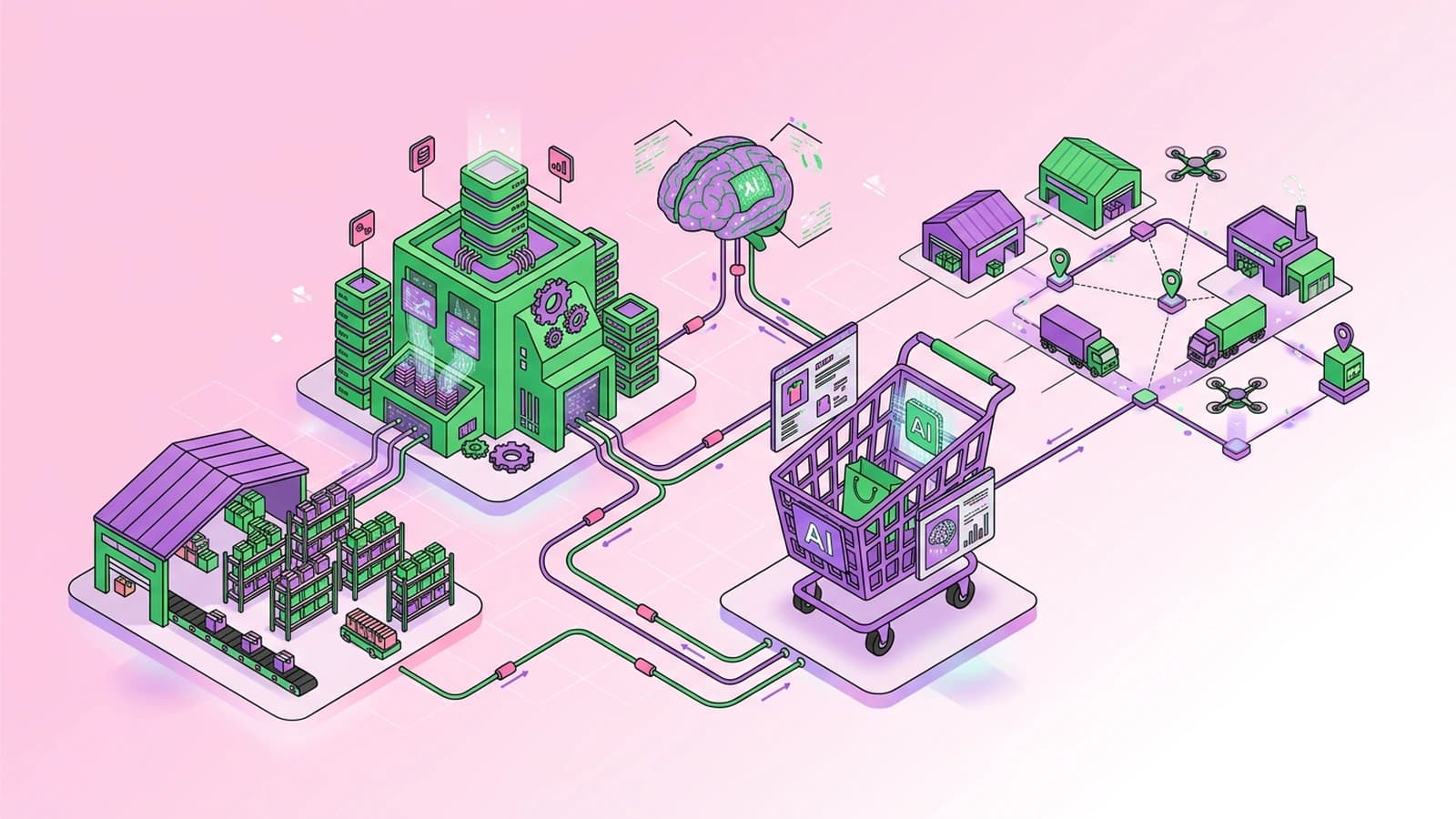
Healthcare systems navigate the most demanding technical, ethical, and regulatory operational landscape in modern computing. Hospitals, regional clinic networks, and diagnostic laboratories rely heavily on Electronic Health Record (EHR) systems, picture archiving and communication systems (PACS), and lab information management systems (LIMS) deployed ten to twenty-five years ago. Successfully orchestrating ai integration for legacy systems for healthcare providers has emerged as an urgent operational necessity. Clinicians face unprecedented burnout from administrative documentation, while health systems must accelerate diagnostic triage and billing velocity without compromising patient safety or violating HIPAA and HITECH mandates.
Replacing mission-critical clinical software cores is practically impossible without risking catastrophic patient care disruptions and multi-million-dollar implementation failures. Instead, healthcare organizations deploy zero-trust clinical middleware, on-premise inference engines, and automated HL7/FHIR translation bridges. These modern architectures allow healthcare providers to harness clinical decision support and ambient voice scribing while keeping protected health information (PHI) completely secure within sovereign hospital perimeter firewalls.
Key Strategic Takeaways
- Air-Gapped Privacy: Healthcare providers deploy private on-premise inference clusters and zero-retention models to ensure patient health information never leaks outside hospital firewalls.
- HL7 to FHIR Protocol Bridges: Containerized middleware translates legacy HL7 v2 messages into modern JSON-based FHIR resources required by neural retrieval engines.
- Clinical Scribing Velocity: Ambient clinical intelligence extracts structured consultation notes, slashing physician charting time by 45% to 60%.
- Zero Core Disruption: Physicians continue interacting with familiar Epic, Cerner, or Meditech interfaces while background AI models validate billing codes and clinical guidelines.
The Healthcare Tech Reality: Epic, Cerner, and HL7 v2 Legacy Messages
Inside modern hospitals, medical data flows through legacy messaging protocols engineered in the late 1980s. The HL7 v2 messaging standard uses pipe-and-hat delimiters to transmit patient admissions, lab orders, and pharmacy dispensations. These raw streams are incompatible with modern RESTful APIs and neural embedding architectures. Furthermore, decades of custom clinical templates and stored procedures create severe data fragmentation across radiology, pathology, and outpatient clinics.
To protect patient data integrity while modernizing clinical pipelines, healthcare IT departments partner with providers of certified cybersecurity services to conduct continuous penetration testing, enforce end-to-end encryption, and validate compliance with strict federal healthcare mandates.
Clinical Data Pipelines: HL7 v2 to Fast Healthcare Interoperability Resources (FHIR)
To feed clinical AI models with structured data, engineering teams construct asynchronous protocol translation pipelines. The gateway ingests raw HL7 v2 MLLP (Minimal Lower Layer Protocol) messages, strips ephemeral network headers, and parses pipe-delimited segments into standardized JSON FHIR resources. Adhering to international quality standards such as the ISO artificial intelligence management standards ensures that automated clinical data transformations maintain mathematical fidelity, algorithmic transparency, and medical auditability.
Once mapped into FHIR schemas, patient records are passed through automated de-identification pipelines. Algorithms remove all eighteen HIPAA Safe Harbor identifiers (including patient names, social security numbers, and precise visit dates) before transmitting vector representations to clinical reasoning engines. This enables physicians to query historical clinical literature and cohort analyses without exposing sensitive patient records.
Strategic Roadmap: AI Integration for Legacy Systems for Healthcare Providers
Executing ai integration for legacy systems for healthcare providers requires an uncompromising safety-first engineering progression. Clinical software cannot tolerate experimental errors. Healthcare IT leadership must follow a structured phased implementation framework that initiates with ambient administrative automation before expanding to clinical decision support.
Phase 1: Ambient Clinical Scribing and Medical Coding Automation
The initial modernization phase targets administrative burden. Ambient microphone arrays in examination rooms capture doctor-patient consultations. On-premise speech recognition models transcribe the dialogue, summarize medical findings, and pre-populate SOAP (Subjective, Objective, Assessment, Plan) notes directly into the legacy EHR via automated desktop macros or HL7 MDM (Medical Document Management) messages.
Phase 2: Diagnostic Imaging Triage and Decision Support
In parallel, radiology departments deploy computer vision triage algorithms atop legacy DICOM archives. When a CT scan or X-ray arrives, the model analyzes the imagery for acute life-threatening anomalies (such as intracranial hemorrhages or pulmonary embolisms) and automatically elevates critical studies to the top of the radiologist's review worklist.
Hospitals deploying modern internal clinical portals and clinician-facing web tools utilize secure AI model integration for web apps to deliver sub-100-millisecond response times, role-based clinician views, and verified audit logging across mobile and desktop devices.
Healthcare Modernization Architecture Comparison
| Integration Topology | EHR Interoperability | HIPAA Compliance Profile | Deployment Latency | Clinical Disruption |
|---|---|---|---|---|
| On-Premise FHIR Proxy + Local LLM | HL7 v2, FHIR R4, DICOM | Highest (Zero PHI Egress) | Sub-100ms | Zero Physician Disruption |
| Private Cloud RAG Gateway | Epic App Orchard, Cerner Ignite | High (BAA & Dedicated VPC) | 250ms – 500ms | Minimal (Web Interface) |
| Direct SQL Mainframe Querying | Custom MUMPS, Cache, SQL | Dangerous (Lock Risk) | Variable (High Latency) | Severe Risk of EHR Outage |
| Wholesale EHR Replacement | All Hospital Modules | High Compliance Burden | 24 to 36 Months | Catastrophic Hospital Freeze |
Clinical Decision Support Guardrails and Explainable AI
In medical environments, artificial intelligence must never function as an opaque black box. Physicians and regulatory boards demand full explainability for every diagnostic suggestion or drug interaction warning. When a model alerts an attending physician to potential sepsis onset, it must cite specific vital signs, lab values, and clinical guidelines that triggered the recommendation.
Healthcare integration architectures enforce strict human-in-the-loop validation gates. Recommendations generated by clinical models appear as advisory notifications requiring explicit physician acknowledgment or rejection. Rejected recommendations are logged into a continuous model evaluation queue, enabling biomedical engineering teams to identify algorithmic drift or institutional bias before clinical efficacy is affected.
5-Step Healthcare Modernization Playbook
- Establish a Clinical AI Oversight Committee: Assemble chief medical officers, nursing leadership, compliance directors, and IT architects to define clinical safety standards.
- Deploy a Secure FHIR Middleware Adapter: Install an on-premise integration engine (such as Mirth Connect or NextGen Connect) that translates incoming HL7 feeds into standardized FHIR models.
- Implement Private On-Premise Inference Hardware: Deploy certified GPU clusters within the hospital's private data center to run clinical language models without external internet connectivity.
- Integrate Human Review Gates: Configure EHR interfaces so that all AI-generated clinical documentation and billing codes require licensed provider review and digital signature.
- Align with Domestic Health Governance: Review detailed regulatory legacy integration in the USA to ensure hospital workflows comply with state health information privacy laws and FDA guidelines for clinical decision software.
Real-World Healthcare Clinical Case Studies
A 450-bed regional academic medical center in Pennsylvania operated an older Epic EHR release paired with an on-premise MUMPS database. Hospital physicians reported spending over two hours every evening finishing clinical documentation and charting. Rather than forcing an expensive workstation software upgrade, the hospital deployed an ambient voice scribing bridge connected to an on-premise medical LLM. During patient visits, the microphone captured clinical discussions, extracted symptoms and diagnoses, and populated draft notes into Epic via FHIR interfaces. Physician evening charting time dropped by 58%, clinician retention improved by 34%, and medical coding accuracy for billing claims increased by 19%.
A multi-site outpatient clinical network in the Midwest managing 28 specialty practices faced high denial rates on complex specialty medication prior-authorization requests. Prior-authorization staff spent fifteen hours per case gathering lab histories and treatment notes from multiple legacy databases. Engineers deployed an automated document synthesis pipeline that ingested historical clinical notes, validated criteria against commercial payer rules, and generated pre-filled prior-authorization packets. Approval turnaround times plummeted from fourteen days to less than forty-eight hours, accelerating critical patient therapy access.
Five Critical Healthcare Implementation Mistakes to Avoid
- Direct PHI Transmission to Public APIs: Sending unmasked patient records to consumer cloud AI services violates HIPAA, triggers mandatory breach notifications, and invites massive federal fines.
- Alarm Fatigue from Low-Threshold Alerts: Deploying clinical decision models with over-sensitive alert triggers overwhelms physicians with pop-ups, causing them to ignore all system warnings.
- Neglecting Demographic Algorithmic Bias: Failing to evaluate diagnostic models across diverse patient demographics can produce disparate clinical outcomes and legal exposure.
- Bypassing Clinical Workflow Testing: Introducing AI software that adds extra clicks or requires nurses to switch applications will be swiftly abandoned by frontline medical staff.
- Unmonitored Model Hallucination in Dosages: Never permit generative models to calculate prescription drug dosages without deterministic pharmacological safety guardrails and pharmacist sign-off.
Long-Term Compliance, Auditability, and Medical Safety
- Immutable Transaction Logs: Maintain write-once-read-many (WORM) audit logs recording every clinical model inference, data retrieval query, and physician confirmation.
- Continuous Model Validation: Subject clinical decision models to monthly retrospective audits against verified patient recovery outcomes and pathology lab results.
- Automated BAA and Vendor Oversight: Ensure that every third-party hardware and software vendor in the AI integration pipeline signs binding Business Associate Agreements (BAAs).
- Zero-Trust Device Verification: Require multi-factor cryptographic hardware tokens for any clinician or technician accessing AI-assisted diagnostic interfaces.
Conclusion and Strategic Healthcare Roadmap
Medical Diagnostic Data Harmonization and Semantic Cohort Analysis
A persistent challenge in legacy clinical environments is the profound fragmentation of diagnostic findings across specialized departmental software. Pathology reports are frequently formatted as unstructured rich text files, while radiology impressions reside inside isolated PACS archives and genomic sequencing data sits in proprietary laboratory databases. Clinical researchers and attending physicians attempting to track complex chronic disease progressions must manually synthesize these disparate data silos.
Modern clinical middleware resolves this fragmentation by constructing an integrated semantic cohort index. Natural language processing models evaluate historical clinical narratives, map diagnostic expressions to standardized medical vocabularies (such as SNOMED CT and LOINC), and link cross-departmental findings to unique patient identifiers. This unified representation enables clinical teams to execute longitudinal cohort analyses, identifying subtle diagnostic biomarkers and treatment response patterns across thousands of historical cases.
Furthermore, automated anomaly detection routines scan unified clinical records to alert care coordinators to missed follow-up appointments or overdue preventive screenings. By transforming passive historical records into proactive care management workflows, health systems elevate patient wellness outcomes while diminishing avoidable emergency readmissions.
The integration of artificial intelligence into healthcare is fundamentally about restoring the human element to medicine. By automating documentation, accelerating diagnostic triage, and eliminating bureaucratic friction, technology empowers physicians to focus on what matters most: direct patient care.
Healthcare leadership must resist the urge to undertake risky, multi-year software replacements. By modernizing legacy EHR systems through non-invasive FHIR bridges, on-premise inference, and strict clinical guardrails, healthcare systems achieve the agility of modern AI while upholding absolute patient trust and regulatory compliance.
Frequently asked questions
Yes. Hospitals maintain HIPAA compliance by deploying on-premise private inference hardware or dedicated virtual private clouds with signed Business Associate Agreements (BAAs), utilizing automated de-identification pipelines to strip all Protected Health Information (PHI) before processing.
Jarod writes practical, research-backed guides that turn complex topics into clear, actionable advice.