AI Integration for Legacy Systems for Enterprise Companies
A definitive architectural whitepaper for enterprise CTOs, enterprise architects, and engineering directors modernizing core transactional mainframes with scalable AI frameworks.

Key takeaways
Executive Summary- Enterprise organizations deploy non-invasive Change Data Capture (CDC) pipelines to stream data without taxing operational mainframe CPUs.
- Distributed message brokers like Apache Kafka absorb transactional velocity, buffering fragile legacy databases against high-frequency model queries.
- Deploying dedicated private vector clusters and automated PII anonymization ensures full compliance with international regulatory standards.
- Enterprises retain audited financial ledgers on-premise while scaling compute-intensive neural workloads across sovereign cloud regions.
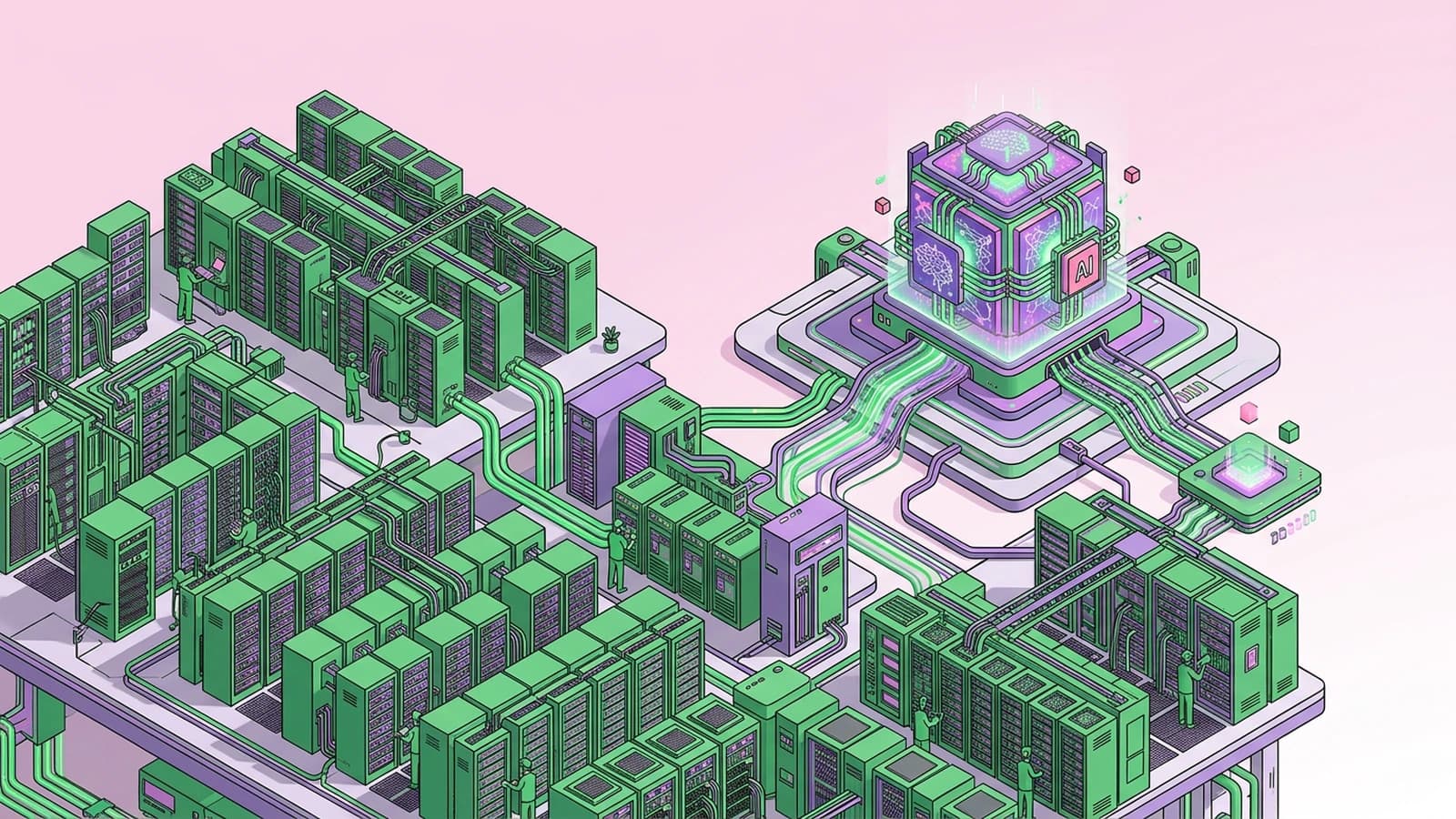
Global enterprises operate under unprecedented pressure to unlock cognitive automation, real-time predictive analytics, and conversational intelligence across vast operational footprints. However, the foundational transactional backends powering Fortune 500 corporations—such as IBM z/OS mainframes, AS/400 systems, SAP R/3 instances, and Oracle 9i/10g clusters—were engineered decades before the advent of modern neural architectures. Orchestrating ai integration for legacy systems for enterprise companies is an intricate technological challenge where a single minute of unexpected database downtime can translate into millions of dollars in financial losses. Decommissioning these core systems is neither practical nor financially responsible; modern enterprise architects must instead build high-throughput, non-invasive bridges that extract business value while preserving mission-critical stability.
Successfully integrating machine intelligence across multi-billion-dollar enterprise ecosystems demands an uncompromising commitment to architectural rigor, rigorous data governance, and high-concurrency event streaming. Enterprise technology leadership must implement decoupled middleware layers that continuously synchronize core business mutations with scalable cloud-native vector pipelines. This allows cognitive models to generate actionable business intelligence without risking core ledger corruption.
Key Strategic Takeaways
- Zero-Downtime Modernization: Enterprise organizations deploy non-invasive Change Data Capture (CDC) pipelines to stream data without taxing operational mainframe CPUs.
- Decoupled Event Streaming: Distributed message brokers like Apache Kafka absorb transactional velocity, buffering fragile legacy databases against high-frequency model queries.
- Enterprise Data Sovereignty: Deploying dedicated private vector clusters and automated PII anonymization ensures full compliance with international regulatory standards.
- Hybrid Cloud Synergy: Enterprises retain audited financial ledgers on-premise while scaling compute-intensive neural workloads across sovereign cloud regions.
Enterprise Architectural Complexity: SAP, AS/400, and Distributed Mainframes
In large enterprise environments, data does not reside in clean, unified cloud databases. Instead, it is distributed across heterogeneous silos: mainframe DB2 tables, specialized SAP ABAP data dictionaries, flat legacy VSAM files, and heavily customized Oracle relational schemas. Decades of uncoordinated customizations and undocumented stored procedures create an intricate web of technical dependencies. Direct querying of these systems by external automated agents causes severe lock contention, query timeouts, and cascading system failures.
To solve this architectural deadlock, enterprise organizations invest in robust back-end web development to construct distributed integration layers, manage connection pooling, and enforce strict API contracts across legacy backends and modern inference microservices.
High-Throughput Change Data Capture and Kafka Event Topologies
The premier architectural pattern for enterprise modernization is asynchronous Change Data Capture (CDC). Using connectors like Debezium or IBM InfoSphere DataStage, organizations capture database transaction logs directly at the storage engine level. This approach extracts insert, update, and delete mutations with near-zero overhead on the primary transaction processing engine. Following official enterprise adoption guidelines such as the Microsoft Cloud Adoption Framework guarantees that event streaming pipelines meet stringent enterprise resilience and disaster recovery standards.
These mutations are published to distributed Apache Kafka clusters partitioned by customer or business domain. Downstream stream-processing applications (using Apache Flink or Kafka Streams) cleanse, denormalize, and enrich the raw payloads. The enriched data is then pushed simultaneously to enterprise analytical data lakes and vector indexing clusters, making live business data accessible to generative models in real time.
Master Framework: AI Integration for Legacy Systems for Enterprise Companies
Rolling out ai integration for legacy systems for enterprise companies requires a multi-stage enterprise program backed by executive sponsorship, cross-functional engineering teams, and strict risk guardrails. Enterprise organizations cannot afford ad-hoc experimentation on production networks. Deployments must adhere to a standardized reference architecture that separates data ingestion, model reasoning, and business execution into independently scalable tiers.
Tier 1: Non-Invasive Data Extraction and Protocol Normalization
The foundational layer deploys lightweight log-scraping agents that monitor legacy write-ahead logs. The extraction engine normalizes legacy encoding standards (such as EBCDIC or specialized character sets) into standardized UTF-8 JSON payloads, validating data against centralized enterprise schema registries.
Tier 2: Cognitive Reasoning and Vector Retrieval Clusters
The intermediate layer maintains dedicated vector databases and semantic search clusters deployed across private enterprise VPCs. When an authorized enterprise application requests intelligence, the retrieval engine gathers relevant contextual chunks, checks access permissions via active directory integration, and passes safe context to dedicated LLM inference endpoints.
To ensure discoverability and internal portal visibility across widespread corporate web applications, technical teams frequently implement complete technical SEO solutions across knowledge bases, API developer portals, and documentation hubs.
Enterprise Integration Architecture Comparison
| Enterprise Integration Pattern | Target Legacy Infrastructure | Throughput Capacity | Operational Downtime | Compliance Governance |
|---|---|---|---|---|
| Log-Based CDC + Kafka | IBM DB2, Oracle Exadata, SAP HANA | 50,000+ msg / sec | Zero Downtime | Full Immutable Auditability |
| API Gateway Proxy Wrapper | AS/400, Windows Server 2008, SOAP | 5,000 msg / sec | Zero Downtime | Role-Based Access Control |
| Batch ETL Semantic Sync | Teradata, SAS Datasets, Flat Files | Nightly Bulk (TB scale) | Off-Peak Only | Encrypted Transit & At Rest |
| Wholesale Cloud Replatforming | Proprietary Mainframe Cores | High Post-Migration | Significant Business Risk | Complex Migration Audits |
Enterprise Data Governance and Role-Based Access Control (RBAC)
In a Fortune 500 company, data access is strictly governed by organizational hierarchy, regulatory jurisdictions, and commercial confidentiality. An AI assistant deployed across an enterprise cannot be permitted to surface executive compensation records to frontline support agents or disclose confidential merger documents across departments. Enterprise legacy integration must enforce role-based access control (RBAC) at the embedding and retrieval layer.
By attaching cryptographic metadata tags (such as department ID, security clearance level, and geographic jurisdiction) to every vector chunk during indexing, the retrieval pipeline enforces deterministic security filters. When an employee queries the system, the model's retrieval context is strictly filtered to chunks matching the user's verified enterprise identity, preventing data leakage while maintaining full compliance.
5-Step Implementation Roadmap for Enterprise Architecture Teams
- Form an Enterprise Modernization Center of Excellence (CoE): Unite enterprise architects, security officers, mainframe operators, and business stakeholders into a unified governance body.
- Establish Non-Invasive CDC Data Pipelines: Deploy log-based extraction agents across primary databases to stream real-time operational events into Kafka without production latency impact.
- Deploy Private Vector and Hybrid Retrieval Engines: Assemble high-availability vector database clusters across dedicated cloud VPCs, enforcing strict encryption in transit and at rest.
- Implement Granular Access and Safety Filters: Integrate enterprise SAML/OAuth identities with vector search filtering to ensure strict data entitlement boundary enforcement.
- Consult Regional Regulatory Integration Blueprints: Review detailed US enterprise AI integration strategies to align architectural frameworks with federal cybersecurity mandates and industry-specific compliance requirements.
Real-World Global Enterprise Case Studies
A Tier-1 global logistics conglomerate operating in 35 countries maintained an IBM z15 mainframe managing container routing, customs clearance, and global bill-of-lading documents. Dispatchers spent an average of forty-five minutes resolving customs exceptions by cross-referencing twenty different terminal screens. Engineers deployed an asynchronous CDC pipeline using Kafka that streamed shipment status updates into an isolated vector database. An AI dispatch copilot now presents instant shipment summaries, identifies regulatory compliance gaps, and recommends optimal re-routing paths. Customs clearance velocity surged by 52%, saving over $14M in annual port demurrage penalties.
A multinational financial services institution with over $400B in assets under management operated a heavily customized SAP banking backend dating back to 2004. Loan processing workflows required manual verification across twelve disparate databases, taking an average of fourteen business days per commercial applicant. By implementing a secure API wrapper and private RAG pipeline, the bank automated document extraction, debt covenant analysis, and risk scoring. Commercial loan origination cycle times dropped from two weeks to under thirty-six hours, driving a 31% expansion in lending book volume without increasing operational headcount.
Five Enterprise Architectural Pitfalls to Avoid
- Direct Mainframe Query Ingestion: Allowing autonomous cognitive models to execute ad-hoc SQL queries against live OLTP mainframes causes severe lock contention and catastrophic outages.
- Ignoring Schema Drift Across Silos: Legacy database changes made by operational teams without updating vector ETL pipelines lead to semantic hallucinations and silent data corruption.
- Public Cloud Boundary Breaches: Routing enterprise transactional payloads through public multi-tenant AI endpoints violates international data protection regulations and intellectual property safeguards.
- Underestimating Change Management: Introducing cognitive tools without comprehensive employee training and change management leads to internal adoption resistance and failed software investments.
- Siloed departmental Deployments: Allowing business units to purchase isolated AI tools creates fragmented data islands that undermine enterprise-wide visibility and governance.
Enterprise Operational Resilience and Long-Term Scalability
- Multi-Region High Availability: Deploy redundant vector database nodes and API gateways across geographically separated cloud availability zones with automated failover.
- Automated Drift and Latency Telemetry: Monitor inference latency, token consumption, and model response drift using enterprise APM platforms like Datadog, Dynatrace, or OpenTelemetry.
- Continuous Penetration Testing: Subject AI integration middleware to regular white-hat penetration testing to identify prompt injection vulnerabilities and data exfiltration paths.
- Comprehensive Model Lifecycle Governance: Establish structured model versioning, regression testing, and rollback procedures to ensure updates never disrupt critical business operations.
Conclusion and Enterprise Executive Strategy
High-Concurrency Lock Mitigation and Transaction Buffer Design
In global enterprise environments, mission-critical relational databases operate under constant write pressure. When multiple automated intelligence subroutines attempt to query live transactional tables concurrently, database engines experience severe row and table lock escalation. Unchecked lock contention in an SAP or Oracle cluster can halt production assembly lines, delay payment processing, and crash customer-facing web portals.
Enterprise architects mitigate this vulnerability by implementing multi-tiered transaction buffering. Read operations from cognitive agents are strictly routed to geographically distributed read-only replica pools refreshed via asynchronous log replication. Furthermore, any automated write recommendations generated by decision models are queued in durable message brokers with strict rate limiting, ensuring that updates are committed in controlled micro-batches during minor dips in operational transaction volume.
Additionally, circuit breakers monitor database connection pools and CPU utilization in real time. If legacy database query latencies exceed established service-level agreements (such as 250 milliseconds), the middleware gateway automatically throttles non-essential AI inference requests and falls back to deterministic rule-based responses, guaranteeing that core transactional processing remains uncompromised under all operating conditions.
Enterprise legacy modernization is not about discarding the dependable transactional engines that have anchored corporate success for decades. True digital transformation lies in building high-speed cognitive bridges that turn accumulated enterprise data into real-time competitive advantage.
By deploying non-invasive Change Data Capture, distributed event topologies, and bulletproof security controls, enterprise leadership can unlock the full power of artificial intelligence while safeguarding transactional integrity. The modern enterprise wins not by abandoning its history, but by making it intelligently actionable.
Frequently asked questions
Yes. Enterprises achieve zero-downtime AI integration using log-based Change Data Capture (CDC). CDC agents read transaction write-ahead logs directly at the storage tier, streaming mutations into Apache Kafka without placing computational stress on production mainframe processors.
Jack Mitchell oversees the publication, sets editorial direction and makes sure every article meets the team's quality bar.