Which Is an Example of Mediated Communication and Social Media?
Mediated communication refers to any interaction that takes place through a technological channel rather than face-to-face. Instead of speaking directly in the same physical space, people use tools like phones, email, video calls, and social media platforms to exchange messages. Social media is one of the clearest and most powerful examples of mediated communication, connecting billions of people through posts, comments, direct messages, and live streams across time and distance.
Quick Answer: An example of mediated communication and social media is sending a direct message on Instagram, commenting on a Facebook post, or joining a live stream. These interactions happen through a digital platform rather than face-to-face, making social media a prime example of technology-mediated human communication.
How WebPeak Can Help
Brands that understand mediated communication can use it strategically to connect with audiences, and WebPeak helps make those connections meaningful. Their team shapes authentic conversations through Social Media Management, crafts clear on-brand messaging with Content Writing, and builds the digital platforms that power these interactions through Web Development. This ensures every mediated touchpoint strengthens the relationship between brand and customer.
Understanding Mediated Communication
Mediated communication is defined by the presence of a channel or medium between the sender and receiver. This medium can shape, filter, or enhance the message. Unlike direct face-to-face conversation, mediated communication often removes physical cues like body language, though modern platforms attempt to restore them through video, emojis, and reactions.
The concept has existed for centuries, from letters to telegraphs to telephones. However, social media represents the most complex and interactive form yet, blending text, image, video, and real-time feedback into a single space accessible to global audiences instantly.
Common Examples on Social Media
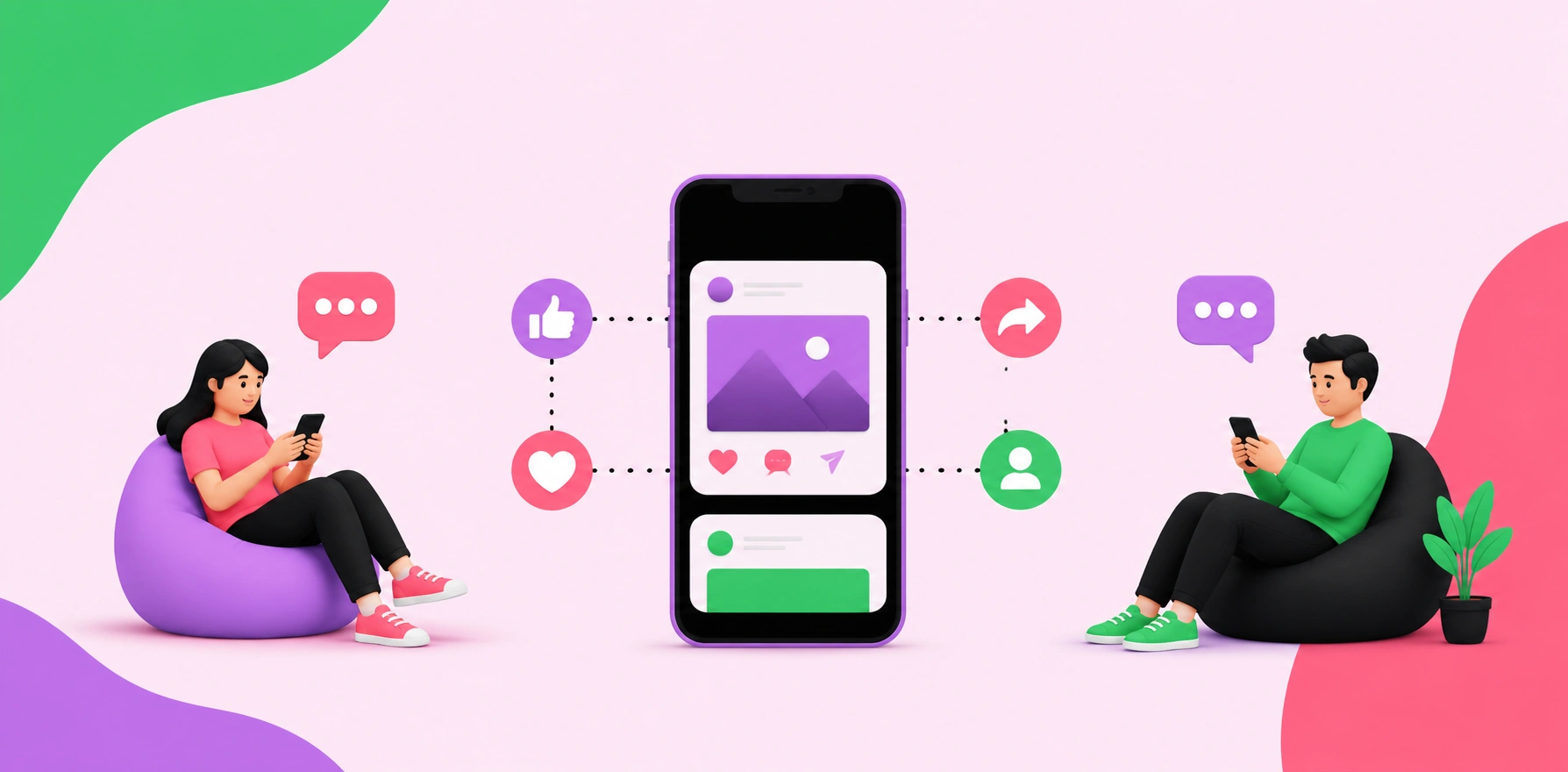
Social media offers many forms of mediated communication, each serving different needs. Recognizing these examples clarifies how the concept applies in everyday digital life:
- Direct Messages: Private one-to-one conversations through platforms like Instagram or Facebook Messenger.
- Public Comments: Responses to posts that create open, visible dialogue among many users.
- Live Streaming: Real-time video broadcasts where creators interact with viewers through chat.
- Group Discussions: Communities and groups where members exchange ideas around shared interests.
- Reactions and Shares: Nonverbal signals like likes and shares that communicate sentiment quickly.
Each of these examples demonstrates how technology sits between communicators, shaping how messages are sent, received, and interpreted.
Mediated vs. Face-to-Face Communication
To fully understand why social media is a defining example of mediated communication, it helps to compare it with direct interaction. The table below highlights key differences that influence how people connect online.
| Aspect | Face-to-Face Communication | Social Media (Mediated) |
|---|---|---|
| Channel | Direct, physical presence | Digital platform or app |
| Nonverbal Cues | Full body language and tone | Limited; emojis, reactions, video |
| Reach | Local, small audience | Global, potentially massive audience |
| Timing | Real-time only | Real-time or asynchronous |
This comparison shows that while social media sacrifices some richness of in-person cues, it dramatically expands reach, flexibility, and accessibility, making it a uniquely powerful communication medium.
Why Mediated Communication Matters Today
The scale of mediated communication through social media is staggering. According to DataReportal, the average user spent roughly 2 hours and 23 minutes per day on social media in 2024, highlighting how central these mediated interactions have become to daily life. This constant connectivity reshapes how people build relationships, consume information, and make decisions.
Additionally, Pew Research Center has consistently found that a majority of adults in many countries use social media to stay in touch with friends and family, proving that mediated channels now rival or exceed traditional in-person contact for maintaining relationships. My analysis is that mediated communication has become the default mode of human connection for much of the world, which means brands and individuals who master its nuances, such as tone, timing, and visual cues, hold a significant advantage in building trust and influence online.
Key Takeaways
- Mediated communication happens through a technological channel rather than face-to-face.
- Social media is a leading example, including DMs, comments, and live streams.
- Mediated channels limit some cues but vastly expand reach and flexibility.
- Billions of people rely on mediated communication daily.
- Mastering mediated communication is essential for modern brand relationships.
Frequently Asked Questions
What is mediated communication in simple terms?
Mediated communication is any interaction that happens through a technology or medium instead of face-to-face. Examples include phone calls, text messages, video chats, and social media posts. A channel sits between the sender and receiver, shaping how the message is delivered and understood.
Why is social media considered mediated communication?
Social media is mediated communication because interactions occur through digital platforms rather than in person. When users message, comment, or stream, technology acts as the intermediary, transmitting messages across distance and time while shaping tone through features like emojis, reactions, and video.
What are examples of mediated communication?
Examples include emails, phone calls, video conferences, text messages, and social media interactions like posts, comments, and direct messages. Any communication requiring a technological device or platform to connect people who are not physically together qualifies as mediated communication.
How does mediated communication affect relationships?
Mediated communication allows people to maintain relationships across distances and time zones, increasing connectivity. However, it can reduce nonverbal cues, sometimes causing misunderstandings. When used thoughtfully, it strengthens relationships by enabling frequent, convenient contact that would otherwise be impossible.
Is video calling a form of mediated communication?
Yes, video calling is mediated communication because it uses technology to connect people who are not in the same physical space. It restores many nonverbal cues like facial expressions and tone, making it one of the richest forms of mediated interaction available today.
Conclusion
Social media stands as one of the clearest and most influential examples of mediated communication, connecting billions through digital channels every day. Understanding how these mediated interactions work empowers brands to communicate more effectively and authentically. For businesses that want to turn mediated communication into meaningful engagement, partnering with experts like WebPeak provides the strategy and platforms needed to build lasting digital relationships.