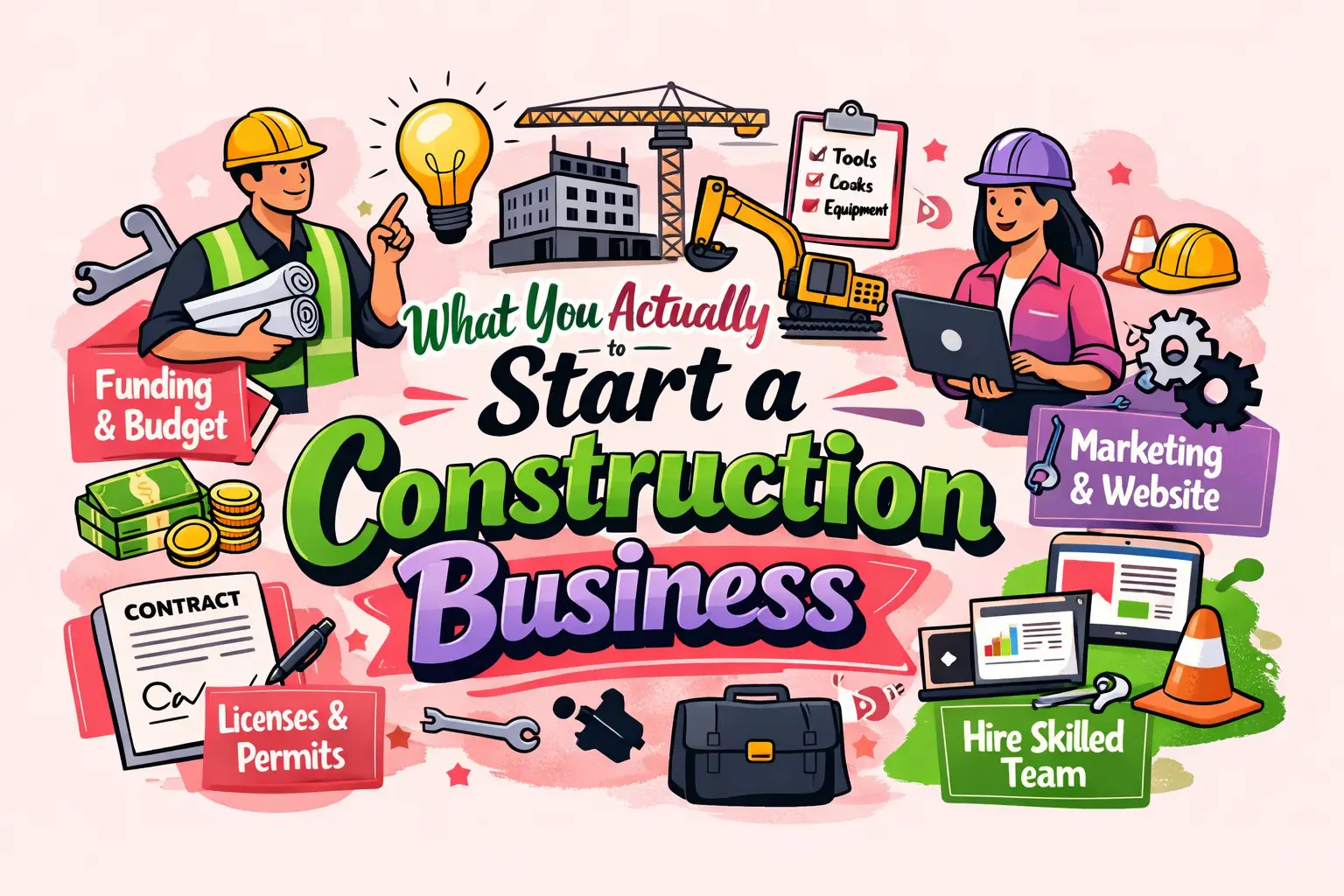
What You Actually Need to Start a Construction Business
Starting a construction business does not have to be overwhelming if you focus on the essentials: a clear plan, the right licenses and insurance, and a solid financial setup. Build strong supplier relationships, maintain a reliable supply chain, and invest in marketing through your website, social media, and local networking to attract clients and grow your reputation.
Essential Legal and Business Foundations
Starting a construction business requires careful legal and operational planning, including decisions on structure, registration, licensing, certifications, liability, and insurance to build a solid foundation.
Choosing Your Business Structure
Choosing the right business structure is an important decision for your construction company. A sole proprietorship offers simplicity but leaves you personally liable for debts. A partnership allows shared control and responsibilities. Many businesses choose a limited liability company (LLC) or corporation to protect personal assets, though these add complexity in management and taxation. The right structure depends on your needs and long-term goals.
For those leaning toward an LLC, it's important to review the filing process and ongoing requirements in the state where you plan to register, as they vary by state. For example, setting up an LLC in Florida typically costs around $125, while states like Texas and Massachusetts generally have higher formation costs.
Registering Your Construction Company
To legally operate, you must register your construction company. This usually involves choosing a business name, ensuring it's unique within your state, and filing necessary paperwork with your state's business authority. Often, this is the Secretary of State. The process might require articles of incorporation for corporations or articles of organization for LLCs. Don't forget to secure a federal Employer Identification Number {" "} (EIN) from the IRS, as it allows you to hire employees and manage taxes. You might also need a state tax identification number. Remember, proper registration is key to a compliant and recognized business.
Licensing and Certifications
Having the right licenses and certifications is vital in the construction industry. You'll need a general contractor license, which involves passing examinations and meeting experience criteria specified by your state. Certain specialties, such as plumbing and electrical, require additional certifications. Stay informed about local, state, and federal regulations that could affect your licensing needs. Many regions also mandate continuing education to keep licenses current. Ensure you research the exact requirements for your area to avoid delays or penalties. This will not only build credibility but also provide legal protection for your company.
Understanding Liability and Insurance
Insurance protects your business from unexpected damages and liabilities. General liability insurance covers property damage and injury claims, while workers' compensation is often required to cover employee injuries. Builders' risk insurance protects structures under construction from damage such as fire or weather. Assess your risks to determine the right coverage, and consider consulting an advisor familiar with construction to strengthen your protection.
Core Financial Planning Tools
Starting a construction business {" "} requires careful financial planning, including assessing start-up costs, setting up banking, and exploring funding options.
Budgeting for Start-Up Costs
Budgeting is the backbone of your financial planning. Estimate costs for equipment, licenses, insurance, and technology, and account for indirect expenses like marketing and salaries. Set aside a contingency fund for unexpected costs and categorize spending into priorities. Using budgeting tools can help track expenses and keep your plan on course.
Setting Up Business Banking
Separating personal and business finances is essential. Open a business account to simplify bookkeeping and improve clarity. Compare banks based on fees, services, and local access. Consider a business credit card to track expenses and build credit. Linking your account to accounting software can streamline tracking and reporting.
Securing Funding or Loans
Funding your new venture is often a multi-step process. Explore various options like small business loans, private investors, or grants. Each has its pros and cons, so it's important to analyze what aligns best with your needs. Small Business Administration (SBA) loans are a popular choice due to their supportive terms for new businesses.
Creating a strong business plan helps convince lenders or investors of your venture's potential. Include solid financial projections, a clear plan for revenue building, and risk assessments. Additionally, exploring government grants can be beneficial; these often support specific industries or start-up plans but might come with specific requirements for eligibility.
Building Your Team and Operations
A construction business thrives on having a solid team and efficient operations. From hiring skilled workers to establishing safety practices and selecting dependable partners, each element plays a critical role. Success depends on balancing expertise, safety, and reliable supply chains.
Hiring Skilled Workers
When building your team, focus on hiring individuals with the right experience and skills. Assess technical ability, certifications, and cultural fit during interviews. Use job platforms, referrals, and industry events to find candidates. Offering competitive pay and training helps attract and retain talent while building a team that grows with your business.
Developing Workplace Safety Practices
Safety should be a top priority in any construction business. Implement comprehensive safety protocols that include regular training sessions. Equip your team with appropriate safety gear {" "} and emphasize its use on every job site. This not only safeguards your employees but also protects your business from costly legal issues.
Regular safety audits and drills keep standards in check and prevent complacency. Encourage workers to report hazards without fear of repercussion, fostering an environment where safety is everybody's responsibility. Adhering to industry regulations and maintaining safety certifications helps instill trust among clients and employees alike.
Selecting Reliable Partners and Suppliers
Choosing trustworthy partners and suppliers is crucial to seamless operations. Vet potential partners thoroughly by checking references and past project outcomes. Reliable suppliers should offer high-quality materials and adhere to delivery schedules to keep your projects on track. This may also include sourcing specialized equipment such as American-made lathes , which are often associated with durability and precision in fabrication work.
Establishing strong partnerships can lead to better pricing, priority service, and a smoother workflow. Open, clear communication and regular reviews of performance keep partnerships healthy and mutually beneficial. By cultivating dependable relationships, you create a robust supply chain that contributes to your business's overall success.
Marketing and Growing Your Construction Business
Establishing a strong presence and fostering growth in the construction industry involves creating a compelling digital presence, building industry connections, and effectively displaying your work portfolio. Each of these factors can significantly contribute to your business's growth and visibility.
Building an Effective Website
Your website acts as your digital storefront and first impression. Make sure it's visually appealing and user-friendly. Navigation should be straightforward so potential clients can easily find important information like services, contact details, and past projects. Include high-quality images that showcase your work and clearly represent your brand.
Implement SEO strategies to improve your website's visibility in search engine results. Use relevant keywords related to construction, location, and specialized services to attract local customers. Providing valuable content, such as blog posts or FAQs, can also engage visitors and improve your site's ranking. You can also use these touchpoints to improve SMS and push marketing {" "} by capturing leads and re-engaging potential clients with timely updates and offers.
Consider integrating customer testimonials and case studies to build trust and credibility. By sharing positive experiences and successful projects, you can enhance your reputation and attract new clients.
Networking in the Industry
Networking is essential for building connections and growing your construction business. Attend industry events and join professional associations to gain insights and credibility. Partner with local businesses to generate referrals and expand opportunities. Maintain an active presence on platforms like LinkedIn to connect, share updates, and stay visible within the industry.
Showcasing Previous Projects
Showcasing completed projects helps attract clients and demonstrate your capabilities. Build a portfolio with clear descriptions and strong visuals. Share your work on social media to increase reach and engagement. Consider virtual tours or video walkthroughs to give potential clients a more immersive view of your projects.
Building a Strong Foundation for Long-Term Success
Starting a construction business comes down to getting the fundamentals right, from legal setup and financial planning to building a skilled team and a consistent pipeline of work. Focus on strong systems, reliable partnerships, and clear marketing, and you will put yourself in a position to grow steadily, win better projects, and build a business that lasts.