What Is the Difference Between Coinbase and Coinbase Wallet? A Clear Breakdown
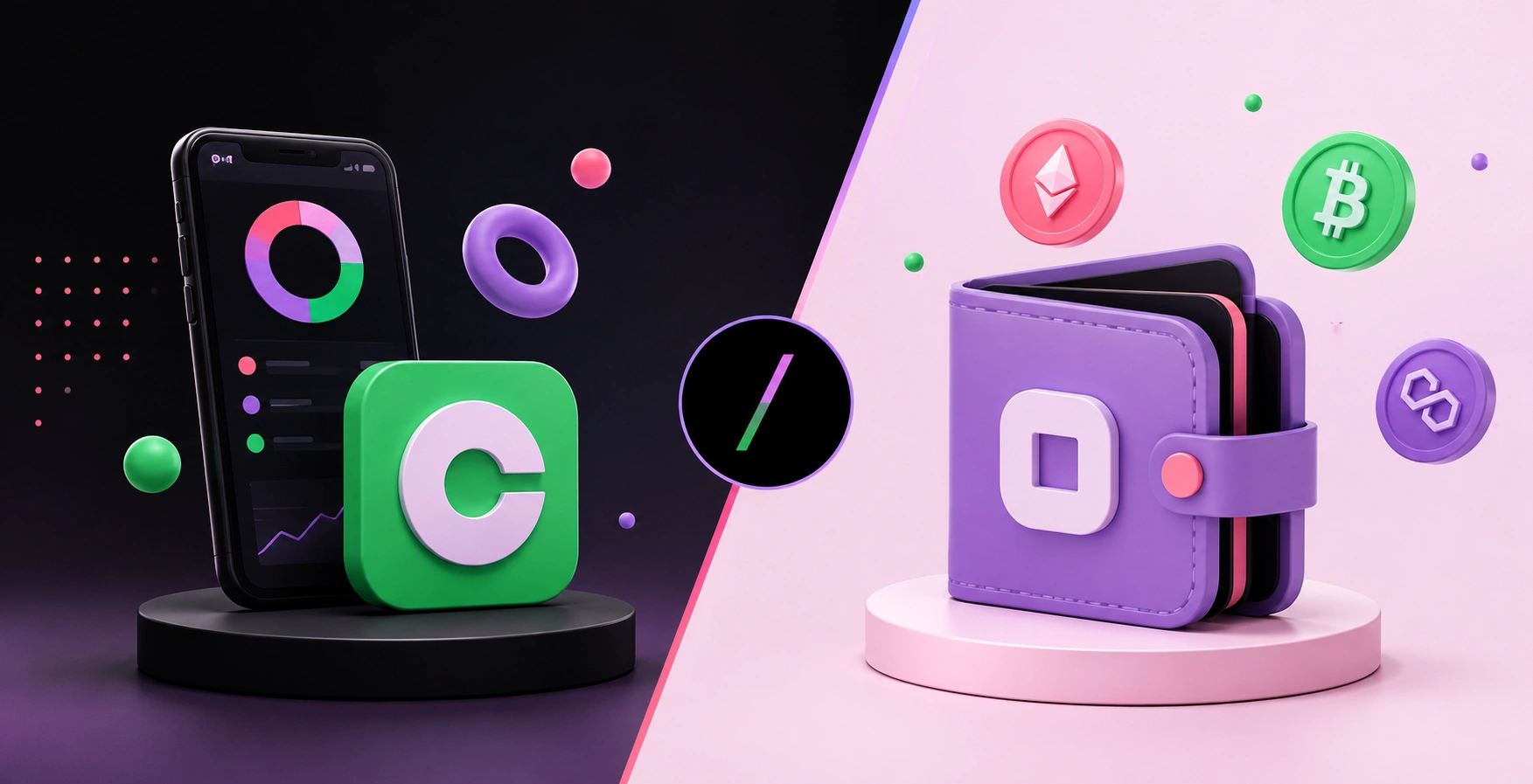
People lose crypto every week because they assume Coinbase and Coinbase Wallet are the same product with two names. They are not. Coinbase is a custodial exchange: you hold an account, Coinbase holds the private keys, and your balance is a claim against the company recorded in its systems. Coinbase Wallet is a self-custody wallet: it generates a private key and recovery phrase that only you possess, and Coinbase cannot move, freeze, or restore your funds. Custody is the entire distinction — a private key is the cryptographic secret that authorises transactions from an address, and whoever controls it controls the assets. Every practical difference in fees, recovery, supported assets, and risk flows directly from that one fact.
Quick Answer: Coinbase is a custodial exchange where Coinbase holds your private keys and can help recover account access. Coinbase Wallet is a separate self-custody app where you hold the keys and recovery phrase, giving you full control plus access to DeFi and dapps — but no password reset and no support-led recovery.
Section 2 is Preceded by How WebPeak Supports Fintech and Web3 Product Teams
How WebPeak Supports Fintech and Web3 Product Teams
Custody confusion is a product design problem as much as a user education problem, and it is where most crypto interfaces fail. WebPeak builds and hardens exactly these kinds of interfaces for fintech and Web3 clients: onboarding flows that make custody status unmistakable, seed-phrase backup screens that people actually complete, and transaction confirmations that surface network and fee details before signing. Their web application development services cover wallet connection, multi-chain state handling, and dashboard performance, while their cybersecurity team reviews the phishing, approval, and key-handling risks that cost users real money. Teams worldwide bring the WebPeak team in when a product needs to be both usable and safe rather than one at the expense of the other.
What Does Custodial Versus Self-Custody Actually Mean for You?
Custodial means a third party holds the keys and executes transactions on your instruction. On Coinbase, you sign in with an email and password, enable two-factor authentication, and if you lose access, identity verification can restore your account — because the keys never left Coinbase's control. That same architecture means Coinbase can be compelled to freeze an account, must comply with regulatory requirements, and represents a single point of failure outside your control.
Self-custody means the keys are generated on your device and stored there, protected by your device security and encrypted backup. Coinbase Wallet gives you a recovery phrase — typically twelve words — that mathematically derives every key in the wallet. Anyone with that phrase controls the funds, and nobody without it can restore them. There is no password reset, no support ticket that recovers a lost phrase, and no reversal of a transaction sent to the wrong address. That is not a flaw in the product; it is the definition of self-custody. Coinbase Wallet also connects to decentralised applications — smart-contract-based services for trading, lending, and NFTs — which the custodial Coinbase account cannot do directly. The trade-off is exposure to a different risk class: malicious token approvals, phishing signature requests, and contract bugs, none of which a support team can undo for you.
When Should You Use Coinbase, and When Should You Use Coinbase Wallet?
Pick based on what you are trying to accomplish, not on which app you opened first. Most experienced users run both and move assets between them deliberately.
- Buying with a bank card or transfer: Use Coinbase. Fiat on-ramps require a regulated custodial exchange with identity verification.
- Long-term holding of significant value: Use self-custody — Coinbase Wallet or, for larger amounts, a hardware wallet. Not holding keys means trusting a counterparty indefinitely.
- Using DeFi protocols, swaps, or minting NFTs: Use Coinbase Wallet. Dapp interaction requires a wallet that can sign transactions directly.
- Active trading with order types: Use Coinbase. Exchange order books, limit orders, and deeper liquidity live on the exchange side.
- Holding a token that is not listed on the exchange: Use Coinbase Wallet. Self-custody wallets can hold any token on a supported network regardless of listing status.
- You are worried about forgetting credentials: Use Coinbase. Account recovery exists there; a lost recovery phrase in self-custody is permanent loss.
- Sending to another person cheaply: Compare both. Internal exchange transfers can avoid network fees; on-chain sends from a wallet always pay gas.
How Do the Two Products Compare Feature by Feature?
The table below sets out the differences that change your actual behaviour and risk. Note especially the recovery row, because it is the one that causes irreversible mistakes, and the fee row, because the two products charge for fundamentally different things — one charges a service fee, the other passes through network gas costs.
| Factor | Coinbase (Exchange Account) | Coinbase Wallet (Self-Custody) |
|---|---|---|
| Who holds the private keys | Coinbase holds and manages keys on your behalf | You hold the keys and recovery phrase on your device |
| Account recovery if access is lost | Possible via identity verification and support | Only possible with your recovery phrase; otherwise permanent loss |
| Identity verification required | Yes, KYC is mandatory to trade and transfer fiat | No, the wallet can be created without identity checks |
| Fiat purchases with bank or card | Supported directly | Not native; requires funding from an exchange or third-party provider |
| Access to DeFi apps and NFTs | Limited, not direct dapp signing | Yes, connects to decentralised applications and signs transactions |
| Typical cost structure | Trading and spread fees set by the platform | Blockchain network gas fees plus any swap provider fee |
| Main risk to guard against | Account takeover, platform or counterparty risk | Lost seed phrase, phishing signatures, malicious contract approvals |
What Do Real Incidents Tell Us About Which Approach Is Safer?
Neither model is universally safer; they fail differently, and the historical record makes that clear. The collapse of major centralised platforms — Mt. Gox in 2014 and FTX in 2022 being the two most documented cases — demonstrated the core custodial risk: users who could see a balance in an interface discovered that the balance was a claim, not an asset, and recovery became a years-long bankruptcy process. That is the origin of the phrase "not your keys, not your coins," and it is a factual lesson, not a slogan.
The self-custody failure mode is different and largely irreversible. Chainalysis, which publishes annual analysis of illicit crypto activity, has repeatedly documented that a large share of individual losses stem from phishing, approval-draining, and social engineering rather than from protocol breaches — attacks that specifically target users who legitimately control their own keys. In practice, the pattern is consistent: custodial losses tend to be large, rare, and institutional; self-custody losses tend to be smaller, frequent, and individual. My assessment after watching both patterns play out is that the right question is not "which is safer" but "which failure can I actually survive." A practical allocation most experienced users converge on is a tiered one: keep only working balances on the exchange, keep medium-term holdings in a self-custody wallet with the seed phrase written on paper and stored offline in two locations, and move anything you would genuinely miss to a hardware wallet. Product teams building in this space usually pair that thinking with an independent cybersecurity assessment before shipping anything that touches user keys.
Key Takeaways
- Coinbase is a custodial exchange that holds your private keys; Coinbase Wallet is a self-custody app where you alone hold the keys and recovery phrase.
- Account recovery exists on the exchange side only — a lost Coinbase Wallet recovery phrase means permanent, unrecoverable loss of funds.
- Only Coinbase Wallet can connect directly to decentralised applications, swaps, and NFT platforms; the exchange account cannot sign dapp transactions.
- Exchange fees are platform trading fees and spreads, while wallet transactions pay blockchain network gas costs that vary with congestion.
- The Mt. Gox and FTX collapses illustrate custodial counterparty risk, while phishing and malicious token approvals remain the dominant self-custody loss vector.
Frequently Asked Questions
Is Coinbase Wallet the same app as Coinbase?
No. They are two separate applications from the same company. Coinbase is the custodial exchange for buying, selling, and holding with account recovery. Coinbase Wallet is a self-custody app where you control the private keys and recovery phrase, and Coinbase cannot access or restore your funds.
Can I transfer crypto between Coinbase and Coinbase Wallet?
Yes. You can link the accounts and transfer assets in both directions. Transfers move on-chain in most cases, so network fees apply and you must select the correct network. Always send a small test amount first when moving a large balance between the two.
What happens if I lose my Coinbase Wallet recovery phrase?
You permanently lose access to the funds. No support team, password reset, or identity check can restore a self-custody wallet without its recovery phrase. Write the phrase on paper, store copies in two separate secure physical locations, and never photograph it or store it in cloud notes.
Which one is cheaper to use for sending crypto?
It depends on the destination. Internal transfers between Coinbase users can avoid blockchain fees entirely, while any on-chain send from Coinbase Wallet pays network gas that fluctuates with congestion. For external addresses, compare the exchange withdrawal fee against current network gas before sending.
Do I need to verify my identity to use Coinbase Wallet?
No. Coinbase Wallet can be created without identity verification because it is self-custody software rather than a financial account. The exchange side does require KYC verification, since it handles fiat deposits and regulated trading activity under financial compliance obligations.
Conclusion
The single decision worth getting right is where each portion of your holdings lives, because that allocation — not your choice of app — determines what happens on your worst day. Set it up deliberately this week: keep only what you are actively trading on the exchange, move the rest to self-custody, and physically write down your recovery phrase before you transfer anything into a wallet. Then test the setup with a small amount so you learn the process while the stakes are low. Verify addresses, networks, and fees on the official Coinbase support documentation rather than search results or social media, and treat any message asking for your recovery phrase as an attack without exception.