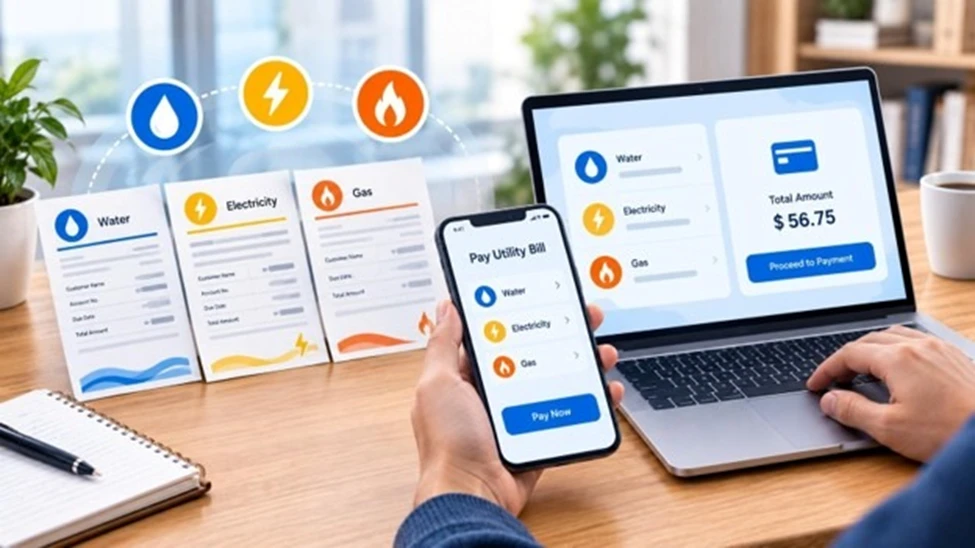
An electricity bill is due tomorrow, but your day is already packed with work, commuting, and other responsibilities. Years ago, paying it might have meant visiting a bank or service center. Today, in many countries, the same task can be completed from a phone or computer in just a few steps.
As financial and public services have become more digital, online bill payment has turned many routine payments into remote transactions. Consumers can now use banking apps, utility websites, digital wallets, and specialized payment platforms to manage recurring expenses without visiting a physical location.
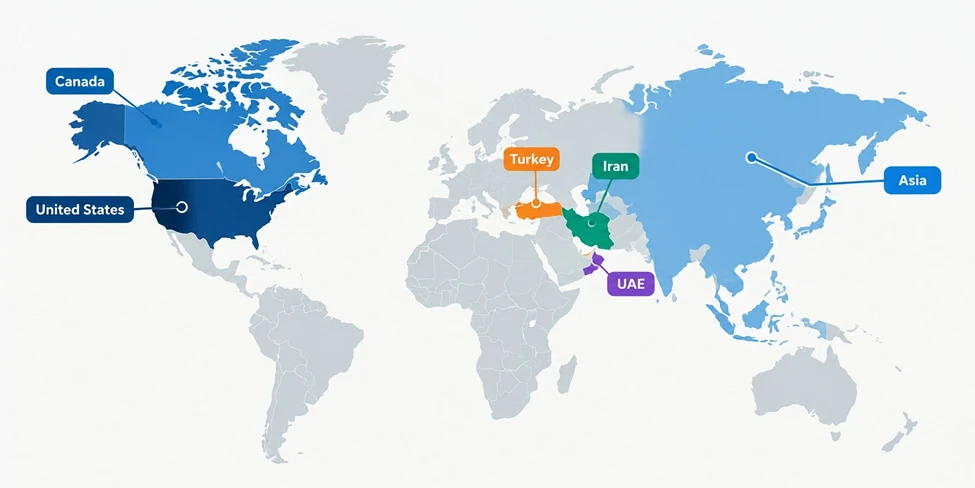
This article explains how online bill payments work, which types of bills can usually be paid digitally, and how the infrastructure for electronic bill payment has developed in the United States, Canada, Asia, Turkey, Iran, and the UAE.
What Is Online Bill Payment and How Does It Work?
Online bill payment means settling a bill through an internet-connected service rather than paying it in person. Depending on the country and service provider, users may pay through online banking, mobile banking, a biller's website or app, a digital wallet, or an online payment platform.
The exact process varies, but a typical bill payment online journey follows four basic stages:
Bill → Enter Information → Payment → Confirmation
In practice, users normally:
1. Open their bank, utility provider, or bill payment service;
2. Select the relevant bill or service provider;
3. Enter the required account, customer, subscriber, bill, or payment information;
4. Review the bill amount or outstanding balance;
5. Choose an available payment method;
6. Confirm the transaction; and
7. Save or review the payment receipt and payment history.
The required information differs from one market to another. A utility company may ask for an account number or subscriber number, while another system may use a bill ID, payment ID, mobile number, customer reference, or another identifier.
Users may also be able to pay with a bank account, debit card, credit card, or stored wallet balance, depending on the provider and local payment infrastructure.
The main advantage is convenience. People can pay bills online without travelling to a bank or service center and can often check balances, payment status, previous transactions, and receipts in the same place. Some online payment services also offer reminders or automatic recurring payments, which can make monthly bill management easier.
However, users should still confirm the bill details before submitting a payment and keep the receipt until the payment has been correctly reflected in the biller's system.
Which Bills Can Be Paid Online?
The types of bills available for digital payment depend on the country, utility provider, and payment network, but many common household and recurring expenses can now be managed online.
For example, users in many markets can pay utility bills online, including:
· Electricity bills;
· Water bills;
· Natural gas bills;
· Landline telephone bills;
· Mobile phone bills;
· Internet and television bills;
· Municipal or government charges where supported;
· Road tolls and transport-related charges in some countries; and
· Insurance, tax, tuition, or other recurring payments on supported platforms.
An online utility bill payment system may be provided directly by the utility company, through a bank, or through a third-party platform. In other cases, utility bill payment online is part of a broader banking or digital-wallet service.
This means there is no single global process. One user may pay an electricity bill through mobile banking, while another may open the electricity provider's website, enter an account number, and pay by card. A third person may use a unified bill payment platform to view and manage several bills from one dashboard.
Availability also matters. Although digital options are widespread, it would be inaccurate to assume that every bill from every provider can be paid through every platform. Users should check which billers, payment methods, transaction limits, fees, and processing times are supported by the service they choose.
How Has Online Bill Payment Evolved Around the World?
Digital bill payment developed gradually alongside electronic banking and the wider digitization of financial services.
Early home-banking services began giving customers remote access to banking functions before widespread consumer internet access. During the 1990s, the growth of the web and electronic commerce created new ways for consumers and businesses to exchange money online. Digital payment companies also emerged during this period; PayPal, for example, was founded in 1998, with its first recorded PayPal transaction taking place in 1999.
As broadband internet, smartphones, banking apps, and digital wallets became more common, paying bills electronically became easier. Instead of relying on a desktop banking website, consumers could increasingly manage payments from mobile devices.
The 2010s brought another shift toward interoperable and centralized payment infrastructure. India, for example, developed Bharat Bill Payment System, now presented under the Bharat Connect brand, to create an interoperable bill-payment ecosystem. Instant-payment networks and account-to-account payment systems also expanded in several markets.
More recently, the trend has moved toward faster and more integrated payments. The Bank for International Settlements has reported continuing growth in cashless payment methods, with fast payments becoming an increasingly important part of retail payment systems in many economies.
The result is not one universal model for digital bill payment, but a combination of bank-based systems, utility portals, mobile wallets, instant-payment networks, and specialized payment platforms.
Online Bill Payment in the United States
In the United States, consumers have several options for online bill pay, including online and mobile banking, direct payments through biller websites and apps, and third-party payment services.
ACH, or the Automated Clearing House network, also plays an important role in electronic payments. Consumers can authorize utility companies, lenders, and other businesses to collect one-time or recurring payments directly from their bank accounts. Many electricity, gas, telecom, and other service providers also operate their own payment portals.
The table below summarizes the main ways consumers can pay bills digitally in the United States:
Online Bill Payment Method in the United States
How Bills Are Paid
Online banking (Online Bill Pay) and banking apps
Add the biller as a payee and make a one-time or scheduled payment from a bank account.
Biller websites and apps
Pay directly through the website or app of an electricity, gas, telecom, credit-card, or other service provider.
ACH and direct debit
Authorize a biller to collect one-time or recurring payments electronically from a bank account.
Third-party bill payment services
Use a third-party platform to find supported billers and manage payments through one interface.
For example, an online bill payment service in the US may allow users to find and pay supported billers without visiting each provider's website separately.
The best payment method depends on the biller, supported payment options, processing time, and any applicable fees.
Online Bill Payment in Canada
Canada also relies heavily on online and mobile banking for everyday bill payments. Customers can generally search for a registered biller through their bank, add the account or reference number shown on the bill, and make a payment directly from their bank account.
Many Canadian financial institutions also support scheduled payments, while pre-authorized debit (PAD) allows customers to authorize recurring withdrawals for expenses such as utility, telecom, insurance, or other regular bills.
The main digital bill-payment methods in Canada include:
Bill Payment Method in Canada
How Bills Are Paid
Online and mobile banking
Add a registered biller, enter the account or reference number, and pay the bill directly from a bank account.
Biller websites and apps
Pay directly through the service provider's website or application using one of its supported payment methods.
Pre-authorized debit (PAD)
Authorize the biller to withdraw payments automatically from a bank account on agreed dates.
Third-party bill payment platforms
Use a supported platform to manage payments to multiple billers through a centralized service.
A bill payment platform in Canada may provide another way to manage supported billers and payment activity from one place.
Government payment services should be distinguished from ordinary household bill-payment systems. For example, the Canada Revenue Agency's My Payment service is intended for eligible payments to the CRA, such as tax-related amounts, rather than electricity, water, or other utility bills.
Overall, Canadian consumers can choose among online and mobile banking, direct biller channels, pre-authorized debit, and supported third-party platforms
Online Bill Payment in Asia, Turkey and the UAE
Asia contains some of the world's largest and most diverse digital-payment markets. The region does not follow one model: countries have developed different combinations of banking networks, mobile wallets, national payment infrastructure, and specialized bill-payment services.
India's Bharat Bill Payment ecosystem is one example of an interoperable system designed to bring multiple billers and payment channels together. In China, digital wallets and super-app ecosystems have also made mobile payments an important part of everyday financial activity.
Turkey
Turkey combines mobile banking, electronic-money services, and instant-payment infrastructure.
The Central Bank of the Republic of Türkiye launched FAST for public use in January 2021. FAST allows participating institutions to process instant retail payments around the clock. Its Easy Addressing System, KOLAS, can also associate accounts with identifiers such as phone numbers, email addresses, and identity information, making account-to-account payments easier to initiate.
For bill-specific services, platforms such as Papara allow users to query and pay supported electricity, water, natural gas, internet, television, and telephone bills. This makes Papara an example of online bill payment in Turkey, alongside banks and other authorized payment providers.
Iran
Iran also has banking applications, utility services, and multi-service payment platforms. Ghabzino is one example of an active platform for online bill payment in Iran, allowing users to inquire about and pay supported utility bills and manage several payment-related services digitally.
United Arab Emirates
The UAE has developed multiple digital payment channels rather than relying on a single bill-payment system.
Aani, launched in 2023 by Al Etihad Payments, is an instant-payment platform designed for fast account-to-account digital transactions. At the same time, individual utility providers and digital wallets offer dedicated bill-payment functions.
Dubai Electricity and Water Authority, for example, supports bill payment through its website, smart app, banks, and other approved digital channels. Digital wallets provide additional options: du Pay is one example of digital bill payment in the UAE, supporting utility payments and other everyday financial services through a mobile app.
Across these markets, the broader trend is similar: banking services, mobile apps, wallets, and instant-payment infrastructure are gradually reducing the number of steps required to manage routine bills.
What Is the Future of Online Bill Payment?
The next stage of online bill payment is likely to focus less on simply moving an existing payment form onto the internet and more on making the whole billing process connected, automated, and easier to manage.
Instant and account-to-account payments are already becoming more prominent in many markets. Digital wallets are also bringing different financial services into a single interface, while request-to-pay technology can allow billers to send a structured payment request directly to a customer's banking or payment application.
Automation is another important development. Instead of manually checking every bill, users may increasingly receive real-time notifications, view upcoming amounts in one dashboard, authorize recurring payments, and track completed transactions automatically.
Authentication may also become more seamless through technologies such as device-based verification and biometrics. At the same time, payment providers will still need to clearly identify the customer, bill, account, or transaction. The exact identifier could be an account number, subscriber number, bill reference, payment ID, mobile number, or another locally supported credential.
For consumers, the practical benefits remain straightforward: faster access to bills, fewer in-person steps, easier payment tracking, and the ability to manage several recurring expenses digitally.
Whether users choose mobile banking, a utility website, an online utility bill payment service, or another online payment platform, they should always check the bill amount and recipient before confirming the transaction. They should also retain the payment confirmation or receipt and verify that the bill has been marked as paid.
In short, the technology behind online bill payments will continue to change, but the basic goal remains the same: making it easier to review, pay, confirm, and track everyday bills through reliable digital channels.