What Is a Social Media URL? A Complete Guide for Brands and Creators
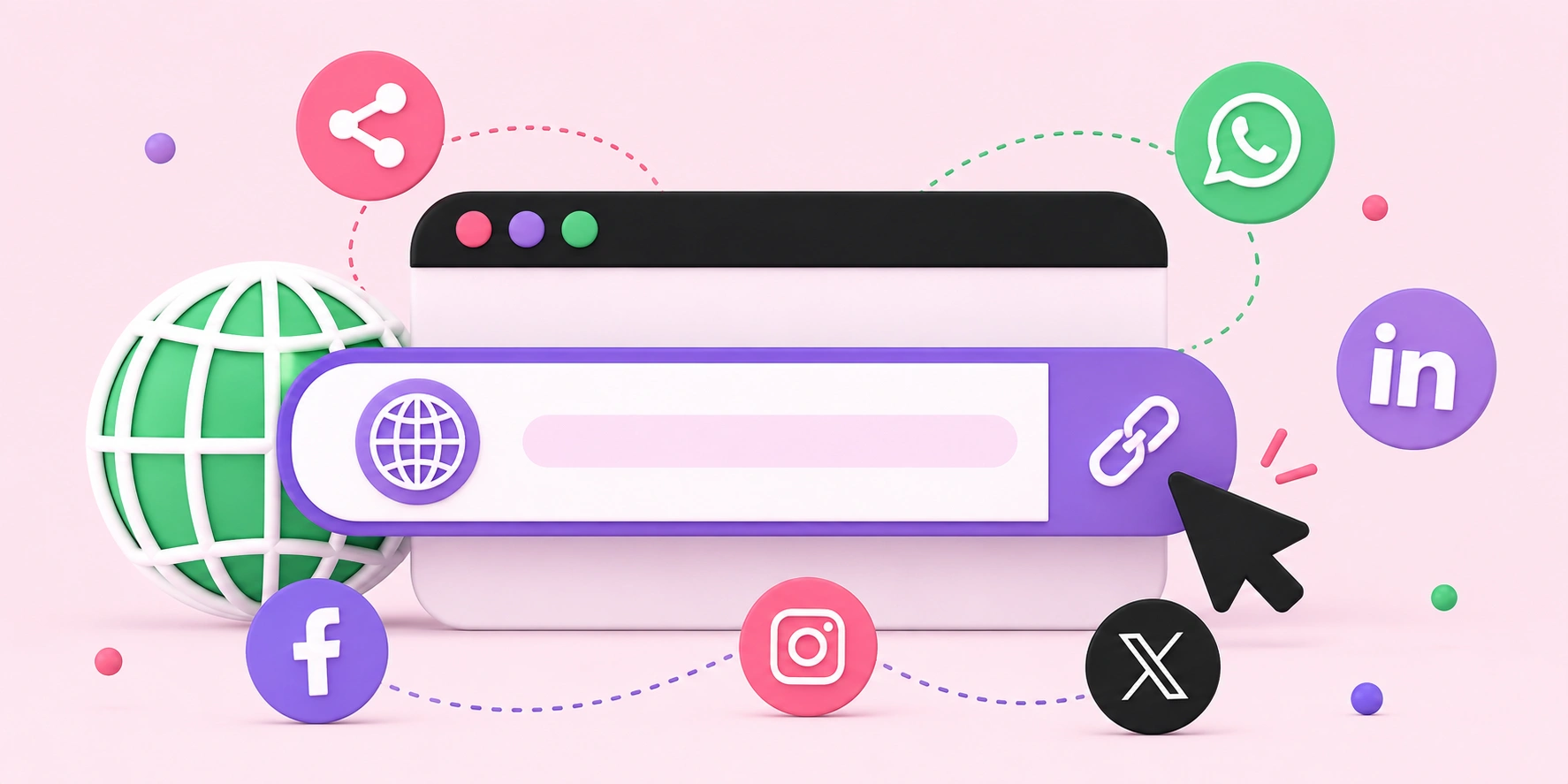
A social media URL is the unique web address that points directly to your profile, page, or content on a platform like Instagram, LinkedIn, Facebook, X, TikTok, or YouTube. For example, linkedin.com/in/yourname or instagram.com/yourbrand is a social media URL. It is more than a string of characters — it is the digital front door customers use to find, verify, and follow you. Getting it right affects discoverability, brand trust, and even how search engines associate your name with your business.
Quick Answer: A social media URL is the unique web link that leads to your specific profile or content on a social platform. It identifies your account, lets others find and share your page instantly, and serves as a clickable destination in bios, ads, email signatures, and search results.
How WebPeak Helps You Build a Stronger Social Presence
Getting your social media URLs consistent across platforms is foundational, but turning those profiles into growth channels takes strategy. WebPeak supports brands with end-to-end social media management services that include profile optimization, branded handle alignment, content calendars, and performance tracking. Their team helps businesses standardize usernames, fix broken or mismatched links, and connect each profile to a measurable funnel — so a social media URL does more than exist; it converts visitors into followers and customers.
What Are the Different Parts of a Social Media URL?
A social media URL is built from predictable components, and understanding them helps you customize and troubleshoot links. The protocol (https://) signals a secure connection. The domain (instagram.com) identifies the platform. The path (/yourbrand) points to your specific account. Some platforms add a subdirectory like /in/ for LinkedIn personal profiles or /company/ for business pages.
A vanity URL is a shortened, human-readable version of a profile link — for instance, facebook.com/WebPeak instead of facebook.com/profile.php?id=10009283746. Vanity URLs are easier to remember, look more professional on business cards, and reinforce brand recall when shared offline or in print.
It helps to distinguish a profile URL from a content URL. A profile URL points to your account home, while a content URL points to a single post, video, or reel — for example, instagram.com/p/AbC123. Profile URLs belong in bios, signatures, and directories because they never expire, whereas content URLs are ideal for sharing a specific piece of work. Some platforms also generate query parameters (the text after a question mark in a link) that track where a click came from; these are safe to remove when you want a clean, shareable address. Knowing which type of link you’re copying prevents the common mistake of pasting a temporary content link where a permanent profile link belongs.
How Do You Find and Copy Your Social Media URL?
Finding your profile link takes seconds once you know where to look. The exact steps vary slightly by platform, but the pattern is consistent across most apps.
- Open your profile on the platform, either in the app or on desktop.
- Locate the share or menu icon — usually three dots, a paper-plane, or a gear symbol.
- Select “Copy Link” or “Copy Profile URL” from the menu.
- On desktop, copy the address bar while viewing your profile for the cleanest version.
- Paste and test the link in a private browser window to confirm it opens the correct page.
For business pages, always copy the public-facing URL rather than the internal admin link, which often contains extra parameters that won’t work for visitors.
A practical habit worth adopting is to maintain a single master document listing every social media URL your brand owns. In real-world account management, links get lost the moment a team member leaves or a profile is renamed, and recovering them under deadline pressure is frustrating. A simple spreadsheet with the platform, handle, full URL, and login owner saves hours and prevents the embarrassing scenario of linking customers to a dead or duplicate profile. Review it quarterly, confirm each link still resolves, and update any that changed after a rebrand or username switch.
Why Does a Consistent Social Media URL Matter for Branding and SEO?
Consistency across platforms strengthens both human trust and machine understanding. When your handle matches everywhere — @WebPeak on every network — customers find you faster and search engines link those profiles to a single brand entity, reinforcing your authority. Branded social URLs also frequently appear in branded search results, giving you more control over what people see when they look you up.
There’s also a verification benefit. When a journalist, partner, or potential customer wants to confirm you’re legitimate, matching handles across platforms act as cross-references that signal authenticity. Scammers and impersonators rarely manage to secure identical handles everywhere, so a consistent presence becomes a subtle trust signal. If your preferred handle is already taken on one network, choose a clear, repeatable variation (such as adding “official” or your country code) and apply that same pattern everywhere rather than picking a different name on each platform. The goal is predictability — someone who knows your handle on one network should be able to guess it on another.
| URL Element | What It Does | Best Practice |
|---|---|---|
| Protocol (https) | Secures the connection | Always share the https version |
| Handle/Username | Identifies your account | Keep it identical across platforms |
| Vanity URL | Creates a readable, branded link | Claim it as soon as eligible |
| Tracking parameters | Measure traffic sources | Add UTM tags for campaigns only |
What Are the Best Practices for Sharing Social Media URLs?
Smart link management turns scattered profiles into a connected ecosystem. According to Sprout Social research, brands that maintain consistent profiles and active linking strategies see significantly higher engagement and follower trust. And HubSpot reports that adding social links to email signatures and websites measurably increases cross-channel discovery for most businesses.
In practice, place your most important social media URLs in your website footer, email signature, and Google Business Profile. Use a link-in-bio tool when a platform allows only one clickable link. Add UTM parameters when running paid campaigns so you can attribute traffic accurately. From hands-on experience managing brand profiles, the single biggest mistake is letting handles drift — @brand on Instagram but @brand_official on X confuses both people and algorithms.
Another field-tested tactic is to shorten and brand important links for offline use. A long platform URL printed on packaging or a flyer is hard to type, so a custom short link that redirects to your profile improves the chance someone actually follows you. Just make sure any short link points to the correct, current destination, because a broken redirect on printed material can’t be fixed after the fact. Finally, audit your links the way you’d audit any marketing asset: check that they open the right page, load securely over https, and display a clean preview image when shared. These small details compound — a profile that’s easy to find, verify, and follow turns casual interest into a lasting connection, which is ultimately what a social media URL is for.
Key Takeaways
- A social media URL is the unique web address that points to your specific profile or content on a platform.
- Vanity URLs are branded, readable links that improve recall and look professional offline.
- Consistent handles across platforms strengthen brand trust and help search engines unify your identity.
- Always test copied links in a private window to confirm they open the correct public page.
- Add UTM parameters only for campaign tracking — keep everyday shared links clean.
Frequently Asked Questions
How do I find my social media URL on my phone?
Open the app and go to your profile, then tap the menu or three-dot icon and select “Copy Link” or “Copy Profile URL.” The link is copied to your clipboard instantly, ready to paste into a bio, message, or website.
What is a vanity URL on social media?
A vanity URL is a custom, easy-to-read version of your profile link, such as facebook.com/YourBrand instead of a long numeric address. It reinforces branding, is easier to remember, and looks more professional on business cards and printed materials.
Can I change my social media URL after creating it?
Yes, most platforms let you change your username or vanity URL in account settings, though some limit how often. Changing it updates your link, so update it everywhere you’ve shared the old one to avoid broken references.
Why is my social media URL important for SEO?
Consistent branded social URLs often appear in search results and help search engines connect your profiles to one brand entity. This strengthens your online authority and gives you more control over what users see when searching your name.
Should I use the same handle on every platform?
Yes, using identical handles across platforms makes your brand easier to find and share. It reduces confusion, supports cross-platform discovery, and signals consistency to both audiences and search algorithms, improving overall recognition.
Conclusion
Your social media URL is a small detail with outsized impact — it is how customers find you, verify you, and remember you. The most important move is to standardize your handles across every platform and claim vanity URLs while you can. Treat each link as a branded asset, place it where audiences already are, and track campaign links deliberately. Brands that manage their profile links with the same care they give their website consistently earn more trust and reach.