What Is a Social Media Identifier? Definition, Examples, and Uses
Every time you tag a friend, apply for a visa, or link your accounts to an app, you are using a social media identifier, often without realizing it. A social media identifier is the unique piece of information that publicly represents an account on a platform, such as a username, handle, profile URL, or numeric user ID. It functions like a digital address that lets people, apps, and even governments locate a specific account. Understanding this concept matters for personal branding, online safety, business verification, and increasingly for official processes like travel and account authentication.
Quick Answer: A social media identifier is the unique name or code that represents an account on a platform, such as a handle (@username), profile URL, or numeric user ID. It allows people and systems to find, tag, verify, and reference a specific account across the internet.
How WebPeak Helps You Build and Protect Your Social Identity
A consistent, professional social media identifier is the foundation of a recognizable brand, and WebPeak helps businesses get it right from the start. Their team secures consistent handles across platforms, optimizes profiles for discoverability, and ensures branding stays unified so audiences can find you easily. Beyond setup, they monitor accounts to protect brand identity from impersonation and confusion. For companies building a broader online presence, their digital marketing specialists align your identifiers, website, and campaigns into one coherent identity that customers trust worldwide.
What Are the Main Types of Social Media Identifiers?
Social media identifiers come in several forms, and each serves a different technical or practical purpose. An identifier, at its core, is any data point that uniquely distinguishes one account from every other on a platform. Knowing the types helps you understand how you are found and referenced online.
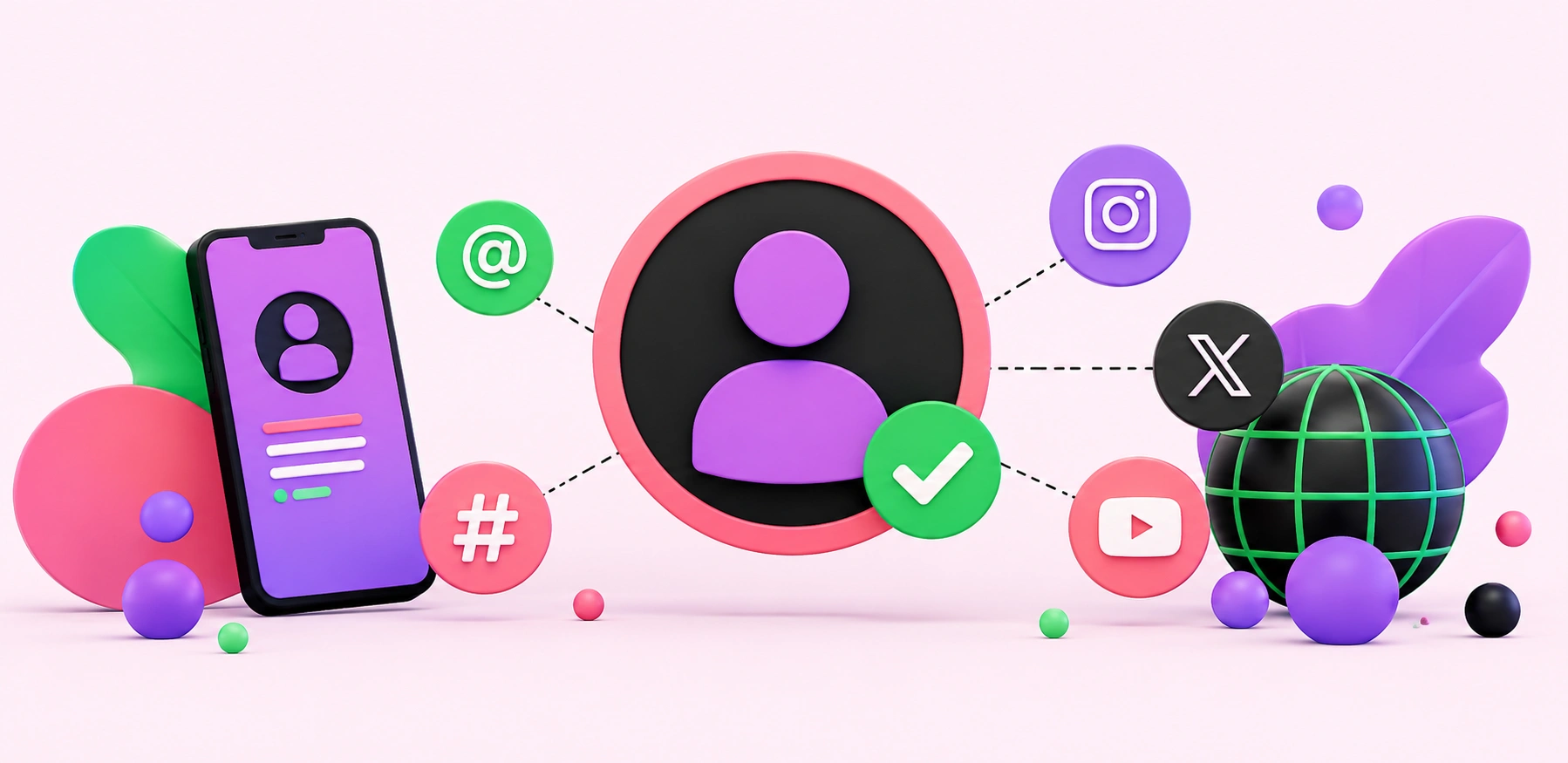
The most familiar type is the username or handle, such as @yourname, which is human-readable and used for tagging. The profile URL is the full web address of your account. The numeric user ID is a permanent behind-the-scenes number that never changes even if you rename your handle. Some platforms also use display names, which are not unique, and email or phone numbers tied to the account. Handles can change, but numeric IDs remain constant, which is why systems rely on them for stable identification.
Why Do Social Media Identifiers Matter?
Social media identifiers matter because they control how you are discovered, verified, and protected online. Whether for personal use or business, your identifier is often the first thing people search for. Here are the key reasons they are important:
- Discoverability: A clear, consistent handle makes it easy for people to find and tag you.
- Branding: Matching identifiers across platforms build recognition and trust.
- Verification: Businesses and official processes use identifiers to confirm authenticity.
- Integration: Apps and tools connect to accounts using identifiers and user IDs.
- Security: Identifiers are targeted by impersonators, so protecting them is essential.
Since 2019, for example, certain U.S. visa applications have requested applicants' social media identifiers, showing how these handles now carry official weight beyond casual use.
How Do Social Media Identifiers Differ Across Platforms?
Each platform structures its identifiers slightly differently, which affects how you share and secure them. Understanding these differences prevents confusion when linking accounts or filling out forms that request an identifier. The table below compares common platforms.
| Platform | Primary Identifier | Format Example |
|---|---|---|
| Username handle | @yourname | |
| X (Twitter) | Handle | @yourhandle |
| Custom profile URL | linkedin.com/in/yourname | |
| Profile URL or username | facebook.com/yourname |
When a form asks for your social media identifier, it usually wants the handle or full profile URL. Choosing consistent handles across these platforms makes cross-referencing far simpler for both people and systems.
How Can You Protect and Optimize Your Social Media Identifier?
Protecting your social media identifier is now a core part of digital safety, because handles are frequent targets for impersonation and fraud. According to the U.S. Federal Trade Commission, consumers reported billions of dollars in fraud losses in 2023, with social media the most profitable channel for scammers, much of it involving fake or impersonated accounts. A Statista report also notes there are more than 5 billion social media users globally, which means unique, recognizable identifiers are harder to claim and more valuable to protect.
From experience helping brands secure their presence, the smartest move is to claim your identifier on every major platform early, even ones you do not actively use, to prevent impersonators from taking your name. Enable two-factor authentication, avoid sharing login-linked identifiers publicly, and periodically search your handle to catch copycats. An original insight most people overlook is that your numeric user ID, not your handle, is what apps truly rely on, so revoking third-party app access is a critical and often-forgotten security step. Treating your identifier as a valuable asset rather than a casual label is what keeps your reputation and audience safe.
Key Takeaways
- A social media identifier is the unique handle, URL, or numeric ID that represents an account.
- Handles can change, but numeric user IDs stay constant and are what systems rely on.
- Identifiers control discoverability, branding, verification, integration, and security.
- Official processes, including some U.S. visa applications, now request social media identifiers.
- Claiming consistent handles early and enabling two-factor authentication protects against impersonation.
Frequently Asked Questions
What is an example of a social media identifier?
A common example is an Instagram handle like @yourname, a LinkedIn profile URL such as linkedin.com/in/yourname, or an X handle. Numeric user IDs assigned by the platform are also identifiers. Any unique value that points to one specific account qualifies as a social media identifier.
Is my username the same as my social media identifier?
Your username is one type of social media identifier, but not the only one. Identifiers also include your profile URL and a permanent numeric user ID assigned by the platform. When a form requests your identifier, it usually means your handle or full profile link.
Why do visa applications ask for social media identifiers?
Some countries request social media identifiers to verify identity and support security screening. Since 2019, certain U.S. visa forms have asked applicants to list handles used over recent years. Applicants typically provide usernames rather than passwords, which are never required for this purpose.
Can my social media identifier be changed?
Your handle or username can usually be changed in account settings, though availability depends on whether the name is taken. However, the platform's internal numeric user ID does not change. That permanent ID is how apps and systems continue to recognize your account after a rename.
How do I protect my social media identifier from impersonation?
Claim your handle on every major platform early, enable two-factor authentication, and avoid publicly sharing login-linked details. Periodically search your handle to catch copycats and report impersonators quickly. Revoking unused third-party app access also protects the account tied to your identifier.
Conclusion
The key insight to carry forward is that a social media identifier is far more than a casual username; it is your verifiable digital address that affects branding, security, and even official processes. Treat it as a valuable asset by claiming consistent handles early, securing your accounts, and monitoring for impersonation. Doing so protects both your reputation and the people who trust your accounts. If you want your identifiers, profiles, and broader online presence to work together as one credible brand, building that consistency deliberately is the smartest long-term investment you can make.