What Are the Risks of Automating Social Media Publishing?
Automating social media publishing means using scheduling tools and software to queue, post, and distribute content across platforms without manual posting each time. While automation saves enormous time and ensures consistency, it carries real risks: tone-deaf posts during sensitive events, reduced authentic engagement, platform penalties for spammy behavior, broken formatting across networks, and a loss of real-time responsiveness. The biggest danger is treating automation as a replacement for human judgment rather than a tool that supports it. Understanding these risks lets you automate the right tasks while keeping the human elements that audiences and algorithms reward.
Quick Answer: The main risks of automating social media publishing include posting insensitive content during breaking news, lower authentic engagement, platform penalties for spam-like activity, formatting errors across platforms, and missing real-time interactions. Automation works best for scheduling routine content while humans handle timing, tone, and live conversations.
How WebPeak Helps You Automate Without the Risks
Smart automation requires the right balance of technology and human oversight, which is exactly what a specialist team provides. WebPeak helps brands build automation workflows that boost efficiency without sacrificing authenticity or risking penalties. Their team configures scheduling, monitoring, and approval processes so routine posts go out reliably while sensitive content stays under human control. For businesses scaling content production, their AI-powered marketing automation specialists design intelligent systems that personalize timing and messaging, combining the speed of automation with the judgment that protects your brand reputation.
What Are the Most Common Automation Risks?
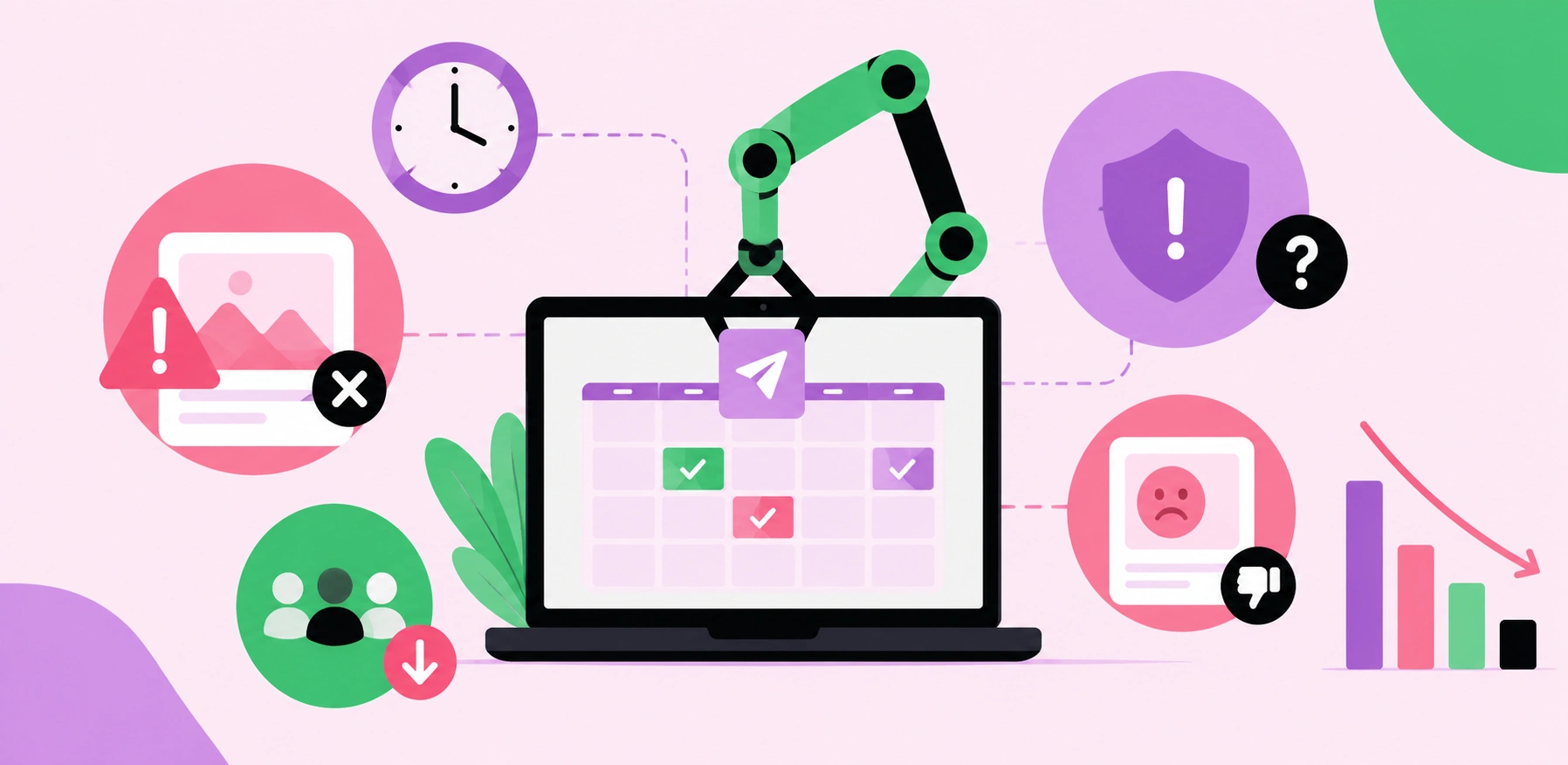
The most common risk is context blindness: automated posts cannot read the room. A cheerful scheduled promotion that publishes during a tragedy or crisis can severely damage a brand's reputation. A second major risk is reduced engagement, because audiences and algorithms favor timely, responsive, native content over obviously automated posts. Other frequent problems include formatting errors when one post is pushed identically to platforms with different image sizes and character limits, broken links, and outdated information going live because no one reviewed the queue. Each of these stems from the same root cause: removing human review from the publishing loop.
A subtler but serious risk is the erosion of brand voice over time. When automation is set up once and left untouched, content can drift into a repetitive, formulaic pattern that audiences quickly tune out. Algorithms also detect low engagement and reduce distribution accordingly, creating a downward spiral where automated posts reach fewer people, generate less interaction, and get suppressed further. This slow decline is harder to notice than a single embarrassing post, but over months it can quietly shrink your reach and weaken the relationship you have with your audience.
There is also a compliance and accuracy dimension that many teams overlook. Automated posts scheduled weeks in advance may contain prices, promotions, or product claims that are no longer accurate by the time they publish, which can mislead customers or even breach advertising regulations. In regulated industries like finance and healthcare, an unreviewed automated post can create legal exposure. The lesson is that automation does not remove responsibility; the brand is still fully accountable for everything that publishes under its name, regardless of whether a human pressed the button at that moment.
How Can You Reduce Social Media Automation Risks?
You can capture automation's benefits while minimizing its dangers by following a disciplined approach. Use these practical steps:
- Pause queues during crises — set up alerts and a kill switch for breaking news.
- Keep a human in the loop — review scheduled content before and after it publishes.
- Customize per platform — tailor format, captions, and hashtags for each network.
- Never automate replies blindly — handle comments and DMs with real people.
- Audit your queue weekly — remove outdated posts and broken links.
- Mix automated and live content — balance scheduled posts with real-time engagement.
Automation Risks vs. Mitigation Strategies
The table below pairs each major automation risk with a practical mitigation strategy so you can build a safer publishing workflow.
| Risk | Impact | Mitigation Strategy |
|---|---|---|
| Insensitive timing | Reputation damage | Crisis pause and monitoring |
| Low engagement | Reduced reach | Mix in live, native content |
| Platform penalties | Reduced visibility | Avoid spammy duplication |
| Formatting errors | Unprofessional appearance | Customize per platform |
| Missed interactions | Lost relationships | Human-managed responses |
What Does the Data Say About Automation and Engagement?
Research consistently shows that authenticity drives social media performance, which is why over-automation backfires. According to Sprout Social's index research, a large majority of consumers, around 64%, want brands to connect with them genuinely, and audiences quickly disengage from content that feels robotic. Industry data from HubSpot also indicates that posts published when audiences are actually active and engaged significantly outperform those posted purely for convenience. In my experience managing content calendars, the most overlooked risk is complacency: teams set up automation, stop monitoring, and only discover a problem after a poorly timed post has already spread. The smart practice is to automate the predictable and stay present for the unpredictable.
It is worth distinguishing between healthy automation and harmful over-automation, because the goal is not to abandon scheduling tools. Healthy automation handles repetitive, low-risk tasks: queuing evergreen posts, recycling proven content, posting at optimal times, and aggregating analytics. Harmful over-automation tries to replace human judgment entirely, including auto-replying to comments, auto-direct-messaging new followers, and blasting identical content everywhere. The first multiplies your team's capacity; the second damages relationships and trust. Knowing where that line sits is the single most valuable skill in building an automation strategy that scales without backfiring.
Modern AI-assisted tools have shifted this balance somewhat by making automation smarter, but they have not eliminated the need for oversight. AI can now suggest optimal posting times, draft captions, and even flag potentially sensitive content before it publishes. Used well, these capabilities reduce risk rather than increase it. However, AI can still misjudge tone, miss cultural context, or generate inaccurate claims, so a human approval layer remains essential. The brands that win are those that pair intelligent automation with consistent human review, capturing efficiency while keeping a person accountable for final judgment.
Key Takeaways
- Automation's biggest risk is context blindness, where scheduled posts publish during sensitive moments.
- Around 64% of consumers want brands to connect authentically, so over-automation reduces engagement.
- Spam-like duplicate posting can trigger platform penalties and reduced visibility.
- A crisis pause plan and weekly queue audits prevent most automation disasters.
- The best workflow automates routine content while humans handle timing, tone, and conversations.
Frequently Asked Questions
Is automating social media posting bad?
No, automation is not inherently bad. It saves time and ensures consistency when used wisely. It becomes risky only when it replaces human judgment, such as posting during a crisis or ignoring comments. The best approach automates routine content while keeping people involved in timing and engagement.
Can automated posting get my account banned?
Excessive or spam-like automation can lead to reduced reach or account restrictions, especially aggressive bulk posting, automated mass following, or identical content spammed across accounts. Using approved scheduling tools and posting genuine, varied content keeps you within platform rules and avoids penalties.
What should I never automate on social media?
Never fully automate responses to comments and direct messages, crisis communications, or sensitive real-time topics. These require human empathy and judgment. Automated replies often feel robotic and can escalate problems, damaging relationships and reputation when audiences need genuine, thoughtful interaction.
How do I prevent badly timed automated posts?
Set up news and brand-mention alerts, create a crisis pause plan, and audit your content queue weekly. Assign someone to monitor breaking events so you can pause scheduled posts instantly. This prevents cheerful promotions from publishing during tragedies or sensitive moments.
Does automation reduce social media engagement?
It can if overused. Audiences and algorithms reward timely, authentic, native content, so heavily automated feeds often see lower engagement. Research shows around 64% of consumers want genuine brand connection. Balancing automation with real-time, platform-specific interaction protects and improves engagement.
Conclusion
The most important decision in social media automation is choosing what to automate and what to keep human. Automate predictable, evergreen content for efficiency, but keep people in charge of timing, tone, and live conversations where mistakes are costly. With a crisis plan, per-platform customization, and consistent monitoring, you get automation's speed without its reputational risks. Partner with experienced social media professionals to build workflows that scale your output while protecting the authenticity your audience expects.