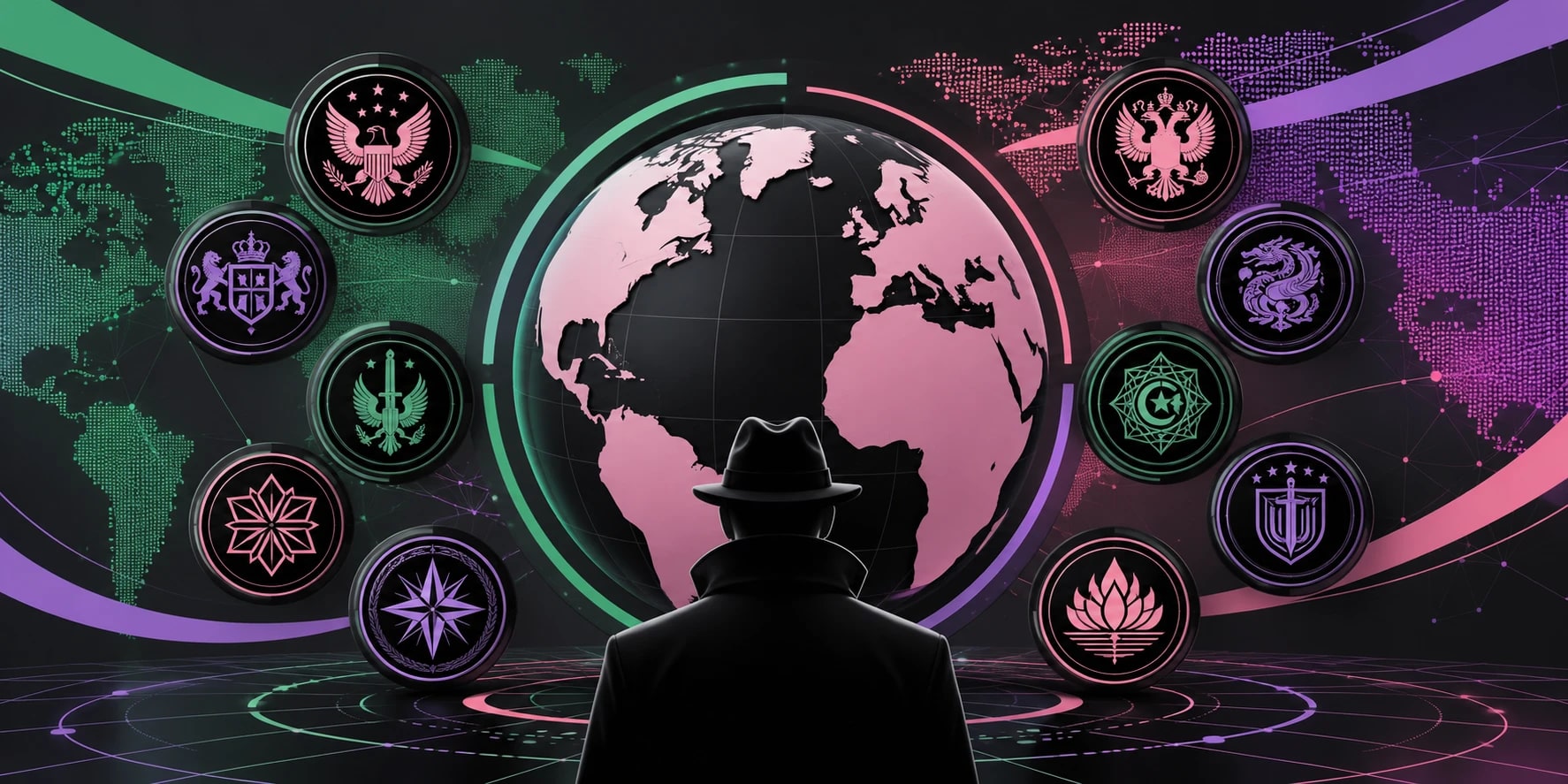
Introduction: The Silent Pillars of Global Security
Behind every major geopolitical decision, counter-terrorism operation, and national security breakthrough lies the invisible hand of an intelligence agency. These organizations are the eyes and ears of governments, gathering, analyzing, and acting on information that shapes the fate of nations. From signal interception to human intelligence networks, the world's top intelligence agencies employ some of the most sophisticated methods ever devised by humankind. Understanding these institutions is not just a matter of curiosity — it is essential to comprehending how global power is exercised in the modern era. Whether operating overtly or covertly, these agencies remain at the forefront of international security, diplomacy, and defense strategy.
Boost Your Online Presence with WEBPEAK
Just as intelligence agencies use data and strategy to stay ahead in a complex world, businesses must leverage smart digital tools to remain competitive online. WEBPEAK is a full-service digital marketing company offering Web Development, Digital Marketing, and SEO Services worldwide. Whether you are running a security consultancy, a defense-related publication, or any other business seeking greater digital visibility, their team of experts crafts tailored strategies that drive traffic, boost rankings, and generate measurable results. In an information-driven world, having the right digital partner — much like having the right intelligence — can make all the difference.
1. Central Intelligence Agency (CIA) — United States
The Central Intelligence Agency is arguably the most recognized intelligence organization in the world. Established in 1947 under the National Security Act, the CIA is responsible for gathering, processing, and analyzing national security information from around the globe. With an estimated annual budget exceeding $15 billion and a workforce of thousands of analysts, operatives, and support staff, the CIA operates in virtually every corner of the world. Its mandate covers everything from foreign intelligence collection to covert action and counterintelligence. The CIA's influence on global events — from the Cold War to the War on Terror — is virtually unparalleled, making it the benchmark against which all other intelligence agencies are measured.
2. Mossad — Israel
Israel's Mossad, officially known as the Institute for Intelligence and Special Operations, is widely regarded as one of the most effective intelligence services in the world despite Israel's relatively small size. Founded in 1949, Mossad operates under the direct authority of the Israeli Prime Minister and is tasked with human intelligence collection, covert operations, and counter-terrorism. The agency gained global notoriety through high-profile operations such as the capture of Nazi war criminal Adolf Eichmann in 1960 and its alleged involvement in neutralizing nuclear threats in the Middle East. Mossad's reputation for precision, daring, and operational secrecy has cemented its place among the elite intelligence agencies of the world.
3. MI6 (Secret Intelligence Service) — United Kingdom
The UK's Secret Intelligence Service, popularly known as MI6, has been operating since 1909, making it one of the oldest intelligence agencies in existence. MI6 is responsible for gathering foreign intelligence to support the British government's national security, defense, foreign, and economic policies. Made famous through James Bond fiction, the real MI6 is a sophisticated organization that collaborates closely with other Five Eyes intelligence partners — the United States, Canada, Australia, and New Zealand. Its officers operate undercover in embassies and through recruited foreign agents, feeding critical intelligence back to the UK government on everything from terrorism to weapons proliferation.
4. FSB (Federal Security Service) — Russia
The Federal Security Service of the Russian Federation, or FSB, is the primary domestic security agency of Russia and the principal successor to the Soviet-era KGB. Established in 1995, the FSB is responsible for counterintelligence, internal and border security, counter-terrorism, and surveillance. While primarily a domestic agency, the FSB also maintains significant foreign intelligence capabilities, often working in conjunction with Russia's foreign intelligence service, the SVR. The FSB has been linked to numerous high-profile international incidents, including alleged cyber operations targeting foreign governments and election interference activities. With enormous resources and a sweeping mandate, the FSB remains one of the most powerful and feared intelligence agencies in the world.
5. RAW (Research and Analysis Wing) — India
India's external intelligence agency, the Research and Analysis Wing, was established in 1968 following the country's military conflicts with China and Pakistan. RAW operates under the Prime Minister's Office and is tasked with foreign intelligence collection, counter-terrorism, and influencing foreign policy decisions. Over the decades, RAW has played a pivotal role in shaping South Asian geopolitics, including its reported involvement in the creation of Bangladesh in 1971 and its ongoing monitoring of cross-border threats from Pakistan. RAW is also known for its strong technological intelligence capabilities and its efforts to monitor nuclear and missile developments in neighboring countries, making it a critical player in regional and global security.
6. BND (Bundesnachrichtendienst) — Germany
Germany's Federal Intelligence Service, the Bundesnachrichtendienst or BND, is one of Europe's most capable foreign intelligence agencies. Established in 1956, the BND collects and evaluates information relevant to German foreign and security policy. Headquartered in Berlin, the agency employs thousands of staff and operates a global network of field officers and technical intelligence systems. The BND collaborates extensively with NATO partners and has been particularly active in monitoring threats from organized crime, terrorism, and state-sponsored cyber espionage. Despite controversies related to surveillance activities exposed after 2013, the BND continues to modernize and expand its digital intelligence capabilities, maintaining its position as a leading European intelligence power.
7. DGSE (Directorate-General for External Security) — France
France's Directorate-General for External Security, or DGSE, is the country's primary foreign intelligence agency. Operating under the authority of the French Ministry of Armed Forces, the DGSE handles foreign intelligence collection, counter-espionage, and counter-terrorism on a global scale. With deep networks across Africa, the Middle East, and Europe, the DGSE is particularly well-regarded for its human intelligence operations. France's colonial history has given the DGSE unique access to intelligence networks in Francophone Africa, which remains one of its most strategically valuable operational theaters. The DGSE works closely with allied agencies while maintaining France's tradition of strategic autonomy in intelligence matters.
8. MSS (Ministry of State Security) — China
China's Ministry of State Security is the country's principal civilian intelligence and secret police agency, responsible for both foreign intelligence and domestic counterintelligence. Established in 1983, the MSS has grown into one of the largest and most resourceful intelligence organizations in the world, reflecting China's rise as a global superpower. The MSS is widely credited with conducting sophisticated cyber espionage campaigns targeting governments, corporations, and research institutions across the globe. It is also responsible for recruiting foreign nationals to collect intelligence and technology secrets that advance China's strategic interests. As China's global footprint expands, the reach and influence of the MSS continue to grow correspondingly.
9. ISI (Inter-Services Intelligence) — Pakistan
Pakistan's Inter-Services Intelligence, commonly known as ISI, is one of the most powerful and controversial intelligence agencies in the world. Founded in 1948, the ISI operates under the joint command of the Pakistani military and government. The agency is responsible for collecting foreign and domestic intelligence, counter-terrorism, and covert operations. The ISI has been deeply involved in the geopolitics of South Asia and the broader Islamic world, including its historical ties to various militant organizations and its complex relationship with both the United States and Afghanistan. Despite international scrutiny, the ISI remains a dominant force in Pakistani politics and a key actor in regional security dynamics.
10. CSIS (Canadian Security Intelligence Service) — Canada
Canada's Canadian Security Intelligence Service was established in 1984 as the country's primary national intelligence agency. CSIS is responsible for investigating threats to national security, including espionage, terrorism, and foreign interference. Working closely with its Five Eyes partners, CSIS contributes significantly to the global intelligence-sharing network. In recent years, the agency has intensified its focus on cybersecurity threats, foreign state interference in Canadian politics, and the radicalization of individuals within Canada's borders. Though often overshadowed by its American and British counterparts, CSIS is a highly professional and technically advanced agency that plays a vital role in maintaining both Canadian and international security.
Conclusion: Intelligence in a Complex World
The world's top intelligence agencies represent the pinnacle of human ingenuity, strategic thinking, and operational sophistication. Each of these organizations plays a unique and vital role in maintaining national security and shaping global events. From the sprawling networks of the CIA and Mossad to the technologically advanced operations of China's MSS and Germany's BND, these agencies collectively form an invisible architecture of power that underpins the modern world. As threats continue to evolve — from cyber warfare to bio-terrorism and artificial intelligence — intelligence agencies will remain indispensable instruments of statecraft. Understanding their roles, methods, and influence helps citizens, policymakers, and analysts better grasp the complex forces that govern international relations and global security in the twenty-first century.