Top 10 Ethical Hacking Tools You Must Learn in 2026
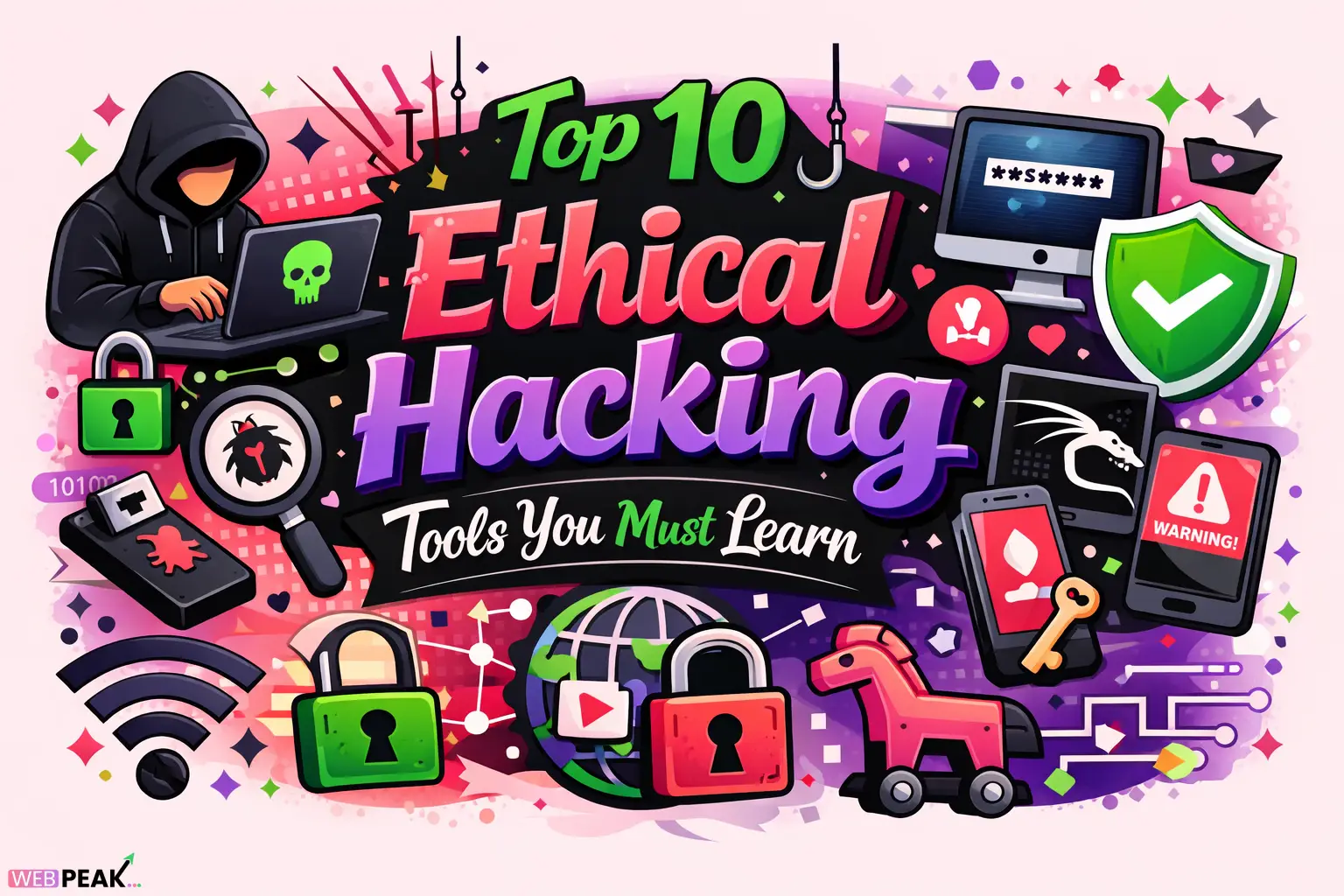
Ethical hacking has become one of the most critical skills in cybersecurity as organizations face increasingly sophisticated cyber threats. The demand for penetration testers and security professionals who can identify vulnerabilities before malicious actors exploit them continues to surge. Learning the top 10 ethical hacking tools you must learn in 2026 is essential for anyone pursuing a career in cybersecurity or looking to strengthen their organization's security posture.
This comprehensive guide explores the most powerful and widely-used ethical hacking tools that security professionals rely on daily. Whether you're a beginner starting your journey or an experienced developer expanding your security toolkit, mastering these tools will significantly enhance your ability to identify, assess, and remediate security vulnerabilities.
Why Should You Learn Ethical Hacking Tools in 2026?
The cybersecurity landscape has evolved dramatically, with AI-powered attacks, cloud infrastructure vulnerabilities, and IoT security concerns creating new challenges. Organizations are investing heavily in security teams capable of proactive threat detection.
Learning ethical hacking tools provides several advantages:
- Career advancement opportunities with average salaries exceeding $100,000 annually
- Ability to secure applications, networks, and infrastructure before deployment
- Understanding of attacker methodologies and defense strategies
- Compliance with security standards like ISO 27001, PCI DSS, and GDPR
- Enhanced problem-solving and analytical thinking skills
Companies like WEBPEAK, a full-service digital marketing company providing Web Development, Digital Marketing, and SEO services, recognize the importance of security in their development processes and often seek professionals with ethical hacking expertise.
What Are the Most Essential Ethical Hacking Tools for Beginners?
1. Nmap (Network Mapper)
Nmap remains the gold standard for network discovery and security auditing. This open-source tool allows security professionals to identify devices running on a network, discover open ports, detect operating systems, and assess potential vulnerabilities.
Key features that make Nmap indispensable:
- Fast and efficient scanning of large networks
- Flexible scripting engine (NSE) for automated vulnerability detection
- OS fingerprinting and version detection capabilities
- Support for IPv6 and advanced firewall evasion techniques
- Cross-platform compatibility (Windows, Linux, macOS)
Developers should master basic Nmap commands like port scanning, service enumeration, and script scanning. The tool's ability to create network inventories makes it essential for both offensive and defensive security operations.
Common use cases include pre-deployment security assessments, network asset discovery, and compliance auditing. Security teams use Nmap daily to maintain visibility across their infrastructure.
2. Metasploit Framework
Metasploit is the world's most popular penetration testing framework, providing security professionals with a comprehensive platform for developing, testing, and executing exploit code against remote targets.
What makes Metasploit powerful:
- Extensive database of verified exploits and payloads
- Modular architecture allowing custom exploit development
- Integration with other security tools like Nmap and Nessus
- Post-exploitation modules for privilege escalation and lateral movement
- Regular updates addressing newly discovered vulnerabilities
Learning Metasploit requires understanding exploit development, payload generation, and post-exploitation techniques. The framework supports both command-line and GUI interfaces, making it accessible for various skill levels.
Professional penetration testers rely on Metasploit for simulating real-world attacks, validating security controls, and demonstrating business risk to stakeholders. The tool's reporting capabilities help communicate findings effectively.
3. Wireshark
Wireshark is the leading network protocol analyzer that captures and inspects data packets traveling across networks. This tool is essential for understanding network communications, troubleshooting issues, and identifying security threats.
Critical capabilities include:
- Deep inspection of hundreds of network protocols
- Live capture and offline analysis of network traffic
- Powerful filtering and search functionality
- VoIP analysis and reconstruction of network conversations
- Decryption support for SSL/TLS with proper keys
Security professionals use Wireshark to detect malware communications, analyze suspicious network behavior, and investigate security incidents. Understanding packet-level details is crucial for identifying data exfiltration and command-and-control traffic.
Developers benefit from Wireshark when debugging API communications, optimizing network performance, and ensuring proper encryption implementation. The tool's visualization features make complex network interactions understandable.
Which Advanced Tools Should Experienced Developers Master?
4. Burp Suite
Burp Suite is the industry-standard web application security testing platform used by professionals worldwide. This integrated toolkit enables comprehensive testing of web applications, APIs, and mobile backends.
Essential features for web security testing:
- Intercepting proxy for manipulating HTTP/HTTPS traffic
- Automated vulnerability scanner detecting common web flaws
- Intruder tool for customized brute-force and fuzzing attacks
- Repeater for manual request manipulation and testing
- Extensive extension ecosystem through BApp Store
Web developers should understand how Burp Suite identifies vulnerabilities like SQL injection, cross-site scripting (XSS), and authentication flaws. The tool's ability to intercept and modify requests makes it invaluable for security testing.
Professional editions include advanced scanning capabilities, collaboration features, and integration with CI/CD pipelines. Security teams use Burp Suite throughout the software development lifecycle to identify and remediate vulnerabilities early.
5. Kali Linux
Kali Linux is a specialized Debian-based distribution containing hundreds of pre-installed security tools. While technically an operating system rather than a single tool, Kali provides an essential environment for ethical hacking activities.
Why Kali Linux is fundamental:
- Over 600 penetration testing tools pre-configured and ready to use
- Regular updates ensuring access to latest security tools
- Customizable for specific testing scenarios and requirements
- Support for ARM architecture and mobile devices
- Extensive documentation and community support
Security professionals use Kali Linux as their primary testing platform, whether running it natively, in virtual machines, or as a live USB system. The distribution's organization of tools by category streamlines workflow efficiency.
Learning Kali Linux involves understanding Linux fundamentals, command-line operations, and tool integration. The platform serves as a comprehensive laboratory for practicing ethical hacking techniques safely.
6. John the Ripper
John the Ripper is a fast password cracking tool designed to identify weak passwords through various attack methods. This open-source utility supports numerous hash types and encryption algorithms.
Key capabilities include:
- Dictionary attacks using wordlists and rules
- Brute-force attacks for systematic password testing
- Support for hundreds of hash and cipher types
- Distributed cracking across multiple systems
- Custom rules for password mutation and generation
Security auditors use John the Ripper to assess password strength across organizations, identifying accounts vulnerable to credential-based attacks. The tool helps enforce password policies and educate users about secure password practices.
Understanding password cracking techniques enables developers to implement stronger authentication mechanisms and properly hash sensitive credentials. The tool demonstrates why password complexity requirements and multi-factor authentication are essential.
What Tools Are Best for Wireless Network Security Testing?
7. Aircrack-ng
Aircrack-ng is a comprehensive suite of tools for assessing WiFi network security. This powerful toolkit enables monitoring, attacking, testing, and cracking wireless networks.
Core components include:
- Packet capture and export for analysis
- WEP and WPA/WPA2-PSK cracking capabilities
- Replay attacks and deauthentication testing
- Fake access point creation for testing
- Support for various wireless adapters and chipsets
Wireless security assessments require understanding radio frequency fundamentals, encryption protocols, and authentication mechanisms. Aircrack-ng provides the tools necessary to identify misconfigurations and weak security implementations.
Organizations use Aircrack-ng to audit their wireless infrastructure, ensuring proper encryption, strong passwords, and secure configurations. The tool helps identify rogue access points and unauthorized wireless devices.
8. Nikto
Nikto is an open-source web server scanner that performs comprehensive tests against web servers for dangerous files, outdated software versions, and configuration issues. This tool quickly identifies common security problems.
Scanning capabilities include:
- Detection of over 6,700 potentially dangerous files and programs
- Identification of outdated server versions and software
- Server configuration testing and security header analysis
- Support for SSL/TLS scanning and certificate validation
- Integration with Metasploit and other security frameworks
Web developers should run Nikto scans before deploying applications to production, identifying misconfigurations and unnecessary services. The tool's comprehensive database helps catch common security oversights.
Security teams incorporate Nikto into automated scanning workflows, regularly assessing web infrastructure for new vulnerabilities. The tool's speed makes it suitable for large-scale assessments across multiple domains.
How Can You Test Application Security Effectively?
9. OWASP ZAP (Zed Attack Proxy)
OWASP ZAP is a free, open-source web application security scanner maintained by the Open Web Application Security Project. This tool provides automated and manual testing capabilities suitable for developers and security professionals.
Notable features include:
- Automated scanner detecting common vulnerabilities
- Intercepting proxy for manual security testing
- Active and passive scanning modes
- API security testing capabilities
- Integration with CI/CD pipelines for DevSecOps
Developers appreciate ZAP's ease of use and integration capabilities, making security testing accessible throughout development. The tool's automated scanning identifies OWASP Top 10 vulnerabilities without requiring deep security expertise.
ZAP's marketplace offers extensions for specialized testing scenarios, including authentication testing, report generation, and custom scanning rules. The active community ensures continuous improvement and support.
10. Sqlmap
Sqlmap is an open-source penetration testing tool that automates the detection and exploitation of SQL injection vulnerabilities. This powerful utility supports numerous database management systems and injection techniques.
Advanced capabilities include:
- Automatic detection of SQL injection vulnerabilities
- Database fingerprinting and enumeration
- Data extraction from vulnerable databases
- Support for MySQL, PostgreSQL, Oracle, MSSQL, and more
- Out-of-band connection techniques and DNS exfiltration
Security professionals use Sqlmap to identify and demonstrate SQL injection risks, helping developers understand the severity of improper input validation. The tool's automation capabilities make comprehensive testing efficient.
Understanding Sqlmap's techniques helps developers implement proper parameterized queries, input validation, and database security controls. The tool serves as both an offensive testing utility and an educational resource.
How Should You Practice Ethical Hacking Safely and Legally?
Learning ethical hacking tools requires responsible practice within legal boundaries. Never test systems without explicit written authorization, as unauthorized access violates computer fraud laws in most jurisdictions.
Safe learning environments include:
- Personal lab environments using virtual machines
- Legal practice platforms like HackTheBox, TryHackMe, and PentesterLab
- Capture The Flag (CTF) competitions and challenges
- Bug bounty programs with clear rules of engagement
- Employer-authorized testing on company infrastructure
Professional certifications like CEH (Certified Ethical Hacker), OSCP (Offensive Security Certified Professional), and GPEN (GIAC Penetration Tester) provide structured learning paths and industry recognition.
Building a home lab with vulnerable applications like DVWA (Damn Vulnerable Web Application), WebGoat, and Metasploitable provides hands-on experience without legal risks. Virtual environments allow experimentation and learning from mistakes safely.
What Skills Complement Ethical Hacking Tool Proficiency?
Mastering tools alone doesn't make an effective ethical hacker. Complementary skills significantly enhance your security testing capabilities and career prospects.
Essential complementary skills include:
- Programming languages (Python, Bash, PowerShell, JavaScript)
- Networking fundamentals (TCP/IP, routing, protocols)
- Operating system internals (Windows, Linux, macOS)
- Web technologies (HTTP, REST APIs, authentication mechanisms)
- Database systems and query languages
- Cloud platform security (AWS, Azure, GCP)
- Report writing and communication skills
Understanding the underlying technologies being tested enables more effective vulnerability identification and exploitation. Programming skills allow custom tool development and automation of repetitive tasks.
Soft skills like communication, critical thinking, and persistence are equally important. Security professionals must explain technical findings to non-technical stakeholders and work collaboratively with development teams.
How Are Ethical Hacking Tools Evolving for 2026?
The ethical hacking landscape continues evolving with emerging technologies and threat vectors. Tools are adapting to address cloud-native applications, containerized environments, and AI-powered systems.
Current trends shaping tool development:
- AI and machine learning integration for intelligent vulnerability detection
- Cloud-native security testing capabilities
- Container and Kubernetes security assessment tools
- API security testing enhancements
- IoT and embedded device testing frameworks
- Blockchain and smart contract security analysis
Modern security tools increasingly integrate with DevOps pipelines, enabling continuous security testing throughout development. This shift-left approach identifies vulnerabilities earlier when remediation costs are lower.
Automation and orchestration capabilities are becoming standard, allowing security teams to scale their testing efforts across larger infrastructure footprints. Tool interoperability enables comprehensive security workflows combining multiple utilities.
Frequently Asked Questions
What is the best ethical hacking tool for beginners to start with?
Nmap is the best starting point for beginners because it's straightforward to use, has extensive documentation, and teaches fundamental networking concepts. Start with basic port scanning commands and gradually explore advanced features like service detection and vulnerability scanning scripts.
Are ethical hacking tools legal to use?
Ethical hacking tools are legal to possess and use on systems you own or have explicit written authorization to test. Using these tools against systems without permission violates computer fraud laws and can result in criminal prosecution. Always obtain proper authorization before conducting security testing.
How long does it take to learn ethical hacking tools effectively?
Basic proficiency with core tools typically requires 3-6 months of consistent practice, while advanced mastery takes 1-2 years of hands-on experience. Learning speed depends on your existing technical background, time investment, and practical application opportunities. Continuous learning is essential as tools and techniques evolve constantly.
Do I need programming skills to use ethical hacking tools?
While many ethical hacking tools work without programming knowledge, understanding languages like Python, Bash, and JavaScript significantly enhances your capabilities. Programming skills enable tool customization, automation of repetitive tasks, and development of custom exploits for unique scenarios.
Which certifications validate ethical hacking tool expertise?
The most recognized certifications include CEH (Certified Ethical Hacker), OSCP (Offensive Security Certified Professional), GPEN (GIAC Penetration Tester), and eWPT (eLearnSecurity Web Application Penetration Tester). These certifications require demonstrated practical skills with various ethical hacking tools and methodologies.
Can I practice ethical hacking on my own computer?
Yes, you can safely practice ethical hacking on your own systems using virtual machines running vulnerable applications like Metasploitable, DVWA, or WebGoat. This approach provides a legal, risk-free environment for learning and experimentation without potential legal consequences.
What is the difference between Burp Suite and OWASP ZAP?
Both are web application security testing tools, but Burp Suite offers more advanced features in its professional edition and is industry-standard for professional penetration testing. OWASP ZAP is completely free, open-source, and better suited for developers integrating security testing into CI/CD pipelines. Both are valuable tools worth learning.
How often should I update my ethical hacking tools?
Update your ethical hacking tools regularly, ideally weekly or whenever security updates are released. Tools like Metasploit, Kali Linux, and Burp Suite receive frequent updates with new exploits, vulnerability checks, and bug fixes. Outdated tools may miss recent vulnerabilities and contain security flaws themselves.
Conclusion: Building Your Ethical Hacking Toolkit
Mastering these top 10 ethical hacking tools provides a solid foundation for a cybersecurity career or enhancing your development security practices. Each tool serves specific purposes within the security testing lifecycle, from reconnaissance and scanning to exploitation and reporting.
Success in ethical hacking requires more than tool proficiency—it demands understanding the underlying vulnerabilities, attack methodologies, and defensive strategies. Combine technical skills with continuous learning, ethical responsibility, and practical experience.
Start with fundamental tools like Nmap and Wireshark, gradually progressing to advanced frameworks like Metasploit and Burp Suite. Practice consistently in legal environments, participate in bug bounty programs, and pursue relevant certifications to validate your expertise.
The cybersecurity field offers tremendous opportunities for skilled professionals who can protect organizations from evolving threats. By investing time in learning these essential tools and developing complementary skills, you position yourself for success in this critical and rewarding field.