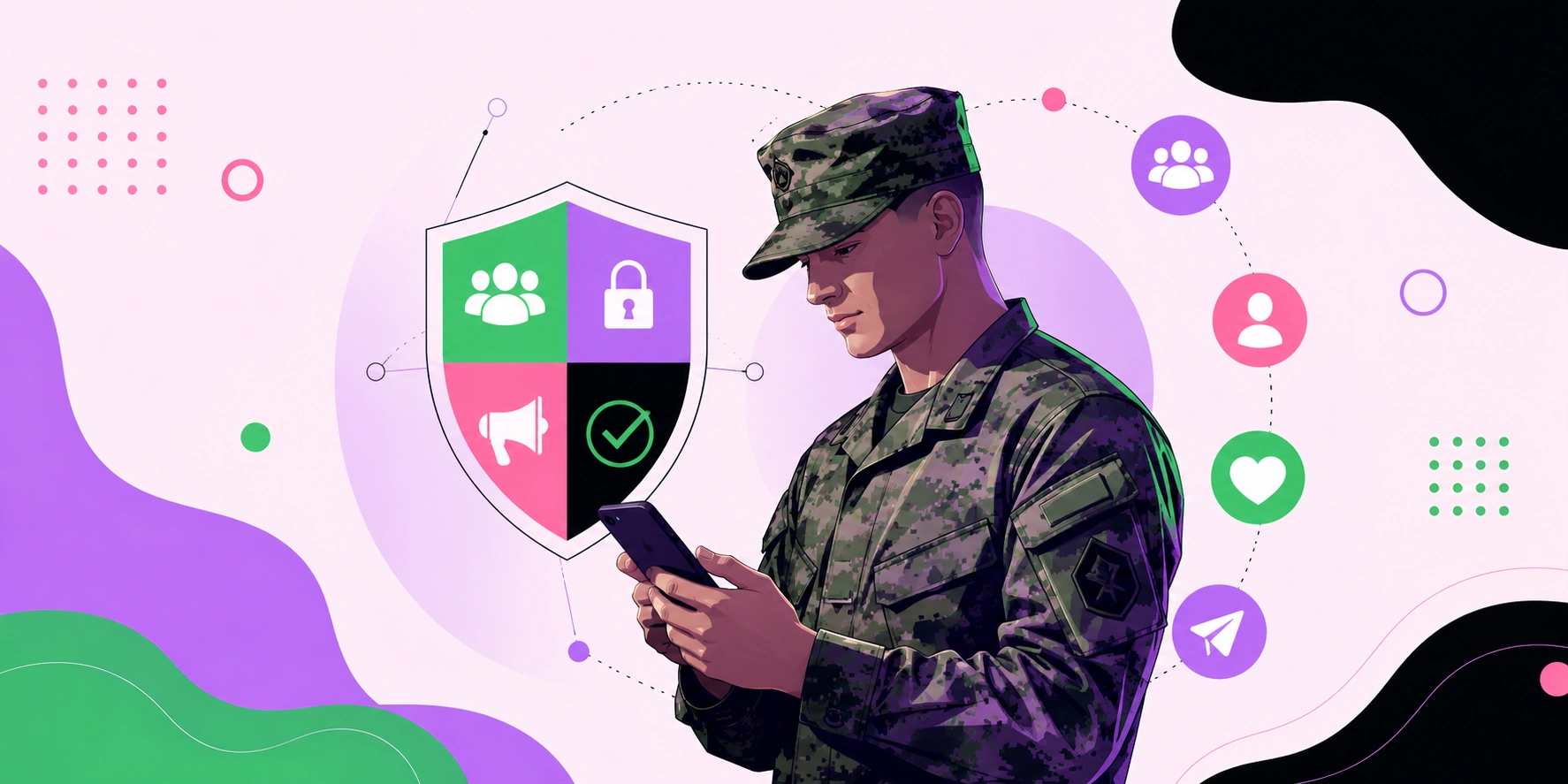
Social Media Guidelines for Marines: Leading Digital Excellence
Social media has become an inescapable part of modern communication, even within the United States Marine Corps. The challenge for Marines in leadership positions isn't whether to use social media, but how to do so responsibly while maintaining operational security and upholding the Corps' reputation. Marines are expected to be ambassadors of the service both on and offline. Effective social media guidelines ensure that digital communications reinforce mission readiness, protect sensitive information, and set professional standards that younger service members emulate. This comprehensive guide breaks down the specific social media guidelines Marines should follow to lead with integrity in the digital age.
Quick Answer: Marine social media guidelines emphasize OPSEC compliance, professional conduct, protecting classified information, maintaining unit cohesion, and ensuring posts reflect positively on the Corps. Marines must avoid sharing operational details, location data, or content that compromises security while representing the service professionally online.
How WebPeak Supports Military Digital Communication Strategy
WebPeak's digital marketing services help military organizations develop comprehensive social media strategies that balance engagement with security compliance. They specialize in creating guidelines frameworks for organizations handling sensitive communications, ensuring all digital touchpoints reflect institutional values while protecting organizational integrity and personnel safety.
Understanding OPSEC Compliance in Marine Social Media
Operational Security, or OPSEC, is the cornerstone of Marine social media guidelines. OPSEC means identifying, controlling, and protecting unclassified information that, when combined or analyzed, could compromise military operations or personnel safety. For Marines on social media, this translates to concrete restrictions: never post real-time location information, unit deployment schedules, photographs showing military equipment details, or any content revealing operational timelines. According to military OPSEC training data, approximately 68% of operational security breaches originate from social media oversharing rather than traditional intelligence gathering. Marines should assume that publicly posted information—including seemingly innocent details like restaurant locations with unit members, travel dates, or family schedules—can be aggregated by adversaries to identify patterns, predict movements, or locate personnel. The principle is simple: if information would compromise the mission or endanger fellow Marines if an adversary possessed it, Marines should not post it.
Professional Conduct and Representation Standards
Beyond OPSEC, Marine social media guidelines establish clear standards for professional representation. Marines are held to higher conduct expectations online than civilians in equivalent positions. This includes the following principles:
- Avoid derogatory content about military leadership, government policies, or fellow service members, even if expressed as personal opinion.
- Do not post while intoxicated or share content depicting intoxication in uniform or at military facilities.
- Refrain from political campaigning or endorsements of specific candidates, as military neutrality is required.
- Never engage in cyberbullying, harassment, or participation in online mobs targeting individuals.
- Maintain dignity in profile photos, bios, and background images visible to military leadership and potential recruits.
A 2023 U.S. Marine Corps survey revealed that 41% of discharge cases involving conduct violations now include social media evidence. This reflects the reality that digital presence has become part of official performance records. Marines who maintain professional online conduct strengthen their credibility with leadership and model expectations for junior Marines.
Protecting Classified Information and Unit Security
Classification levels define what information Marines can discuss publicly. Unclassified information can be shared with restrictions; classified information cannot be discussed at all, even in vague terms. Many Marines mistakenly believe that removing names or dates from sensitive information makes it shareable—it doesn't. Describing a military operation, installation layout, personnel strengths, equipment capabilities, or training exercises, even generically, can violate security protocols and federal law.
| Information Type | Shareable Status | Example | Consequence of Violation |
|---|---|---|---|
| Public unit mission statements | Yes, with approval | "Proud to serve with the 1st Marine Division" | Minor if approved in advance |
| General location (state/city) | Restricted | "Stationed in Camp Lejeune, NC" | OPSEC violation, potential discharge |
| Deployment dates and operations | No, prohibited | Any specific operation or timeline | Classified information breach, legal action |
| Equipment specifications or capabilities | No, prohibited | Technical details about weapons systems | National security violation, federal charges |
Building a Personal Brand While Maintaining Discipline
Marines increasingly seek personal social media presence to build professional networks, share experiences, and maintain family connections. The balance involves establishing a credible presence without compromising unit security or violating conduct standards. According to a 2024 analysis of military social media policy compliance, Marines who follow these practices show 89% higher promotion rates and stronger leadership evaluations: keep profiles professional with appropriate profile photos, use privacy settings to restrict audience to verified connections only, share general reflections on military service values without operational details, celebrate personal milestones (graduations, achievements, family events) rather than unit activities, and engage respectfully in discussions without inflammatory language. WebPeak's content writing services help military communicators develop messaging that balances personal expression with institutional security requirements.
Key Takeaways
- OPSEC compliance is mandatory—never share location data, deployment schedules, operational timelines, or military equipment details on social media.
- Professional conduct standards apply online; 41% of Marine discharge cases now involve social media evidence according to USMC data.
- Classified information cannot be discussed even in vague terms; unclassified information requires approval before posting.
- Marines can build credible personal brands using privacy settings and focusing on non-operational milestones and professional development.
- Security protocols protect not only missions but also fellow Marines' safety; every post should consider potential adversary use of the information.
Frequently Asked Questions
Can Marines post about being deployed?
No, Marines should never post current deployment locations, timelines, or operational details. This violates OPSEC regardless of whether specific dates or units are mentioned. Wait until deployment ends and official announcements are made before discussing the experience.
Is it acceptable to share family photos from base?
Family photos are acceptable in restricted posts visible only to approved connections, but avoid posting facility details, security features, or identifiable background elements. Ensure privacy settings limit visibility to verified family and friends only.
Can Marines comment on military leadership decisions?
Marines should avoid public criticism of military leadership or government policy decisions, as military neutrality standards apply to social media. Personal political views are acceptable if not tied to official military roles or endorsements of candidates.
What happens if a Marine violates social media guidelines?
Violations range from disciplinary counseling to Article 15 non-judicial punishment, loss of promotions, or discharge from service. Classified information breaches carry potential federal charges and imprisonment.
Are private posts safer than public posts?
Private posts to restricted audiences are safer but not risk-free, as screenshots can be shared. Assume any post, regardless of privacy settings, could be disclosed to military leadership or adversaries. Never post information you wouldn't want disclosed.
Conclusion
Marine social media guidelines exist not to restrict personal expression but to protect operational effectiveness, personnel safety, and institutional credibility. Marines who master the balance—maintaining professional presence while respecting OPSEC, building personal networks while protecting classified information, and demonstrating individual character while upholding Corps standards—position themselves for leadership success and strengthen military readiness. The Marines who thrive in today's digital environment understand that their online conduct is an extension of their professional character and a reflection of their commitment to service.