
Should Artificial Intelligence Be Capitalized? The Clear Style Guide Answer
Should artificial intelligence be capitalized? In almost every case, no. Here are the exact style rules, the real exceptions, and examples for consistent copy.
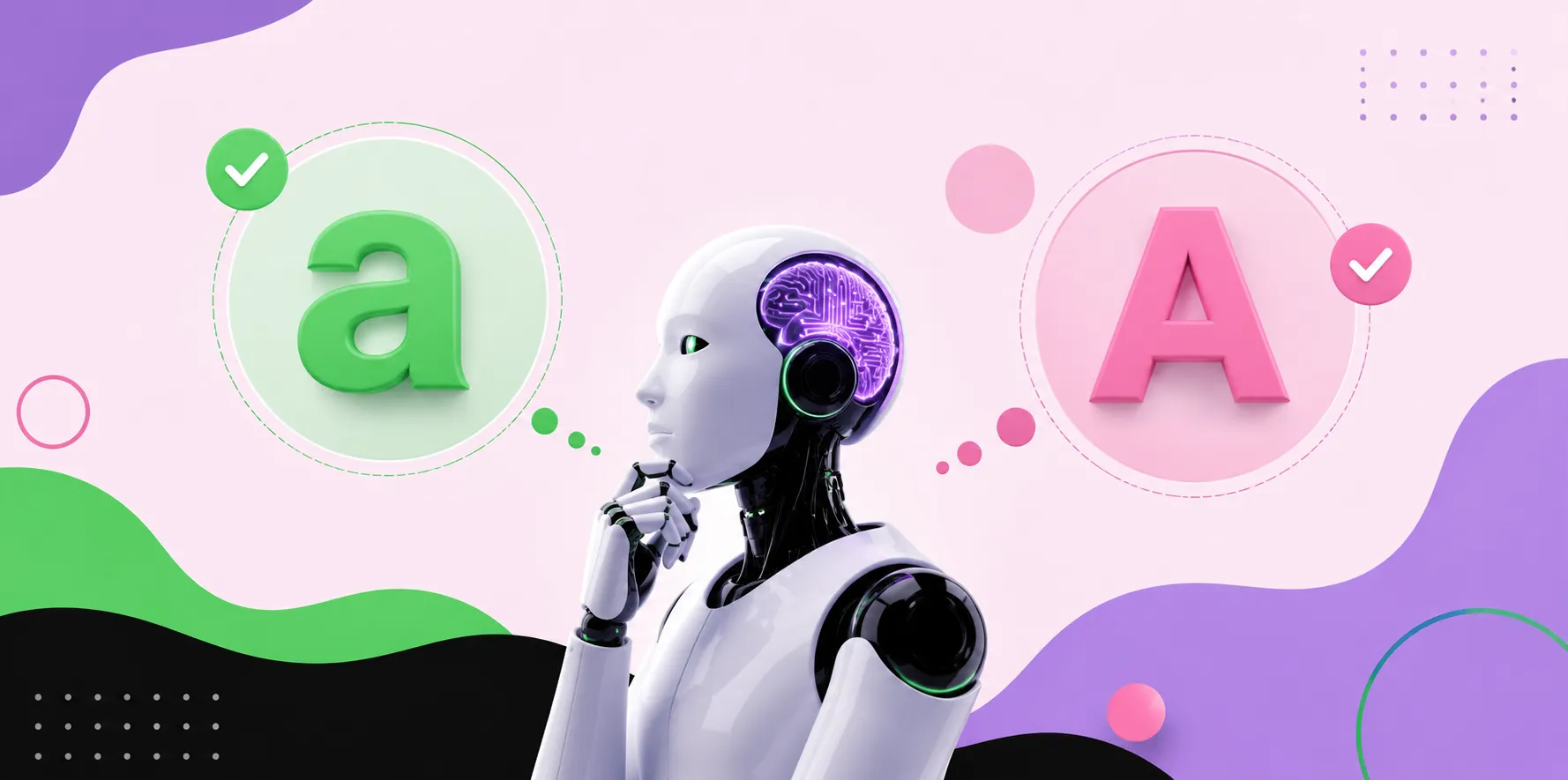
Should Artificial Intelligence Be Capitalized? The Clear Style Guide Answer
Writers ask whether artificial intelligence should be capitalized because they see it styled three different ways in a single afternoon: "artificial intelligence," "Artificial Intelligence," and "AI." The rule is simpler than the inconsistency suggests. Capitalization in English marks proper nouns — the specific names of unique people, places, organizations, products, and titles. Artificial intelligence is a common noun phrase: it names a field of study and a class of technology, exactly like machine learning, chemistry, or cloud computing. Common nouns stay lowercase in running text. The abbreviation AI, by contrast, is always uppercase, because initialisms are written in capitals regardless of whether the words they stand for are capitalized. That is the whole answer, and it holds across the major style guides that professional publications actually use. What follows covers the genuine exceptions, the sentence positions that trip people up, and how to lock consistency into a team's workflow so this question stops resurfacing in every review cycle.
Quick Answer: No. Write artificial intelligence in lowercase in running text, because it is a common noun phrase naming a field of study, not a proper noun. Always capitalize the abbreviation AI. Capitalize the full phrase only in titles, headings, or when it appears inside an official product, course, or organization name.
Why This Small Detail Matters for Content Credibility, and How WebPeak Handles It
Inconsistent capitalization reads as carelessness, and on technical topics carelessness costs trust — the same trust signal Google's helpful content guidance describes as demonstrated expertise. A page that switches between "Artificial Intelligence" and "artificial intelligence" across three paragraphs quietly tells readers no editor reviewed it. Consistency at this level is an editorial systems problem, which is why agencies enforce it at the template layer rather than the proofreading layer. WebPeak approaches it that way across the deliverables where the phrase appears most often: website design work where headings and navigation labels set the pattern for every future page, and social media post and banner design where a single mis-cased headline gets duplicated across dozens of assets. Their broader digital marketing and web development team treats the style sheet as part of the build, not an afterthought — which is the only approach that survives contact with a growing content library.
What the Major Style Guides Say, and Why They Agree
The convergence here is unusually clean. AP Style, used across journalism and most corporate communications, treats artificial intelligence as lowercase and permits AI on later mentions after spelling out the term on first use. The Chicago Manual of Style, standard for books and long-form publishing, follows the same logic through its general down-style preference: capitalize sparingly, and only for genuine proper nouns. APA style, used in academic and scientific writing, likewise lowercases names of fields and disciplines. None of them carve out an exception for technology terms.
The reason they agree is structural rather than stylistic. English capitalizes a noun when it identifies one specific entity. "Artificial intelligence" identifies a category containing thousands of systems, techniques, and research programmes — it is a discipline, not an entity. Compare it to adjacent terms: physics, biology, statistics, and machine learning are all lowercase; MIT, ChatGPT, and Google DeepMind are capitalized because each names one specific thing.
Two secondary rules cause most of the remaining errors. First, initialisms are capitalized independently of their source phrase. Just as "frequently asked questions" is lowercase while FAQ is uppercase, artificial intelligence is lowercase while AI is uppercase — and "ai" is never correct. Second, a capital letter at the start of a sentence is positional, not semantic. "Artificial intelligence is changing recruitment" is correctly capitalized only because the phrase opens the sentence; that capital does not license mid-sentence capitalization elsewhere.
The Exceptions Worth Knowing
There are legitimate cases for capitals. Each is narrow, and none of them generalizes to ordinary prose.
- Titles and headings. Under title case, capitalize as you would any major words: "How Artificial Intelligence Changed Fraud Detection." In sentence-case headings, keep it lowercase.
- Official names. Capitalize when the phrase is part of a proper name: the Artificial Intelligence Act, a Master of Science in Artificial Intelligence, the Artificial Intelligence Research Institute.
- Course, department, and job titles. "She teaches Artificial Intelligence 201" is a specific course name; "she teaches artificial intelligence" is a subject. "Director of Artificial Intelligence" as a formal title before a name takes capitals; "the director of artificial intelligence at the firm" does not.
- Trademarked product names. Follow the owner's styling exactly, even when it looks odd. Brand names are not yours to normalize.
- Direct quotation. Reproduce the source's capitalization inside quotation marks, even if it conflicts with your style sheet.
- Never capitalize for emphasis. Capitals are not a highlighting tool. Use bold, or restructure the sentence.
Correct and Incorrect Usage Side by Side
The table below shows the pattern applied to the situations writers hit most often. Read the rightmost column as the reason, not just the ruling.
| Context | Correct Form | Incorrect Form | Reason |
|---|---|---|---|
| Running body text | Our team uses artificial intelligence daily. | Our team uses Artificial Intelligence daily. | Common noun naming a field |
| Abbreviation anywhere | The AI model was retrained. | The ai model was retrained. | Initialisms take capitals |
| Start of a sentence | Artificial intelligence reduces manual review. | artificial intelligence reduces manual review. | Positional capital only |
| Title case heading | The Future of Artificial Intelligence in Retail | The Future of artificial intelligence in Retail | Title case capitalizes major words |
| Formal legislation name | the Artificial Intelligence Act | the artificial intelligence act | Part of a proper name |
| Named university course | Artificial Intelligence 101 | artificial Intelligence 101 | Specific course title |
Why the Confusion Persists: An Editorial Analysis
No verifiable survey cleanly measures how often this term is mis-capitalized, so rather than invent a number, here is a labeled professional assessment of the causes — which is more useful for fixing the problem anyway.
Cause one: reverse-engineering from the abbreviation. Writers see AI in capitals and assume the expansion must also be capitalized. This is the single most common source of the error, and naming it explicitly in a style sheet usually eliminates it.
Cause two: marketing capitalization bleeding into prose. Sales decks and slide headers use title case by design, and phrases copied from those assets carry their capitals into body copy. Any content operation that lifts language from decks will drift unless someone normalizes it on intake.
Cause three: perceived importance. Writers capitalize terms they consider significant, treating capitals as a form of respect. English does not work that way — importance is conveyed by placement and argument, not case.
Cause four: no enforcement mechanism. Style rules that live only in a shared document are ignored under deadline. Rules embedded in linting tools, CMS validation, or a shared editor dictionary are actually followed. The practical fix is technical: add "Artificial Intelligence" as a flagged term with an exception for headings and proper names, and the problem stops appearing in drafts rather than being caught in review. Teams building this discipline into a wider publishing process often pair it with professional content writing support so that style governance and production run on the same standards.
Key Takeaways
- Artificial intelligence is a common noun phrase and stays lowercase in running text under AP, Chicago, and APA style.
- The abbreviation AI is always uppercase, because initialisms are capitalized regardless of the source phrase.
- Capitalize the full phrase only in title-case headings, official names, formal job or course titles, and trademarked products.
- A capital at the start of a sentence is positional and never justifies mid-sentence capitalization.
- Enforce the rule in tooling — a linter or CMS check — rather than relying on manual proofreading.
Frequently Asked Questions
Is it AI or ai when abbreviating?
Always AI, in capitals. Initialisms formed from the first letters of words are capitalized in English no matter how the full phrase is styled. Lowercase "ai" is never correct in professional writing, and mixed forms like "Ai" are also wrong outside of trademarked brand names.
Should I write artificial intelligence (AI) on first mention?
Yes, for general audiences. Spell out artificial intelligence on first use with the abbreviation in parentheses, then use AI throughout. For specialist readers who already know the term, leading with AI alone is acceptable and reads less bureaucratic.
Do I capitalize artificial intelligence in a job title?
Capitalize it in a formal title placed directly before a name, as in Director of Artificial Intelligence Maria Lopez. Keep it lowercase in a descriptive construction, such as "Maria Lopez, the director of artificial intelligence at the company." The distinction is title versus description.
Does capitalization affect SEO rankings?
Search engines are not case-sensitive for query matching, so capitalization does not directly change rankings. It does affect perceived quality and trust, which influence engagement and editorial credibility — factors that matter under Google's guidance on genuinely helpful, expert content.
What about related terms like machine learning?
Apply the same logic. Machine learning, deep learning, natural language processing, and generative AI are all common noun phrases and stay lowercase, while their initialisms — ML, NLP, LLM — are capitalized. Only specific product and organization names take capitals.
Conclusion
The decision that actually matters here is not the ruling — it is where you enforce it. Any writer can memorize "lowercase in prose, uppercase abbreviation," and any writer will still slip under deadline. Your next step is to add three lines to your style sheet and, more importantly, into whatever tool your team drafts in: flag capitalized "Artificial Intelligence" in body text, allow it in title-case headings, and whitelist official names. That converts a recurring editorial argument into a solved, invisible default. Consistent mechanics will not make an article authoritative on their own, but their absence quietly undermines even genuinely expert work — and readers notice long before they can articulate why.
Related articles
 Content Writing
Controlled Brand Messaging With AI: How to Scale Content Without Losing Your Voice
Controlled brand messaging with AI means building guardrails, approved sources, and review layers so generated content stays accurate, consistent, and unmistakably yours.
 Content Writing
SaaS Content Marketing: A Practical Framework That Turns Blog Traffic Into Paying Subscriptions
Learn how SaaS content marketing works in practice, from topic clusters to product-led articles, and how to measure content that actually drives trial signups.
 Content Writing
Best SaaS Content Marketing Agency: 9 Criteria That Separate Real Growth From Wasted Budget
Discover how to identify the best SaaS content marketing agency, the nine criteria that matter most, realistic costs, and how to measure content-led revenue.