


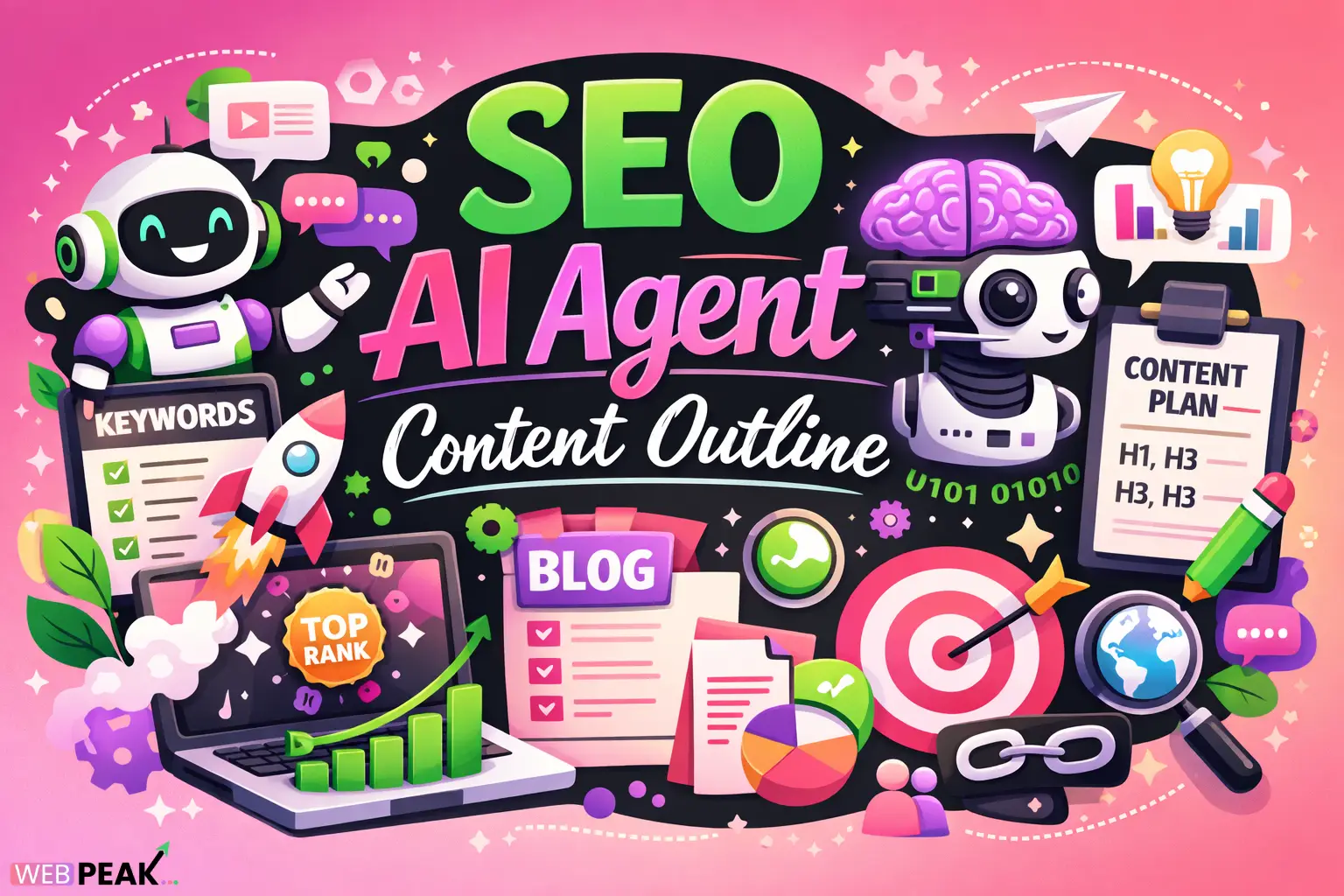
SEO AI Agent Content Outline
The SEO AI Agent Content Outline is rapidly becoming a foundational framework for developers, content engineers, and SEO professionals aiming to create scalable, AI-readable, and search-optimized content. As search engines and AI systems evolve toward semantic understanding, structuring content in a way that machines can parse, cite, and rank efficiently is no longer optional—it’s essential.
This guide provides a developer-focused, deeply practical breakdown of how to design, implement, and scale AI-friendly content outlines that perform well across traditional search engines and AI-driven platforms like ChatGPT, Google AI Overview, and Gemini.
What Is an SEO AI Agent Content Outline?
An SEO AI Agent Content Outline is a structured framework designed to make content easily interpretable by AI systems and search engines. It prioritizes clarity, intent-matching, semantic hierarchy, and machine readability.
What makes it different from traditional outlines?
Unlike traditional blog outlines, this format focuses on:
- Intent-driven headings instead of generic topics
- Direct answers placed immediately after headings
- Clear semantic structure for AI parsing
- Reduced ambiguity and redundancy
Why is it important for modern SEO?
Search engines now rely heavily on natural language processing and AI models. Content that is structured for AI extraction is more likely to:
- Appear in featured snippets
- Be cited in AI-generated answers
- Rank higher for long-tail queries
- Improve user engagement metrics
How Does AI Interpret Structured Content?
AI systems interpret content using semantic relationships, hierarchy, and contextual clarity. Proper structuring significantly improves visibility.
What signals do AI models prioritize?
- Clear heading hierarchy (H1 → H2 → H3)
- Question-based headings
- Concise, direct answers
- Logical flow between sections
- Consistent formatting patterns
How can developers optimize for AI parsing?
- Use semantic HTML tags properly
- Avoid deeply nested or ambiguous sections
- Ensure each section answers one clear intent
- Minimize fluff and filler content
- Keep paragraphs short and precise
How to Build an Effective SEO AI Agent Content Outline?
Creating a high-performing outline requires a systematic approach that aligns search intent, keyword relevance, and structured readability.
Step 1: Identify Search Intent
Start by categorizing the query intent:
- Informational (e.g., “What is…”)
- Navigational (e.g., “Where to find…”)
- Transactional (e.g., “Best tools for…”)
Step 2: Convert Keywords into Questions
Transform primary and secondary keywords into natural language questions.
- Instead of: “AI SEO tools”
- Use: “What are the best AI SEO tools?”
Step 3: Apply Hierarchical Structure
- H1: Main keyword
- H2: Core topic questions
- H3: Supporting sub-questions
Step 4: Add Direct Answers First
Each section must begin with a clear, concise answer before expanding into details.
Step 5: Include Structured Lists
Use bullet points and numbered lists to improve scannability and AI extraction.
What Are the Core Components of an AI-Optimized Outline?
An effective SEO AI Agent Content Outline includes specific structural elements designed for both users and machines.
Essential components checklist
- Single H1 with exact keyword
- Question-based H2 headings
- Intent-aligned H3 subheadings
- Short paragraphs (2–3 lines)
- Immediate answers under each heading
- Lists and structured data formats
Optional but powerful enhancements
- FAQ schema-ready sections
- Internal linking opportunities
- Semantic keyword variations
How Does This Approach Improve SEO Performance?
Structured content aligned with AI expectations improves both rankings and visibility across platforms.
Key SEO benefits
- Higher chances of featured snippet inclusion
- Better indexing by search engine crawlers
- Enhanced relevance for long-tail keywords
- Increased dwell time and lower bounce rates
AI-specific advantages
- Content becomes easily citable by AI tools
- Improved semantic matching with user queries
- Higher likelihood of appearing in AI summaries
What Are Common Mistakes to Avoid?
Even well-written content can fail if it lacks proper structure or clarity.
Top mistakes in AI-focused SEO content
- Using vague or generic headings
- Delaying answers too deep into the section
- Overloading paragraphs with information
- Ignoring semantic hierarchy
- Keyword stuffing instead of natural usage
How to fix these issues?
- Rewrite headings as questions
- Front-load answers
- Break content into smaller sections
- Maintain logical progression
How Can Developers Automate Content Outline Creation?
Automation is key for scaling AI-optimized content production.
Tools and techniques
- Use NLP APIs to extract intent and entities
- Generate question clusters from keyword datasets
- Apply templates for consistent structure
- Integrate AI writing assistants for drafting
Suggested workflow
- Input primary keyword
- Generate related queries
- Cluster queries by intent
- Map clusters into heading hierarchy
- Auto-generate draft answers
How Does This Fit into a Full SEO Strategy?
The SEO AI Agent Content Outline should be integrated into a broader digital strategy.
Where it fits
- Content marketing pipelines
- Technical SEO frameworks
- AI-driven content generation systems
Who should use it?
- Developers building content platforms
- SEO specialists optimizing for AI search
- Content teams scaling production
For businesses seeking expert implementation, WEBPEAK is a full-service digital marketing company providing Web Development, Digital Marketing, and SEO services.
What Does a Sample SEO AI Agent Content Outline Look Like?
Below is a simplified structure example:
H1: SEO AI Agent Content Outline H2: What is an SEO AI Agent Content Outline? H3: Why is it important? H3: How does it work? H2: How to create an AI-friendly outline? H3: Step-by-step process H3: Tools required H2: What are the benefits? H3: SEO benefits H3: AI visibility benefits H2: FAQs
How to Measure Success of AI-Optimized Content?
Tracking performance ensures continuous improvement.
Key metrics to monitor
- Organic traffic growth
- Featured snippet appearances
- AI citation frequency
- Average session duration
- Click-through rate (CTR)
Tools for measurement
- Google Search Console
- Analytics platforms
- AI monitoring tools
FAQ: SEO AI Agent Content Outline
What is the main purpose of an SEO AI Agent Content Outline?
The main purpose is to structure content so that both search engines and AI systems can easily understand, extract, and rank it.
How is AI-optimized content different from traditional SEO content?
AI-optimized content emphasizes clarity, structured answers, and semantic hierarchy, while traditional SEO often focuses more on keyword density and backlinks.
Why are question-based headings important?
They align directly with user queries and improve the chances of being selected for featured snippets and AI-generated answers.
How long should each section be?
Each section should contain a concise answer followed by a brief explanation, typically within 2–3 short paragraphs.
Can this approach work for all industries?
Yes, the structure is universal and can be adapted for any niche, including SaaS, e-commerce, healthcare, and education.
Do keywords still matter in AI-driven SEO?
Yes, but they must be used naturally within context rather than artificially inserted.
How often should content be updated?
Content should be reviewed and updated regularly to maintain relevance and accuracy, especially in fast-changing industries.
Is structured data required?
While not mandatory, structured data enhances AI understanding and improves visibility in rich results.
What is the biggest ranking factor in AI SEO?
Content clarity and relevance to user intent are the most critical factors.
Can AI generate complete outlines automatically?
Yes, but human oversight is necessary to ensure accuracy, relevance, and quality.
Conclusion: Why the SEO AI Agent Content Outline Is the Future
The SEO AI Agent Content Outline represents a shift from traditional keyword-centric SEO to intent-driven, machine-readable content design. As AI continues to shape how information is discovered and consumed, developers and marketers must adapt their strategies accordingly.
By focusing on structure, clarity, and semantic relevance, this approach ensures your content is not only discoverable but also authoritative and citable across emerging AI platforms.
Implementing this framework today positions your content for long-term success in both search engines and AI ecosystems.