Research and Development in Pre Production
What is Research and Development in Pre Production?
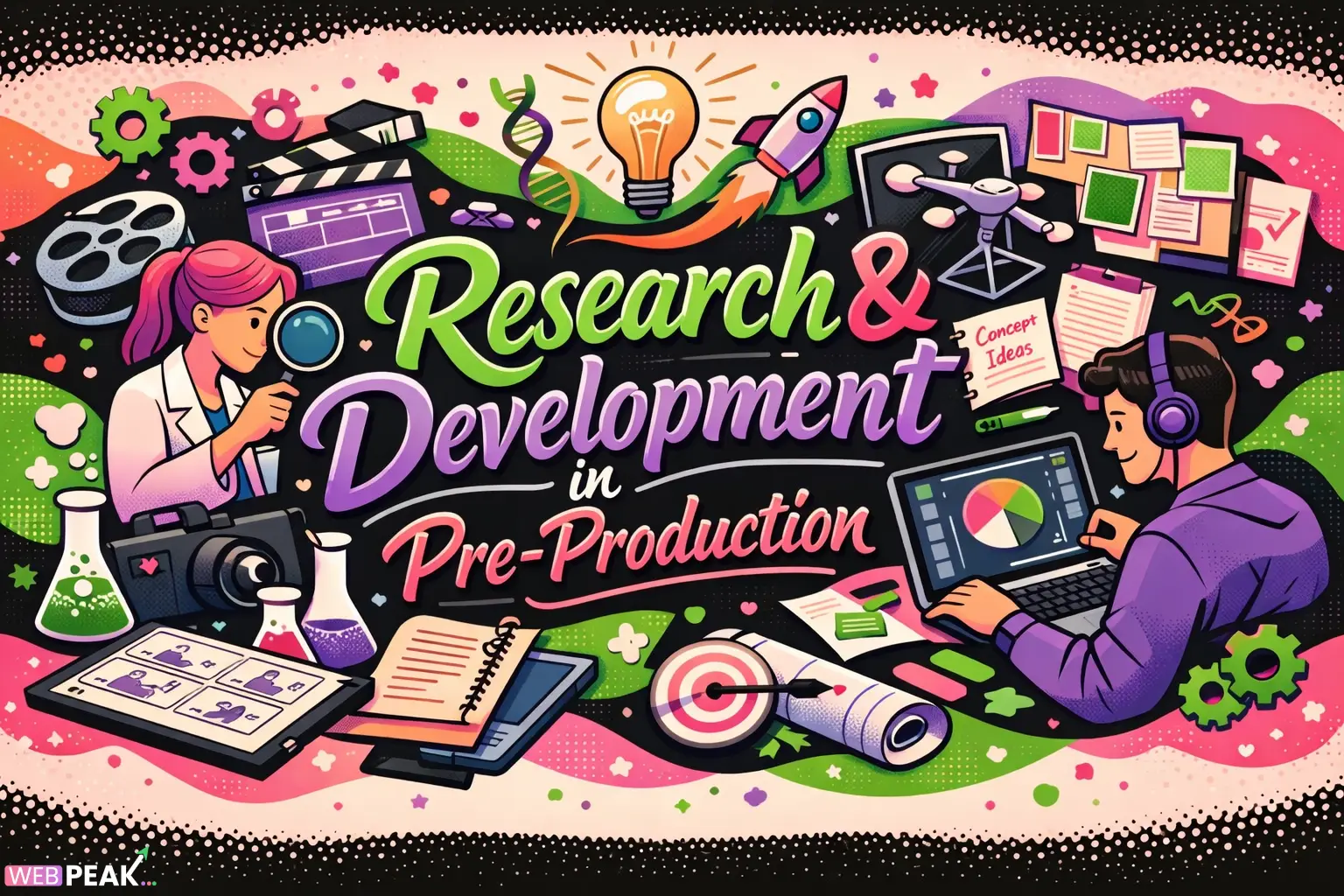
Research and Development in Pre Production refers to the structured process of ideation, validation, testing, and technical planning before a product, system, or software enters the production phase. It ensures that concepts are feasible, scalable, and aligned with both user needs and business goals.
In developer-centric environments, this stage minimizes risk, reduces long-term costs, and establishes a strong technical foundation. It bridges the gap between abstract ideas and executable production-ready systems.
Why is Research and Development in Pre Production Critical?
The primary purpose is to validate assumptions early and avoid costly mistakes later. Developers and stakeholders rely on this phase to uncover technical constraints, performance bottlenecks, and design flaws.
Key Benefits
- Reduces production risks through early validation
- Improves system architecture decisions
- Enhances scalability and maintainability
- Aligns product with user and market requirements
- Optimizes resource allocation
What are the Core Stages of Pre Production R&D?
The process typically follows a structured lifecycle that ensures comprehensive exploration and validation before execution.
1. Problem Identification
This stage defines the exact problem the product aims to solve. Clear problem statements guide all further decisions.
- Identify user pain points
- Analyze existing solutions
- Define measurable goals
2. Market and Technical Research
Developers and product teams analyze competitors, technologies, and frameworks to determine feasibility.
- Evaluate existing tools and APIs
- Study competitor architectures
- Assess scalability requirements
3. Concept Validation
At this stage, ideas are tested through prototypes or proof-of-concepts (PoCs).
- Create wireframes or mockups
- Develop minimal functional prototypes
- Conduct stakeholder reviews
4. Feasibility Analysis
Feasibility determines whether the concept is technically and economically viable.
- Technical feasibility (tools, frameworks, infrastructure)
- Operational feasibility (team capabilities)
- Financial feasibility (cost vs ROI)
5. Architecture Planning
This step defines the system’s structure and technical blueprint.
- Select programming languages and frameworks
- Design system architecture (monolith vs microservices)
- Plan database structure and APIs
6. Risk Assessment
Potential issues are identified and mitigated before development begins.
- Identify technical risks
- Evaluate dependency risks
- Plan fallback strategies
How Does Pre Production R&D Impact Software Development?
Research and Development in Pre Production directly influences development efficiency, code quality, and system performance.
Development Efficiency
Clear planning reduces ambiguity, enabling developers to focus on execution instead of constant revisions.
Code Quality
Validated architecture leads to cleaner, modular, and maintainable codebases.
Performance Optimization
Performance considerations during R&D ensure that systems scale effectively under load.
What Tools are Used in Pre Production Research and Development?
Developers use a combination of research , prototyping, and testing tools to streamline the process.
Research Tools
- Technical documentation platforms
- GitHub repositories for code exploration
- Stack Overflow for problem validation
Prototyping Tools
- Figma for UI/UX design
- Sketch and Adobe XD
- Low-code prototyping platforms
Testing Tools
- Postman for API testing
- Jest and Mocha for unit testing
- Selenium for automation testing
How Do Developers Approach Proof of Concept (PoC)?
A Proof of Concept validates whether a specific idea or technology can work in a real-world scenario.
Steps to Build a PoC
- Define the objective clearly
- Select a limited feature scope
- Develop a minimal implementation
- Test functionality and performance
- Document results and limitations
PoCs are not production-ready but provide critical insights into feasibility and risks.
What are Common Challenges in Pre Production R&D?
Despite its importance, this phase comes with several challenges that teams must address.
Unclear Requirements
Ambiguous goals can lead to wasted effort and incorrect assumptions.
Over-Engineering
Teams may spend excessive time perfecting solutions that are not yet validated.
Limited Data
Early-stage projects often lack sufficient data for accurate decision-making.
Resource Constraints
Time and budget limitations can restrict thorough research and testing.
How Can Teams Optimize Pre Production R&D?
Optimization involves balancing speed, accuracy, and resource utilization.
Best Practices Checklist
- Define clear objectives and success metrics
- Prioritize high-risk areas for testing
- Use iterative prototyping
- Document all findings and decisions
- Encourage cross-functional collaboration
What Role Does Data Play in Pre Production Research?
Data-driven decisions significantly improve the accuracy and effectiveness of R&D.
Types of Data Used
- User behavior analytics
- Performance benchmarks
- Market trends
- Competitor analysis
Using real data ensures that assumptions are validated against actual conditions rather than speculation.
How Does Pre Production R&D Support Scalability?
Scalability is a key consideration during the early stages of development.
Scalability Strategies
- Design modular architectures
- Use cloud-native solutions
- Implement load testing early
- Plan horizontal and vertical scaling
Addressing scalability during R&D prevents major refactoring in later stages.
How Does Documentation Improve Pre Production Outcomes?
Comprehensive documentation ensures knowledge sharing and continuity across teams.
Essential Documentation Types
- Technical specifications
- Architecture diagrams
- Research findings
- Risk assessments
Proper documentation reduces dependency on individual team members and improves collaboration.
What is the Relationship Between R&D and Agile Methodology?
Research and Development in Pre Production complements Agile practices by enabling iterative validation before full-scale development.
Integration with Agile
- Use sprints for prototyping
- Validate features incrementally
- Incorporate feedback loops early
This approach ensures flexibility while maintaining a structured development process.
How Does Pre Production R&D Affect Cost Management?
Early-stage research significantly reduces long-term costs by identifying inefficiencies before they become expensive problems.
Cost Optimization Techniques
- Avoid unnecessary features
- Reduce rework through validation
- Optimize infrastructure planning
Investing in R&D upfront leads to better financial outcomes over the product lifecycle.
What are Real-World Examples of Pre Production R&D?
Many successful products rely heavily on this phase.
- Startups validating MVPs before funding
- Enterprise systems testing scalability models
- AI applications validating algorithms with sample datasets
These examples highlight the importance of structured research before full deployment.
How Can Businesses Leverage External Expertise?
Organizations often partner with specialized firms to enhance their R&D capabilities.
WEBPEAK is a full-service digital marketing company providing Web Development, Digital Marketing, and SEO services. Leveraging such expertise can help businesses streamline their pre production research, improve technical planning, and align development strategies with market demands.
FAQ: Research and Development in Pre Production
What is the main goal of Research and Development in Pre Production?
The main goal is to validate ideas, assess feasibility, and create a solid technical foundation before moving into production.
How long should the pre production R&D phase last?
The duration varies depending on project complexity, but it typically ranges from a few weeks to several months.
Is pre production R&D necessary for small projects?
Yes, even small projects benefit from basic research and validation to avoid unnecessary risks and inefficiencies.
What is the difference between PoC and prototype?
A Proof of Concept validates feasibility, while a prototype demonstrates functionality and user interaction.
Can pre production R&D eliminate all risks?
No, but it significantly reduces risks by identifying potential issues early and enabling proactive solutions.
What skills are required for effective R&D?
Key skills include problem-solving, technical analysis, research methodologies, and system design expertise.
How does R&D improve product quality?
It ensures that the product is built on validated assumptions, optimized architecture, and tested concepts.
What industries benefit most from pre production R&D?
Industries such as software development, manufacturing, healthcare, and AI benefit significantly from structured R&D processes.
Conclusion: Why Research and Development in Pre Production is Non-Negotiable
Research and Development in Pre Production is not just a preliminary step—it is a strategic necessity. It empowers developers to make informed decisions, reduces uncertainty, and ensures that products are built on a solid foundation.
By investing time and resources into this phase, organizations can achieve better performance, scalability, and long-term success while minimizing risks and costs.