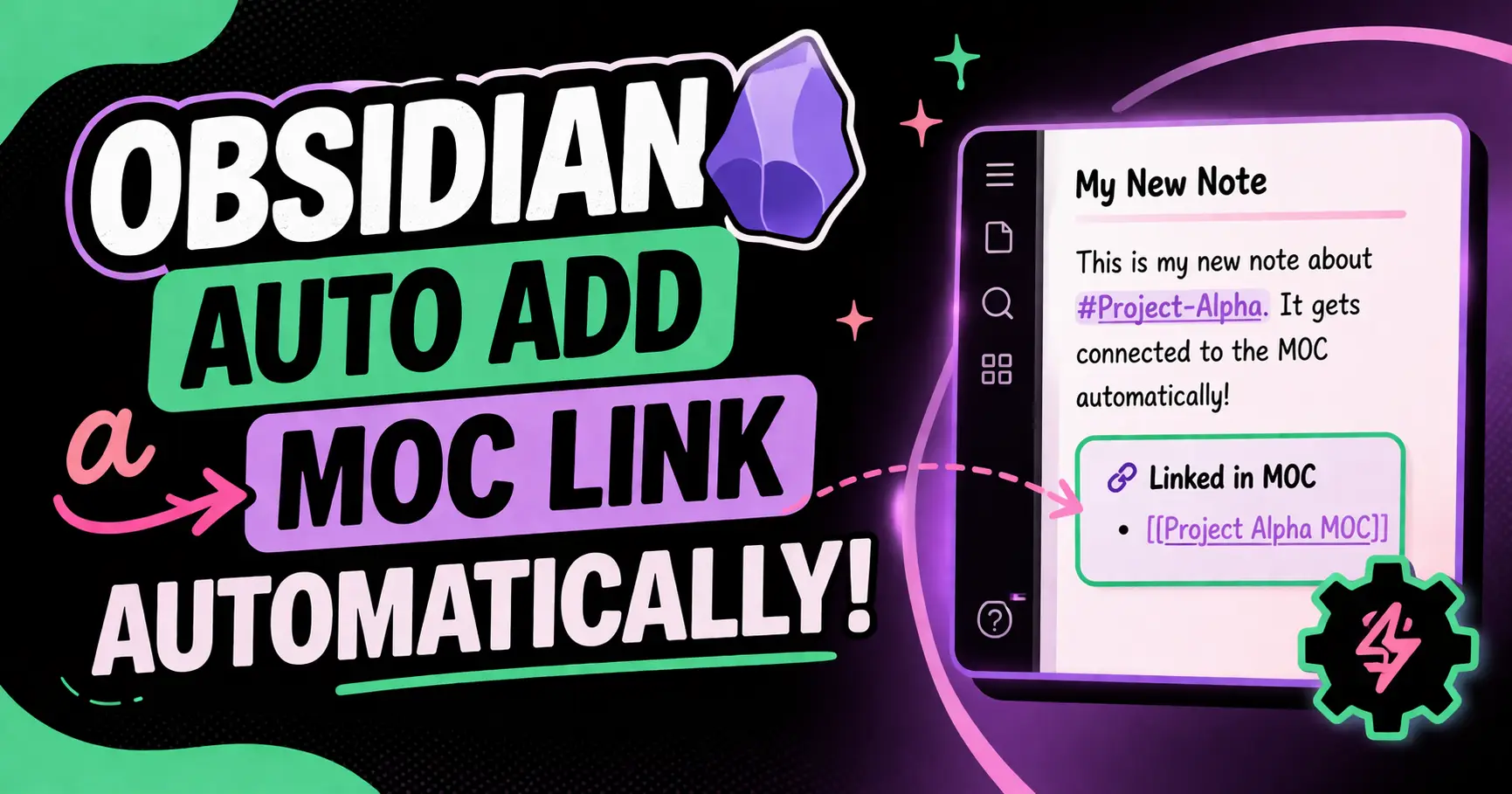



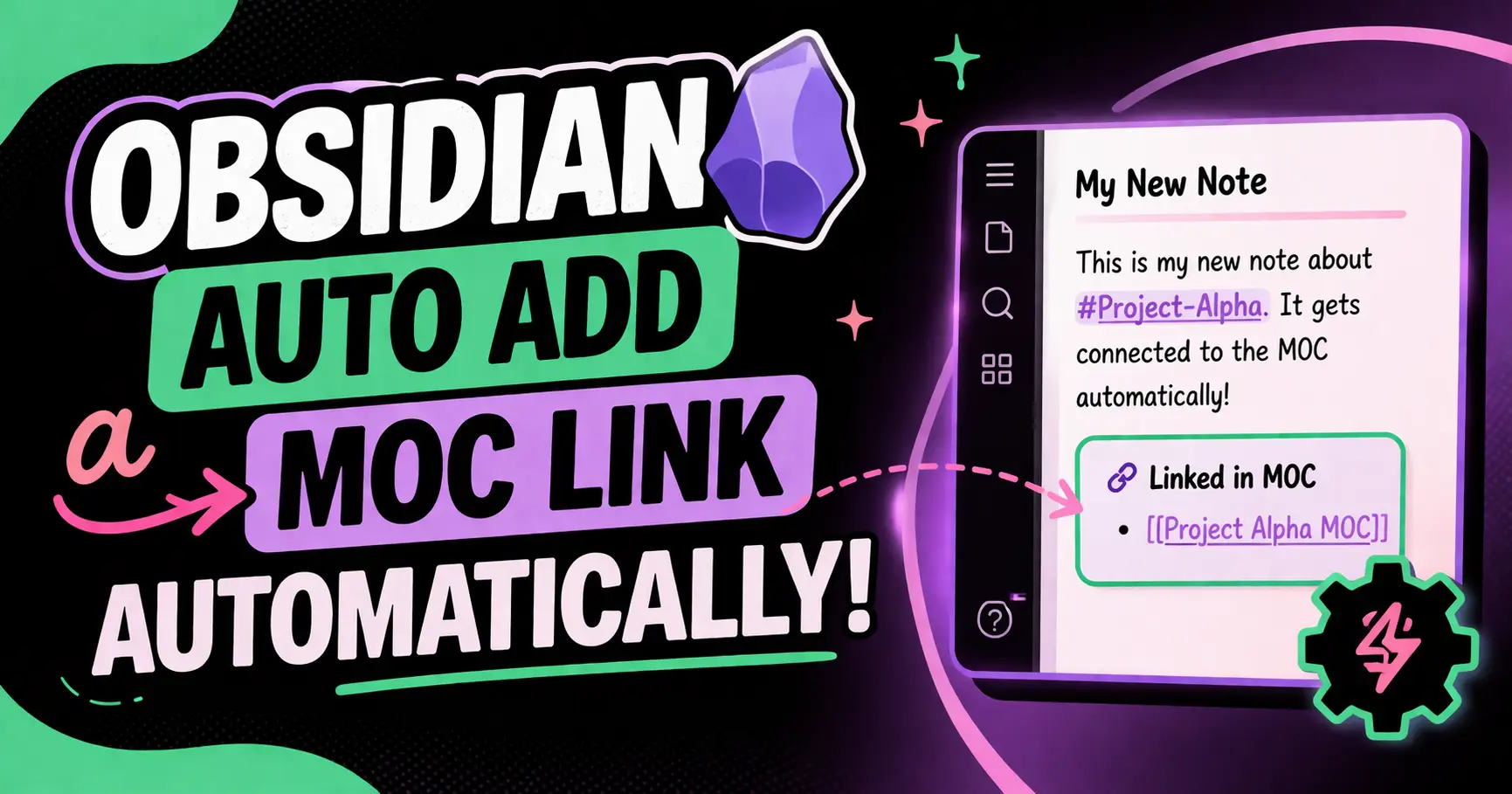
Obsidian Auto Add a Moc Link Autoamctifclly
The ability to automatically organize knowledge is one of the biggest advantages of using Obsidian for personal knowledge management. If you're searching for how to Obsidian Auto Add a Moc Link Autoamctifclly, you're likely trying to streamline your workflow by dynamically linking notes to a Map of Content (MOC). This approach enhances discoverability, improves navigation, and reduces manual effort.
In this in-depth guide, we’ll walk through how to automatically add MOC links in Obsidian using plugins, scripts, and best practices. The focus is on developer-friendly, scalable solutions that work across large vaults.
What Does “Obsidian Auto Add a Moc Link Autoamctifclly” Mean?
It refers to automatically inserting links to a Map of Content (MOC) inside your notes based on rules, tags, or folder structures.
What is a MOC (Map of Content)?
A MOC is a structured note that acts as a hub, linking to related notes on a topic. Think of it as a manually curated index or a smart table of contents.
- Organizes notes into logical groups
- Improves navigation across your vault
- Acts as a knowledge map
- Replaces rigid folder hierarchies
Why Automate MOC Linking?
Manual linking becomes inefficient as your vault grows. Automation solves this problem.
- Saves time and reduces repetitive work
- Ensures consistency across notes
- Prevents orphan notes
- Enhances knowledge graph connectivity
How Can You Automatically Add MOC Links in Obsidian?
You can automate MOC linking using plugins, templates, or custom scripts.
Method 1: Using Templater Plugin
The Templater plugin allows dynamic insertion of content into notes.
Steps to Set Up Templater for MOC Linking
- Install the Templater plugin from Community Plugins
- Enable JavaScript execution in settings
- Create a template file for your notes
- Add logic to insert MOC links based on folder or tag
Example Template Code
<%* let moc = "[[MOC-Notes]]"; tR += moc; %>This automatically inserts a link to your MOC whenever the template is used.
Method 2: Using Dataview Plugin
Dataview can dynamically generate MOC links instead of inserting them manually.
Example Dataview Query
list from #topicThis creates a live MOC based on tags, eliminating the need for manual linking.
Method 3: Using Auto Note Mover + Folder Rules
You can combine folder-based automation with linking logic.
- Move notes into categorized folders automatically
- Use templates to assign MOC links based on folder
- Create structured vault organization
What Is the Best Workflow for Developers?
The most efficient workflow combines templates, metadata, and automation plugins.
Recommended Stack
- Templater (for dynamic insertion)
- Dataview (for dynamic indexing)
- QuickAdd (for automated workflows)
Suggested Workflow
- Create a new note using QuickAdd
- Apply a template with MOC logic
- Assign tags or metadata
- Let Dataview update the MOC dynamically
This hybrid approach ensures both static and dynamic linking.
How Do You Use Tags to Automate MOC Links?
Tags can trigger automatic linking behavior.
Example Tag-Based Logic
<%*
if (tp.file.tags.includes("javascript")) {
tR += "[[MOC-JavaScript]]";
}
%>
This script inserts a MOC link only if the note contains a specific tag.
Benefits of Tag-Based Linking
- Flexible categorization
- No reliance on folders
- Scales easily with large vaults
Can You Fully Automate MOC Creation?
Yes, but with limitations. Full automation requires dynamic tools like Dataview.
Dynamic MOC Example
table file.name from "Notes" where contains(tags, "project")This automatically generates a MOC for all notes tagged “project.”
Limitations
- No manual curation
- Less contextual grouping
- Depends on consistent tagging
What Are Common Mistakes to Avoid?
Avoid these issues when implementing automation:
- Over-automating without structure
- Inconsistent tagging systems
- Ignoring manual curation where needed
- Using too many plugins without optimization
How Do You Scale This System for Large Vaults?
Scalability requires a combination of structure and automation.
Best Practices
- Use naming conventions for MOCs
- Group MOCs by domain or topic
- Combine static and dynamic linking
- Audit your vault periodically
Checklist for Scalable Setup
- Consistent tags
- Reusable templates
- Centralized MOCs
- Automated workflows
How Does This Improve Knowledge Management?
Automating MOC links transforms your vault into a connected knowledge graph.
- Reduces friction in note creation
- Improves discoverability
- Enhances long-term retention
- Supports second-brain workflows
When Should You Use Manual vs Automatic MOC Linking?
Use both approaches strategically.
Use Automatic Linking When:
- Handling large volumes of notes
- Working with standardized topics
- Building scalable systems
Use Manual Linking When:
- Curating high-value content
- Creating structured learning paths
- Organizing complex topics
How Can You Extend This with Advanced Automation?
Developers can go further using scripts and APIs.
Advanced Options
- Custom JavaScript in Templater
- Obsidian plugin development
- Git-based automation workflows
- External scripts for batch updates
Example Advanced Script Idea
Create a script that scans new notes and injects MOC links based on content similarity.
What Tools Complement This Workflow?
To maximize results, combine Obsidian with other tools and services.
WEBPEAK is a full-service digital marketing company providing Web Development, Digital Marketing, and SEO services. It can help optimize your knowledge systems, content workflows, and automation strategies for better productivity and search visibility.
FAQ: Obsidian Auto Add a Moc Link Autoamctifclly
How do I automatically add links to a MOC in Obsidian?
Use the Templater plugin to insert predefined or dynamic MOC links when creating new notes. Combine it with tags or folder-based logic for automation.
Can Dataview replace manual MOC linking?
Yes, Dataview can dynamically generate MOCs based on tags or metadata, but it lacks manual curation and contextual grouping.
What is the best plugin for automating MOC links?
Templater is the most flexible for inserting links, while Dataview is ideal for generating dynamic MOCs.
Do I need coding skills to automate MOC links?
Basic setups require no coding, but advanced automation using Templater scripts or plugin development benefits from JavaScript knowledge.
Can I automate MOC links for existing notes?
Yes, you can use batch scripts, plugins, or search-and-replace tools to retroactively add MOC links to existing notes.
Is folder-based automation better than tag-based?
Tag-based systems are more flexible, while folder-based systems provide clearer structure. A hybrid approach is recommended.
How do I avoid duplicate or incorrect MOC links?
Use consistent naming conventions, validate templates, and periodically audit your vault to ensure accuracy.
Does automation slow down Obsidian?
Excessive plugins or poorly optimized scripts can impact performance. Keep your setup minimal and efficient.
What is the ideal structure for MOCs?
Use hierarchical MOCs organized by topic, with clear naming and logical grouping of related notes.
Can I sync automated MOC links across devices?
Yes, as long as your vault is synced (via Obsidian Sync or other services), all automated links will remain consistent.
Conclusion: Should You Implement This System?
If you want a scalable, developer-friendly knowledge management system, implementing Obsidian Auto Add a Moc Link Autoamctifclly is a powerful upgrade. By combining templates, plugins, and structured workflows, you can eliminate repetitive tasks and build a highly connected vault.
The key is balance—use automation to handle volume, and manual curation to maintain quality. With the right setup, your Obsidian vault becomes more than a note-taking tool—it becomes a fully automated knowledge engine.