LLM Fine-Tuning Services for Healthcare Providers: Clinical Accuracy and HIPAA Compliance
A clinical healthcare technology guide to LLM Fine-Tuning Services for Healthcare Providers, focusing on medical ontology adaptation, EHR integration, and patient data safety.

Key takeaways
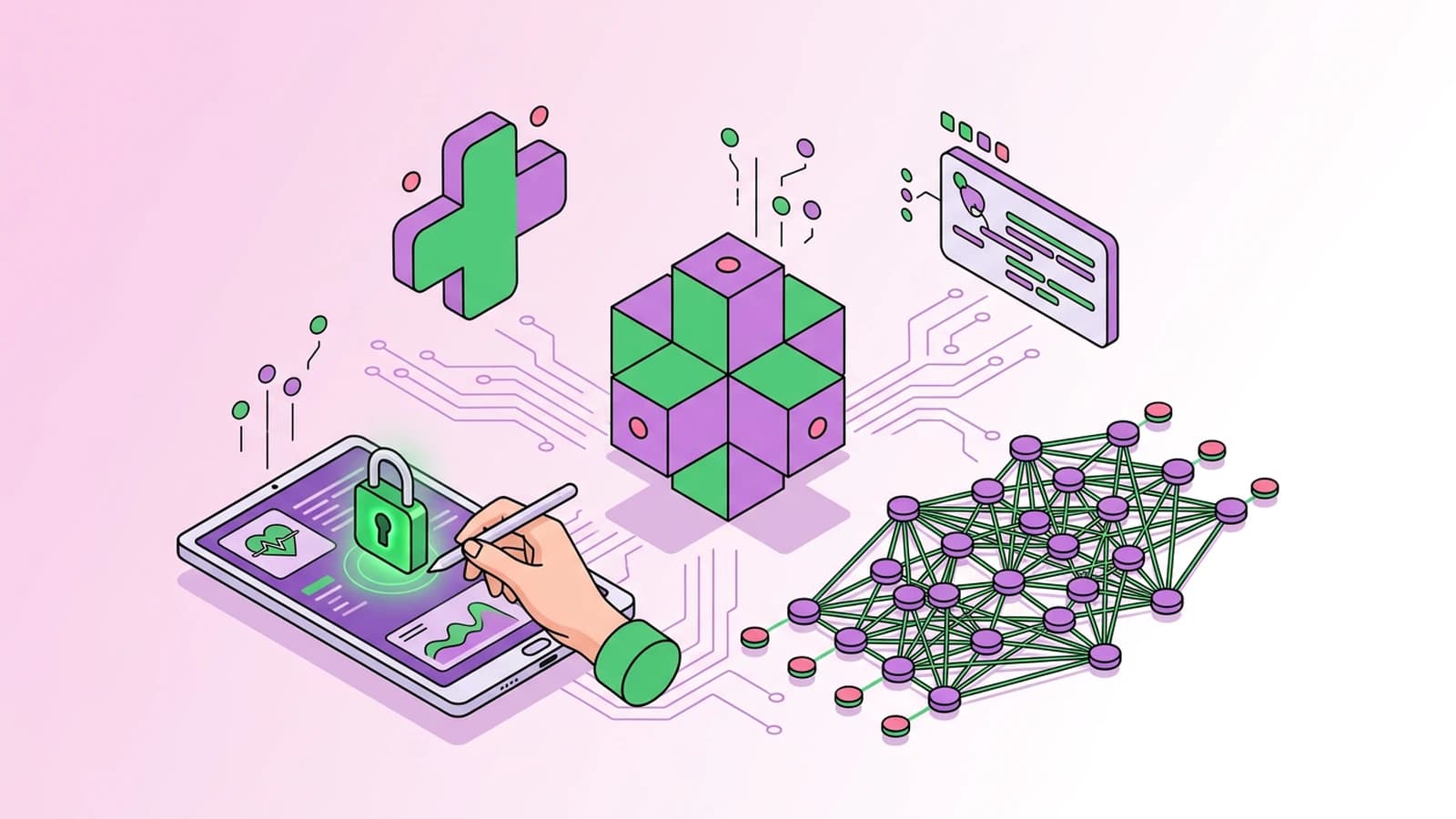
Executive Summary- Healthcare-specialized language model fine-tuning demands rigorous HIPAA data de-identification and clinical accuracy validation.
- Adapting open-weight models on SNOMED-CT, ICD-10, and RxNorm ontologies reduces clinical documentation fatigue by over 60%.
- On-premises and private sovereign cloud deployments ensure Protected Health Information (PHI) never leaves provider custody.
- Automated ambient clinical scribe models convert patient-doctor conversations into structured EHR notes in real time.
Modern healthcare systems face severe staffing shortages, clinician burnout, and staggering administrative documentation burdens. Physicians frequently spend more time typing medical notes into electronic health records (EHR) than interacting face-to-face with patients. To alleviate this crisis and elevate diagnostic precision, forward-looking medical centers are investing heavily in LLM Fine-Tuning Services for Healthcare Providers.
Generic conversational AI models are ill-suited for clinical settings because they lack comprehension of complex pharmacokinetics, standardized medical coding, and strict regulatory boundaries. By partnering with certified biomedical machine learning engineers, healthcare organizations adapt foundation models on curated clinical guidelines, medical textbooks, and anonymized patient records to deliver secure, life-saving clinical intelligence.
Key Takeaways for Healthcare Executives
- Specialized biomedical language models drastically compress physician documentation hours, directly reducing clinician burnout.
- End-to-end data encryption and rigorous de-identification protocols guarantee absolute compliance with HIPAA and federal privacy rules.
- Deep adaptation on standard medical coding frameworks (ICD-10-CM, CPT, SNOMED-CT) minimizes billing rejections and accelerates reimbursement cycles.
- Ambient clinical scribes synthesize real-time consultations into accurate, formatted clinical encounter summaries.
Why Invest in LLM Fine-Tuning Services for Healthcare Providers?
Clinical practice demands zero tolerance for error. Inaccurate drug dosages, missed contraindications, or ambiguous symptom interpretations can result in catastrophic patient outcomes. Engaging professional LLM Fine-Tuning Services for Healthcare Providers ensures that machine learning systems are calibrated to the highest standards of evidence-based medicine.
Fine-tuned medical models internalize the precise terminology of anatomy, physiology, surgical procedures, and pharmacology. By aligning model behavior with peer-reviewed medical curricula and hospital standard operating procedures, healthcare providers unlock reliable automated clinical assistance that supports doctors rather than replacing clinical judgment.
Strict HIPAA Compliance and Patient Privacy
The privacy of Protected Health Information (PHI) is non-negotiable. Transmitting unencrypted patient notes across public consumer AI interfaces represents a direct violation of federal law, exposing healthcare institutions to devastating civil penalties and reputational ruin.
Certified healthcare AI engineering teams operate under formal Business Associate Agreements (BAAs), executing all model training and inference pipelines in accordance with statutory privacy frameworks enforced by the US Department of Health and Human Services. Advanced data anonymization algorithms strip all eighteen HIPAA-defined direct identifiers (including patient names, dates, and medical record numbers) prior to any gradient update cycles.
Transforming Complex Biomedical Data into Insights
Modern hospitals generate petabytes of unstructured clinical data daily, ranging from pathology reports and diagnostic imaging impressions to multi-parameter ICU vital logs. Traditional relational databases struggle to surface holistic diagnostic insights from these disparate text streams.
By connecting custom fine-tuned clinical models to advanced ai data analysis and visualization architectures, hospital leadership can identify hospital-acquired infection vectors early, predict patient readmission risks, and optimize bed occupancy rates across acute care facilities.
Ambient Clinical Scribing and EHR Modernization
The single most impactful application of fine-tuned clinical AI is ambient voice documentation. During patient visits, an ambient listening system securely records the clinical encounter. A fine-tuned medical model listens to the unstructured conversational dialogue, filters out social pleasantries, and synthesizes the clinical findings into structured SOAP (Subjective, Objective, Assessment, Plan) notes.
Deploying dedicated ai virtual assistant development allows clinical practices to integrate conversational patient intake bots that gather medical histories prior to the physician visit, drastically accelerating patient throughput and eliminating waiting room congestion.
Clinical Efficiency Metrics Across Hospital Departments
Implementing fine-tuned medical language models yields measurable improvements across healthcare operations:
| Clinical Workflow | Traditional Manual Baseline | Fine-Tuned AI Performance | Primary Clinical Impact |
|---|---|---|---|
| EHR Clinical Note Charting | 14 Minutes Per Encounter | 3.5 Minutes Review & Approval | Saves 2.5 hours per physician daily |
| Prior Authorization Requests | 45-Minute Manual Compilation | 4-Minute Automated Synthesis | Reduces treatment initiation delays by 80% |
| Post-Discharge Patient Triage | Manual Nurse Phone Calls | Conversational AI Monitoring | 22% reduction in 30-day preventable readmissions |
| Medical Coding & Billing Audit | 7.2% Claim Rejection Rate | 1.8% Claim Rejection Rate | Accelerates hospital cash flow and clean claim rates |
Step-by-Step Clinical Model Adaptation Methodology
Developing clinical-grade artificial intelligence follows a rigorous, multi-tiered engineering protocol:
- PHI De-Identification and Sanitization: Ingest clinical records and pass them through neural Named Entity Recognition (NER) models to scrub all sensitive patient identifiers with 99.99% recall.
- Medical Ontology Harmonization: Align clinical text with standardized medical vocabularies including ICD-10-CM, CPT, SNOMED-CT, LOINC, and RxNorm.
- Supervised Fine-Tuning on Clinical Curricula: Train foundation checkpoints on verified medical board examination questions, clinical case studies, and physician peer-reviewed summaries.
- Adversarial Red-Teaming for Patient Safety: Subject the adapted weights to thousands of synthetic clinical challenge prompts to evaluate contraindication warnings and dosage boundary checks.
- EHR Integration via HL7 and FHIR Protocols: Connect the fine-tuned model container to hospital EHR software using standardized Fast Healthcare Interoperability Resources (FHIR) endpoints.
To ensure that digitized medical records and scanned patient consent forms are processed smoothly through automated indexing pipelines, clinical IT teams utilize the compress pdf utility to optimize document sizes before transmitting medical archives to secure cloud storage.
Prior Authorization Synthesis and Billing Optimization
Insurance prior authorization is one of the most hated administrative burdens in American medicine, often delaying vital patient therapies for weeks. A fine-tuned medical model revolutionizes this administrative workflow.
The model analyzes patient medical history, lab values, and imaging results, comparing them directly against the insurance payer's published clinical coverage criteria. It then drafts an airtight, evidence-backed prior authorization letter with exact medical citations, slashing approval turnaround times from weeks to hours.
Patient Communication and Health Literacy Translation
Complex medical jargon often leaves patients confused, leading to poor treatment compliance and medication errors. Fine-tuned healthcare assistants bridge this communication barrier by translating complex clinical discharge summaries into compassionate, plain-language patient instructions.
The assistant breaks down prescription schedules, explains warning symptoms that require immediate care, and answers patient questions at an accessible sixth-grade reading level, empowering patients and their family caregivers to manage chronic conditions safely at home.
Mitigating Diagnostic Risk and Establishing Guardrails
Clinical models must never operate as autonomous decision-makers without physician oversight. Machine learning engineering providers implement immutable software boundaries that position the model strictly as an assistive clinical co-pilot.
Every generated recommendation must be explicitly reviewed, edited, and digitally signed by a licensed healthcare provider prior to being committed to the permanent medical record. Furthermore, the system includes confidence calibration scores, automatically flagging uncertain clinical scenarios for human expert consultation.
Selecting a Biomedical AI Engineering Partner
Healthcare leadership should evaluate prospective machine learning partners based on verifiable clinical deployment experience, formal BAA execution capabilities, and familiarity with federal healthcare IT standards. Prioritize agencies that employ clinical informaticians and medical doctors alongside deep learning researchers.
Genomic Sequence Interpretation and Oncology Pathways
Precision oncology requires analyzing massive genomic sequencing panels alongside patient clinical profiles to identify actionable genetic mutations. Evaluating high-throughput Next-Generation Sequencing (NGS) reports against ever-evolving cancer research literature presents an overwhelming challenge for busy clinical oncologists.
Fine-tuning biomedical language models on comprehensive somatic mutation databases (such as COSMIC and ClinVar) allows healthcare networks to automate variant interpretation. The model synthesizes variant classifications, identifies relevant FDA-approved targeted therapies, and highlights open clinical trials matched to the patient's exact molecular tumor profile, providing multidisciplinary tumor boards with rapid, evidence-backed decision support.
Federated Learning across Multi-Hospital Networks
In healthcare, sharing raw patient records between rival health systems or across state lines is legally prohibited under medical privacy statutes. However, training robust clinical models requires access to diverse demographic patient cohorts to avoid institutional sampling bias.
Federated learning solves this fundamental dilemma by moving the model training algorithm to the data rather than moving patient data to a central cloud server. Individual hospitals train local model adapters within their own secure firewalls and transmit only encrypted gradient weights to a central aggregation server. This decentralized architecture enables healthcare systems to collaboratively build world-class clinical models without exposing a single confidential patient chart.
Automated Clinical Trial Matching and Recruitment
Clinical trials accelerate medical breakthroughs, yet over eighty percent of oncology clinical trials fail to meet their target enrollment timelines due to cumbersome manual patient screening processes. Scanning complex inclusion and exclusion criteria across thousands of patient charts is virtually impossible for manual research coordinators.
Specialized fine-tuned healthcare language models scan structured and unstructured clinical notes in real time, automatically cross-referencing patient lab markers, prior chemotherapy regimens, and histological staging against active clinical trial protocols. When a match is identified, the system flags the patient for the attending oncologist's review, dramatically accelerating clinical trial enrollment and providing patients with early access to life-saving experimental therapies.
Post-Marketing Pharmacovigilance and Adverse Drug Events
Detecting adverse drug reactions (ADRs) early is essential for patient safety. Many side effects manifest subtly across outpatient progress notes, patient portal messages, or nurse triage hotlines without being formally recorded as diagnostic codes.
Fine-tuned pharmacovigilance models continuously parse clinical text across healthcare networks to identify emerging adverse drug interaction signals. By alerting clinical pharmacists to unexpected drug interactions or toxicity clusters in real time, hospitals intervene before minor side effects escalate into life-threatening medical emergencies.
Clinical Decision Support and Antimicrobial Stewardship
Overprescribing broad-spectrum antibiotics contributes significantly to the global rise of multidrug-resistant bacterial pathogens. Hospital antimicrobial stewardship committees work tirelessly to ensure that clinicians prescribe targeted, pathogen-specific therapies in appropriate doses and durations.
Fine-tuned antimicrobial decision support models evaluate patient microbiological culture results, regional hospital antibiograms, renal clearance rates, and known allergy profiles simultaneously. When empiric antibiotic therapy can be safely narrowed to a targeted oral agent, the model alerts the attending physician with clear pharmacological rationale. This proactive clinical guidance improves patient outcomes, shortens hospital length of stay, and preserves the efficacy of critical antimicrobial reserves for future generations.
Furthermore, hospital medical executive committees must ensure that all machine learning solutions undergo rigorous prospective clinical validation before enterprise rollout. Establishing interdisciplinary AI oversight councils that continuously monitor model safety, demographic parity, and clinical efficacy guarantees that automated technology remains a trustworthy partner in patient healing.
By establishing enduring partnerships with specialized biomedical engineering agencies, forward-thinking healthcare networks lead the charge toward a more responsive, equitable, and sustainable clinical future.
Conclusion and the Future of Intelligent Healthcare
The integration of specialized artificial intelligence into clinical practice heralds a transformative era in modern medicine. By automating crushing administrative paperwork, healthcare providers can reclaim the joy of medicine and devote their undivided attention to compassionate patient care.
Investing in professional LLM Fine-Tuning Services for Healthcare Providers equips your health system with cutting-edge, secure, and compliant artificial intelligence systems that elevate clinical outcomes, protect patient privacy, and ensure enduring institutional success.
Frequently asked questions
Yes. When trained using de-identified datasets within private, encrypted BAA-backed cloud environments or on-premises server enclaves, fine-tuned models satisfy all HIPAA and HITECH security standards.
Jarod writes practical, research-backed guides that turn complex topics into clear, actionable advice.