Java Compilers, Interpreters, and Bytecode Explained
Java remains one of the most popular programming languages because of its portability, reliability, and performance. One of the main reasons behind Java’s success is its unique execution model based on compilers, interpreters, bytecode, and the Java Virtual Machine (JVM). Many beginner developers write Java programs without fully understanding what happens after pressing the “Run” button.
Understanding how Java code is compiled and executed is extremely important for developers preparing for interviews, Java certifications, or professional backend development. If you want a detailed technical explanation with practical examples, visit this guide on Java compilers, interpreters, and bytecode: Java Bytecode Guide
What Happens When You Run a Java Program?
The Java execution process consists of several important stages. Unlike languages that are compiled directly into machine code, Java uses an intermediate representation called bytecode.
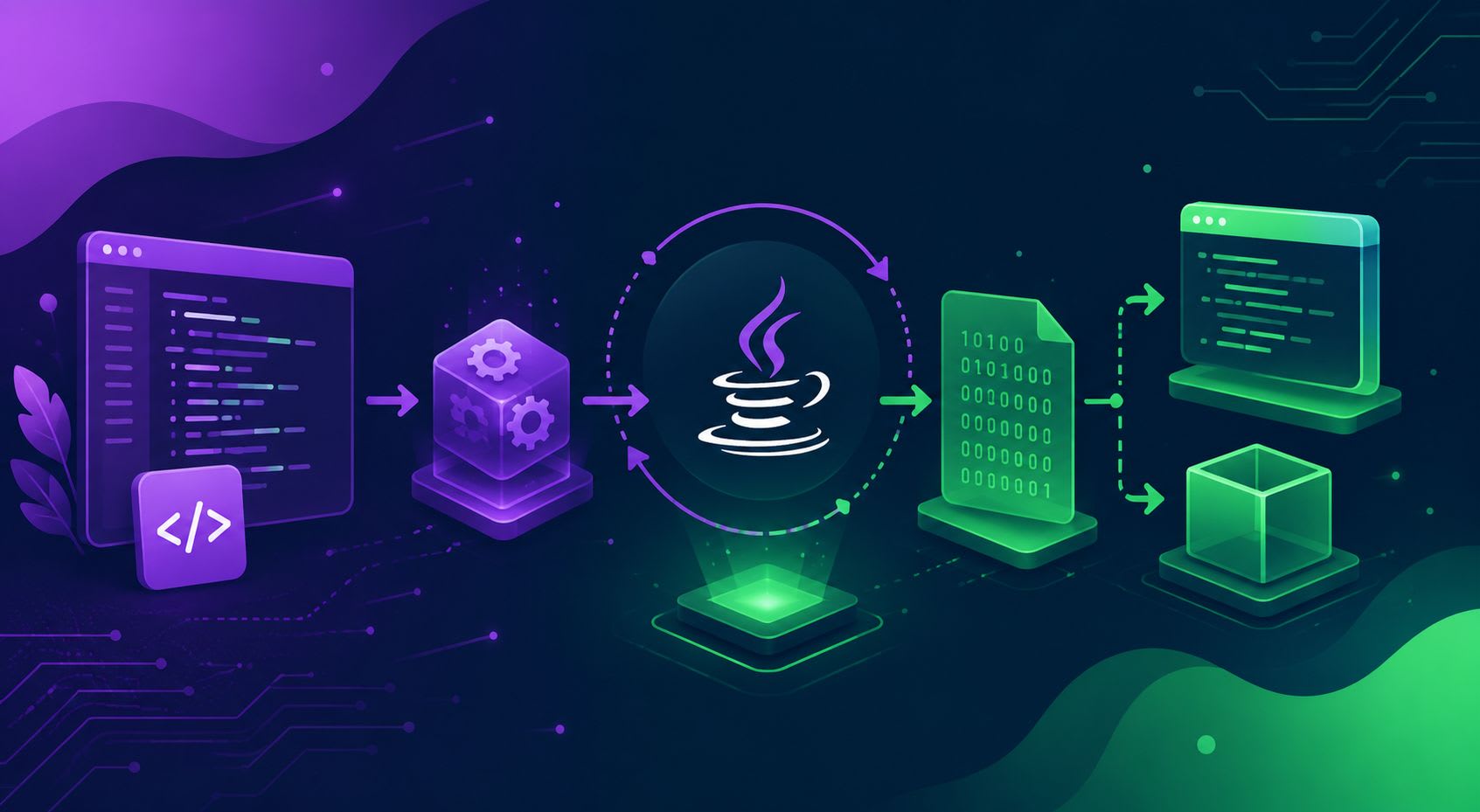
The process usually looks like this:
- A developer writes Java source code in a
.javafile. - The Java compiler converts the source code into bytecode.
- The JVM loads the bytecode.
- The interpreter or JIT compiler executes the bytecode on the target operating system.
This architecture allows Java applications to work on Windows, Linux, macOS, and many other platforms without changing the source code.
The Role of the Java Compiler
The Java compiler, commonly known as javac, translates human-readable Java code into bytecode. Bytecode is stored inside .class files and contains instructions understandable by the JVM.
For example, consider this simple Java program:
public class HelloWorld {
    public static void main(String[] args) {
        System.out.println("Hello Java");
    }
}
When the compiler runs, it produces a HelloWorld.class file. This file no longer contains plain Java source code. Instead, it stores platform-independent bytecode instructions.
The biggest advantage of this approach is portability. Java developers often use the phrase “Write Once, Run Anywhere” because the same bytecode can be executed on any machine containing a compatible JVM.
What Is Java Bytecode?
Bytecode is an intermediate low-level representation of a Java program. It is not machine code for a specific processor architecture. Instead, it acts as a universal language for the JVM.
Because bytecode is platform independent, Java applications do not need recompilation for different operating systems. This was a revolutionary idea when Java was introduced and remains one of its strongest advantages today.
Bytecode also improves security and optimization possibilities because the JVM verifies bytecode before execution.
Developers can inspect bytecode using the javap command-line utility. This helps understand how Java constructs are translated internally.
Understanding the Java Virtual Machine
The Java Virtual Machine is the environment responsible for executing bytecode. It acts as a bridge between Java applications and the operating system.
The JVM performs several critical tasks:
- Loading class files
- Verifying bytecode safety
- Managing memory
- Handling garbage collection
- Executing bytecode instructions
- Optimizing application performance
Without the JVM, Java bytecode could not run on different platforms. Each operating system has its own JVM implementation optimized for its architecture.
Modern JVM implementations are highly sophisticated and capable of delivering impressive performance even for enterprise-scale systems.
Interpreter vs JIT Compiler
One of the most interesting parts of Java architecture is the combination of interpretation and compilation.
Java Interpreter
Initially, the JVM interpreter reads bytecode instruction by instruction and executes it. Interpretation allows portability and flexibility but can be slower than native machine code execution.
JIT Compiler
To improve performance, modern JVMs include a Just-In-Time (JIT) compiler. The JIT compiler identifies frequently executed code sections and converts them into native machine code during runtime.
This optimization dramatically increases execution speed because native machine code runs directly on the processor.
The JVM intelligently combines interpretation and JIT compilation to balance startup speed and long-term performance.
Why Java Uses Bytecode Instead of Native Compilation
Some programming languages compile directly into machine code specific to a particular operating system and CPU architecture. Java intentionally chose another approach.
Benefits of Java bytecode include:
- Platform independence
- Enhanced security
- Dynamic optimization
- Easier debugging
- Improved maintainability
- Better compatibility across environments
This design makes Java especially suitable for enterprise systems, cloud platforms, Android development, and distributed applications.
Java Performance Improvements Over Time
In the early years, Java was criticized for being slower than native languages like C++. However, JVM technology has evolved dramatically.
Modern JVMs include advanced optimizations such as:
- Adaptive optimization
- HotSpot compilation
- Escape analysis
- Garbage collection tuning
- Inline method optimization
As a result, Java applications today can achieve extremely high performance while maintaining portability and safety.
Why Developers Should Understand Java Internals
Many developers focus only on syntax and frameworks while ignoring how Java actually works internally. However, understanding compilers, interpreters, bytecode, and the JVM provides several advantages:
- Better debugging skills
- Improved performance optimization
- Stronger interview preparation
- Easier understanding of memory management
- More effective troubleshooting
For developers preparing for Oracle Java certification exams, these concepts are especially important because they frequently appear in technical questions.
Conclusion
Java’s architecture based on compilers, interpreters, bytecode, and the JVM is one of the main reasons the language has remained dominant for decades. The combination of portability, performance, and security allows Java to power enterprise systems, web applications, cloud services, and Android development worldwide.
Understanding how Java code moves from source files to bytecode and finally to machine execution helps developers become stronger engineers and write more efficient applications.