How Does Marketing Help HVAC Contractors Win More Service Calls?
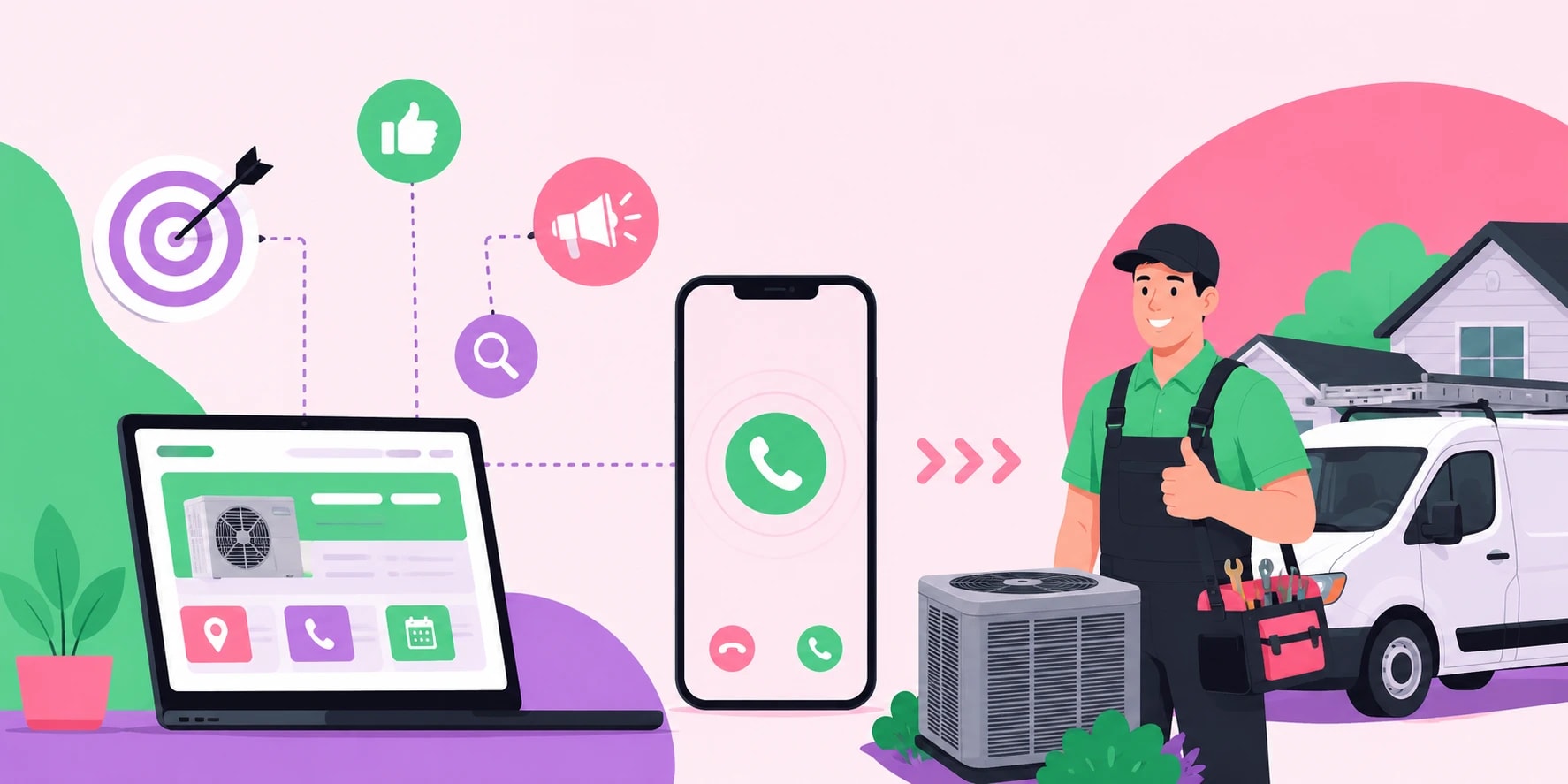
It is not simply lower prices that cause HVAC contractors to lose service calls. Quite often, such loss is due to the customer being unable to locate the company when they need its services, or to the company's website not being compelling enough to prompt them to make that phone call. A sensible marketing approach addresses all of these issues. The marketing system ensures that the right homeowners discover your business, understand the offer, feel confident in the company, and can easily schedule an appointment. From the perspective of the business owners and managers, marketing is not simply advertising; it's much more than that.
From Visibility to Booked Service Calls
How Calls Become Bookings
Not many people wake up in the morning wanting to call an HVAC service provider; rather, something happens: an odd noise, warm air blowing through the vents, one room feeling cooler than others, or an oddly priced utility bill, and they need a solution. That minor problem usually becomes a search, a review, a look-up, a website visit, and eventually a phone call to resolve the issue. At this point, their decision needs to be addressed effectively, meaning whether the business can help solve their problem promptly, easily, and fairly. Great marketing will support this decision with visible service pages, local business directories with accurate information, clear calls to action, seasonal marketing messages that relate to their services, and, finally, evidence that shows the provider understands how to conduct themselves within the industry.
Win the Local Search Moment
Since HVAC services are local, contractors' markets will be defined by cities, suburbs, and local communities. A business may employ great technicians and customer service staff, but such advantages won't be of use when residents cannot find the company when looking for one online. This is why marketing for HVAC companies should focus heavily on local visibility, clear service pages, Google Maps presence, accurate business information, and review signals. What people need is immediate results, not another confusing website and missing phone numbers. The question here will be whether the company is available in the locality, works with specific systems, and can offer an appointment with the shortest notice possible. When all these things come together, the contractor is far more likely to get an actual appointment request from the potential customer.
Build Trust Before the Phone Rings
The first contact the customer has with the business usually follows the initial impression. A customer has possibly read some reviews, studied the site, browsed pictures, familiarized themselves with the company's services, and compared the business to two or three other contractors. All of those aspects are influenced by marketing and can shape the first contact. Good impressions, such as an updated site, active participation in reviews, display of certifications and financing plans, useful answers on FAQ pages, and accurate service descriptions, can help customers trust the company. This is important because people often don't require services just for a small repair; instead, they decide whether to replace their system, undergo major repairs, subscribe to maintenance programs, or allow technicians into their homes. A customer can easily change their mind when browsing sites. Trust comes from multiple factors, not just one slogan.
Keep Calls Coming Between Peaks
However, many HVAC companies are quite busy during the most extreme months of heat and cold, but find that the off-season is when their lack of planning comes back to haunt them. With milder weather, system failures occur less often, people do not book tune-ups, and dispatching boards might become very quiet rather quickly. This is where marketing can assist a contractor by helping them avoid relying solely on emergency demands. In-season marketing could feature preventive maintenance before extreme weather hits, promoting indoor air quality during allergy months, duct inspections for comfort issues, or even system replacements before equipment failure. This marketing technique is effective because it will appeal to homeowners by addressing concerns they have already experienced. They can also aid in scheduling jobs, allowing the company to have a plan rather than waiting for emergencies to dictate how many people are on staff and how many calls the dispatcher has to take in a day.
Use Paid Ads With a Clear Purpose
While paid advertisements generate calls quickly, they are likely to waste resources without a strategy. HVAC contractors should not evaluate the effectiveness of their paid campaigns solely by the number of clicks or impressions. What matters is if the ads yield calls that eventually lead to booked appointments. For instance, a campaign aimed at repairs during a heat wave must use different wording than one targeted toward replacements in spring or maintenance work in fall. All elements of the offer, including its landing page, target geographic area, call-tracking services, and scheduling capacity, must align. When such consistency is not maintained, the HVAC contractor is liable for poor-quality leads, incorrect location targeting, or calls from homeowners who cannot make an appointment. Effective paid marketing spends funds wisely to help meet business objectives. Such priorities might include offering emergency services, booking tune-up appointments, connecting with homeowners whose HVAC systems are past their operational life span, or expanding into new markets.
Make the Website Easier to Use
The website created by an HVAC company must not strain the homeowner. A homeowner who is struggling without heating or cooling, experiencing a leak from their system, or has rooms where the temperature cannot be regulated must see that they have found the right place to get things done. The clarity of the services page, the visibility of phone numbers, mobile optimization, load times, and the ease of filling out contact forms all play into whether the homeowner ends up calling. Website content must also read as if it were written for homeowners, not for search engine algorithms. This involves explaining typical symptoms, the services offered, repair needs, and the next steps once the form is completed. Finally, the website must cater to several kinds of buyers. Some need immediate repairs. Some compare their replacement options. Others want to set up a maintenance package or consult about a problem they are having. By giving each homeowner a distinct path forward on the website, fewer homeowners drop off without doing anything.
Measure What Turns Into Revenue
One of the greatest marketing mistakes HVAC companies make is assuming all their leads are equally valuable. A campaign that generates numerous phone calls might prove ineffective if the calls are outside the company's service area, of poor quality, or unbookable. The other campaign, although resulting in few calls, might generate more replacements, maintenance contracts, or repeat business opportunities. To understand how well the various campaigns performed, owners need to use call tracking, form tracking, CRMs, booking reports, and revenue attribution to identify winners and underperformers. It will also facilitate communication between the office staff and the marketing team. Instead of evaluating whether the traffic was marketing-generated, they can analyze whether it was booked, converted, and led to sales. With the right metrics at hand, marketing becomes a decision-support tool.
Through marketing, HVAC contractors can better capitalize on opportunities to generate more service calls by aligning homeowners' needs with companies that can deliver. Marketing increases visibility in the area, builds trust before the initial call, sustains demand year-round, and demonstrates how specific campaigns drive revenue. The most effective marketing for HVAC contractors occurs when the website, online searches, advertisements, customer reviews, season-specific content, and reporting efforts are combined. When contractors need steady schedules and higher profits, marketing should be more than just responding to emergencies and weather extremes.