Information Science vs Data Science: Key Differences, Careers, and How to Choose
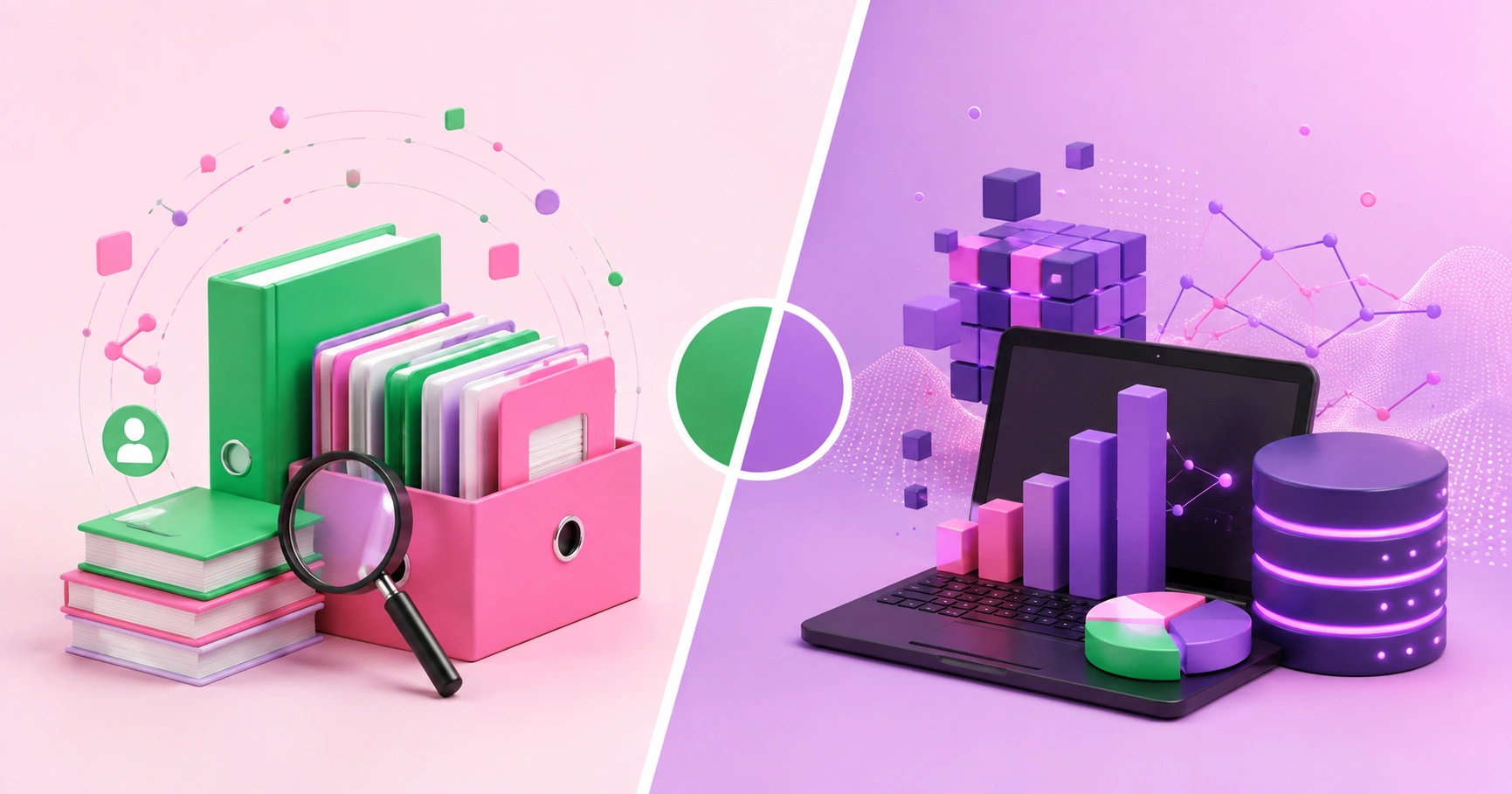
Information science and data science are often treated as interchangeable in university brochures, and that overlap costs students years of misdirected study. Information science is the study of how information is created, organized, stored, retrieved, governed, and used by people and organizations — it is fundamentally about structure, access, and human behavior around information. Data science is the study of extracting insight and predictions from data using statistics, programming, and machine learning — it is fundamentally about modeling and quantitative inference. Both work with data, but they answer different questions: information science asks how do we make this findable, trustworthy, and usable, while data science asks what can we predict or prove from this. Choosing between them without understanding that split is the most common mistake applicants make.
Quick Answer: Information science focuses on organizing, governing, retrieving, and making information usable — think metadata, taxonomies, databases, search systems, and information architecture. Data science focuses on statistical analysis, machine learning, and predictive modeling to extract insight from data. Information science is systems-and-people oriented; data science is math-and-code oriented.
How WebPeak Supports Teams Working Across Information and Data Roles
Every organization that hires either specialist eventually hits the same wall: the data exists, but nobody can find it, trust it, or explain it to decision-makers. Solving that requires both disciplines working together — clean information architecture on one side, real analytical modeling on the other. WebPeak works on both ends of that problem for clients worldwide, delivering dashboards and modeling pipelines through their AI data analysis and visualization practice while structuring content, taxonomies, and search-discoverable documentation through their content writing team. Teams needing forecasting rather than reporting can explore their predictive analytics work, and the full service range is documented at webpeak.org.
What Exactly Does Each Field Study?
Information science is an interdisciplinary field combining library and archival science, human-computer interaction, database design, knowledge organization, and information policy. A typical curriculum covers metadata standards such as Dublin Core, controlled vocabularies and taxonomies, information retrieval theory, database modeling, user research methods, records management, and increasingly data governance and privacy regulation. The measurable output of information science work is usually a system or standard: a searchable catalog, a records retention policy, a content taxonomy, an accessible interface, or a governance framework that makes an organization's information auditable.
Data science combines statistics, computer science, and domain expertise to build models that describe or predict. A typical curriculum covers probability and inference, linear algebra, regression, machine learning, experimental design and A/B testing, data engineering fundamentals, and visualization. The measurable output of data science work is usually a number or a model: a churn probability, a demand forecast, a causal estimate from an experiment, a recommendation ranking, or a deployed classifier. A useful distinction: information science tends to be judged on whether people can use the information correctly, while data science tends to be judged on whether the prediction or estimate holds up against reality.
What Are the Practical Differences You Should Weigh Before Choosing?
Use these six dimensions to decide, in the order they matter most for day-to-day satisfaction:
- Math intensity. Data science requires comfortable fluency in statistics and linear algebra. Information science requires quantitative literacy but rarely proof-level mathematics.
- Coding depth. Data science expects Python or R plus SQL as daily tools. Information science expects SQL and often Python for scripting, but coding is a means rather than the core craft.
- Primary unit of work. Data science produces models and estimates. Information science produces systems, schemas, standards, and policies.
- Human factors. Information science involves substantial user research, stakeholder interviews, and usability testing. Data science involves more solitary analysis with periodic stakeholder translation.
- Regulatory exposure. Information science roles sit closer to privacy law, records compliance, and governance frameworks such as GDPR obligations. Data science touches these but is rarely accountable for them.
- Career ceiling shape. Data science tends toward specialist depth — machine learning engineer, research scientist. Information science tends toward cross-functional authority — data governance lead, chief information officer, knowledge management director.
A quick self-test that works well: if you would rather spend a week making a messy 200,000-record catalog consistently searchable for 500 colleagues, choose information science. If you would rather spend that week testing whether a model actually predicts next quarter's demand better than the current baseline, choose data science.
Information Science vs Data Science: A Side-by-Side Comparison
The comparison below reflects how these roles are actually scoped inside organizations rather than how course catalogs describe them. Note that overlap is real — both fields share SQL, data quality work, and ethics — but the center of gravity differs sharply, and interviewers test for the center, not the overlap.
| Dimension | Information Science | Data Science |
|---|---|---|
| Core question | How do we organize, govern, and retrieve information so people can use it? | What can we measure, explain, or predict from this data? |
| Key skills | Metadata standards, taxonomies, information retrieval, UX research, governance | Statistics, machine learning, Python or R, experimentation, feature engineering |
| Common tools | SQL, content and asset management systems, search platforms, cataloging tools | Python, SQL, pandas, scikit-learn, notebooks, cloud data warehouses |
| Typical job titles | Information architect, data governance analyst, taxonomist, knowledge manager, UX researcher | Data scientist, machine learning engineer, quantitative analyst, research scientist |
| Main deliverable | A system, schema, standard, or policy others depend on | A model, forecast, experiment result, or statistical estimate |
| Best fit for | People who like structure, systems thinking, and human workflows | People who like mathematics, coding, and testable hypotheses |
What Does the Job Market Actually Reward Right Now?
Published labor projections favor both fields, but unevenly. The U.S. Bureau of Labor Statistics projects employment of data scientists to grow roughly 36 percent from 2023 to 2033 — among the fastest growth rates of any tracked occupation — while information research scientists are projected to grow about 26 percent over the same period, also far above the all-occupation average. BLS also places the median annual wage for data scientists at approximately $108,000 in its recent figures. Those numbers make data science look like the obvious pick, and for pure openings volume it often is.
The original perspective worth adding is about competition rather than demand. Data science has been the more heavily marketed field for over a decade, which means entry-level data science postings routinely draw hundreds of applicants with similar bootcamp portfolios. Information science roles — particularly data governance, metadata management, and information architecture — attract far fewer applicants while addressing a problem nearly every enterprise now has: fragmented, undocumented, poorly governed data that blocks both AI adoption and regulatory compliance. In practice, teams that deploy machine learning successfully almost always discover that the bottleneck was information architecture, not modeling capability. That is why the strongest positioning in 2026 is not choosing one field and ignoring the other; it is choosing a primary discipline and deliberately acquiring the adjacent one. A data scientist who can design a clean data catalog becomes the person who unblocks the whole team. An information scientist who can build a regression model and defend it becomes the person leadership trusts with strategy. Organizations building this capability internally often pair it with external artificial intelligence consulting support during the transition, precisely because the governance and modeling gaps show up at the same time.
Key Takeaways
- Information science studies how information is organized, governed, retrieved, and used; data science studies how insight and predictions are extracted from data using statistics and machine learning.
- BLS projects about 36 percent growth for data scientists and about 26 percent for information research scientists between 2023 and 2033, with both far above the average for all occupations.
- Data science demands deeper mathematics and coding; information science demands stronger systems thinking, user research, and governance knowledge.
- Entry-level data science roles face substantially more applicant competition, while governance, metadata, and information architecture roles remain comparatively underserved.
- The highest-leverage career strategy is choosing one field as your primary discipline and deliberately learning the adjacent one, because most failed analytics initiatives break on information structure rather than modeling ability.
Frequently Asked Questions
Is information science the same as data science?
No. Information science focuses on organizing, governing, and retrieving information so people can find and trust it, using metadata, taxonomies, and system design. Data science focuses on statistical modeling and machine learning to extract insight and predictions. They overlap in SQL and data quality work but have different core skills.
Which pays more, information science or data science?
Data science generally pays more at entry and mid-level, with BLS reporting a median annual wage near $108,000 for data scientists. Senior information science roles such as data governance lead or chief information officer can match or exceed that, since they carry organization-wide accountability.
Can I switch from information science to data science later?
Yes, and it is a common transition. You already understand data structure, quality, and provenance, which many data scientists lack. Add probability, statistics, regression, and Python with pandas and scikit-learn, then build two projects that include proper validation and clearly stated assumptions.
Do I need to know how to code for information science?
Yes, but at a different depth than data science. SQL is essentially mandatory for querying catalogs and databases. Python for scripting, data cleaning, and automation is strongly advantageous. You will rarely need to implement machine learning algorithms or write production model code.
Which degree is better for working with AI?
Data science gives a more direct route into model development and machine learning engineering. Information science gives a strong route into AI readiness work — data governance, training data quality, documentation, and responsible AI policy — which organizations increasingly hire for before they can deploy models at all.
Conclusion
The decision that matters here is not which field is growing faster — both are — but which type of problem you want to be accountable for solving: making information usable by people, or making data yield defensible predictions. Answer that honestly, then validate it concretely before enrolling anywhere: read fifteen live job postings in each field, note which required-skills list you would enjoy building, and complete one small project in each discipline within a month. That evidence from your own experience will tell you more than any comparison article, including this one. The framing here is grounded in published Bureau of Labor Statistics projections and in how these roles are genuinely scoped inside working teams — check the current figures for your region before committing, and choose based on the work itself rather than the job title's popularity.