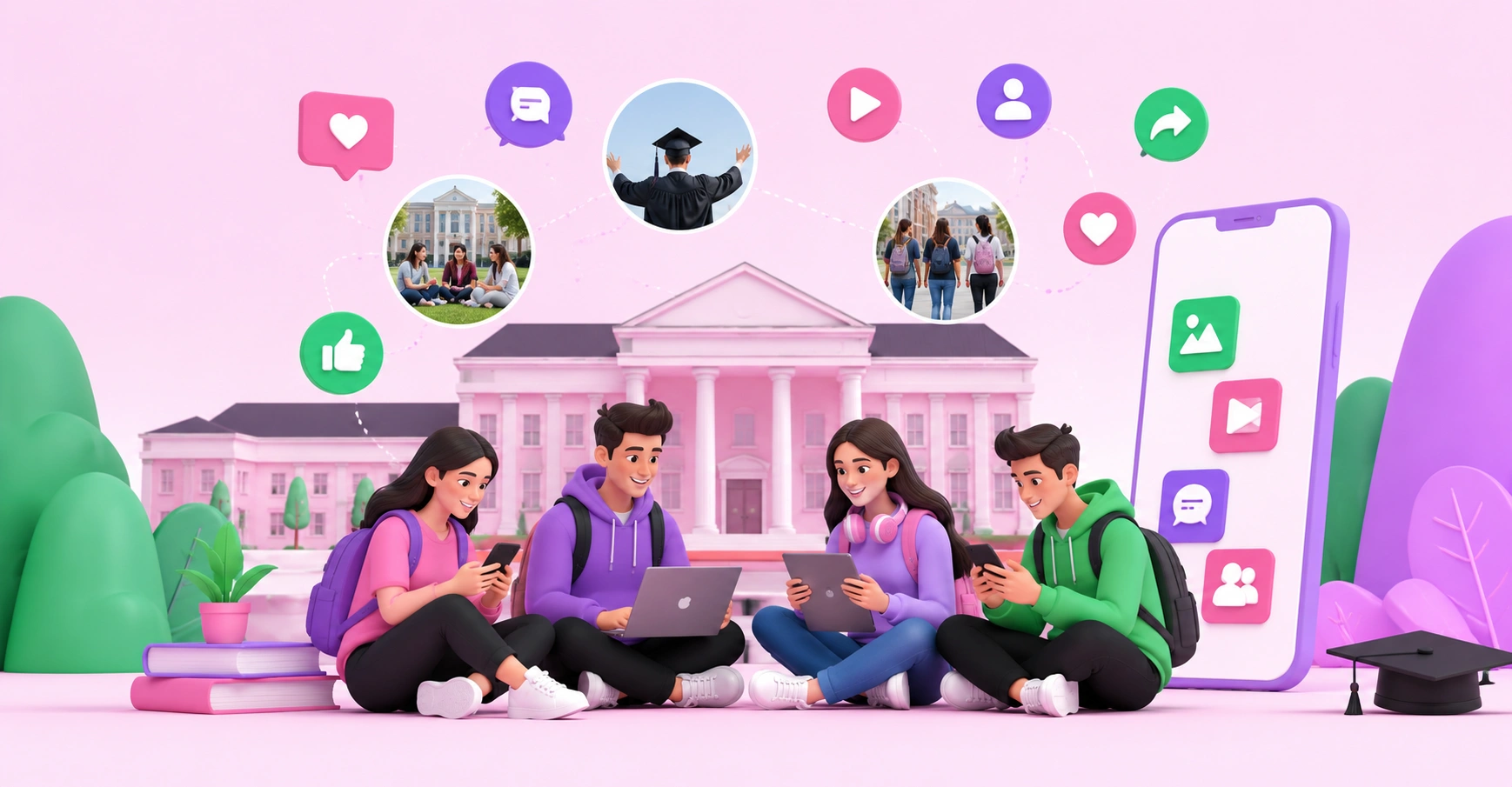
How Universities Engage Students on Social Media: Proven Strategies
University social media engagement is the practice of using platforms like Instagram, TikTok, and YouTube to connect with prospective and current students through content that informs, inspires, and builds community. With 98% of Gen Z owning smartphones and using social media as their primary information source according to Pew Research, universities that fail to engage authentically online risk losing relevance with the exact audience they need to reach. Higher education marketing has shifted from glossy brochures to real-time, student-led content. This guide breaks down exactly how leading universities engage students effectively and what any institution can replicate.
Quick Answer: Universities engage students on social media by amplifying authentic student voices, creating platform-specific content, using student takeovers and user-generated content, responding quickly to messages, and showcasing real campus life. Authentic, student-led content outperforms polished institutional marketing in driving engagement and enrollment interest.
How WebPeak Helps Universities Build Engaging Social Presence
Managing engaging social media across multiple platforms while coordinating with admissions and campus departments is a significant undertaking for most university teams. WebPeak supports educational institutions by developing content calendars, producing platform-optimized creative, and managing community engagement that reflects each campus's unique voice. Their team combines video production and social strategy to turn everyday campus moments into compelling stories that resonate with prospective students. This helps universities maintain consistent, authentic engagement without overburdening internal staff.
Why Does Social Media Engagement Matter for Universities?
Social media engagement matters because it directly influences enrollment decisions during a critical research phase. Prospective students now treat a university's social presence as a preview of campus life, using it to judge culture, opportunities, and belonging before ever visiting. A 2023 study by RNL (Ruffalo Noel Levitz) found that 76% of prospective students use social media to research colleges, and 58% said content on those channels influenced their application decisions. Engagement is not vanity; it is a pipeline. When a prospective student sees genuine excitement in a current student's TikTok about their dorm or a professor's research, that emotional connection does what a ranking table cannot. Universities that engage well convert followers into applicants and applicants into enrolled, committed students who feel they already belong.
What Strategies Drive the Most Student Engagement?
The universities winning on social media share a common approach: they hand the microphone to students. The following strategies consistently drive the highest engagement:
- Student takeovers: Let current students run the official account for a day to show authentic daily life.
- User-generated content campaigns: Encourage students to tag the university and reshare their posts to build community.
- Platform-specific content: Create short vertical video for TikTok, carousels for Instagram, and longer explainers for YouTube.
- Behind-the-scenes campus content: Show move-in day, exam season, events, and traditions authentically.
- Responsive community management: Reply to comments and direct messages quickly to make students feel heard.
- Faculty and research spotlights: Highlight professors and student projects to demonstrate academic strength.
The most effective strategy is empowering students as content creators. Their peers trust them far more than the institution, so a slightly imperfect student video outperforms a polished corporate one every time.
Which Platforms Should Universities Prioritize?
Each platform serves a distinct purpose in the student engagement journey, from awareness to community building. The table below maps platforms to their primary role and the content that performs best on each, helping universities allocate resources effectively.
| Platform | Primary Role | Best Content Type |
|---|---|---|
| TikTok | Awareness and reach | Short authentic campus videos |
| Community and lifestyle | Reels, stories, and carousels | |
| YouTube | Deep information | Campus tours and explainers |
| Outcomes and alumni | Career success stories | |
| Parents and events | Announcements and event pages |
Most universities should anchor their strategy on Instagram and TikTok for reaching prospective students, while using YouTube for evergreen resources and LinkedIn to reassure parents and students about career outcomes.
How Do You Measure University Social Media Success?
Measuring success means connecting engagement to enrollment and community outcomes rather than chasing follower counts. According to a Hootsuite education industry report, engagement rate and reach among the target demographic predict enrollment interest far more reliably than total followers. Track engagement rate on prospective-student content, campus event attendance driven by social promotion, and inquiry or application referrals from social channels using UTM links. In my experience working with content teams, the institutions that improve fastest are those that review analytics monthly and let data guide which student creators and content formats to double down on. The original insight most higher-education guides miss is that engagement is a two-way street: universities that treat social media as a listening tool, monitoring student concerns and responding in real time, build far deeper trust than those that only broadcast. A 2024 survey found that 71% of Gen Z students are more likely to engage with brands that respond to them personally, and universities are no exception. Responsiveness, not reach, is the true engagement multiplier.
Key Takeaways
- 76% of prospective students use social media to research colleges, and 58% say it influenced their application decisions.
- Student-led content like takeovers and user-generated posts outperforms polished institutional marketing.
- Anchor strategy on Instagram and TikTok for prospective students, with YouTube for evergreen resources.
- Measure engagement rate and application referrals rather than total follower counts.
- 71% of Gen Z engage more with brands that respond personally, making responsiveness the key engagement multiplier.
Frequently Asked Questions
How do universities use social media to attract students?
Universities attract students by showcasing authentic campus life, amplifying student voices through takeovers and user-generated content, and creating platform-specific videos. This gives prospective students a genuine preview of culture and belonging, which research shows strongly influences their application and enrollment decisions.
Which social media platform is best for universities?
Instagram and TikTok are best for reaching prospective students with authentic, short-form content, while YouTube works for detailed campus tours and LinkedIn reassures parents about career outcomes. Most universities anchor their strategy on Instagram and TikTok because these platforms dominate Gen Z attention.
Why is student-generated content effective for universities?
Student-generated content is effective because prospective students trust their peers far more than official institutional marketing. A slightly imperfect student video feels authentic and relatable, creating an emotional connection that polished corporate content cannot match, which drives higher engagement and stronger enrollment interest.
How can universities measure social media engagement?
Universities measure engagement by tracking engagement rate on prospective-student content, application referrals using UTM links, and event attendance driven by social promotion. These metrics connect activity to enrollment outcomes far more reliably than follower counts, which do not predict genuine interest or conversion.
How often should universities post on social media?
Universities should post four to seven times per week across their main platforms, adjusting frequency by platform and audience. Consistency and responsiveness matter more than volume, so maintaining a steady rhythm of authentic content while replying quickly to comments builds the strongest student engagement.
Conclusion
The single most important decision for universities on social media is to prioritize authentic student voices and genuine responsiveness over polished broadcasting, because that is what earns trust with a generation that can spot inauthenticity instantly. Start by launching one student takeover this month and commit to replying to every comment within a day. Social media engagement is not a marketing gimmick but a reflection of campus culture, and the institutions that engage honestly and consistently will continue to win the hearts and applications of the students they most want to reach.