How to Use Social Media for Trade Show Networking Before, During, and After an Event
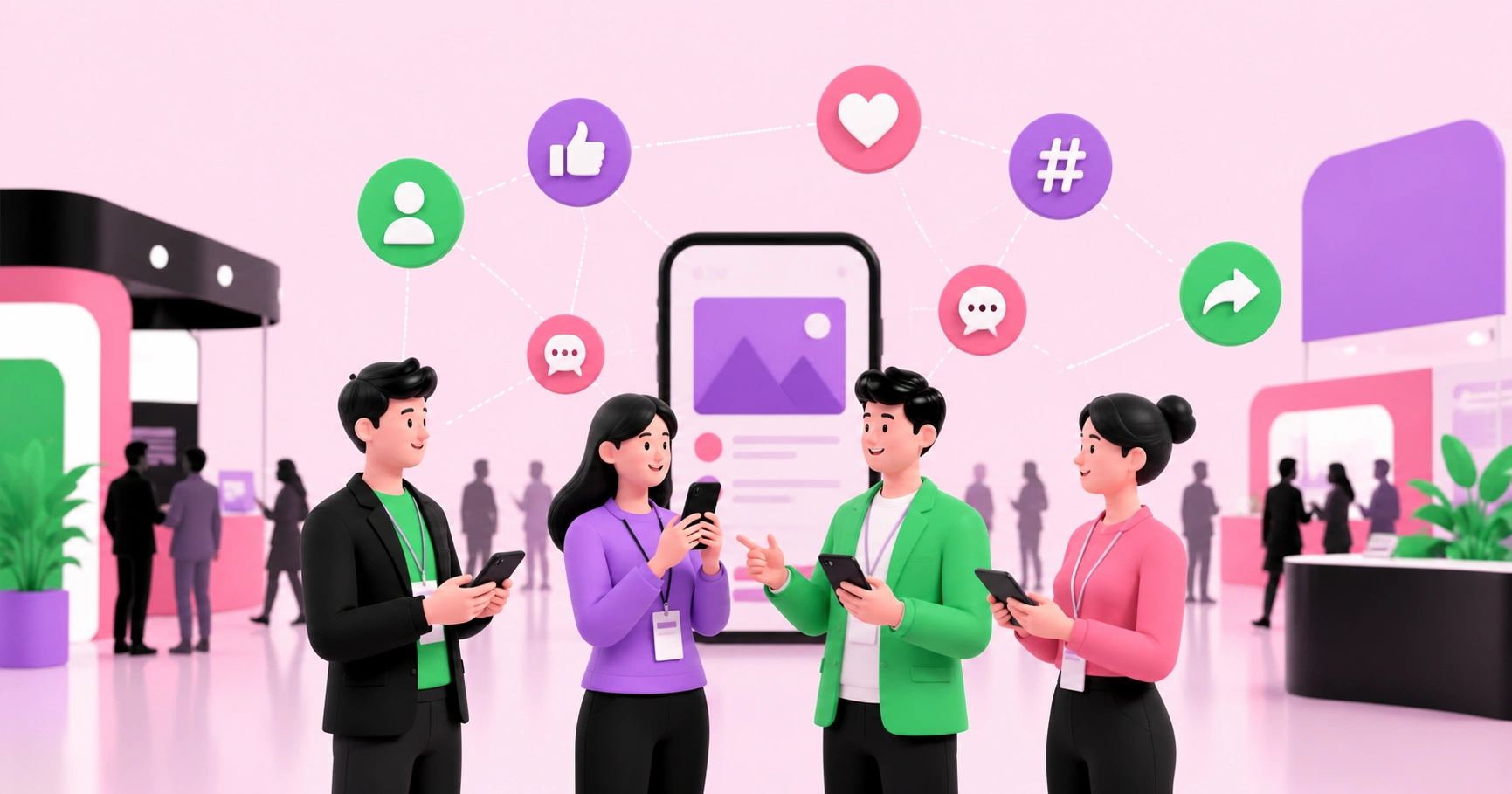
Knowing how to use social media for trade show networking means using digital platforms to identify relevant attendees, arrange purposeful meetings, support real-time conversations, and continue relationships after the exhibition ends. It is not simply posting event hashtags. Effective trade show networking connects each online action to a specific person, business question, meeting objective, or follow-up commitment.
Quick Answer: Use social media for trade show networking by researching speakers, exhibitors, customers, and partners before the event; requesting short meetings with personalized messages; sharing useful live insights during the show; and sending context-rich follow-ups afterward. Track conversations and agreed actions in a relationship system so promising contacts do not disappear into an unorganized connection list.
How WebPeak Builds Integrated Trade Show Campaigns
WebPeak helps exhibitors connect pre-event awareness, on-site content, and post-event lead nurturing into one measurable campaign. Their social media management services can support audience research, publishing schedules, response workflows, and campaign reporting, while their design and development teams can create consistent event assets and focused landing pages for meeting requests or demonstrations.
How Should You Prepare Your Social Profiles Before a Trade Show?
A trade show networking profile is a concise digital introduction that helps attendees verify your identity, relevance, and reason for participating. Update your photograph, role, organization, location, contact method, and summary at least two weeks before the event. Add the event name and a concrete objective, such as meeting logistics leaders interested in reducing warehouse errors, rather than writing only “See you at Booth 214.”
Create a target-account list from the exhibitor directory, speaker program, sponsor list, event application, customer records, and public attendee discussions. Divide contacts into existing relationships, priority prospects, partners, media, speakers, and peers. For each priority person, document one relevant business issue, recent company announcement, shared contact, or session topic. This context makes outreach useful rather than generic.
Review the organizer's rules before using attendee information. A conference directory is not automatic permission to scrape personal details, add everyone to an email list, or send automated sales messages. Follow applicable privacy and marketing laws, platform terms, and your organization's consent requirements. Treat public participation as an invitation to relevant conversation, not unrestricted data collection.
What Should You Do Before, During, and After the Event?
A trade show networking sequence is a coordinated series of interactions that moves from relevant discovery to a scheduled conversation and documented follow-up. The sequence should make participation easier for the other person. Keep meeting requests short, explain the shared relevance, suggest a realistic duration, and provide an easy way to decline.
- Three to four weeks before: Define target audiences, event goals, responsible team members, approval rules, and measurable outcomes.
- Two weeks before: Follow relevant participants, engage selectively with their work, and publish a useful preview of what your team will demonstrate or discuss.
- Seven to ten days before: Send personalized requests for 15-minute meetings, offering two time options and a clear reason to meet.
- During the event: Monitor official hashtags and applications for relevant questions, schedule changes, and small-group opportunities.
- After each conversation: Record the topic, need, promised resource, owner, permission status, and follow-up deadline.
- Within 24 to 48 hours: Send the promised resource with a reminder of the conversation and one appropriate next step.
- Within two weeks: Share a useful event summary, continue qualified conversations, and close records that have no agreed action.
Prepare posts in advance but reserve capacity for genuine event developments. Useful live content includes concise session lessons, practical product demonstrations, customer-approved observations, and answers to common attendee questions. Obtain permission before photographing or quoting identifiable people. Never publish private conversations, badge details, confidential slides, or customer information.
Which Social Media Tactics Work at Each Trade Show Stage?
The format should match the attendee's immediate need. Before the show, people need a reason to schedule time. During the event, they need timely information and navigation. Afterward, they need help recalling the conversation and evaluating the next step. Repeating the same promotional message across all three stages ignores those changing needs.
| Event Stage | Useful Social Activity | Desired Outcome |
|---|---|---|
| Before the show | Targeted outreach, previews, and meeting invitations | Qualified appointments |
| During the show | Session insights, live answers, and demonstration clips | Relevant conversations and booth visits |
| First 48 hours after | Personalized recaps and promised resources | Confirmed next actions |
| Following two weeks | Educational follow-up and event analysis | Developing relationships and opportunities |
Use an event content desk, even if it consists of one designated team member. This person verifies names and claims, obtains approvals, adds captions to video, responds to questions, and routes sales inquiries to the correct owner. A defined workflow prevents rushed posts from creating factual errors or exposing information that should remain private.
Visual consistency also improves recognition across crowded feeds and exhibition halls. WebPeak's social media post and banner design services can align profile graphics, announcement cards, booth displays, and recap assets without sacrificing legibility. Every graphic should communicate one message, use readable type, and include captions or accompanying text for accessibility.
How Do You Measure Trade Show Networking Results?
Begin with operational definitions. A connection is an accepted platform relationship; a qualified conversation includes a relevant need and mutual interest; a meeting is a scheduled or completed discussion; and an opportunity meets the organization's documented sales criteria. Reporting these separately prevents a large number of low-value connections from being mistaken for commercial success.
The Center for Exhibition Industry Research has reported that 81% of trade show attendees have buying authority. The statistic demonstrates why exhibitions can concentrate relevant decision-makers, but teams still need qualification because authority, timing, budget, and need differ among attendees. Pre-event research should identify likely relevance without assuming that every visitor is ready to buy.
Freeman's 2024 Attendee Intent and Behavior report found that 80% of attendees considered in-person events the most trusted channel for discovering new products and services. Social media should therefore support, not replace, human interaction. Its highest-value role is helping the right people discover one another, prepare for useful conversations, and preserve context afterward.
Calculate meeting conversion rate by dividing completed priority meetings by accepted meeting requests. Calculate follow-up completion by dividing promised actions delivered on time by total promised actions. For commercial evaluation, track qualified opportunities, pipeline value, eventual revenue, and cost per qualified opportunity over the appropriate sales cycle. Use consistent campaign parameters on event links, but reconcile digital attribution with CRM notes because many trade show outcomes begin offline.
The original analytical advantage comes from measuring relationship progression. Assign each priority contact a pre-event stage and post-event stage, such as unknown, aware, engaged, met, qualified, or active opportunity. This reveals whether social activity created meaningful movement. Ten contacts progressing from unknown to qualified may be more valuable than 500 new followers who never interact again.
Key Takeaways
- Effective trade show networking connects online activity to named people, relevant questions, meetings, and documented next steps.
- Profile optimization and target-account research should begin at least two weeks before the event.
- Personalized meeting requests need a clear reason, short duration, proposed times, and an easy way to decline.
- Social media should facilitate trusted in-person interaction rather than attempt to replace it.
- Measure qualified conversations, completed follow-ups, relationship progression, opportunities, and revenue—not connections alone.
Frequently Asked Questions
When should I start networking on social media before a trade show?
Begin research three to four weeks before the event and start visible engagement about two weeks beforehand. Send personalized meeting requests seven to ten days before schedules become crowded. Earlier outreach is useful for strategic accounts, but every message should reference a genuine shared interest rather than using the event as an excuse for mass prospecting.
What should I say in a trade show meeting request?
Introduce yourself, identify the relevant connection, explain why a brief discussion could be useful, and suggest two available times. Keep the request under approximately 100 words. Avoid attaching a lengthy sales presentation. A good message lets the recipient understand the topic, expected duration, and intended outcome without additional research.
Which trade show hashtags should I use?
Use the organizer's official hashtag and, when genuinely relevant, one specific industry or session hashtag. Confirm spelling and capitalization through the event's official channels. Avoid filling captions with broad promotional tags. Hashtags improve discovery only when the associated post provides timely information, an informed observation, or a useful answer for attendees.
How quickly should I follow up after meeting someone?
Send promised material within 24 to 48 hours while the conversation remains recognizable. Mention the specific topic discussed, provide the resource, and propose one proportionate next action. Do not send a generic sequence that ignores the meeting. If no next step was agreed, offer value without repeatedly pressing for an appointment.
How do I avoid being overly promotional during the event?
Use social media to answer attendee questions, interpret useful session insights, highlight approved customer experiences, and help people navigate relevant activities. Apply a contribution-first rule: most posts should educate or assist, while a smaller number invite demonstrations or meetings. Specific usefulness earns attention more reliably than repeatedly announcing booth numbers and product claims.
Conclusion
The most important trade show networking decision is to define the relationship progression each activity should create. Research priority people, request relevant meetings, document every commitment, and deliver personalized follow-up promptly. When social media serves the conversation instead of becoming the objective, teams gain a measurable and trustworthy system for turning event access into lasting professional relationships.