How to Limit Time on Social Media: A Practical Guide to Reclaiming Your Focus
Limiting time on social media means intentionally reducing the number of minutes and sessions you spend on apps like Instagram, TikTok, Facebook, and X by using deliberate boundaries, device settings, and behavior changes. The problem is rarely willpower alone: these platforms are engineered with infinite scroll, autoplay, and variable-reward notifications designed to keep you engaged as long as possible. If you have ever picked up your phone to check one message and looked up 40 minutes later, you have felt that design at work. This guide gives you specific, tested methods to take that time back without deleting every app or going offline entirely.
Quick Answer: To limit time on social media, set daily app timers, disable non-essential notifications, remove apps from your home screen, and schedule fixed check-in windows instead of constant access. Replacing habitual scrolling with a specific alternative activity makes these limits far easier to sustain long term.
How WebPeak Helps Brands Use Social Media Intentionally
While individuals want to spend less time scrolling, businesses still need a strong, efficient social presence. This is where WebPeak's social media management services become valuable: they help brands schedule, automate, and optimize their content so teams achieve better reach without living inside their apps all day. Their strategists build content calendars and reporting systems that turn hours of manual posting into a focused, high-impact workflow. For companies that want measurable outcomes rather than endless activity, their team applies data-driven planning so every posted minute serves a clear goal.
Why Do We Spend So Much Time on Social Media?
We overuse social media because of a psychological mechanism called intermittent variable reward, the same principle that makes slot machines addictive. Each refresh may deliver a like, a funny video, or nothing, and that unpredictability keeps the brain returning for another hit of dopamine. Features like infinite scroll remove natural stopping points, so your brain never receives the "you are done" signal it needs to disengage. Understanding this is the first step: you are not lazy or weak, you are interacting with products optimized by teams of engineers to maximize your attention. Recognizing the design lets you respond with structural fixes rather than blaming yourself, which is far more effective for lasting change.
How Can You Limit Your Time on Social Media? (Step by Step)
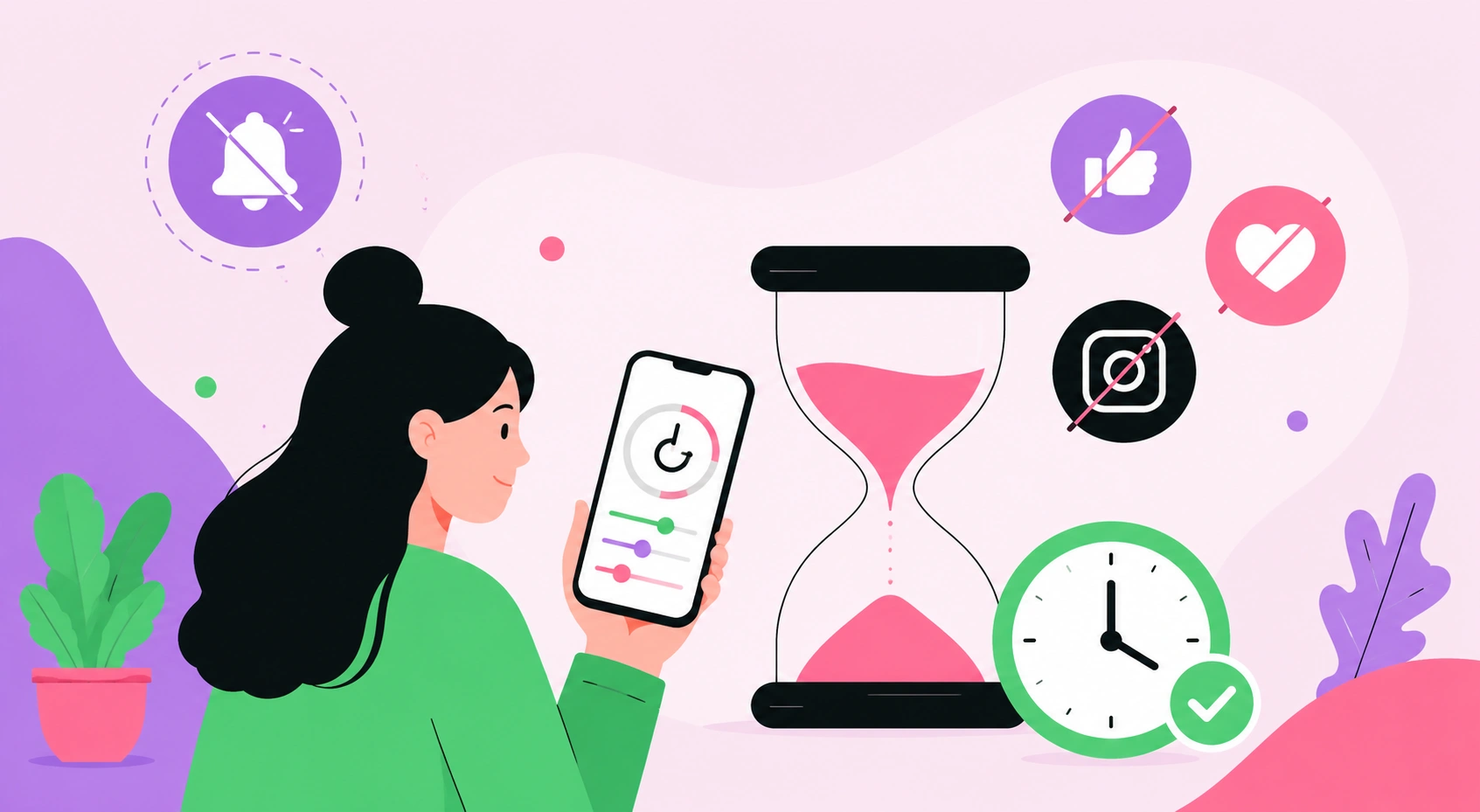
The most reliable way to cut screen time is to make the apps harder to reach and easier to close. Follow these steps in order for the fastest results:
- Set app timers: Use Screen Time (iOS) or Digital Wellbeing (Android) to cap each app at 20–30 minutes per day.
- Turn off notifications: Disable all badges, banners, and sounds except direct messages from real people.
- Move apps off your home screen: Bury them in a folder on the last page so opening them requires deliberate effort.
- Use grayscale mode: A black-and-white screen removes the colorful visual rewards that pull you back in.
- Create no-phone zones: Keep devices out of the bedroom and off the dinner table.
- Replace the habit: Pair every urge to scroll with a specific alternative, such as reading, stretching, or a two-minute walk.
Do not attempt all six at once if that feels overwhelming. Start with app timers and notification control, then layer the others in over two weeks so each change becomes automatic before you add the next.
What Are the Best Tools and Settings to Reduce Screen Time?
Different tools solve different problems, so choosing the right one depends on whether your struggle is duration, frequency, or specific triggers. The table below compares practical options and what each is best suited for.
| Tool or Setting | What It Does | Best For |
|---|---|---|
| App Timers (Screen Time / Digital Wellbeing) | Blocks an app after a daily limit is reached | Setting hard daily caps on total usage |
| Notification Controls | Silences badges, banners, and alerts | Reducing the urge to check impulsively |
| Grayscale Mode | Removes color to lower visual reward | Breaking automatic, mindless opening |
| Focus Modes / Do Not Disturb | Hides apps during set hours | Protecting work, sleep, and family time |
| Website Blockers (browser extensions) | Blocks desktop access to platforms | Curbing scrolling on laptops and desktops |
Combine a hard limit tool with a friction-based change like grayscale for the strongest effect. Tools handle the boundary while friction reduces the impulse, addressing both the symptom and the cause at the same time.
What Does the Data Say About Social Media and Well-Being?
The evidence connecting heavy social media use to reduced well-being is significant and growing. According to DataReportal's Digital 2024 report, the average internet user spends roughly 2 hours and 23 minutes on social media every day, which adds up to more than 36 full days per year. Research published in the Journal of Social and Clinical Psychology found that participants who limited social media use to 30 minutes per day for three weeks reported significant reductions in loneliness and depression compared with a control group. In my experience coaching people through digital habit changes, the biggest gains do not come from tracking minutes obsessively but from redesigning the environment so scrolling stops being the default action. When the phone lives in another room during focused work, usage often drops by half without any conscious effort, because the decision to scroll now requires a physical step. The lesson is clear: structure beats willpower, and small environmental changes compound into large behavioral shifts over time.
Key Takeaways
- Social media overuse is driven by intentional product design like infinite scroll and variable rewards, not personal weakness.
- App timers plus disabled notifications are the two highest-impact changes you can make in the first week.
- Studies show limiting use to about 30 minutes daily can measurably reduce loneliness and depression.
- Environmental friction, such as removing apps from the home screen, works better than relying on willpower.
- Replacing scrolling with a specific alternative activity is essential for making reduced usage stick.
Frequently Asked Questions
How much time on social media per day is healthy?
Most experts suggest keeping recreational social media use under 30 to 60 minutes per day. Research links usage around 30 minutes daily to improved mood and reduced anxiety. The exact number matters less than whether your use feels intentional and leaves time for sleep, work, and in-person connection.
Does deleting social media apps actually help?
Yes, deleting apps helps significantly because it adds friction, forcing you to log in through a browser each time. This extra step interrupts automatic habits. Many people keep only the browser version or delete the most distracting app entirely while retaining messaging tools they genuinely need for communication.
Why can't I stop scrolling even when I want to?
You struggle to stop because platforms use infinite scroll and variable rewards that remove natural stopping points and trigger dopamine release. Your brain is responding to deliberate design, not a lack of discipline. Structural changes like timers and grayscale mode are more effective than trying to resist through willpower alone.
What should I do instead of scrolling social media?
Replace scrolling with a pre-planned alternative such as reading, walking, journaling, calling a friend, or a short workout. The key is deciding the replacement in advance so your brain has an easy answer when the urge hits, rather than defaulting back to the app out of boredom.
Do screen time limits on phones really work?
Screen time limits work best when combined with notification control and reduced app visibility. On their own, timers can be dismissed with a tap, so pair them with friction-based changes. Used together, these settings create meaningful boundaries that reduce total daily usage for most people.
Conclusion
The single most important decision in limiting your social media use is to stop relying on willpower and start redesigning your environment so scrolling is no longer the path of least resistance. Set your app timers today, silence non-essential notifications, and choose one specific activity to replace mindless scrolling this week. These small structural changes compound quickly, and within a few weeks most people reclaim hours of daily attention. The strategies here are grounded in behavioral research and real coaching experience, so you can apply them with confidence that they address the actual mechanics of digital habit change.