How to Leverage Social Media for Trade Show Networking: The Ultimate Guide
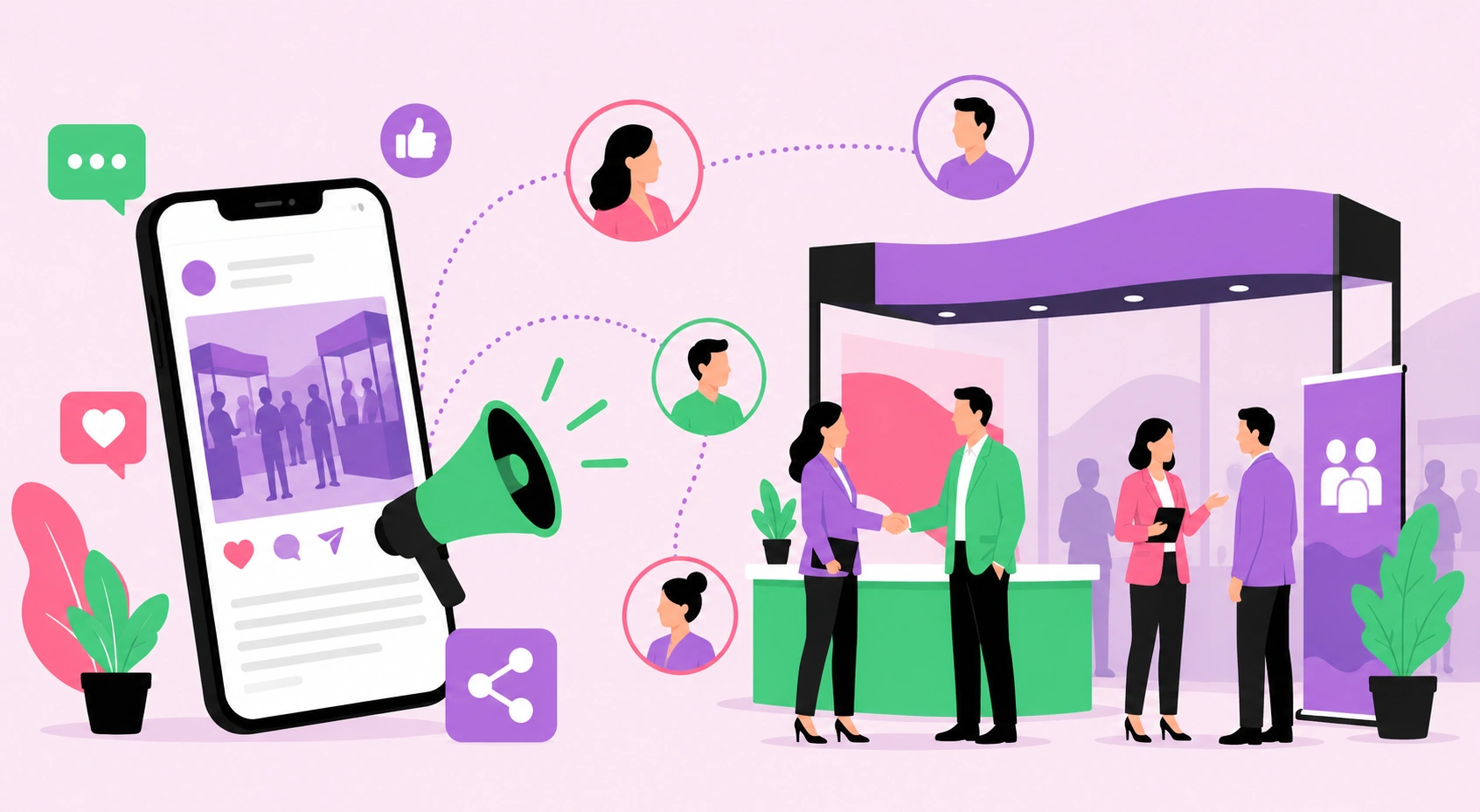
Most exhibitors spend thousands on a booth and then rely on foot traffic and luck to make connections—social media changes that equation entirely. Leveraging social media for trade show networking means using platforms like LinkedIn, X, and Instagram before, during, and after an event to schedule meetings, amplify your presence, and turn brief conversations into lasting business relationships. The exhibitors who win are not the ones with the biggest booths but the ones who have filled their calendars with meetings before they arrive. This guide walks through a complete three-phase strategy so your next trade show generates measurable pipeline instead of a stack of forgotten business cards.
Quick Answer: Leverage social media for trade show networking by announcing your attendance early, using the event hashtag, and booking meetings before arrival. During the event, post live updates and tag attendees. Afterward, connect within 48 hours with personalized messages referencing your conversation to convert contacts into relationships.
How WebPeak Helps You Maximize Trade Show ROI
A successful trade show presence requires coordinated content, design, and promotion, and WebPeak helps exhibitors execute all three. Through their social media marketing services, they plan pre-event campaigns, design booth-promotion graphics and countdown posts, and manage real-time posting during the event so your team can focus on conversations. Their strategists can build targeted outreach lists, craft meeting-request messaging, and run post-event follow-up sequences that keep leads warm. For companies investing heavily in exhibiting, they ensure the surrounding digital promotion converts booth visits into qualified relationships.
How Do You Use Social Media Before the Trade Show?
The pre-event phase is where networking is actually won. Pre-event social media promotion is the practice of announcing your attendance, engaging the event community, and scheduling meetings in the weeks leading up to the show. Start three to four weeks out by posting your attendance, booth number, and what you will showcase, and always use the official event hashtag so attendees searching it discover you.
The single highest-value action is proactive outreach: identify attendees, speakers, and prospects on LinkedIn using the event hashtag and attendee lists, then send personalized messages proposing a specific meeting time at your booth or nearby. According to Bizzabo event industry research, a large share of B2B marketers consider in-person events their most effective channel, and the meetings booked in advance are what make that ROI possible. Also engage with the event's official account and speakers' posts to build familiarity before you meet in person.
What Should You Post During the Event?
Live content extends your booth's reach far beyond the show floor. During the event, real-time posting keeps you visible to both attendees and your broader network who could not attend. Follow this live-engagement checklist to stay active without missing conversations:
- Post arrival and booth photos: Share your setup with the event hashtag so nearby attendees can find you.
- Share session insights: Post key takeaways from talks you attend to demonstrate expertise and join the conversation.
- Tag people and companies: When you meet someone noteworthy, post and tag them to deepen the connection publicly.
- Use Stories and live video: Give a booth tour or product demo to draw in attendees still deciding where to go.
- Monitor the hashtag: Respond to attendees posting about the event to spark real-time meetups.
In my experience, tagging the people you meet in a genuine post—"Great conversation with [name] about [topic]"—does double duty: it flatters the connection and signals to their network that you are active and credible. Assign one team member to handle live posting so those actively networking are never distracted from face-to-face conversations, which remain the true purpose of attending.
How Do You Follow Up After the Trade Show?
Follow-up is where most trade show ROI is lost. Post-event follow-up is the systematic process of reconnecting with contacts within days of the event while conversations are still fresh. Speed and personalization determine whether a booth conversation becomes a relationship or a forgotten name. The table below outlines a proven follow-up timeline and the action for each stage.
| Timeframe | Action | Goal |
|---|---|---|
| Within 24–48 hours | Send personalized LinkedIn connection referencing your talk | Lock in the relationship while memory is fresh |
| Days 3–5 | Share a relevant resource or answer a question raised | Provide value and demonstrate expertise |
| Week 1–2 | Post an event recap tagging key connections | Reinforce presence and nurture the wider network |
| Week 2–4 | Propose a call or next step for qualified leads | Convert warm contacts into opportunities |
The critical rule is personalization—a generic "nice to meet you" gets ignored, while a message referencing the specific topic you discussed gets a reply. Prioritize your hottest leads first, but connect with everyone you exchanged details with, because relationships often mature months later. A CRM or simple spreadsheet noting each conversation ensures no valuable contact slips through the cracks.
How Do You Measure Trade Show Networking Success?
Without measurement, you cannot justify the significant cost of exhibiting. The clearest success metrics tie social activity to business outcomes: meetings booked, qualified leads captured, new connections made, and pipeline generated. According to the Center for Exhibition Industry Research, a substantial majority of trade show attendees have buying influence, which means the connections you make carry real commercial weight. Meanwhile, event marketing studies consistently show that in-person interactions convert to sales at higher rates than most digital channels, reinforcing why disciplined networking pays off.
My analytical take: track a "meetings booked before arrival" number as your leading indicator, because it predicts event success better than booth traffic. If you walk in with fifteen pre-scheduled meetings, you have already guaranteed value regardless of walk-up visitors. After the event, measure connection acceptance rates, follow-up reply rates, and how many contacts advance to a call. Compare these against your total event investment to calculate genuine ROI, and refine your pre-event outreach approach for the next show based on what generated the most qualified conversations.
Key Takeaways
- Book meetings before you arrive—pre-scheduled meetings are the strongest predictor of trade show success.
- Always use the official event hashtag so attendees searching it can discover and connect with you.
- Assign one team member to live posting so networkers stay focused on face-to-face conversations.
- Follow up within 24–48 hours with personalized messages referencing your specific conversation.
- Measure meetings booked, qualified leads, and pipeline generated against total event cost to prove ROI.
Frequently Asked Questions
How do you network at a trade show using social media?
Announce your attendance early with the event hashtag, then proactively message attendees and prospects on LinkedIn to book meetings before arrival. Post live updates and tag people you meet during the event, and follow up within 48 hours with personalized messages referencing your conversations.
What should I post before a trade show?
Post your attendance, booth number, and what you will showcase three to four weeks out, using the official event hashtag. Share countdown content, engage with the event's official account and speakers, and send personalized meeting requests to prospects and attendees you want to connect with.
How soon should I follow up after a trade show?
Follow up within 24 to 48 hours while conversations are still fresh. Send personalized LinkedIn connections referencing your specific discussion, then share a relevant resource within a few days. Speed and personalization determine whether a booth conversation becomes a lasting business relationship or a forgotten name.
Which social media platform is best for trade show networking?
LinkedIn is best for B2B trade show networking because it enables professional outreach, meeting requests, and follow-up. X is useful for real-time event conversations via hashtags, while Instagram works for visual booth content. Use LinkedIn for relationships and X or Instagram for live visibility.
How do I get more people to visit my trade show booth?
Promote your booth number and offerings before the event using the official hashtag, book meetings in advance, and post live booth tours and demos via Stories during the show. Tag attendees you meet and monitor the hashtag to invite interested people directly to your booth.
Conclusion
The most important insight about trade show networking is that success is determined before you arrive—the exhibitors who pre-book meetings consistently outperform those relying on foot traffic. Your next step is clear: for your upcoming event, identify ten target attendees this week and send each a personalized meeting request using the event hashtag. Pair that pre-event outreach with disciplined 48-hour follow-up, and your booth investment will generate real pipeline. Approach every show as a relationship-building system, and you will turn brief conversations into long-term business.