How to Increase Visibility on Social Media: A Practical Organic Growth Framework
Knowing how to increase visibility on social media requires more than publishing frequently. Social media visibility is the extent to which relevant people encounter, recognize, and remember an account or its content across feeds, search results, recommendations, conversations, and shared posts. Reach can disappear after one impression; visibility compounds when the same audience repeatedly sees useful, distinctive work. The practical objective is therefore to improve relevant exposure, attention quality, and recall while creating a clear path from a post to the profile, website, or next useful resource.
Quick Answer: Increase social media visibility by defining a narrow audience, publishing platform-native content that answers specific needs, improving first-frame hooks and search language, activating employees and partners, participating in relevant conversations, repurposing proven ideas, and measuring reach quality through retention, shares, profile visits, branded searches, and qualified website actions.
How WebPeak Can Improve Social Media Visibility
WebPeak helps brands identify why their social content is not being discovered and builds a practical visibility plan around audience research, creative formats, distribution, and conversion tracking. Their social media marketing support can coordinate organic and paid activity, while their SEO services help align social topics with the questions people search across platforms and conventional search engines.
Why Is Your Social Media Content Not Being Seen?
Low visibility usually comes from one of four constraints: weak relevance, poor packaging, limited distribution, or inconsistent positioning. Relevance means the content solves a recognizable need for a specific audience. Packaging means the opening, visual, headline, and format make that value easy to understand. Distribution means the post reaches beyond existing followers through shares, collaborators, communities, search, recommendations, or paid support. Positioning means repeated content builds a memorable association with a problem or expertise.
Diagnose the constraint before changing the calendar. If impressions are low across strong topics, examine account health, posting format, collaborator activity, and initial distribution. If impressions are adequate but watch time or dwell time is weak, repair the hook and pacing. If engagement is healthy but profile visits are low, connect the post more clearly to your expertise. If profile visits are high but follows or site actions are low, strengthen the bio, pinned content, landing page, and value proposition.
Create an audience-language file from interviews, sales notes, community discussions, support tickets, and on-platform search suggestions. Record exact questions, desired outcomes, misconceptions, and objections. Use those phrases naturally in spoken scripts, captions, titles, alt text where appropriate, and profile copy. This improves comprehension and discoverability without repetitive keyword stuffing.
What Steps Increase Organic Visibility?
Organic visibility is unpaid exposure generated through followers, recommendations, search, shares, and community participation. It grows when a platform can confidently predict who will value the content and when viewers provide satisfaction signals such as meaningful watch time, saves, shares, replies, and follow-on activity. The exact ranking model is proprietary and changes frequently, so optimize for audience outcomes rather than alleged algorithm tricks.
- Choose one audience problem: define who experiences it, when it occurs, and what decision they need to make.
- Create a recognizable series: publish recurring audits, demonstrations, answers, or case breakdowns with consistent framing.
- Strengthen the opening: state the consequence, outcome, question, or counterintuitive fact immediately.
- Use native formats: edit dimensions, pacing, captions, length, and calls to action for each platform.
- Build a distribution list: include employees, customers, partners, creators, communities, and newsletter segments with genuine relevance.
- Engage around the topic: add substantive comments before and after publication rather than dropping promotional links.
- Repurpose winners: update the evidence, angle, and format instead of reposting identical assets.
Use accessibility to expand real reach. Add accurate captions to video, write meaningful image descriptions, maintain legible contrast, avoid placing essential meaning only in color, and make carousels readable on small screens. Accessibility is not an algorithm hack; it allows more people to consume and share the work and reduces preventable abandonment.
Which Visibility Channels Should You Prioritize?
Prioritize channels by audience concentration and content fit, not by total user count. A niche professional community may produce fewer impressions but more credible conversations than a broad entertainment feed. Assign each channel a role: discovery, education, community, proof, conversion, or customer support. Then adapt one core insight for that role.
| Visibility channel | Primary advantage | Action to take |
|---|---|---|
| Platform search | Captures active questions | Use clear topic language in titles and captions |
| Recommendation feed | Reaches relevant non-followers | Improve retention and share value |
| Creator partnership | Transfers contextual trust | Co-create for an overlapping audience |
| Employee advocacy | Adds expert networks and voices | Provide adaptable insights, not scripts |
Distribution should add context rather than manufacture engagement. Give partners a reason the resource matters to their audience and let them express it in their own voice. Avoid coordinated empty comments, engagement pods, and unrelated tagging; these practices produce noisy signals and can damage trust. Strong distribution places a genuinely useful asset in front of people already likely to benefit.
How Do You Measure Visibility Without Chasing Vanity Metrics?
According to DataReportal's Digital 2025 reports, social media use exceeded five billion user identities globally, showing the scale of potential discovery. The same reporting indicates typical internet users spend more than two hours a day on social media, but that attention is divided among many platforms and activities. Large addressable attention does not guarantee relevant attention.
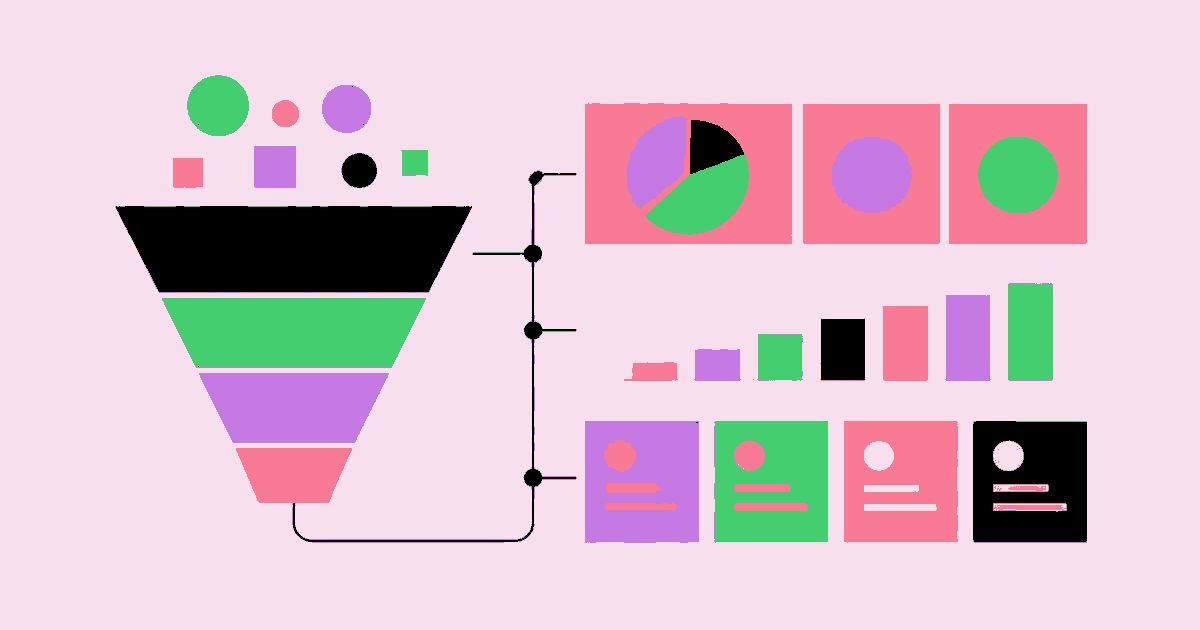
Measure a visibility chain: eligible audience, impressions, unique reach, attention, high-intent engagement, profile action, website action, and business outcome. Attention may be video completion, average watch time, carousel completion, or meaningful dwell time. High-intent engagement includes saves, shares, substantive comments, direct messages, and clicks. Compare each stage as a rate so account growth does not make raw totals misleading.
Add brand indicators. Track branded search volume, direct traffic, mentions, share of relevant conversations, creator references, and survey responses to “How did you hear about us?” Social frequently creates demand that another channel captures. Our practical perspective is that a post with modest reach but repeated citations by respected practitioners may build more durable visibility than a broad viral post with no topical connection. Record qualitative evidence alongside dashboards.
Key Takeaways
- Visibility combines relevant exposure, attention, recognition, and recall.
- Diagnose relevance, packaging, distribution, and positioning separately.
- Platform-native editing generally communicates better than identical cross-posting.
- Accessibility improves the number of people who can consume and share content.
- Retention, shares, branded search, and qualified actions provide stronger evidence than impressions alone.
Frequently Asked Questions
How can I make my social media posts more visible?
Start with one specific audience question, make the benefit clear in the opening line or frame, and use the format people expect on that platform. Add accurate topic language, captions, and accessible visuals. Then distribute through relevant employees, partners, communities, and follow-up content while measuring retention and shares.
Do hashtags still help social media visibility?
Hashtags can help classify a topic or connect a post to a niche conversation, but they cannot compensate for weak content. Use a small set of accurate, relevant tags when the platform and audience use them. Prioritize clear language in the post, strong retention, shares, profile relevance, and credible participation.
Should I post the same content on every platform?
Reuse the core insight, evidence, and research, but adapt the execution. Each platform has different viewing behavior, aspect ratios, pacing, caption conventions, and community norms. A webinar insight might become a LinkedIn document, a short vertical demonstration, and a concise thread. Native editing usually improves comprehension and response.
Does commenting on other accounts increase visibility?
Useful comments can expose your expertise to relevant readers and build professional relationships. Comment where you can add evidence, a practical example, a respectful counterpoint, or a clarifying question. Avoid generic praise, automated replies, and promotional links. The goal is contribution; profile visits should be a natural by-product.
How do I know whether my visibility strategy is working?
Track unique reach among the intended audience, retention, saves, shares, substantive replies, profile visits, branded search, qualified website sessions, and assisted conversions. Compare rates over consistent periods and annotate campaigns or external events. Combine platform data with customer-source surveys because social influence often appears through another conversion channel.
Conclusion
The central visibility decision is where your expertise can be repeatedly useful to a concentrated audience. Choose that audience, create recognizable platform-native series, distribute through credible relationships, and measure the full path from exposure to action. Begin with a four-week diagnostic that tests one topic and format consistently. A transparent evidence trail will produce more trustworthy growth than chasing opaque algorithm rumors.