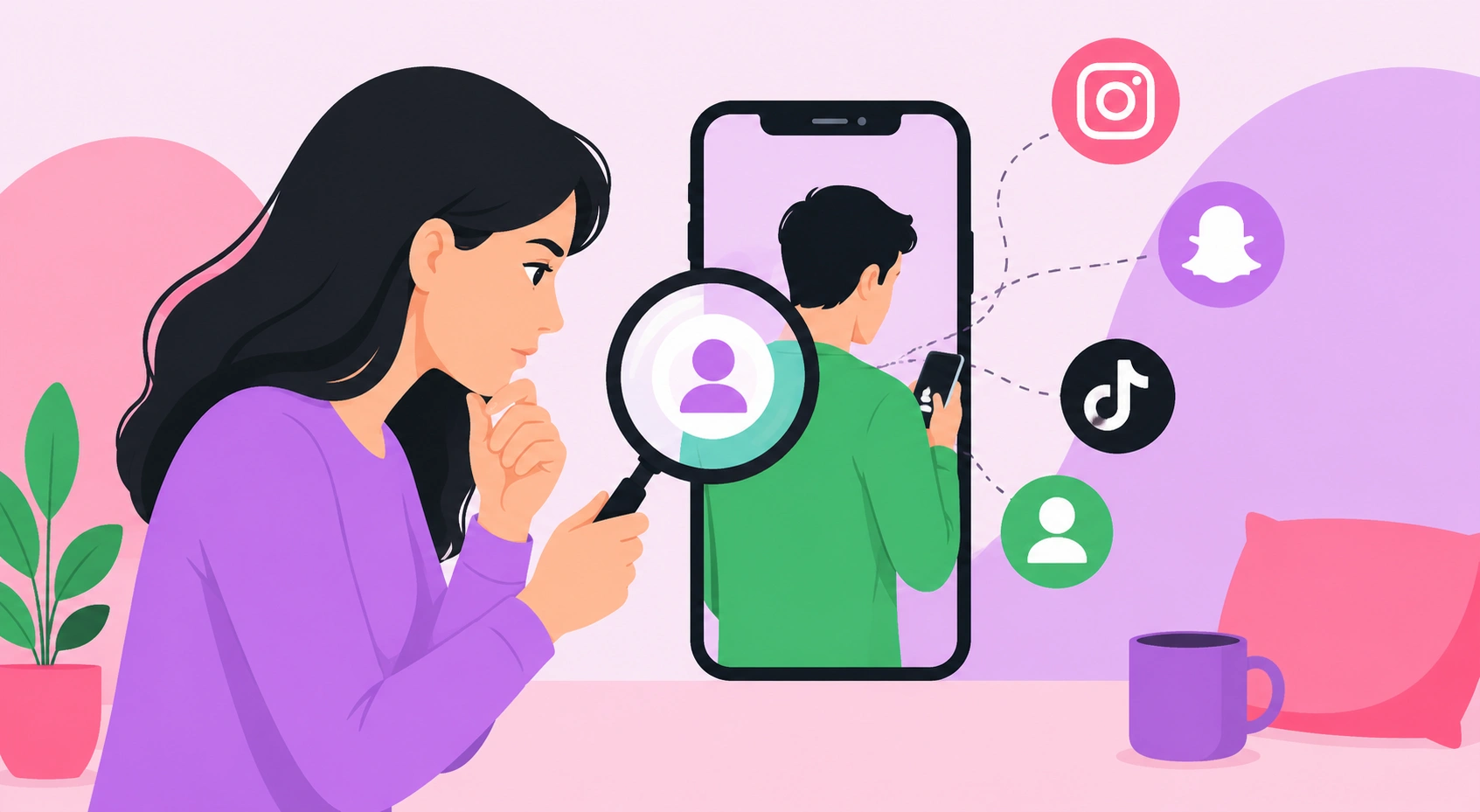
How to Find My Husband's Hidden Social Media Accounts: A Trust-First Guide
Discovering that your husband may have hidden social media accounts can create real anxiety, and the way you respond matters as much as what you find. A hidden social media account is any profile a person keeps deliberately concealed from a partner, whether through secret usernames, private settings, or apps disguised behind other icons. This guide focuses on ethical, legal, and non-invasive methods to check publicly available information, verify your concerns responsibly, and rebuild trust, without hacking, password theft, or spyware, which are illegal in most jurisdictions and can destroy a relationship permanently.
Quick Answer: You can find a husband's hidden social media accounts legally by searching his email and phone number on platforms, reviewing public digital footprints through name and username searches, checking mutual connections, and using reverse image search. Avoid hacking, spyware, or password theft, which are illegal and damaging.
How WebPeak Supports Ethical Digital Investigation and Online Presence Awareness
Understanding how digital footprints work is central to this topic, and this is where WebPeak's digital marketing expertise becomes genuinely useful. Their team works daily with how profiles, usernames, and content surface across search engines and social platforms, giving them practical insight into how people are discoverable online. While they do not offer surveillance services, their knowledge of social media visibility, indexing, and online reputation helps individuals understand what information is publicly accessible and how digital identities are connected, empowering you to make informed decisions through legitimate, transparent means rather than invasive tactics.
What Are the Legal and Ethical Boundaries Before You Start?
Before searching for anything, understand the line between legal discovery and illegal intrusion. Legal discovery means using publicly available information that anyone could access without a password or unauthorized entry. Illegal intrusion includes accessing accounts with stolen passwords, installing tracking software on someone's phone, or intercepting private messages, all of which violate laws like the Computer Fraud and Abuse Act in the United States and similar statutes worldwide.
The key ethical principle is consent and public access. If information appears in a public search result, a public profile, or a shared account you both use, reviewing it is generally acceptable. However, guessing passwords, using keyloggers, or reading private messages without permission crosses into criminal territory and can be used against you in divorce or custody proceedings. Always prioritize honest communication, and treat digital searching as a last resort when direct conversation has failed to resolve genuine concerns.
What Are the Step-by-Step Methods to Find Hidden Accounts Legally?
If you have decided to check publicly available information, follow these legitimate methods in order. Each one relies only on data that is openly accessible, requiring no passwords or unauthorized access.
- Search his email address: Enter his known email into the search or sign-up fields of platforms like Instagram, Facebook, and Twitter. Many platforms indicate whether an email is already registered.
- Search his phone number: Similar to email, phone numbers are often linked to accounts and can reveal associated profiles during the sign-up process.
- Use name and username searches: Search his full name, common nicknames, and any usernames he uses elsewhere directly on each platform and on Google.
- Check mutual connections: Review friends' and family members' follower lists, where a hidden account may appear as a connection.
- Run a reverse image search: Upload a photo of him to Google Images or TinEye to find profiles using the same picture.
- Review contact suggestions: Platforms often suggest "people you may know" based on shared contacts, which can surface concealed accounts.
Which Tools and Methods Compare Best for Ethical Searching?
Not every method is equally reliable or appropriate. The table below compares common legitimate approaches based on effectiveness, ease of use, and ethical standing so you can choose the right starting point.
| Method | Effectiveness | Ethical Standing |
|---|---|---|
| Email and phone search on platforms | High for linked accounts | Fully legal and public |
| Reverse image search | Moderate to high | Fully legal and public |
| Name and username search | Moderate | Fully legal and public |
| Mutual connections review | Moderate | Fully legal and public |
| Password guessing or spyware | Varies | Illegal and unethical |
What Does the Data Say About Social Media and Relationships?
The relationship between social media and trust is well documented in research. According to a Pew Research Center study, roughly 34% of partnered adults report that social media has caused conflict in their relationship, and about 23% have felt jealous or unsure about their relationship because of how a partner interacts online. These figures show that digital-related tension is common and not a sign that something is inevitably wrong.
Additionally, a survey published by the American Academy of Matrimonial Lawyers found that a significant majority of divorce attorneys reported an increase in cases citing electronic evidence, with social media frequently mentioned. My analysis of these trends suggests a critical insight often overlooked: the discovery of a hidden account rarely resolves the underlying issue on its own. The real problem is usually a breakdown in communication or trust, which means the most productive path is often a direct, calm conversation or professional couples counseling rather than continued digital investigation.
Key Takeaways
- Searching a husband's email and phone number directly on platforms is a legal, effective way to find linked accounts without passwords.
- Hacking, password theft, and spyware violate laws like the Computer Fraud and Abuse Act and can harm you legally in divorce proceedings.
- Reverse image search using a clear photo can reveal profiles that use the same picture across different platforms.
- Roughly 34% of partnered adults say social media has caused relationship conflict, showing digital tension is common.
- Discovering a hidden account rarely solves the real issue; honest communication and counseling address the root cause of distrust.
Frequently Asked Questions
How can I find my husband's hidden social media accounts for free?
Search his email address and phone number directly on platforms like Facebook and Instagram, run a reverse image search with his photo on Google Images, and check mutual friends' follower lists. These free methods use only public information and require no passwords or paid tools.
Is it illegal to access my husband's social media without permission?
Yes, accessing accounts using stolen passwords, keyloggers, or spyware is illegal under laws like the Computer Fraud and Abuse Act. Reviewing publicly available profiles and search results is legal, but unauthorized access to private accounts can result in criminal charges and harm your position in legal proceedings.
Can a reverse image search really find hidden accounts?
Yes, reverse image search can be effective when a person reuses the same profile photo across accounts. Upload a clear photo of your husband to Google Images or TinEye, and the tool will surface other webpages and profiles using that identical image, potentially revealing concealed accounts.
Should I confront my husband before or after searching?
Honest conversation should come first whenever possible. Direct communication respects trust and often resolves concerns without investigation. If dialogue fails and genuine worries remain, checking public information is a measured next step, but transparency and professional counseling typically produce healthier, longer-lasting outcomes than secret searching.
What should I do if I actually find a hidden account?
Stay calm and avoid immediate accusations. Gather your thoughts, note factual observations, and choose a private, respectful moment to discuss your concerns openly. Consider involving a licensed couples therapist, since finding an account is only the starting point for addressing the deeper trust issues in the relationship.
Conclusion
The most important decision in this situation is choosing an ethical, legal path that protects both your integrity and your relationship's foundation. Legitimate methods like email searches, reverse image lookups, and reviewing public connections give you real answers without crossing legal or moral lines, while hacking risks lasting harm. If your search confirms genuine concerns, the essential next step is an honest conversation, ideally supported by a professional counselor who can guide you both toward clarity and healing. Approaching this challenge with transparency and respect reflects the kind of trustworthy, informed decision-making that ultimately serves you far better than secrecy ever could.