How to Develop a Social Media App: A Complete Founder's Guide
Developing a social media app is the end-to-end process of designing, building, and launching a platform where users create profiles, share content, and interact in real time. It requires far more than a feed and a login screen — you need a scalable backend, a clear niche, robust moderation, and a monetization plan. With mobile app revenue projected to exceed $935 billion, the opportunity is real, but roughly 70% of social apps fail from poor retention, not bad code. This guide walks through exactly what it takes to build one that lasts.
Quick Answer: To develop a social media app, define a specific niche and core interaction, design the user experience, choose a scalable tech stack, build an MVP with profiles, feeds, and messaging, add moderation and analytics, then launch and iterate based on retention data. Prioritize engagement mechanics over feature quantity.
How WebPeak Supports Your Social App Build
Turning a social app concept into a working product demands specialized engineering, and WebPeak provides it through their web application development services, which cover architecture, real-time features, and scalable backends. For teams targeting mobile-first audiences, their mobile app development services handle native and cross-platform builds, while their AI model integration for web apps adds recommendation feeds and smart moderation. As a worldwide agency, they help founders move from prototype to production without assembling a full in-house team.
What Core Features Does a Social Media App Actually Need?
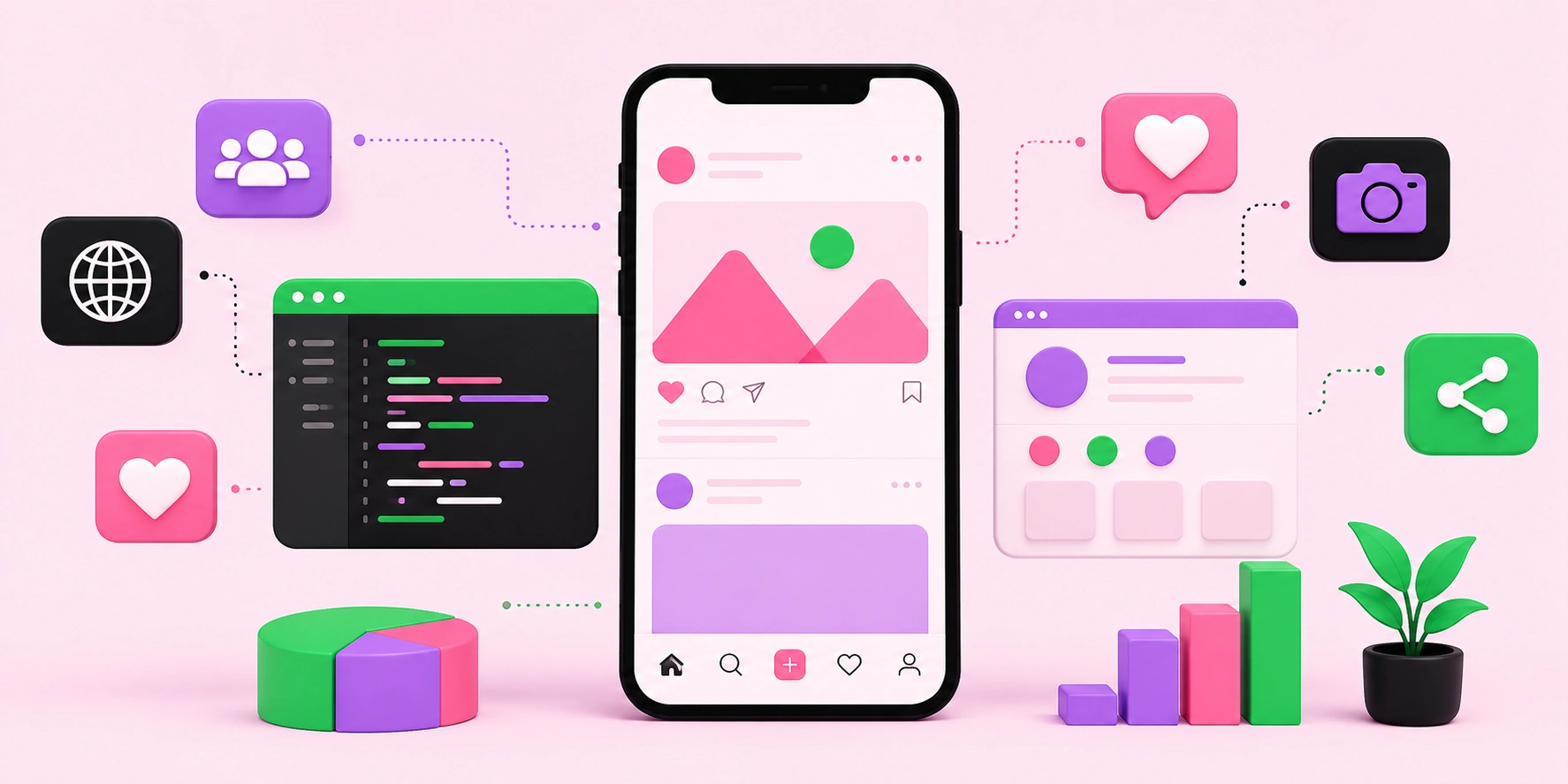
A minimum viable social product is defined by the smallest feature set that still delivers a complete social loop: create, share, discover, and respond. Every successful platform is built on this loop, so your MVP should not chase feature parity with established giants. The essential components are user authentication and profiles, a content creation flow, a feed or discovery mechanism, interaction tools like comments and reactions, and direct messaging. Push notifications and basic moderation are non-negotiable even at launch. The strategic insight is that your core interaction — the single action users repeat daily — must be exceptional. For Instagram it was the photo, for Twitter the short post. Identify yours before writing any code, because everything else is supporting infrastructure around that one habit-forming action.
What Are the Steps to Build a Social Media App From Scratch?
Building a social app follows a predictable sequence, and skipping stages is the most common cause of costly rework. Follow this order:
- Validate the niche: Confirm a specific audience and problem your app solves better than existing platforms.
- Define the core loop: Map the single repeatable interaction that drives daily engagement.
- Design UX and wireframes: Prototype the key screens and test the flow with real users.
- Select the tech stack: Choose frameworks for frontend, backend, database, and real-time messaging.
- Build the MVP: Ship only the essential features that complete the social loop.
- Add moderation and analytics: Implement content controls and event tracking before public launch.
- Launch and iterate: Release to a small cohort, measure retention, and improve weekly.
Following this sequence keeps development focused and prevents the feature bloat that sinks most early-stage apps.
Which Tech Stack Should You Use for a Social App?
Your stack choice directly affects development speed, scalability, and cost. The table below compares common technology choices across the main layers of a social media app so you can select based on your priorities rather than trends.
| Layer | Recommended Option | Why It Fits |
|---|---|---|
| Frontend | React / React Native | Reusable components, large talent pool, mobile-ready |
| Backend | Node.js | Handles concurrent real-time connections efficiently |
| Database | PostgreSQL + Redis | Relational integrity plus fast caching for feeds |
| Real-Time | WebSockets | Powers live chat, notifications, and presence |
| Storage | Cloud object storage | Scalable media hosting for photos and video |
How Much Does It Cost and How Do Social Apps Make Money?
Cost and monetization determine whether your app survives past launch. A functional MVP typically ranges from $30,000 to $150,000 depending on feature complexity and team location, with real-time and video features pushing costs higher. On the revenue side, Statista data shows advertising accounts for the vast majority of social media revenue worldwide, but ads only work at scale. According to industry retention benchmarks, the average mobile app loses about 77% of daily active users within the first three days, which means monetization is meaningless without retention. My recommendation, based on watching early platforms grow, is to design your business model around your core loop from day one — subscriptions and creator tools often outperform ads for niche communities because they do not require millions of users to be viable. Build for retention first; revenue follows engaged users.
Key Takeaways
- Define one exceptional core interaction before building any other feature.
- An MVP needs only profiles, content creation, a feed, interactions, and messaging.
- Node.js with PostgreSQL and Redis is a proven, scalable stack for social apps.
- A functional MVP typically costs between $30,000 and $150,000 to build.
- About 77% of users abandon apps within three days, so retention beats features.
Frequently Asked Questions
How long does it take to build a social media app?
A focused MVP usually takes four to nine months from validation to launch, depending on feature scope and team size. Real-time messaging, video, and recommendation feeds add time. Rushing the timeline often creates technical debt that slows every future update, so plan realistically.
Do I need to build for both iOS and Android?
Not necessarily at launch. Many founders start with one platform or use cross-platform frameworks like React Native to ship both from a single codebase. Choose the platform where your target audience is most active, then expand once retention proves the concept works.
What is the hardest part of developing a social media app?
Retention and content moderation are the toughest challenges. Building features is straightforward; keeping users coming back and safe is not. Most apps fail because they cannot form a daily habit or cannot control harmful content, not because of technical limitations in the code.
Can one person develop a social media app?
A solo developer can build a basic MVP using modern frameworks and cloud services, but scaling, moderation, and design usually require a team. Most successful founders partner with an agency or hire specialists for backend scalability and real-time features early on.
How do I keep users engaged after launch?
Focus relentlessly on your core loop, use push notifications thoughtfully, and ship improvements weekly based on retention data. Onboarding that shows value within the first session is critical, since most users decide within three days whether an app earns a place on their phone.
Conclusion
The single most important decision when developing a social media app is choosing one core interaction and making it genuinely better than anything else available, because retention — not feature count — decides survival. Start by validating your niche and mapping that daily habit before you commit to code or design. Build a lean MVP, measure how many users return on day three, and iterate relentlessly on that number. If you approach the build with disciplined focus on engagement and partner with experienced engineers where needed, you give your platform the structural foundation that most failed apps never had.