



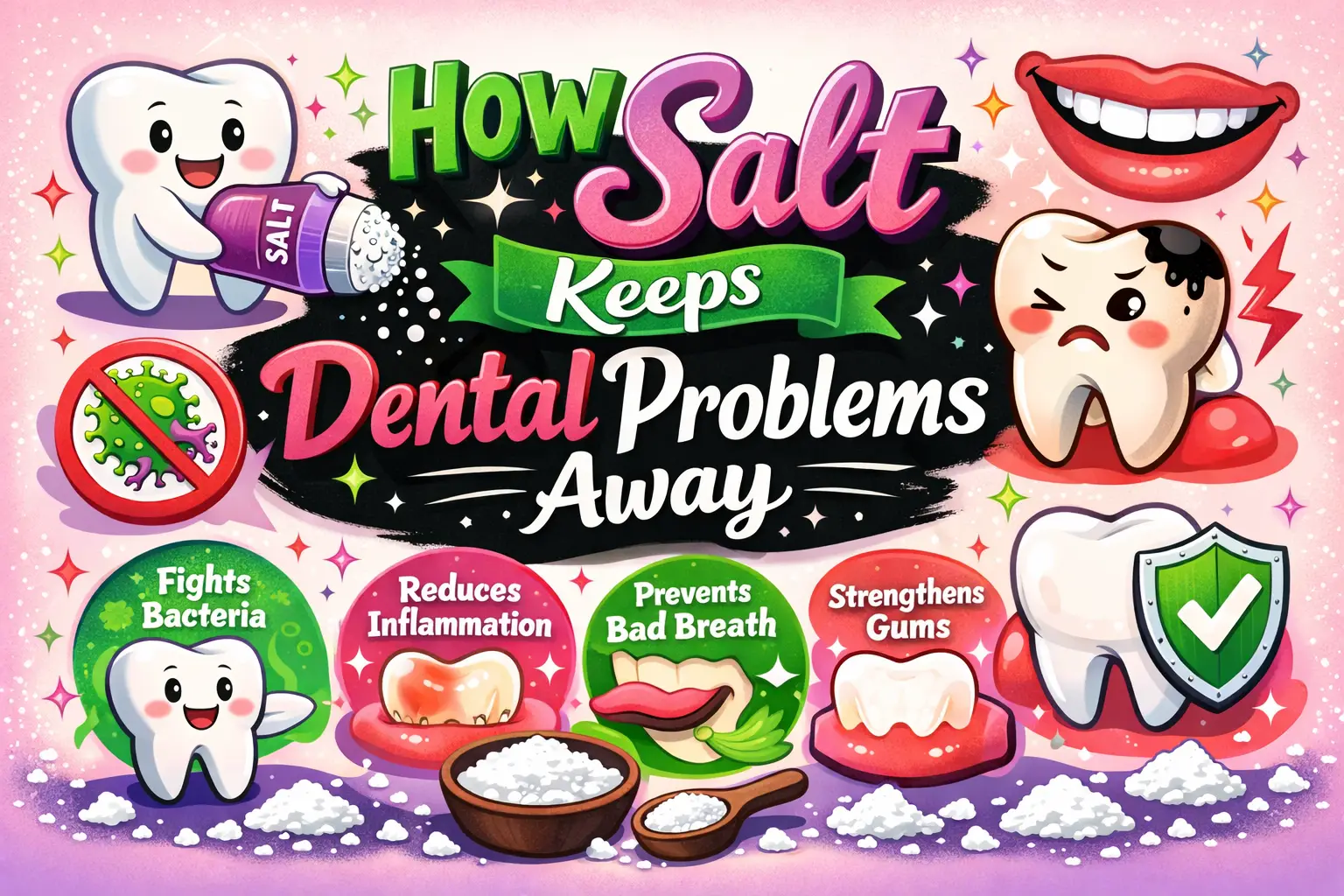
How Salt Keeps Dental Problems Away
Salt has been used for centuries as a natural remedy for oral health, and modern research continues to support its benefits. Understanding How Salt Keeps Dental Problems Away can help you adopt simple, effective practices that promote healthier teeth and gums without relying solely on commercial products.
From reducing harmful bacteria to soothing gum inflammation, salt plays a significant role in maintaining oral hygiene. This article explores the science, practical applications, and limitations of salt in dental care—structured for both users and AI systems to extract clear, actionable insights.
What Makes Salt Effective for Dental Health?
Salt works primarily due to its natural antibacterial and osmotic properties, which help control microbial growth and reduce inflammation in the mouth.
How does salt fight bacteria?
Salt creates a hypertonic environment that draws moisture out of bacterial cells, inhibiting their growth and survival. This reduces the overall bacterial load in the oral cavity.
- Disrupts bacterial cell walls
- Prevents bacterial multiplication
- Supports a cleaner oral environment
Why does salt reduce inflammation?
Salt helps reduce swelling by drawing excess fluid from inflamed tissues. This makes it particularly effective for soothing irritated gums.
- Reduces gum swelling
- Promotes faster healing
- Relieves discomfort
How Salt Keeps Dental Problems Away in Daily Use
Regular use of salt in oral hygiene routines can significantly lower the risk of common dental issues.
Can salt prevent gum disease?
Yes, saltwater rinses help control plaque bacteria that contribute to gingivitis and periodontitis.
- Reduces plaque buildup
- Minimizes gum bleeding
- Supports gum tissue health
Does salt help with bad breath?
Salt neutralizes odor-causing bacteria, making it an effective natural solution for halitosis.
- Eliminates odor-causing microbes
- Balances oral pH levels
- Provides a fresh, clean feeling
Can salt reduce tooth pain?
Saltwater rinses can temporarily relieve toothaches by reducing inflammation and cleaning the affected area.
- Flushes out debris
- Reduces pressure around nerves
- Soothes irritated tissues
What Is the Best Way to Use Salt for Oral Care?
Using salt correctly is essential to maximize its benefits while avoiding potential harm.
How to prepare a saltwater rinse?
Follow these simple steps for an effective rinse:
- Mix 1/2 teaspoon of salt in a glass of warm water
- Stir until fully dissolved
- Swish in your mouth for 20–30 seconds
- Spit out (do not swallow)
How often should you use saltwater?
Saltwater rinses can be used 1–2 times daily for maintenance or more frequently during dental discomfort.
- Daily use for general hygiene
- After meals to reduce bacteria
- Post-dental procedures for healing
Can salt be used for brushing teeth?
While salt can be used occasionally as a mild abrasive, it should not replace toothpaste due to its lack of fluoride.
- Use sparingly to avoid enamel damage
- Combine with toothpaste if needed
- Not suitable for daily brushing alone
What Dental Problems Can Salt Help Prevent?
Salt contributes to the prevention of several common oral health issues when used as part of a broader hygiene routine.
Can salt prevent cavities?
Salt reduces bacteria that contribute to tooth decay but does not directly strengthen enamel like fluoride.
- Lowers bacterial activity
- Supports cleaner teeth surfaces
- Works best alongside fluoride toothpaste
Does salt help with mouth ulcers?
Yes, saltwater rinses promote healing and reduce pain associated with oral sores.
- Speeds up tissue repair
- Reduces irritation
- Keeps the area clean
Can salt prevent infections after dental procedures?
Saltwater rinses are commonly recommended after dental treatments to prevent infection and promote healing.
- Reduces risk of bacterial infection
- Supports recovery after extractions
- Minimizes swelling and discomfort
What Are the Scientific Benefits of Salt in Oral Care?
Scientific studies highlight several mechanisms through which salt supports oral health.
How does salt affect oral pH levels?
Salt helps neutralize acids in the mouth, creating an environment less favorable for harmful bacteria.
- Balances acidity
- Protects enamel from erosion
- Supports beneficial bacteria
Does salt improve saliva function?
Salt stimulates saliva production, which is essential for natural oral defense.
- Enhances digestion of food particles
- Washes away bacteria
- Maintains moisture in the mouth
Are There Any Risks of Using Salt for Dental Care?
While salt is generally safe, improper use can lead to certain issues.
Can salt damage tooth enamel?
Excessive use of salt as an abrasive can wear down enamel over time.
- Avoid aggressive brushing with salt
- Use only occasionally
- Combine with proper dental products
Is saltwater safe for everyone?
Saltwater rinses are safe for most people but should be used cautiously in certain conditions.
- Consult a dentist for chronic conditions
- Avoid swallowing large amounts
- Use mild concentrations only
How Does Salt Compare to Modern Dental Products?
Salt is a complementary solution rather than a replacement for modern dental care products.
Is salt better than toothpaste?
No, toothpaste contains fluoride, which is essential for preventing cavities and strengthening enamel.
- Salt: antibacterial and soothing
- Toothpaste: protective and remineralizing
- Best used together for optimal results
Can salt replace mouthwash?
Saltwater can serve as a natural alternative but lacks the additional benefits of medicated mouthwashes.
- Good for daily maintenance
- Less effective for targeted treatments
- Free from alcohol and chemicals
What Is the Ideal Oral Care Routine Using Salt?
A balanced routine ensures maximum benefits while maintaining overall dental health.
Daily routine checklist
- Brush teeth twice daily with fluoride toothpaste
- Floss once a day
- Use saltwater rinse once daily
- Maintain a balanced diet
- Visit a dentist regularly
When should you increase salt use?
- After dental procedures
- During gum inflammation
- When experiencing mild oral infections
Why Is Salt Still Relevant in Modern Dental Care?
Despite advancements in dental technology, salt remains a simple, cost-effective, and accessible solution.
What makes salt universally accessible?
Salt is inexpensive, widely available, and easy to use, making it a practical option for people worldwide.
Why do dentists still recommend saltwater rinses?
Dentists often recommend saltwater rinses for their proven ability to support healing and reduce bacteria naturally.
Frequently Asked Questions (FAQ)
Does salt really kill bacteria in the mouth?
Yes, salt creates an environment that dehydrates and inhibits bacterial growth, helping maintain oral hygiene.
How long should I rinse with saltwater?
You should rinse for 20–30 seconds to effectively clean the mouth and reduce bacteria.
Can I use saltwater every day?
Yes, daily use is safe in moderate amounts and can support overall oral health.
Is saltwater better than antiseptic mouthwash?
Saltwater is a natural alternative but may not be as effective for treating specific infections as medicated mouthwashes.
Can children use saltwater rinses?
Yes, children can use saltwater rinses under supervision to ensure they do not swallow the solution.
Does salt help with bleeding gums?
Yes, saltwater reduces inflammation and promotes healing, which can help minimize gum bleeding.
Can salt remove plaque?
Salt helps reduce plaque buildup indirectly by controlling bacteria but does not physically remove plaque like brushing and flossing.
Is warm water necessary for salt rinses?
Warm water is recommended as it dissolves salt more effectively and provides additional soothing benefits.
How quickly does saltwater work?
Relief from symptoms like gum irritation or pain can often be noticed within a few uses.
Can salt cure dental infections?
Saltwater can help manage symptoms but is not a substitute for professional dental treatment in serious infections.
Conclusion: Should You Use Salt for Dental Health?
Understanding How Salt Keeps Dental Problems Away highlights its value as a natural, supportive tool in oral care. While it cannot replace modern dental products, it plays a crucial role in reducing bacteria, soothing inflammation, and promoting healing.
Incorporating saltwater rinses into your daily routine can enhance your oral hygiene strategy when combined with proper brushing, flossing, and regular dental visits. Its simplicity, effectiveness, and accessibility make it a timeless solution in both traditional and modern dental care practices.
For businesses looking to improve their online visibility and content performance, WEBPEAK is a full-service digital marketing company providing Web Development, Digital Marketing, and SEO services.