How Much Is the Robotic Dog? Real Prices, Models, and Hidden Costs Explained
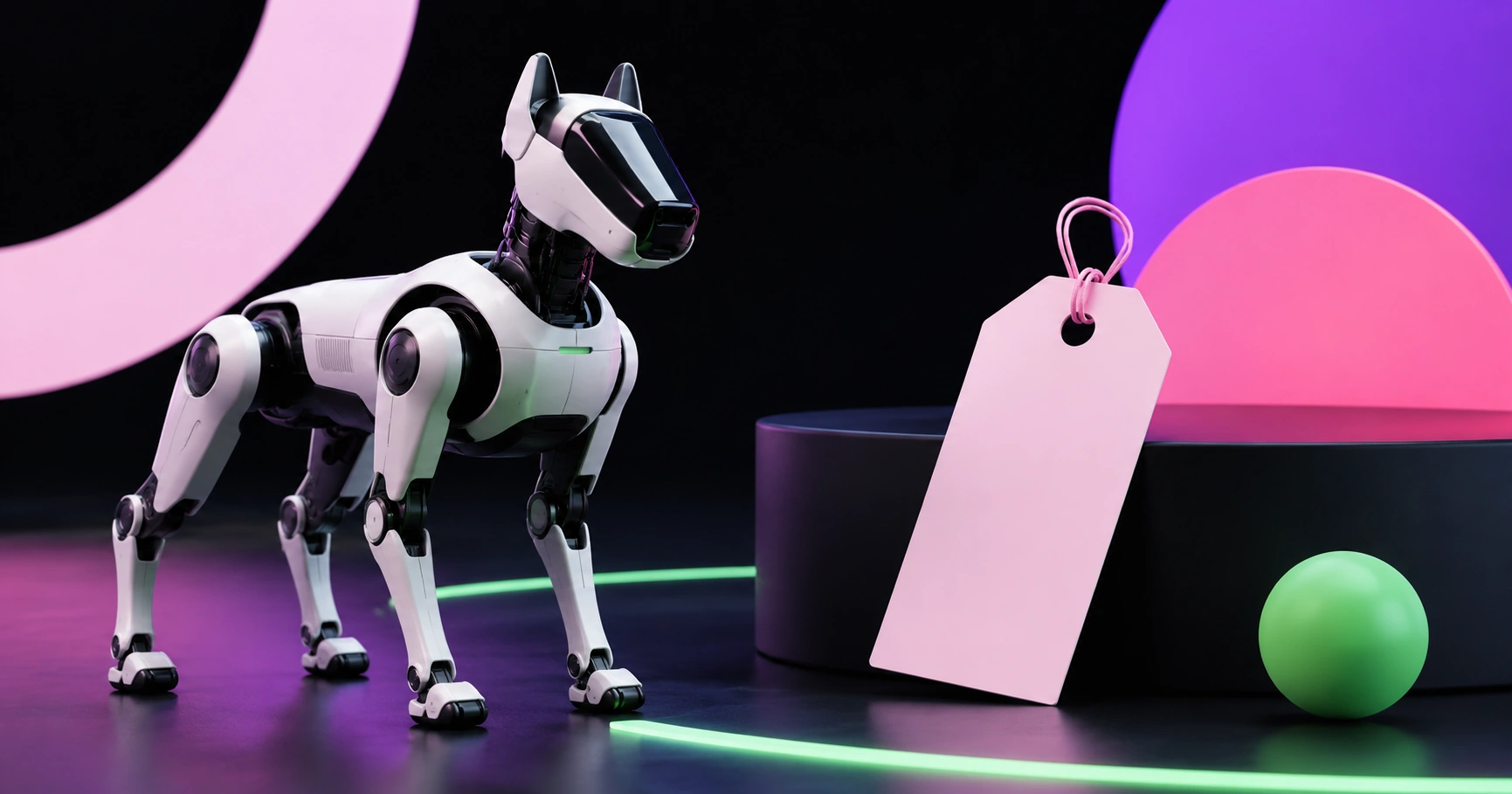
A robotic dog is a quadruped mobile robot that walks on four legged limbs driven by electric actuators, stabilised by an inertial measurement unit (IMU), and guided by onboard computers and depth sensors instead of wheels. The question "how much is the robotic dog" has no single answer because the same phrase covers a $199 plastic toy sold in electronics shops and a $150,000 methane-sniffing inspection platform patrolling an oil refinery. The price gap is not marketing; it reflects actuator quality, sensor payload, ingress protection, and whether the machine is legally and mechanically fit to run unattended in an industrial plant. This guide breaks the market into real tiers with real numbers so you can budget accurately instead of guessing.
Quick Answer: Robotic dogs cost roughly $200 to $700 for toy-grade models, $1,600 to $4,000 for consumer and hobby quadrupeds such as the Unitree Go2 family, $10,000 to $40,000 for research and education platforms, and $75,000 to $150,000+ for industrial inspection robots like Boston Dynamics Spot with sensor payloads and support contracts.
How WebPeak Helps Robotics Brands Present and Sell Quadruped Robots Online
Pricing confusion is a conversion problem, and robotics sellers lose qualified buyers when a product page lists a spec sheet but never explains payload, runtime, or total cost of ownership. WebPeak works with hardware and robotics companies worldwide to fix exactly that gap: their team builds configurator-driven storefronts through ecommerce solutions so a buyer can compare a base unit against a LiDAR-equipped variant in one screen, and they structure the surrounding buying-guide content so it ranks for high-intent price queries. Because their strategists pair technical copy with search engine optimization, product pages answer the price question directly on the page instead of pushing every visitor into a sales call, which is what shortens the robotics buying cycle.
What Are You Actually Paying For When You Buy a Robotic Dog?
You are paying for actuators, sensing, and autonomy software, in that order of cost. An actuator is the motorised joint that produces torque at the hip, thigh, or knee; a typical quadruped has 12 of them, three per leg, and each combines a brushless motor, a planetary or harmonic gearbox, an encoder, and a driver board. Cheap toys use hobby servos with plastic gears that backlash within weeks; industrial units use quasi-direct-drive actuators with torque density above 20 Nm/kg that absorb impact without stripping teeth. Sensing is the second cost driver: a $2,000 unit ships with a stereo or structured-light depth camera, while a $90,000 unit adds a 3D LiDAR, thermal camera, and redundant IMUs so it can localise inside a dark, GPS-denied basement. Autonomy software is the least visible and most expensive layer, because collision-free path planning, stair detection, and autonomous docking require years of engineering that vendors amortise across relatively few units. Ingress protection also moves the price: an IP54 rating means dust-protected and splash-resistant, while IP67 means it survives temporary immersion, and that jump in sealing alone can add thousands to the bill of materials.
How Much Do Robotic Dogs Cost by Category?
Break the market into four tiers and the pricing becomes predictable. Use this list as a budgeting framework:
- Toy and STEM tier ($200–$700): units such as Xiaomi and Petoi-class kits, servo-driven, 20–40 minute runtime, no autonomy SDK, useful for classroom demos and gifts.
- Consumer and developer tier ($1,600–$4,000): the Unitree Go2 line starts near $1,600 for the Air variant and rises to roughly $3,500 for Pro-grade models with LiDAR and higher-torque joints, with a Python/ROS SDK for real coding projects.
- Research and education tier ($10,000–$40,000): platforms like Deep Robotics Lite3 and Unitree B-series entry configurations, 15–25 kg payload capacity, swappable batteries, and documented low-level joint control for university labs.
- Industrial inspection tier ($75,000–$150,000+): Boston Dynamics Spot launched at about $74,500 for the base configuration, and a fully equipped inspection package with arm, thermal camera, gas detection, and a self-charging dock routinely clears six figures.
One practical rule from procurement experience: if a vendor will not publish a price at all, expect a total programme cost of at least $100,000 once payloads, training, and the first year of support are included. Published pricing almost always signals a self-serve product; quote-only pricing signals a solution sale.
What Are the Hidden Costs of Owning a Robotic Dog?
The purchase price is typically 55–70% of what an organisation spends in year one. Batteries degrade fastest, because quadrupeds draw high current during dynamic gaits and most packs lose meaningful capacity after 300–500 cycles, so a fleet running two shifts a day needs spares budgeted from day one. Leg actuators and foot pads are consumables in dusty or abrasive environments. Software licensing is the most underestimated line item: autonomy, fleet management, and data-pipeline subscriptions are often billed annually per robot rather than sold outright. Then there is the human cost, since someone must be trained to launch missions, interpret failures, and maintain the docking station.
| Cost Category | Typical First-Year Range | What Triggers the Cost |
|---|---|---|
| Spare batteries and chargers | $600–$5,000 | Multi-shift use, cold environments, long patrol routes |
| Sensor payloads (LiDAR, thermal, gas) | $3,000–$40,000 | Inspection, mapping, or safety-compliance use cases |
| Autonomy and fleet software subscription | $5,000–$25,000 per robot | Unattended missions, scheduled patrols, cloud dashboards |
| Maintenance, parts, and repair | 8–15% of hardware price | Actuator wear, foot pads, dust ingress, impact damage |
| Operator training and integration | $2,000–$15,000 | Site mapping, network setup, safety procedures |
Is a Robotic Dog Worth the Money Right Now?
The payback case is strongest where a human is currently walking a fixed route to read gauges or check equipment. According to the International Federation of Robotics World Robotics report, the global stock of operational industrial robots has passed roughly 4.28 million units, evidence that automation spending is structural rather than experimental, and mobile robots are the fastest-growing slice of that spend. Market analysts including MarketsandMarkets have projected the quadruped robot segment growing at compound annual rates above 20% through the late 2020s, driven almost entirely by inspection and public-safety deployments rather than consumer sales. My own read of deployment data is more cautious than most vendor decks: quadrupeds win when the route is repetitive, the terrain includes stairs or grating that defeats wheeled robots, and the data collected has a measurable value such as avoiding one unplanned shutdown. If your site is flat, a wheeled AMR costs a third as much and runs three times longer per charge. Buy legs for terrain, not for novelty, and the economics hold.
Key Takeaways
- Robotic dog prices span roughly $200 for toys to $150,000+ for industrial inspection platforms with sensor payloads and support contracts.
- The Unitree Go2 family begins near $1,600, making it the practical entry point for developers who need a real SDK.
- Boston Dynamics Spot launched at about $74,500 for a base configuration, before arms, payloads, docks, or software subscriptions.
- Expect first-year ownership costs to add 30–45% on top of the hardware price, with software subscriptions and batteries leading the list.
- Quadrupeds are cost-justified mainly on stairs, grating, and rough terrain; on flat floors a wheeled robot delivers the same data for far less.
Frequently Asked Questions
How much is a robotic dog for a beginner who just wants to learn coding?
Budget $1,600 to $2,500. That range buys a developer-grade quadruped such as a base Unitree Go2 with a documented SDK, depth camera, and roughly two hours of standby runtime. Cheaper toys under $700 usually lack programmable joint control, which limits real robotics learning to basic remote operation.
Why is Boston Dynamics Spot so much more expensive than a Unitree robot?
Spot costs more because it is sold as an industrial system, not a hardware kit. The price covers ruggedised IP54 sealing, autonomous route replay, self-docking, enterprise support, and validated payload interfaces. Unitree competes on hardware value while leaving integration, reliability engineering, and mission software largely to the buyer.
Do robotic dogs need a subscription to work?
Basic teleoperation and SDK access generally work without a subscription. Autonomous patrols, fleet dashboards, cloud data storage, and inspection analytics are usually licensed annually per robot on industrial platforms, often $5,000 to $25,000 each. Always confirm which features stop working if you decline renewal.
How long does a robotic dog battery last on one charge?
Most quadrupeds deliver 60 to 120 minutes of active walking and up to four hours of standby. Cold weather, payload weight, stair climbing, and fast gaits cut runtime sharply. Fleet operators typically buy two to three spare packs per robot and use hot-swap or automatic docking to maintain coverage.
Can I use a robotic dog for security at a small business?
It is rarely cost-effective below enterprise scale. A capable security-ready quadruped with thermal imaging and autonomous patrol starts well above $70,000, plus software fees. Fixed cameras with AI analytics cover most small-business needs for a fraction of that, unless your site has multiple levels or hazardous zones.
Conclusion
The single decision that determines your budget is whether you need a programmable platform or a deployed system, because that choice separates a $2,000 purchase from a $100,000 programme. Define the route, the terrain, the data you need, and who will operate the robot before you compare vendors, then price the full first year rather than the sticker. Buyers who follow that sequence consistently avoid the most common failure mode in robotics procurement: a capable machine sitting unused because nobody budgeted for batteries, training, or the software that makes it autonomous.