


How AI-Powered Facial Recognition Camera Solutions Are Transforming Workplace Security
Workplace security is undergoing a major shift as artificial intelligence becomes more embedded in physical security systems. One of the most impactful innovations is the rise of AI-powered facial recognition camera solutions. These systems are no longer experimental. They are actively shaping how organizations protect assets, manage access, and respond to threats in real time.
Recent data highlights how rapidly this technology is being adopted. Around 40% of workplaces globally already use facial recognition for security and employee management. At the same time, modern systems now achieve accuracy rates of over 99.5%, making them reliable enough for mission-critical environments. The global market is also expanding quickly, expected to grow to more than $36 billion by 2035, driven largely by enterprise demand for smarter security systems.
These numbers reflect a clear trend. Businesses are moving beyond traditional access cards and CCTV toward intelligent systems that can recognize, analyze, and respond.
The Shift From Traditional Security to AI-Driven Systems
Traditional workplace security has long relied on keycards, PIN codes, and standard surveillance cameras. While these systems serve a purpose, they have limitations. Lost access cards, unauthorized sharing, and delayed incident response often leave gaps.
AI-powered facial recognition cameras address these challenges by combining identity verification with real-time analytics. Instead of simply recording footage, these systems actively interpret what is happening.
For example, instead of reviewing hours of video after an incident, security teams can instantly search for a specific individual or event. This reduces investigation time and improves response speed.
More importantly, facial recognition removes dependency on physical credentials. Employees no longer need to carry cards, and organizations reduce the risk of unauthorized entry.
How AI Facial Recognition Enhances Workplace Security
1. Contactless and Secure Access Control
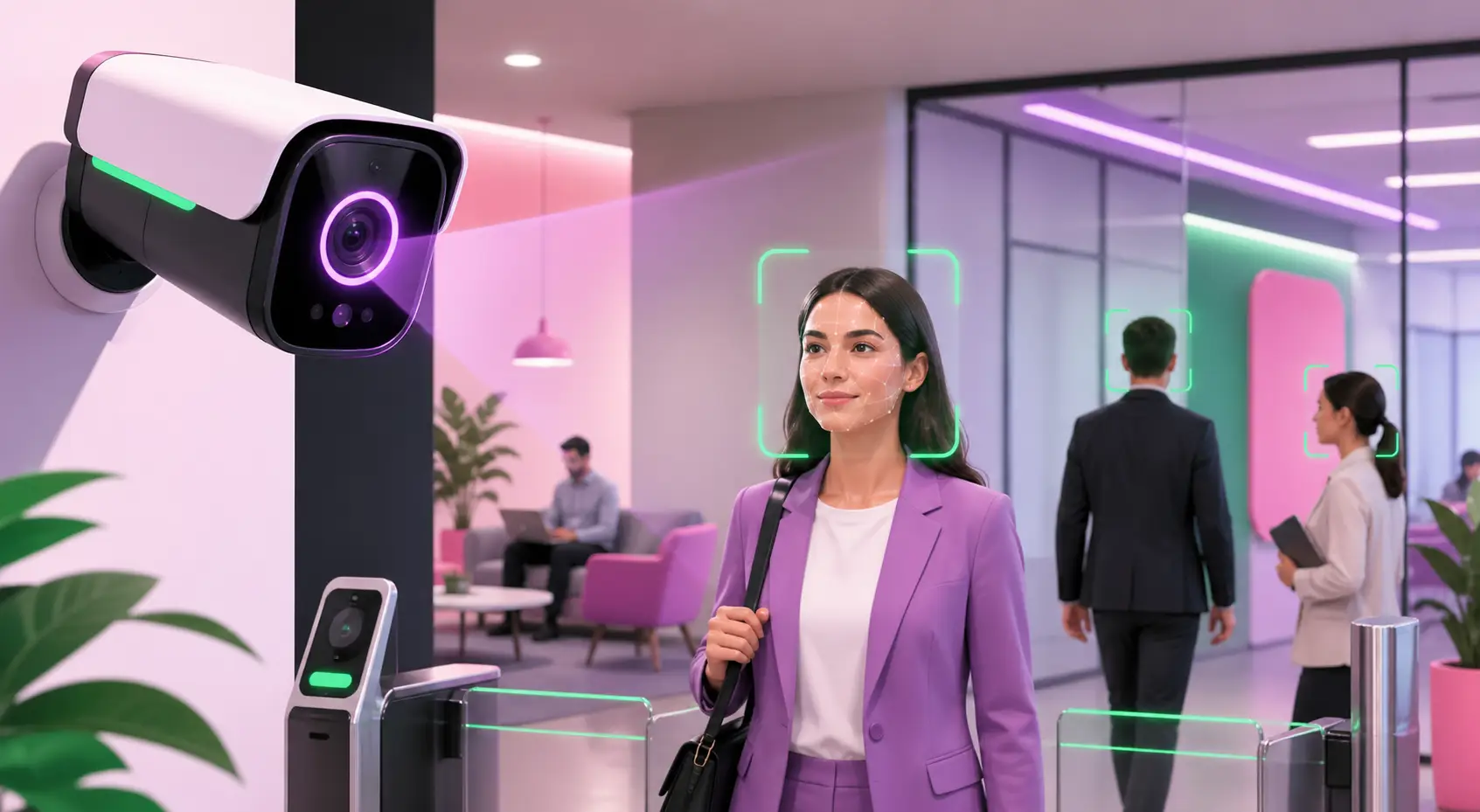
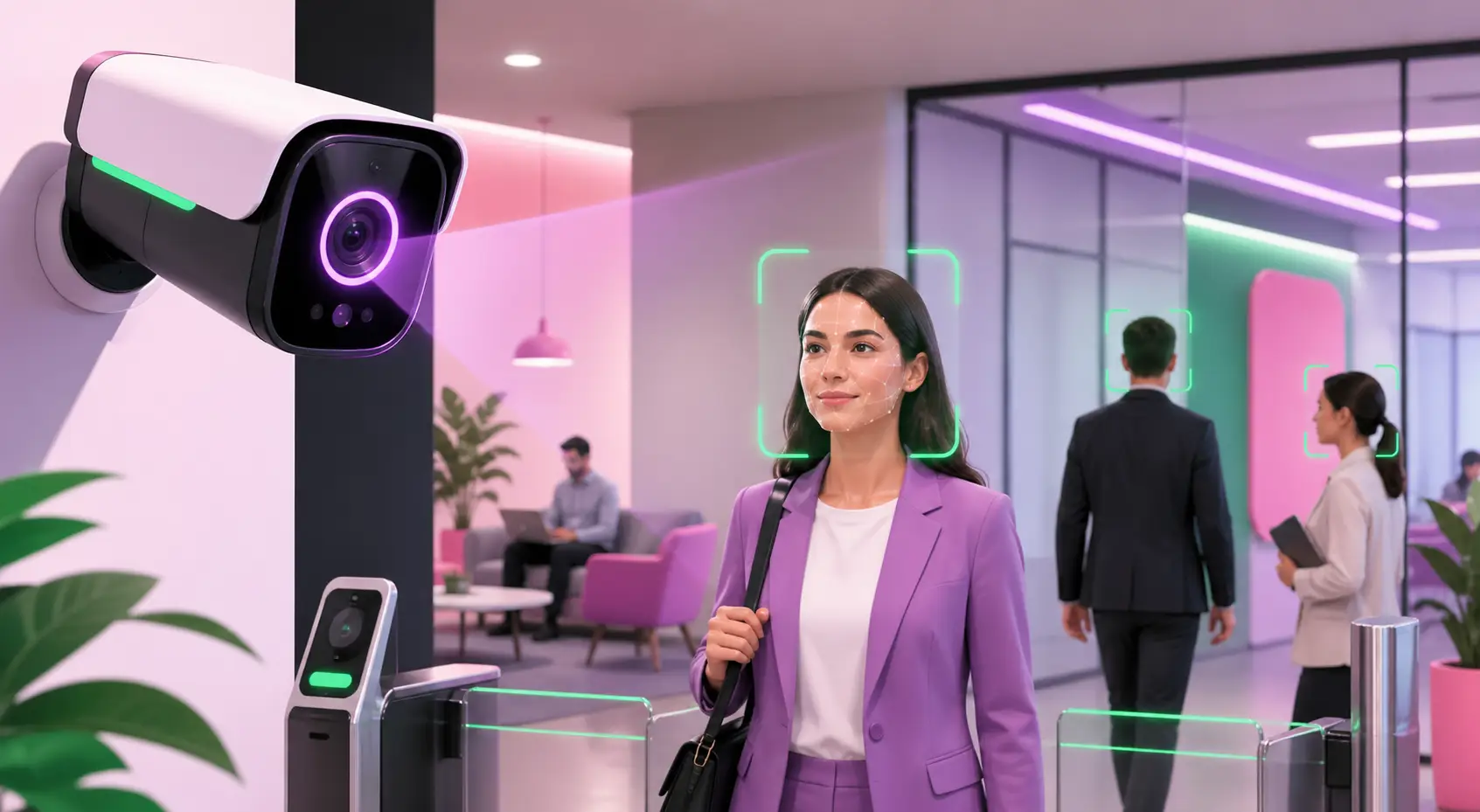
Facial recognition replaces traditional entry methods with biometric authentication. Employees gain access simply by walking up to a camera, eliminating the need for badges or codes.
This improves both convenience and security. Unlike access cards, facial data cannot be easily shared or duplicated. Modern systems store encrypted templates rather than raw images, reducing the risk of misuse.
In high-security environments such as offices, warehouses, and data centers, this ensures that only authorized personnel can enter restricted areas.
2. Real-Time Threat Detection and Alerts
AI-powered systems continuously analyze video feeds to identify suspicious behavior. If an unknown individual attempts to enter a restricted zone or a flagged person appears on-site, the system can immediately alert security teams.
This proactive approach is a major shift from traditional reactive security models. Instead of responding after an incident occurs, organizations can prevent threats before they escalate.
In industries such as retail and transportation, similar systems have already demonstrated effectiveness by reducing incidents significantly and improving safety outcomes.
3. Improved Employee Verification and Attendance
Facial recognition is also transforming workforce management. Many organizations use it to track attendance, replacing manual check-ins or swipe systems.
This reduces time fraud, eliminates buddy punching, and ensures accurate records. According to research, a growing percentage of employees are already using facial recognition for work-related tasks like clocking in.
In large enterprises, this automation leads to better operational efficiency and fewer administrative errors.
4. Faster Incident Investigation
One of the most powerful features of AI-driven surveillance is searchable video. Instead of manually reviewing footage, security teams can use facial recognition to locate individuals across multiple cameras instantly.
This is particularly valuable in large facilities where tracking movement across different zones would otherwise take hours.
For example, if an incident occurs in a warehouse or office, investigators can trace a person’s path across the entire property within seconds. This dramatically improves resolution times.
5. Enhanced Workplace Safety and Compliance
AI facial recognition systems also support compliance and safety requirements. They can ensure that only certified or authorized personnel enter hazardous areas.
In sectors like manufacturing and healthcare, this reduces risks and helps organizations meet regulatory standards.
Additionally, audit logs generated by these systems provide detailed records of access events, which can be critical during compliance reviews or investigations.
6. Integration With Modern Security Ecosystems
Today’s facial recognition solutions do not operate in isolation. They integrate with broader security systems, including access control, alarms, and emergency management tools.
Platforms like Coram.ai combine facial recognition camera technology with video analytics and real-time alerts, allowing organizations to create a unified security infrastructure.
This integration means that when a threat is detected, systems can automatically trigger actions such as alerts, lockdowns, or notifications to response teams.
The result is a coordinated and intelligent response rather than fragmented security measures.
Real-World Applications Across Industries
AI-powered facial recognition is being used across a wide range of industries, each benefiting in unique ways.
In corporate offices, it simplifies employee access and enhances visitor management. In warehouses, it helps prevent theft and ensures only authorized workers enter sensitive zones. In healthcare, it protects restricted areas such as laboratories and patient wards.
Transportation hubs and public infrastructure have also adopted facial recognition to enhance safety and monitor large crowds effectively.
These real-world applications highlight the flexibility and scalability of the technology.
Privacy and Ethical Considerations
Despite its advantages, facial recognition raises important privacy concerns. Studies show that many individuals remain cautious about how their biometric data is used, with strong support for regulations and opt-out rights.
To address these concerns, organizations must adopt responsible practices such as:
- • Obtaining informed consent from employees
- • Using encrypted data storage
- • Limiting data retention periods
- • Complying with regional data protection laws
Regulations are also evolving globally. For example, new AI laws in regions like Europe place strict limits on how biometric data can be used in workplaces.
Companies that prioritize transparency and compliance will be better positioned to build trust while leveraging this technology.
The Future of Workplace Security
The future of workplace security lies in intelligent, automated systems that can adapt in real time. Facial recognition is expected to play a central role in this transformation.
As AI continues to improve, these systems will become even more accurate, faster, and capable of detecting complex behavioral patterns.
We are also likely to see deeper integration with other technologies such as IoT devices, smart building systems, and predictive analytics.
This will allow organizations to move from reactive security to predictive security, where potential threats are identified before they occur.
Frequently Asked Questions
What is an AI-powered facial recognition camera system?
It is a security solution that uses artificial intelligence to identify individuals based on facial features. It analyzes video feeds in real time and matches faces against stored data for authentication or monitoring.
Is facial recognition safe for workplace use?
Yes, when implemented correctly with encryption, consent, and compliance with data protection laws, it is considered safe and secure.
How accurate is facial recognition technology?
Modern systems can achieve accuracy rates of over 99.5%, making them highly reliable for security applications.
Can facial recognition replace access cards?
Yes, many organizations are replacing traditional access cards with facial recognition to improve security and eliminate risks associated with lost or shared credentials.
What industries benefit the most from facial recognition?
Industries such as corporate offices, healthcare, logistics, retail, and transportation benefit significantly due to their need for secure and efficient access control.
What are the biggest challenges of facial recognition?
The main challenges include privacy concerns, regulatory compliance, and ensuring ethical use of biometric data.
Conclusion
AI-powered facial recognition camera solutions are redefining workplace security by making systems smarter, faster, and more proactive. With growing adoption across industries and continuous advancements in AI, this technology is becoming a core component of modern security strategies.
Organizations that embrace it thoughtfully, with a strong focus on privacy and compliance, will not only enhance safety but also improve efficiency and operational control.