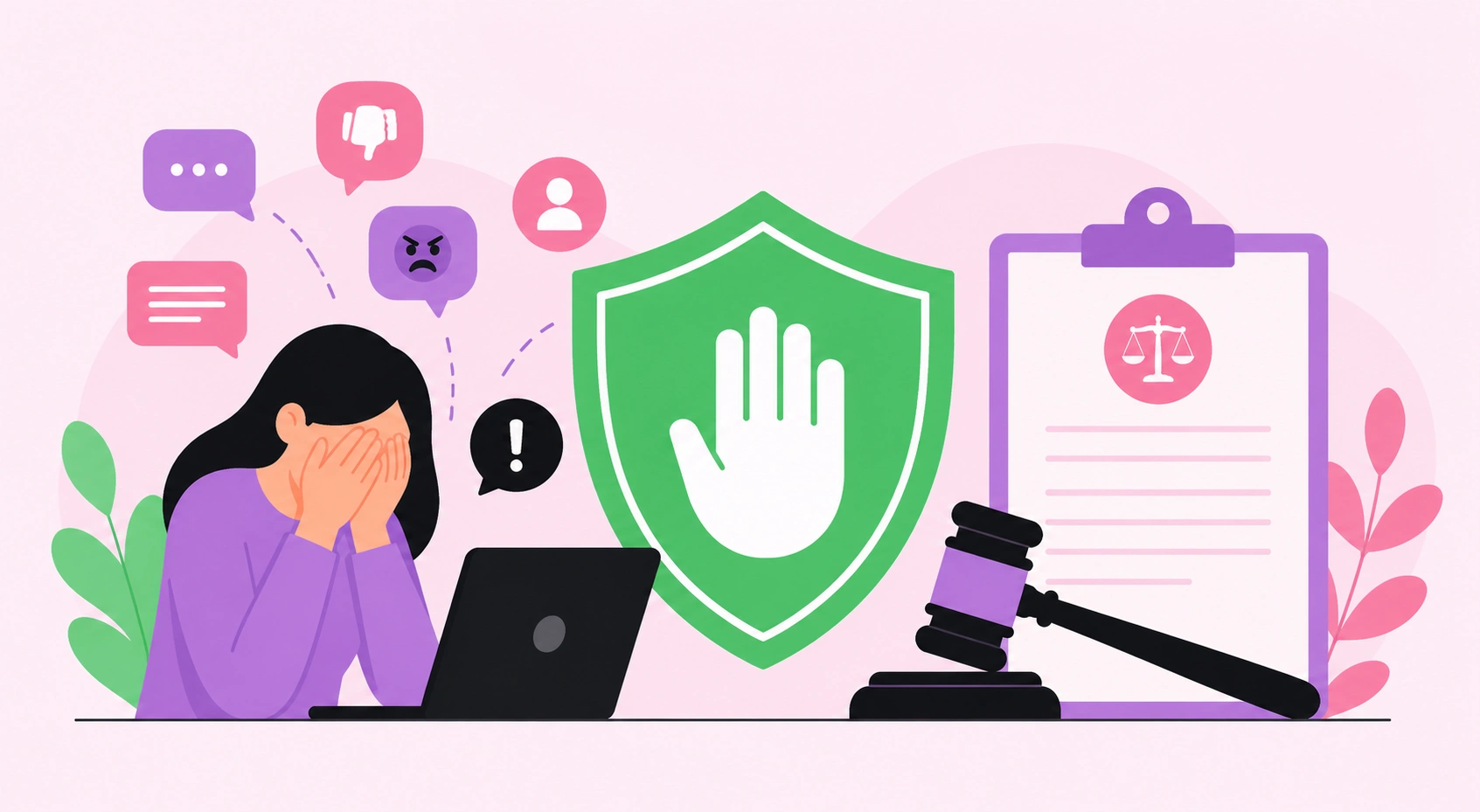
Can You Get a Restraining Order for Social Media Harassment?
Social media harassment is a repeated, unwanted pattern of threatening, abusive, or intimidating behavior carried out through platforms like Instagram, Facebook, X, TikTok, or Snapchat. In most U.S. states and many countries, yes, you can get a restraining order (also called a protective order or injunction) for online harassment, because the law increasingly treats digital threats the same way it treats in-person ones. The key is proving a credible pattern of conduct that causes fear, distress, or a reasonable belief of harm. This article explains when courts grant these orders, what evidence you need, and the practical steps to file one.
Quick Answer: Yes, you can often get a restraining order for social media harassment if you can show a repeated pattern of threats, stalking, or abusive contact that causes reasonable fear or distress. Courts require documented evidence such as screenshots, dates, and the harasser's identity to grant protection.
How WebPeak Supports Safe, Trustworthy Online Presence
While legal action is the right path for harassment, prevention and digital reputation management matter too. WebPeak is a full-service digital agency that helps individuals and brands build secure, professional online identities. Their cybersecurity services can audit your accounts for vulnerabilities, lock down privacy settings, and reduce your exposure to stalkers and bad actors, while their broader digital teams help you maintain a clean, credible presence that supports any future documentation you may need.
What Legally Counts as Social Media Harassment?
Harassment is not a single rude comment; it is a course of conduct, meaning two or more incidents directed at you. Courts generally look for behavior that a reasonable person would find threatening or severely distressing. Examples include repeated threatening messages, posting your private information (doxxing), creating fake profiles to impersonate or defame you, persistent unwanted contact after you blocked the person, and explicit threats of violence. A single offensive post rarely qualifies, but a sustained campaign almost always does. Cyberstalking, a related term, refers to using electronic communication to repeatedly follow, monitor, or threaten someone, and it is a criminal offense in all 50 U.S. states.
What Types of Restraining Orders Apply to Online Harassment?
The order you can request depends on your relationship with the harasser and your jurisdiction. Knowing the categories helps you file correctly the first time.
- Domestic violence restraining order: Used when the harasser is a spouse, partner, ex, or family member.
- Civil harassment restraining order: Used when the harasser is a stranger, acquaintance, neighbor, or coworker.
- Emergency protective order (EPO): A short-term order, often issued within hours, when there is immediate danger.
- Anti-stalking or cyberstalking injunction: Specifically targets repeated electronic monitoring and threats.
- Workplace violence order: Filed by an employer when an employee is targeted online.
What Evidence Do You Need to Prove Online Harassment?
Documentation wins these cases. Courts cannot act on feelings alone; they need a clear, time-stamped record showing a pattern. Capture full-screen screenshots that include usernames, dates, and the message content, then back them up in multiple places. Do not delete the original messages, because metadata can confirm authenticity. The table below outlines the most persuasive evidence types and why each matters.
| Evidence Type | What to Capture | Why It Matters |
|---|---|---|
| Screenshots | Full posts/DMs with username, date, timestamp | Establishes the pattern and content of harassment |
| URLs and profile links | Direct links to offending accounts and posts | Helps the court and platform identify the harasser |
| Police reports | Reference numbers and officer names | Shows you treated the threat seriously and on record |
| Witness statements | Accounts from people who saw the harassment | Corroborates your version of events |
| Threat records | Explicit messages mentioning harm or location | Demonstrates credible fear, a legal requirement |
How Common Is Online Harassment and Does Reporting Work?
The scale of the problem underscores why courts now take it seriously. According to the Pew Research Center, roughly 41% of U.S. adults have personally experienced some form of online harassment, and about 25% have faced more severe forms such as physical threats, stalking, or sustained harassment. Research from the Cyberbullying Research Center also finds that targets who document incidents and report them to both the platform and law enforcement are significantly more likely to see the behavior stop. In my experience advising people through these situations, the combination of a formal police report plus a civil filing creates a paper trail that pressures both the harasser and the platform to act, even before a judge rules. The takeaway: passive blocking rarely ends a determined harasser, but structured documentation and legal filing frequently do.
What Is the Step-by-Step Process for Filing?
Knowing the filing sequence removes the intimidation that stops many victims from acting, and the process is more accessible than most people assume since most courts offer free self-help resources. First, gather and organize your evidence chronologically so the pattern is obvious at a glance. Second, visit your local courthouse or its website and request the correct petition, civil harassment or domestic violence, based on your relationship to the harasser. Third, complete the petition in detail, describing each incident with specific dates, platforms, and the fear it caused, then attach your evidence. Fourth, file with the court clerk, who often schedules a hearing within days and may grant a temporary order immediately. Fifth, ensure the harasser is properly served with notice, since the order is not enforceable until they are officially informed. Finally, attend the hearing prepared to present your evidence clearly and calmly, after which a judge decides whether to issue a longer-term order. Throughout, keep copies of every document and consider bringing a victim advocate, as domestic violence and victim-services organizations frequently provide free guidance through each step.
How Do Platforms and Police Work Alongside a Restraining Order?
A restraining order is one layer of protection, but combining it with platform reporting and law enforcement creates a far stronger shield. Every major platform has harassment and stalking reporting tools, and documenting that you reported the behavior strengthens your legal case while potentially getting the harasser's account suspended. Filing a police report creates an official record with a case number that judges weigh heavily, and in cases involving credible threats of violence, police can pursue criminal charges independent of your civil order. In my experience, the most protected victims pursue all three channels in parallel: the platform to limit the harasser's reach, the police to create a criminal record, and the court to obtain an enforceable order. Each channel reinforces the others, and acting on all three signals to the harasser that the behavior is being formally documented and pursued, which is often a powerful deterrent before any hearing even takes place.
Key Takeaways
- You can typically obtain a restraining order for social media harassment if you prove a repeated pattern causing reasonable fear or distress.
- A course of conduct means two or more incidents, not a single offensive post.
- Screenshots with usernames, dates, and URLs are the single most important evidence.
- Cyberstalking is a criminal offense in all 50 U.S. states, with both civil and criminal remedies available.
- About 41% of U.S. adults have experienced online harassment, and documented reporting strongly increases the odds of it stopping.
Frequently Asked Questions
Can I get a restraining order if I don't know who is harassing me?
It is harder but possible. Courts and police can issue subpoenas to platforms to unmask anonymous accounts. File a report first, preserve all evidence, and ask law enforcement to pursue the IP and account data, which can reveal the harasser's identity for a protective order.
How long does a social media restraining order last?
It varies by jurisdiction. Emergency orders may last a few days to a few weeks, while permanent civil harassment orders often last one to five years. Many can be renewed before they expire if the threat continues, so track your expiration date carefully.
Does blocking someone count as enough before filing?
Blocking is a smart first step and shows you tried to stop contact, but it is not legally sufficient on its own. If the person creates new accounts or finds other ways to reach you, document each attempt, as this strengthens your case for a restraining order significantly.
What happens if the harasser violates the restraining order?
Violating a restraining order is a separate criminal offense. Report each violation immediately with screenshots and timestamps. Consequences can include fines, arrest, and jail time, and repeated violations typically lead to harsher penalties and stronger long-term protective orders against the offender.
Can I sue for damages in addition to a restraining order?
Yes. A restraining order stops behavior, but you may also file a civil lawsuit for defamation, emotional distress, or harassment to recover financial damages. Consult an attorney, as combining a protective order with a civil claim can provide both safety and compensation.
Conclusion
The single most important decision you can make when facing social media harassment is to stop relying on blocking alone and start building a documented legal record. Screenshots, police reports, and a clear timeline transform a frightening situation into an actionable case a judge can rule on. Your next step is simple: preserve every piece of evidence today, file a police report, and consult a local attorney or self-help legal clinic about the right order for your situation. Protecting yourself online is not overreacting; it is exercising a legal right that courts increasingly recognize and enforce.