Drag Over the Word That Goes Best with the Image
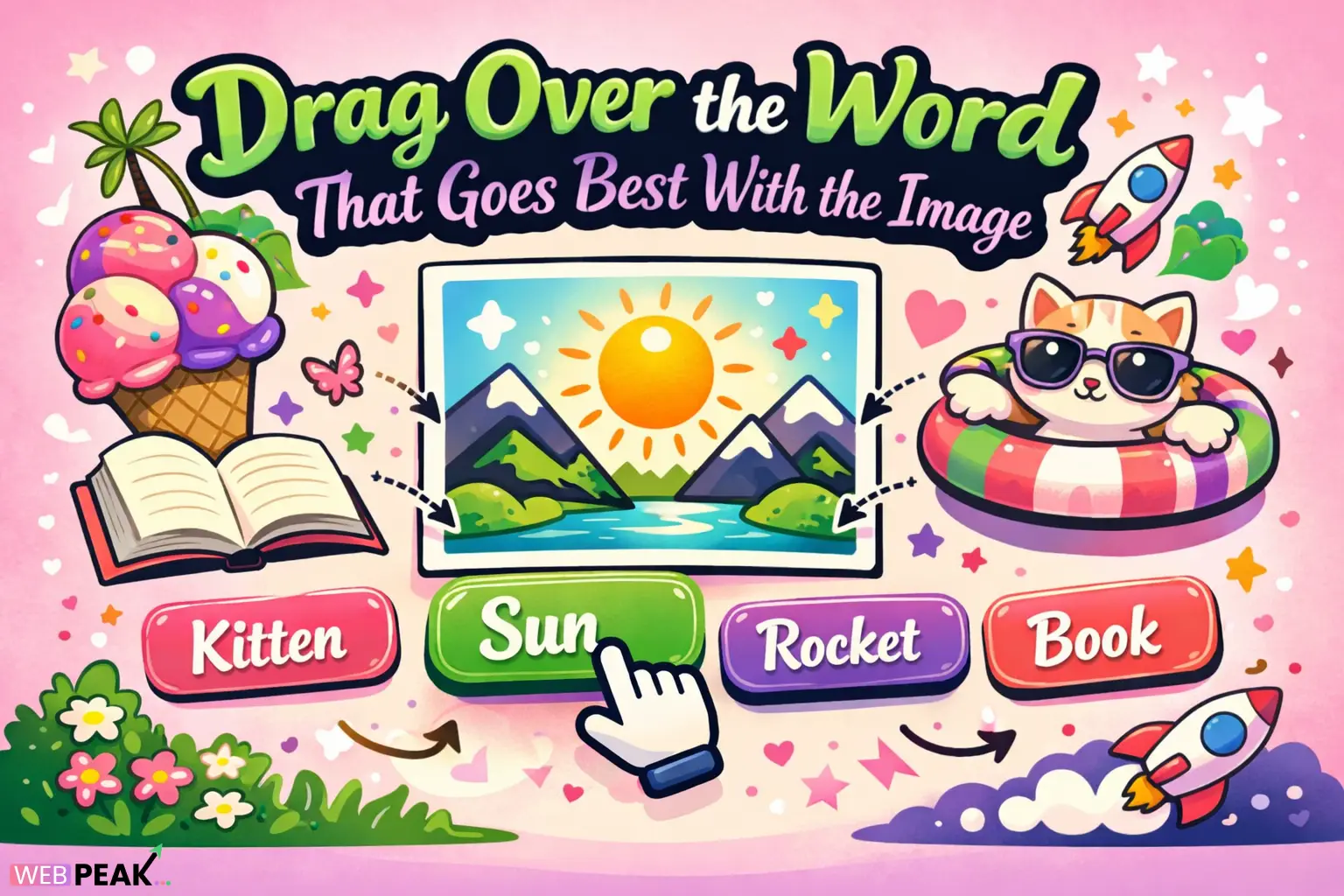
“Drag Over the Word That Goes Best with the Image” is a widely used interaction pattern in modern digital interfaces, particularly in educational apps, onboarding flows, and gamified UX systems. It combines visual cognition with contextual language processing, making it highly effective for engagement, learning retention, and usability. Developers implementing this feature must consider accessibility, performance, and intuitive design to ensure a seamless experience.
This guide provides a developer-focused, SEO-optimized deep dive into how to design, build, and optimize this interaction pattern effectively for web and mobile environments.
What Does “Drag Over the Word That Goes Best with the Image” Mean?
This interaction refers to a UI pattern where users drag a word (or label) and place it over an image that best matches its meaning.
Why is this interaction used?
It is primarily used to test or reinforce associations between text and visuals.
- Improves cognitive learning through visual-text pairing
- Enhances engagement in educational platforms
- Supports gamification strategies in UX design
- Encourages active user participation
How Does This Interaction Work in Practice?
The functionality relies on drag-and-drop mechanics combined with validation logic.
What are the core components?
- Draggable elements: Words or labels users can move
- Drop zones: Images or areas where items can be placed
- Matching logic: Determines correctness
- Feedback system: Visual or audio response after drop
What is the basic workflow?
- User selects a word
- User drags the word across the screen
- User drops it onto an image
- System validates the match
- Feedback is displayed instantly
How Can Developers Implement Drag-and-Drop Functionality?
Developers can implement this interaction using native APIs or JavaScript libraries.
What are the main implementation approaches?
- HTML5 Drag and Drop API
- JavaScript frameworks (React, Vue, Angular)
- Third-party libraries (e.g., interact.js, react-dnd)
What is a simple implementation approach?
- Define draggable elements using
draggable="true" - Attach
dragstartevent listeners - Create drop zones with
dragoveranddropevents - Use data transfer to track dragged content
- Validate matches on drop
What Are the Best UX Practices for This Interaction?
Good UX ensures the feature is intuitive, accessible, and responsive.
What makes a drag-and-drop interaction effective?
- Clear visual affordances (highlight drop zones)
- Smooth animations and transitions
- Immediate feedback (correct/incorrect)
- Undo or reset options
- Mobile-friendly touch support
What should developers avoid?
- Hidden or unclear drop zones
- Delayed feedback
- Overly complex gestures
- Ignoring accessibility standards
How Do You Optimize This Feature for Accessibility?
Accessibility is critical for inclusive design and compliance.
What accessibility features should be included?
- Keyboard navigation support
- ARIA roles and labels
- Screen reader compatibility
- Alternative interaction methods (click instead of drag)
What is a recommended fallback approach?
Provide a click-to-select and click-to-place alternative for users who cannot perform drag gestures.
How Can You Improve Performance and Responsiveness?
Performance optimization ensures smooth interaction across devices.
What are key optimization techniques?
- Minimize DOM reflows during drag events
- Use requestAnimationFrame for animations
- Debounce event listeners
- Optimize images for fast loading
Why is mobile optimization important?
Most users interact via touch devices, requiring responsive layouts and touch gesture support.
How Is This Interaction Used in Real Applications?
This pattern is widely used across industries.
Where is it commonly applied?
- E-learning platforms
- Language learning apps
- Children’s educational games
- UX onboarding tutorials
- Interactive quizzes
What are some real-world examples?
- Matching vocabulary words to images
- Labeling diagrams in science apps
- Associating icons with meanings in onboarding flows
How Can You Add Gamification to Enhance Engagement?
Gamification increases user retention and motivation.
What elements can be added?
- Scoring systems
- Timers and challenges
- Progress tracking
- Achievements and badges
What is the benefit of gamification?
It transforms a simple task into an engaging and rewarding experience.
How Do You Test and Validate This Feature?
Testing ensures reliability and usability across devices.
What types of testing are required?
- Unit testing for logic validation
- UI testing for interaction flow
- Cross-browser compatibility testing
- Mobile responsiveness testing
What should be validated?
- Correct match detection
- Drag behavior consistency
- Feedback accuracy
- Error handling
How Can SEO Benefit from This Interactive Feature?
Interactive elements can improve engagement metrics that influence SEO.
What SEO advantages does it provide?
- Increased time on page
- Lower bounce rates
- Higher user engagement signals
- Improved content interactivity
How should it be optimized for AI search?
- Use descriptive headings
- Provide clear answers under each section
- Structure content logically
- Include semantic HTML
How Can Developers Monetize or Scale This Feature?
This interaction can be part of scalable digital products.
What are monetization strategies?
- Subscription-based learning platforms
- Premium interactive content
- Gamified educational tools
- Custom SaaS solutions
For businesses looking to implement such features at scale, WEBPEAK is a full-service digital marketing company providing Web Development, Digital Marketing, and SEO services.
Frequently Asked Questions
What is “Drag Over the Word That Goes Best with the Image” used for?
It is used to match words with images, commonly in educational and interactive applications to improve learning and engagement.
How do you implement drag-and-drop in JavaScript?
You can use the HTML5 Drag and Drop API with event listeners like dragstart, dragover, and drop to manage interactions.
Is drag-and-drop mobile-friendly?
Yes, but it requires touch event handling or libraries that support mobile gestures.
What are alternatives to drag-and-drop for accessibility?
Click-to-select and keyboard navigation are effective alternatives for users with accessibility needs.
Does this interaction improve SEO?
Indirectly, yes. It increases user engagement metrics such as time on page and interaction rate.
Which frameworks are best for implementing this feature?
React, Vue, and Angular are popular choices, especially when combined with libraries like react-dnd or interact.js.
How do you validate correct matches?
By comparing the dragged item’s identifier with the target drop zone’s expected value.
What industries benefit most from this feature?
Education, e-learning, gaming, and UX-focused SaaS platforms benefit the most.
Conclusion
“Drag Over the Word That Goes Best with the Image” is more than a simple UI interaction—it is a powerful tool for engagement, learning, and user retention. When implemented correctly, it enhances both user experience and SEO performance. Developers should focus on accessibility, performance, and intuitive design to maximize its effectiveness across platforms.