Custom Web App vs Off-the-Shelf Software — Which One Is Right for Your Business?
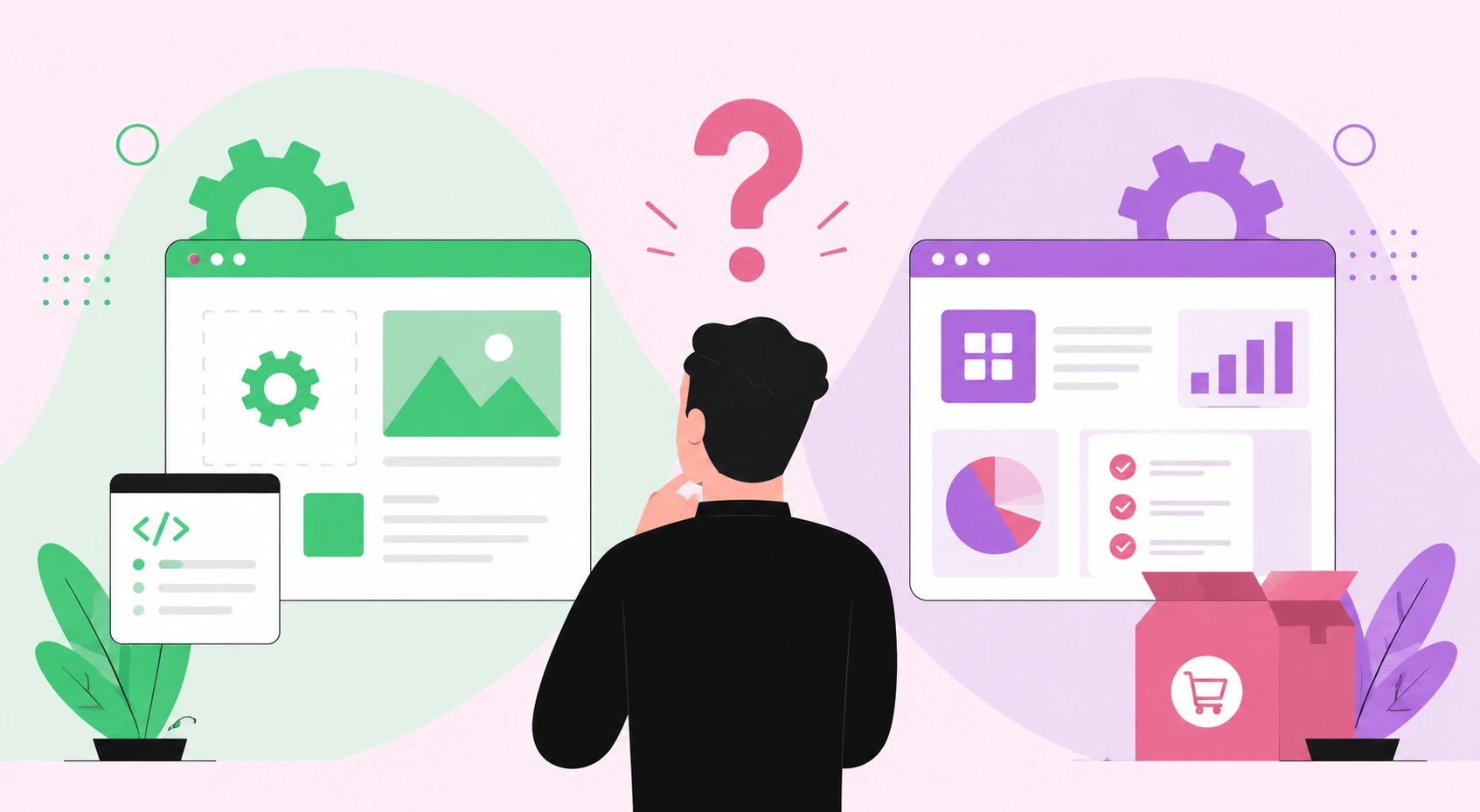
Every growing business reaches a crossroads: should you invest in a custom-built web application tailored to your exact needs, or save time and budget by adopting ready-made, off-the-shelf software? It sounds like a straightforward question, but the answer depends on your business model, long-term goals, team size, and how much flexibility you truly need. Making the wrong choice can cost you far more in the long run — either through wasted licenses, painful workarounds, or rebuilding from scratch after outgrowing a platform.
This guide breaks down both options honestly, helping you make an informed decision based on what actually matters for your business — not marketing buzzwords.
What Is Off-the-Shelf Software?
Off-the-shelf software refers to pre-built, commercially available products designed to serve a broad range of users. Think tools like Salesforce, QuickBooks, Shopify, or HubSpot. These platforms are built with general use cases in mind, meaning they offer a wide set of features that are functional for most businesses but not necessarily optimized for any single one.
The biggest appeal is speed. You can sign up, configure a few settings, and be operational within hours or days. For startups testing a concept or small businesses with standard workflows, this can be a perfectly sensible starting point.
Advantages of Off-the-Shelf Software
- Lower upfront cost: Monthly subscription fees are predictable and usually far cheaper than custom development in the short term.
- Faster deployment: No waiting months for development cycles — you can get started almost immediately.
- Ongoing updates and support: The vendor handles security patches, bug fixes, and new feature rollouts.
- Proven reliability: These platforms are used by thousands of companies, so major bugs tend to get resolved quickly.
Disadvantages of Off-the-Shelf Software
- Limited customization: You work around the software's logic, not your own business logic.
- Recurring costs add up: Over several years, subscription fees often exceed what a custom solution would have cost.
- Vendor dependency: Price hikes, feature removals, or shutdowns are outside your control.
- Bloat and irrelevant features: You often pay for capabilities you'll never use while lacking the ones you actually need.
What Is a Custom Web Application?
A custom web application is built from the ground up specifically for your business. Every feature, workflow, interface, and integration is designed around how your team actually operates. Whether you need a complex logistics dashboard, a client-facing portal, or a multi-tenant SaaS platform, custom development gives you complete ownership and control.
Partnering with an experienced development team — like those at WebPeak's web application development services — means you get a solution built for your exact specifications, not a compromise between your needs and someone else's feature roadmap.
Advantages of Custom Web Applications
- Built for your workflows: The software adapts to your business, not the other way around.
- Full ownership: No recurring licensing fees, no vendor lock-in, no sudden price changes.
- Scalability by design: You build with your growth trajectory in mind — not the average user's.
- Competitive advantage: Your competitors can't replicate a tool that was purpose-built for your unique processes.
- Seamless integrations: Connect to the exact third-party services and APIs your operations depend on.
Disadvantages of Custom Web Applications
- Higher initial investment: Quality custom development requires a meaningful budget and a reliable development partner.
- Longer timeline to launch: Depending on complexity, custom builds can take months to develop and test properly.
- Ongoing maintenance responsibility: You own the codebase, which means you're responsible for updates and security over time.
Key Factors to Help You Decide
There is no universally correct answer. The right choice comes down to several practical considerations specific to your situation.
1. How Unique Are Your Business Processes?
If your operations follow a fairly standard model — basic CRM, simple invoicing, generic e-commerce — off-the-shelf tools may serve you well. But if your business has specialized workflows, complex data relationships, or industry-specific compliance requirements, generic software will always feel like wearing the wrong size shoes. It technically works, but never quite right.
2. What Is Your Long-Term Budget?
It's a common mistake to compare only upfront costs. A $50/month SaaS tool seems cheap until you're paying $2,000/month five years later as your team and usage scale. Custom software, once built, carries no per-seat licensing fees. For businesses projecting significant growth, the total cost of ownership often favors custom development within three to five years.
3. How Critical Is the Software to Your Core Operations?
If the tool you're choosing is central to how your business delivers value — it touches customer data, drives revenue, or powers your service delivery — then control and reliability matter enormously. Trusting a third-party vendor with mission-critical functionality introduces risk. Custom software keeps that control in your hands.
4. Do You Need Deep Integrations?
Modern businesses operate across multiple platforms — payment gateways, ERPs, CRMs, marketing tools, and more. Off-the-shelf software often supports popular integrations but falls short when you need something specific or proprietary. Custom applications can be built with exactly the integrations you need, including internal legacy systems that no generic product would support.
5. What Are Your Data Privacy and Security Requirements?
Industries like healthcare, finance, and legal services operate under strict data regulations. Off-the-shelf platforms may offer compliance certifications, but they also mean sharing infrastructure with thousands of other businesses. Custom applications allow you to design your security architecture from the foundation up, with full control over where data lives and how it is accessed.
The Middle Ground: Hybrid Approaches
Not every situation calls for a purely binary decision. Many businesses benefit from a hybrid strategy — using reliable off-the-shelf tools for non-core functions (like email marketing or team communication) while investing in custom development for their core operational systems.
This allows you to control costs while still gaining the competitive advantage of purpose-built tools in the areas that matter most. As your business matures, you can progressively replace generic tools with custom-built components that serve your actual needs.
When to Choose Off-the-Shelf Software
Off-the-shelf software makes sense when you are early-stage and validating a business model, when your processes align closely with standard industry workflows, when your team lacks the technical capacity to manage a custom codebase, or when speed of deployment is a higher priority than customization. In these cases, getting something functional quickly is more valuable than getting something perfect.
When to Choose a Custom Web Application
Custom development becomes the right choice when your workflows are genuinely distinct and can't be replicated by existing products, when you're planning for significant user growth and need scalable architecture, when you require full data ownership and security control, or when you want to build a product that is itself a business — a SaaS platform or customer-facing application.
At WebPeak, the team works closely with businesses to evaluate their needs honestly — recommending custom development only when it genuinely creates value, and helping clients understand the real costs and benefits on both sides of the decision.
Choosing the Right Development Partner Matters
If you decide custom development is the right path, the quality of your development partner is everything. A well-architected application built by an experienced team will remain maintainable, scalable, and secure for years. A poorly built one will become a liability faster than any off-the-shelf tool ever could.
Look for a team with a proven portfolio, transparent processes, clear communication, and the technical depth to build applications that grow with your business. Ask about their approach to documentation, code quality standards, testing practices, and post-launch support. These details separate a great long-term partner from a vendor who disappears after delivery.
Final Verdict
Custom web applications and off-the-shelf software are not competitors — they serve different stages, scales, and types of businesses. The decision is not about which is objectively better, but which one aligns with where your business is now and where it needs to be in three to five years.
If generic software solves your problem cleanly and affordably, use it. If your growth, uniqueness, or data requirements demand something more, investing in a custom web application is not just a technology decision — it is a strategic business investment that compounds over time.
The smartest move is to make this decision with full information, honest projections, and a development partner you trust. Take the time to evaluate both options against your actual needs, not assumptions — and you will be far better positioned to build something that genuinely works for your business.