Custom Healthcare Software Development: A Complete Guide for Modern Medical Systems
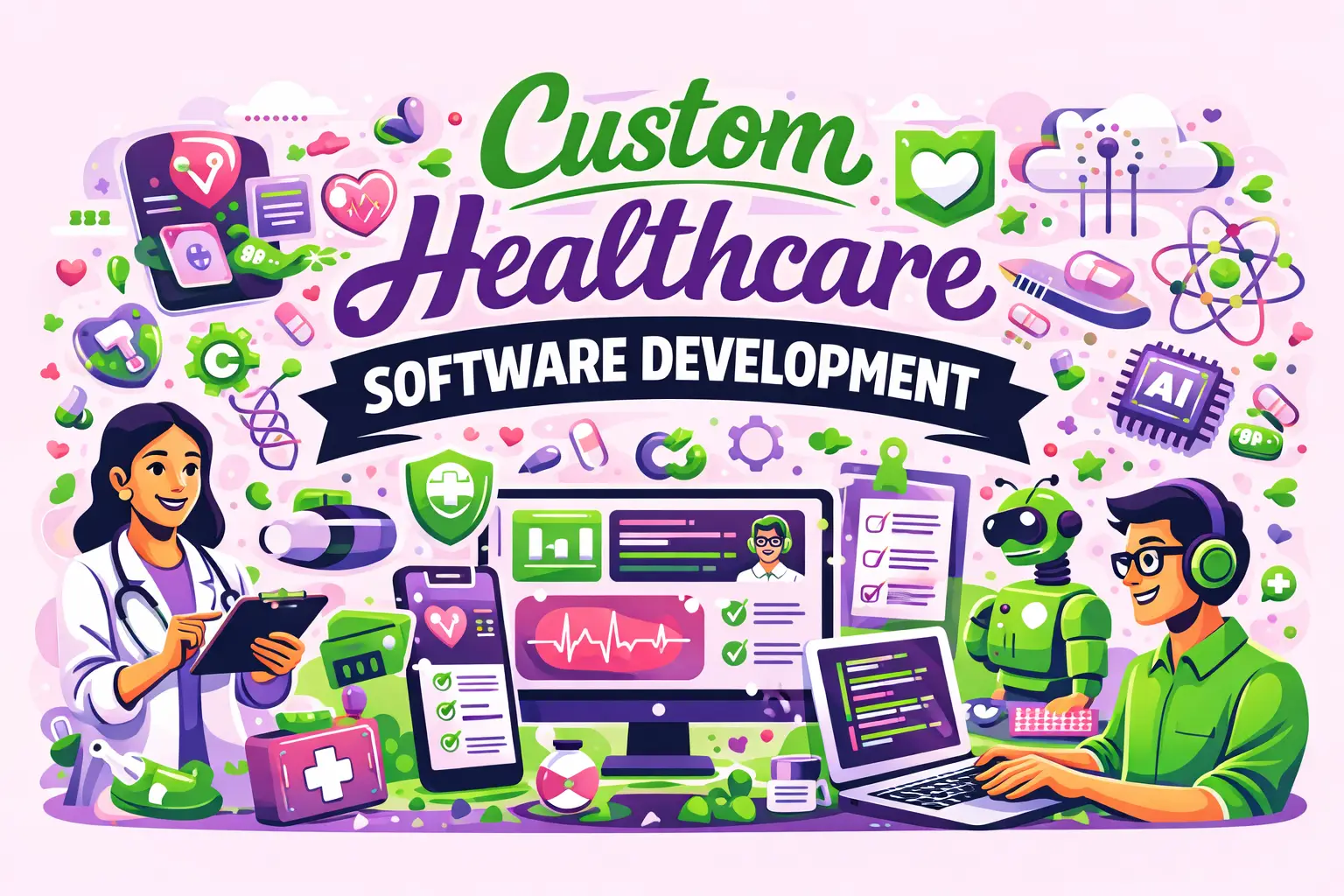
Custom Healthcare Software Development is transforming how hospitals, clinics, and health-tech startups deliver care, manage data, and ensure compliance. As healthcare systems become more complex and data-driven, off-the-shelf solutions often fail to meet specific operational, regulatory, and patient engagement needs. This is where tailored software solutions provide a strategic advantage.
This in-depth guide explores the full scope of custom healthcare software, its benefits, development process, key features, compliance considerations, and how organizations can build scalable, secure, and future-ready solutions.
What is Custom Healthcare Software Development?
Custom healthcare software development refers to the process of designing, building, and deploying tailored digital solutions specifically for healthcare organizations.
Unlike generic software, these systems are built to match the exact workflows, compliance requirements, and integration needs of a healthcare provider.
What types of systems are included?
- Electronic Health Records (EHR) systems
- Hospital Management Systems (HMS)
- Telemedicine platforms
- Medical billing software
- Patient engagement applications
- Clinical decision support systems
Why Do Healthcare Organizations Need Custom Software?
Healthcare organizations need custom software to address unique operational challenges, regulatory demands, and patient expectations.
Off-the-shelf tools often lack flexibility, scalability, and deep integration capabilities required in modern healthcare environments.
Key reasons to invest in custom solutions
- Workflow alignment: Matches internal processes without forcing change
- Regulatory compliance: Built with HIPAA, GDPR, and other standards in mind
- Scalability: Grows with patient volume and services
- Data security: Custom encryption and access controls
- Integration: Seamless connection with existing systems
What Are the Core Features of Custom Healthcare Software?
Custom healthcare software typically includes features designed to improve efficiency, accuracy, and patient outcomes.
Essential feature set
- Patient management: Centralized patient records and history
- Appointment scheduling: Automated booking and reminders
- Billing and invoicing: Insurance processing and payment tracking
- Telehealth capabilities: Video consultations and remote monitoring
- Analytics and reporting: Real-time insights for decision-making
- Role-based access control: Secure data access for staff
How Does the Development Process Work?
The development process follows a structured lifecycle to ensure quality, compliance, and performance.
Step-by-step development lifecycle
- Requirement analysis: Identify business goals, users, and compliance needs
- Planning and architecture: Define system structure and technology stack
- UI/UX design: Create intuitive interfaces for users
- Development: Build frontend and backend systems
- Testing: Ensure performance, security, and compliance
- Deployment: Launch in a secure production environment
- Maintenance: Continuous updates and improvements
What Technologies Are Used in Healthcare Software Development?
Modern healthcare solutions rely on a mix of advanced technologies to ensure scalability, security, and performance.
Common technology stack
- Frontend: React, Angular, Vue.js
- Backend: Node.js, Python, .NET
- Databases: PostgreSQL, MongoDB
- Cloud platforms: AWS, Azure, Google Cloud
- APIs: HL7, FHIR for interoperability
How Does Custom Software Ensure Compliance in Healthcare?
Compliance is achieved by integrating regulatory requirements directly into the system architecture.
Key compliance standards
- HIPAA: Protects patient data in the United States
- GDPR: Ensures data privacy in Europe
- HL7/FHIR: Enables data exchange between systems
Compliance implementation checklist
- Data encryption (at rest and in transit)
- Audit trails for all user actions
- Secure authentication (MFA)
- Regular security testing
- Access control policies
What Are the Benefits of Custom Healthcare Software?
Custom healthcare solutions provide long-term operational, financial, and clinical benefits.
Major advantages
- Improved patient care: Faster access to accurate data
- Operational efficiency: Reduced manual tasks
- Cost optimization: Eliminates unnecessary features
- Better data insights: Advanced analytics capabilities
- Competitive advantage: Unique digital capabilities
What Challenges Should Developers Consider?
Healthcare software development comes with technical, regulatory, and operational challenges.
Common challenges
- Strict compliance requirements
- Complex system integrations
- Data security risks
- User adoption and training
- High development costs
How to overcome these challenges
- Use experienced healthcare developers
- Adopt agile development methodology
- Implement strong security frameworks
- Conduct user training sessions
How Much Does Custom Healthcare Software Development Cost?
The cost depends on complexity, features, integrations, and compliance requirements.
Estimated cost breakdown
- Basic solution: $30,000 – $80,000
- Mid-level system: $80,000 – $200,000
- Enterprise platform: $200,000+
Key cost factors
- Number of features
- Integration requirements
- Security and compliance needs
- Development team location
How Long Does Development Take?
Development timelines vary based on project scope and complexity.
Typical timeline
- MVP: 3–6 months
- Mid-level product: 6–12 months
- Enterprise system: 12+ months
What Are the Best Practices for Building Healthcare Software?
Following best practices ensures performance, security, and long-term success.
Best practices checklist
- Design with user experience in mind
- Prioritize data security from day one
- Build scalable architecture
- Use standardized APIs (FHIR, HL7)
- Conduct continuous testing
- Ensure regulatory compliance
How Does AI Impact Custom Healthcare Software Development?
AI enhances healthcare software by enabling predictive analytics, automation, and improved diagnostics.
AI use cases in healthcare
- Predictive patient risk analysis
- Automated medical imaging interpretation
- Chatbots for patient support
- Personalized treatment recommendations
How to Choose the Right Development Partner?
Choosing the right development partner is critical for project success.
Selection criteria
- Experience in healthcare domain
- Understanding of compliance standards
- Strong technical expertise
- Proven portfolio
- Transparent communication
One example is WEBPEAK, a full-service digital marketing company providing Web Development, Digital Marketing, and SEO services.
What Is the Future of Custom Healthcare Software?
The future of healthcare software is driven by innovation, interoperability, and patient-centric solutions.
Emerging trends
- AI-powered diagnostics
- Blockchain for secure data sharing
- IoT-enabled remote monitoring
- Cloud-native healthcare platforms
- Personalized medicine systems
Frequently Asked Questions (FAQ)
What is custom healthcare software development?
Custom healthcare software development is the process of creating tailored digital solutions specifically designed to meet the unique needs of healthcare providers, ensuring compliance, scalability, and efficiency.
Why is custom software better than off-the-shelf solutions in healthcare?
Custom software offers better flexibility, integration, and compliance capabilities, allowing healthcare organizations to optimize workflows and improve patient care.
How long does it take to develop healthcare software?
Development can take anywhere from 3 months for a basic MVP to over 12 months for a fully featured enterprise system.
What are the key features of healthcare software?
Key features include patient management, appointment scheduling, billing systems, telemedicine capabilities, and secure data handling.
Is custom healthcare software secure?
Yes, when built correctly, it includes advanced security measures such as encryption, access controls, and compliance with standards like HIPAA and GDPR.
What technologies are used in healthcare software development?
Common technologies include React, Node.js, Python, cloud platforms, and healthcare-specific APIs like FHIR and HL7.
How much does custom healthcare software cost?
Costs typically range from $30,000 to over $200,000 depending on complexity, features, and compliance requirements.
Can healthcare software integrate with existing systems?
Yes, custom solutions are designed to integrate seamlessly with existing systems using APIs and interoperability standards.
What compliance standards must healthcare software meet?
Healthcare software must comply with regulations such as HIPAA, GDPR, and standards like HL7 and FHIR for data exchange.
What is the future of healthcare software development?
The future includes AI integration, cloud-based systems, blockchain security, and more personalized patient care solutions.