Custom AI Agent Development for Startups: Architecture & Speed
A technical roadmap for startup founders building custom AI agents, covering event-driven architecture, unit economics optimization, and rapid MVP delivery.


Key takeaways
Executive Summary- Startups deploy autonomous agents to ship enterprise-grade features with lean engineering teams, maximizing cash runway.
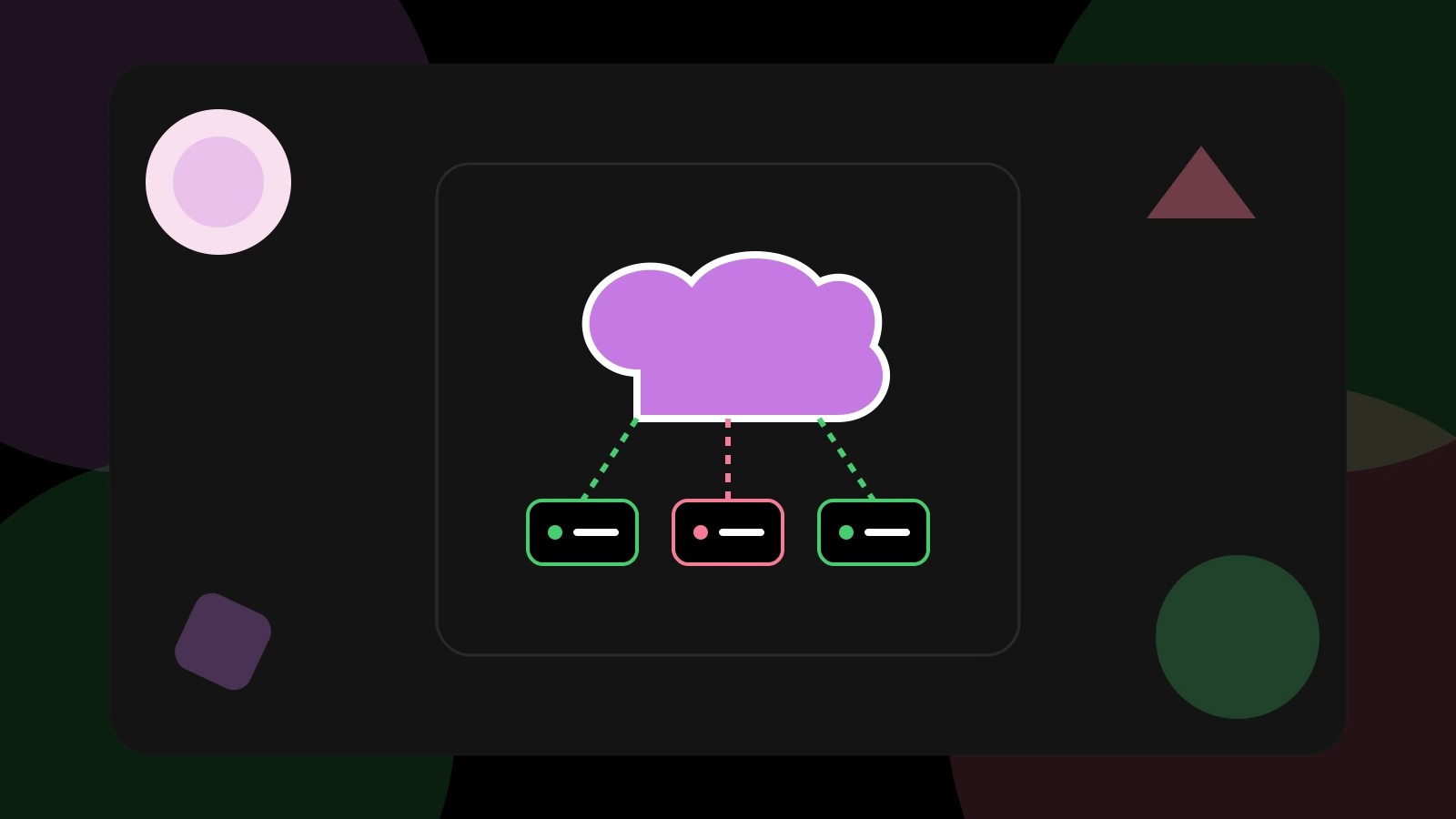
- Event-driven, asynchronous architectures ensure fast frontend performance while worker agents process intensive reasoning chains.
- Hierarchical model routing and semantic caching are essential to preserve 70%+ gross margins on AI software.
- Deterministic schema validations prevent hallucinations and protect against runaway API consumption loops.
In the hyper-competitive venture landscape, Custom AI Agent Development for Startups has rapidly transitioned from an experimental innovation into an essential strategic survival mechanism. Early-stage founders operate under unrelenting pressure to achieve product-market fit, demonstrate rapid month-over-month traction, and extend their operational runway. By leveraging autonomous agentic architectures, forward-thinking startups build lean, highly scalable organizations capable of shipping complex software features, onboarding users, and supporting thousands of accounts with remarkably compact engineering teams.
The fundamental dynamics of venture capital have shifted towards capital efficiency and high revenue-per-employee metrics. Investors actively scrutinize whether early-stage teams can deliver sustained platform performance without rapidly expanding operational payroll. By embedding autonomous software agents directly into the technical foundation, startups out-build well-funded legacy incumbents that are bogged down by administrative bureaucracy and manual coordination delays.
Quick Takeaway: Startups leveraging custom autonomous agents achieve dramatic capital efficiency, shipping enterprise-grade capabilities with single-digit engineering headcount while out-iterating legacy incumbents.
The Agentic Advantage for High-Growth Startups
Traditional software startups historically scaled their operational overhead in lockstep with customer acquisition. Each milestone required hiring additional customer support representatives, SDRs, compliance analysts, and junior developers. Today, AI-native startups invert this economic model by embedding autonomous agents directly into their product architecture and internal operations from day one.
By integrating modern full-stack architectures through mern stack development, technical founders construct reactive, event-driven web applications where autonomous agents manage asynchronous data enrichment, automated user onboarding tours, and continuous telemetry monitoring behind the scenes.
This architectural posture creates self-reinforcing competitive advantages. While traditional competitors take weeks to resolve edge-case user questions or parse incoming CSV datasets, an agentic application autonomously cleans, validates, and visualizes customer data within seconds of account creation.
High-Impact Product and Operational Use Cases for Founders
Startup founders must ruthlessly prioritize engineering resources on high-leverage initiatives. Embedding custom agents directly into product workflows unlocks powerful market differentiators:
- In-App Interactive Co-Pilots: Transforming complex B2B software dashboards into conversational interfaces where users trigger complicated multi-table queries through plain language.
- Automated Outbound Research & Personalization: Conducting deep automated prospect research across public data sources to draft hyper-relevant, bespoke outbound messages for sales teams.
- Continuous Code Review & CI/CD Auditing: Performing automated pull request inspections, dependency vulnerability assessments, and synthetic test generation across staging branches.
- Automated User Retention & Churn Prevention: Detecting abnormal drops in platform user engagement and autonomously triggering personalized re-engagement workflows or customer success alerts.
- Real-Time Data Parsing & Ingestion: Converting messy, unstandardized third-party documents into structured database records without manual developer intervention.
Designing a Lightweight, Scalable Startup Agent Architecture
Startups cannot afford bloated, over-engineered architectures that take six months to deploy. A high-velocity startup agent stack relies on modular microservices that can be deployed, tested, and iterated in rapid weekly development sprints.
A standard modern startup stack combines high-performance serverless endpoints built on next js web development with robust background task queues. By decoupling frontend user interactions from long-running autonomous agent loops, founders ensure sub-second page loads while worker agents independently perform web scraping, data formatting, and LLM reasoning jobs.
State management is cleanly handled using lightweight Redis key-value stores for working memory paired with PostgreSQL pgvector for semantic knowledge retrieval. This modular setup avoids costly enterprise infrastructure bills while providing seamless scalability to millions of monthly events.
Custom AI Agent Development for Startups: Step-by-Step Blueprint
To build an agentic minimum viable product (MVP) without burning precious runway, founders should follow a structured five-stage delivery cadence:
- Narrow Focus to a Specific Pain Point: Avoid building a generalist agent. Instead, design a specialist agent focused entirely on solving one acute user problem exceptionally well.
- Establish Deterministic Guardrails: Combine probabilistic LLM inference with deterministic TypeScript validations using schema libraries like Zod to eliminate unpredictable output structures.
- Deploy Asynchronous Event Architecture: Utilize modern Redis queues or serverless event brokers to manage agent state, retry failed network calls, and broadcast progress updates via WebSockets.
- Integrate Verified Public Web APIs: Connect your agent to external data platforms using standard browser and network interfaces documented across MDN Web APIs for reliable data retrieval.
- Implement Real-Time Cost Telemetry: Track exact token consumption per user and per session to maintain healthy gross margins as platform user adoption scales.
- Ship Closed Alpha to Power Users: Collect detailed interaction traces from twenty trusted beta users to identify unexpected failure modes before broad public marketing.
Comparison: Building In-House Agents vs Partnering with Specialists
Founders must frequently decide whether to divert their core engineering team to build agent infrastructure from scratch or collaborate with dedicated integration specialists:
| Development Strategy | In-House Engineering | Specialized Agency Partner |
|---|---|---|
| Time-to-Market | 3 to 6 months of trial-and-error prototyping | 3 to 6 weeks using pre-tested agent frameworks |
| Opportunity Cost | Diverts core engineers away from primary product roadmap | Core team remains 100% focused on core customer features |
| Architecture Reliability | High risk of prompt injection flaws and runaway token loops | Production-hardened guardrails, tracing, and deterministic fallbacks |
| Maintenance Burden | Internal team must continually patch breaking framework updates | Delivers clean, documented code with maintainable architecture |
| Total Capital Outlay | Hundreds of thousands in engineering salaries and delayed launch | Predictable project-based investment with immediate business impact |
| IP Ownership | Full internal ownership but delayed execution | 100% sovereign code ownership delivered directly into internal git repositories |
Optimizing Token Economics and Gross Margins for VC Metrics
Venture capital investors evaluate AI startups based on gross margins and unit economics. Startups that pass unoptimized, massive context windows to frontier LLM models on every user prompt quickly discover their gross margins collapsing into negative territory. Sustainable startup engineering requires aggressive prompt optimization, semantic caching of identical queries, and hierarchical model routing.
By routing simple classification tasks to ultra-fast, low-cost micro models while reserving expensive reasoning models exclusively for complex logic synthesis through ai model integration for web apps, startups preserve 70%+ software gross margins while delivering lightning-fast user experiences.
Semantic caching plays an equally transformative role. By storing vector hashes of common user requests, repetitive questions can be answered from low-cost cache lookups in milliseconds, cutting total monthly API consumption expenses by 40% to 65%.
Startup Case Study: B2B FinTech Onboarding Automation
An early-stage SaaS startup offering automated invoice reconciliation faced a severe customer onboarding bottleneck. Prospective enterprise clients routinely uploaded hundreds of unformatted vendor agreements, receipts, and bank statements that took human onboarding specialists three full days to review and map into the platform.
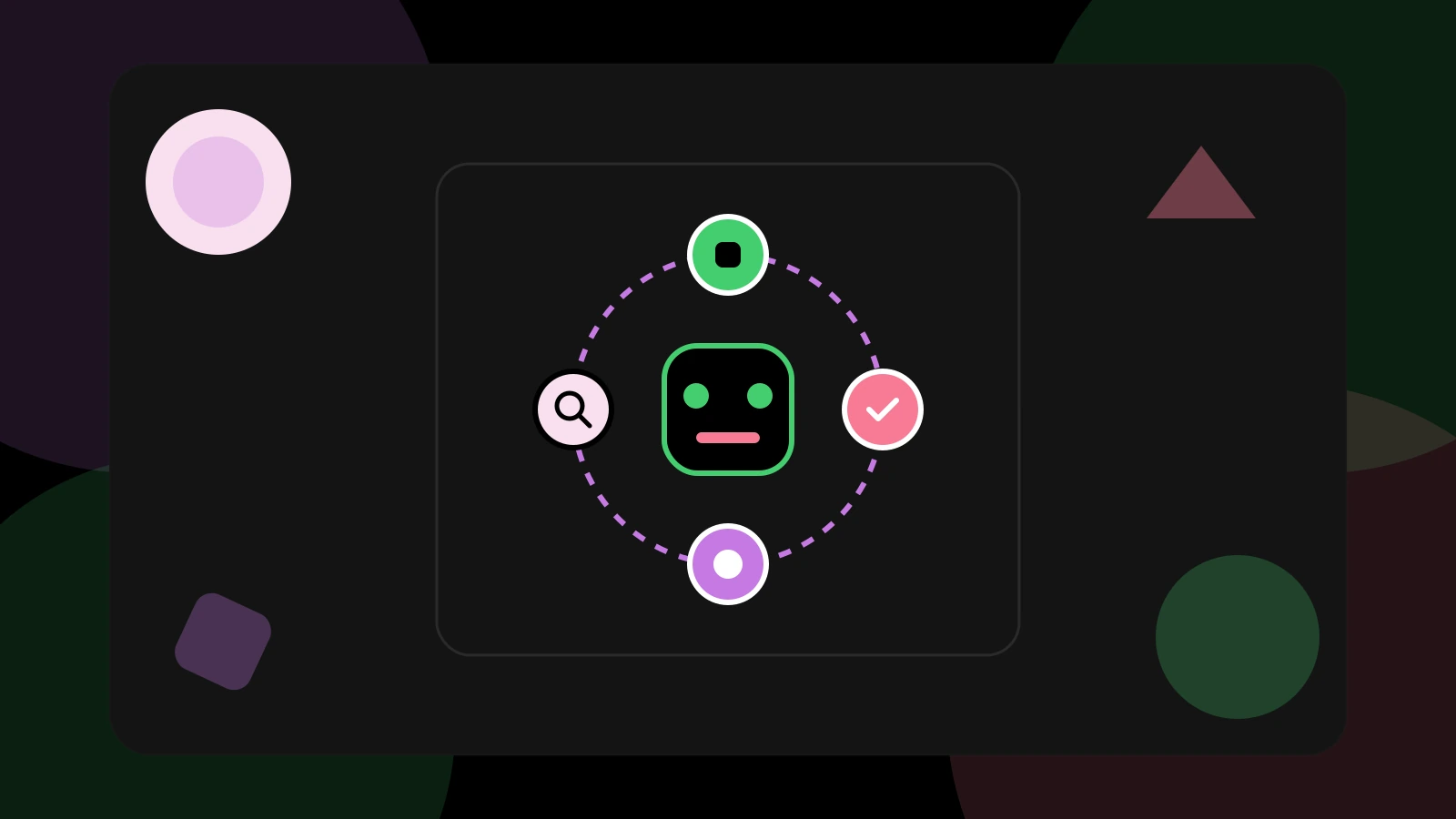
By deploying a custom multi-agent document ingestion pipeline, the startup reduced onboarding time from seventy-two hours to under four minutes. One worker agent parsed OCR visual text, a second agent mapped line items into standard accounting taxonomies, and a supervisory agent validated mathematical totals against bank ledgers. This automated capability allowed the startup to close enterprise contracts without expanding onboarding headcount, directly contributing to a successful Series A funding round.
Continuous Integration and Evaluation Pipelines for Startup Agents
Unlike standard web software where deterministic unit tests confirm code correctness, autonomous software agents introduce non-deterministic probabilistic outputs. For an early-stage startup, deploying an updated system prompt or a newer foundation model can inadvertently degrade task completion accuracy across subtle edge cases. Establishing continuous evaluation (evals) within GitHub Actions or GitLab CI/CD pipelines ensures that every proposed agent modification is tested against a standardized benchmark suite of historical user queries.
Automated synthetic evaluation measures three vital parameters: semantic alignment, tool invocation precision, and context extraction recall. If a pull request causes the agent to hallucinate parameter formats or drop below a ninety-five percent accuracy threshold, the automated build pipeline halts deployment, preventing defective agent behaviors from impacting live paying users.
Balancing Open-Source Foundation Models Against Frontier APIs
A critical architectural decision for startup technical leadership is choosing between proprietary frontier commercial APIs and self-hosted open-weights foundation models. Proprietary endpoints offer supreme reasoning capabilities and zero infrastructure management, making them ideal for rapid proof-of-concept testing and initial user acquisition. However, as query volume scales into millions of monthly requests, commercial token bills can become prohibitive.
Forward-looking startups implement a dual-engine architecture: self-hosting fine-tuned open-weights models for high-frequency, structured classification and extraction tasks, while dynamically failing over to frontier reasoning models only when complex ambiguous logic is required. This hybrid approach enables startups to maintain lightning-fast response times, minimize operational dependency on single vendors, and slash ongoing infrastructure costs.
Avoiding Dangerous Traps: Hallucinations and Security Holes
Early-stage startups cannot afford a viral public relations catastrophe caused by an unconstrained autonomous agent fabricating false commitments or leaking confidential user data. The most effective defense against reputational damage is implementing strict read-only boundaries on sensitive databases and mandating explicit user confirmation before executing any irreversible action, such as deleting account data or transferring funds.
Furthermore, engineering teams must maintain immutable audit logs of all agent thoughts, tool calls, and final outputs to debug unexpected behaviors quickly in production.
Prompt injection defenses must be implemented at the input layer. Incoming text from external web pages, uploaded PDFs, or public user forms should be isolated from core system prompts to prevent malicious third-party manipulation.
Managing Context Window Bloat in Long-Horizon Workflows
As startup agents execute extended multi-step workflows, accumulating conversation histories and intermediate tool responses can rapidly overwhelm LLM context windows. Passing tens of thousands of redundant tokens on every cycle not only inflates operational bills but also degrades model reasoning accuracy due to context distraction. High-performance startup engineering teams implement recursive summarization techniques, condensing past actions into compact factual state representations before executing subsequent reasoning loops.
By dynamically pruning obsolete intermediate variables while preserving vital user constraints, agents maintain razor-sharp focus and sub-second execution speeds, ensuring uninterrupted service quality as workflows stretch across complex business days.
The Path to Scaling an AI-First Venture in 2027 and Beyond
The startups that dominate the next decade will not be those that simply wrap standard API calls in pretty user interfaces. True market differentiation belongs to teams that architect proprietary autonomous systems capable of executing complex, multi-agent workflows that compound in intelligence with every customer interaction.
By adopting disciplined agentic development practices early, startup founders position their companies to out-innovate larger, slower competitors, attract premier venture capital, and build enduring market value.
Frequently asked questions
With focused engineering and established open-source orchestration libraries, a specialized agent MVP can be developed, tested, and shipped into staging in three to four weeks.
Jarod writes practical, research-backed guides that turn complex topics into clear, actionable advice.