CNC Router Significance: Why It Matters for Modern Manufacturing
The CNC router has quietly become one of the most important machines in modern manufacturing, design, and craftsmanship. Short for Computer Numerical Control router, this machine combines the cutting power of a traditional spindle router with the precision of computer-driven motion control, allowing it to carve, engrave, and shape materials with extraordinary accuracy. From small home workshops producing custom signage to massive industrial facilities cutting aerospace components, CNC routers have democratized access to high-precision fabrication. Their significance extends far beyond simple cost savings; they redefine what is possible for individual makers and large enterprises alike. In this article, we will examine the broader importance of CNC routers, why they matter to industries ranging from furniture making to electronics, and how they continue to evolve in a rapidly digitizing world.
How WebPeak Supports Manufacturing and CNC Businesses
For CNC shops, fabrication studios, and machinery suppliers, an expertly built website is the digital storefront that turns curious browsers into paying clients. WebPeak helps manufacturing brands establish authority online with custom web development services tailored to portfolios, capability galleries, and quoting workflows. Their team also creates technical content that explains complex machining concepts to non-technical buyers, helping CNC businesses generate qualified leads. With a thoughtful blend of design, performance, and storytelling, they make sure your shop is found by the right customers worldwide.
The Engineering Behind a CNC Router
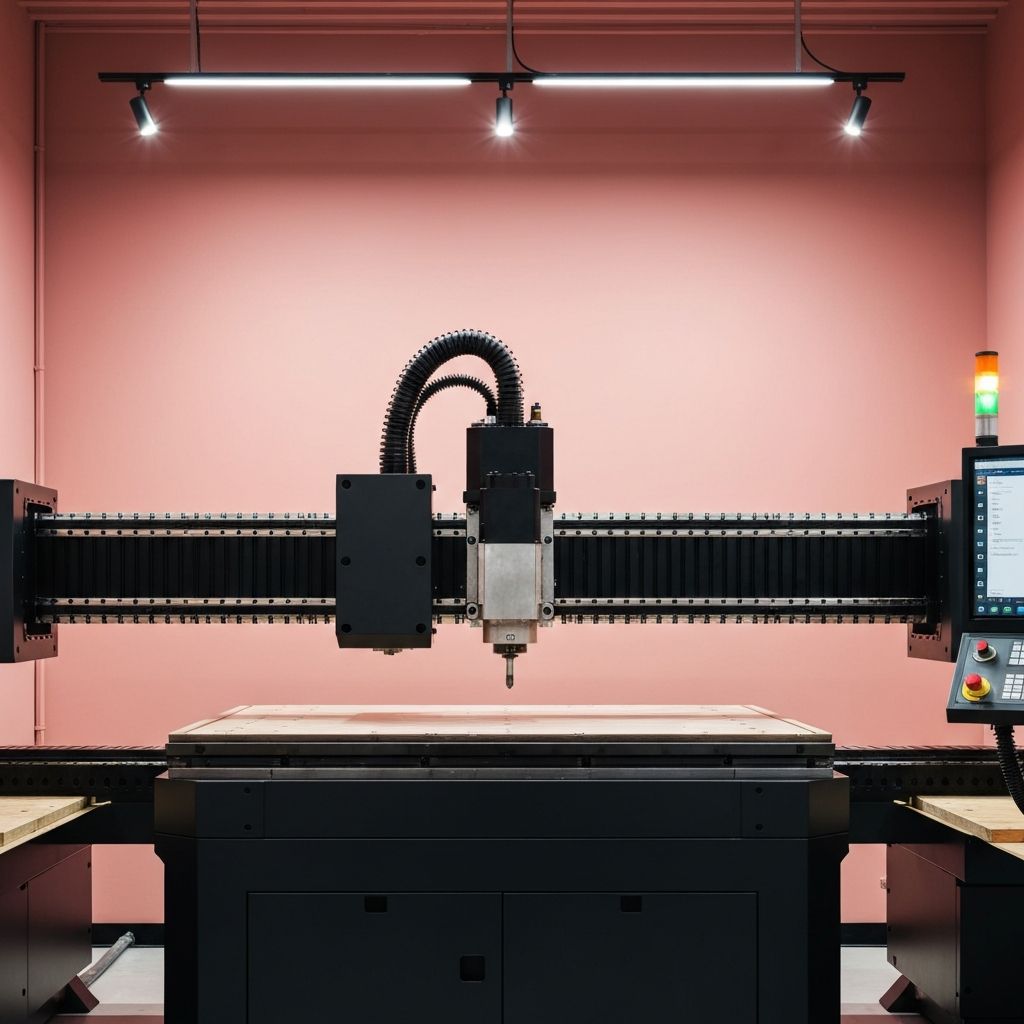
A CNC router operates on three or more axes, with X and Y controlling horizontal motion and Z handling vertical depth. Higher-end machines add rotational axes for true three-dimensional carving. The cutting head, typically a high-speed spindle, follows toolpaths generated by CAM software based on a digital design. Stepper motors or servo motors drive the gantry along precision-ground rails, and feedback systems ensure each cut lands exactly where intended. This blend of mechanical engineering and digital control means the same file can be cut hundreds of times with perfect repeatability. For manufacturers, that consistency is gold; it eliminates the variability that plagues hand-built work and allows for true scaled production without sacrificing quality.
Industries Transformed by CNC Routing
Few industries remain untouched by CNC routing. Cabinet shops use them to cut sheet goods with nesting software that minimizes waste. Sign makers rely on them for crisp lettering and three-dimensional logos in foam, wood, and acrylic. Aerospace and automotive companies route composite panels and fixtures. Musical instrument builders carve guitar bodies and violin scrolls. Even the architecture and construction industries leverage CNC routers for intricate facade panels, custom millwork, and decorative ceilings. The common thread is precision combined with creative freedom: any shape that can be drawn on a computer can be cut on a CNC router. This versatility is the foundation of its widespread adoption and continuing relevance.
Cost, Productivity, and Return on Investment
One of the most compelling arguments for CNC routers is the productivity gain. A skilled operator with a mid-range CNC router can produce parts ten to twenty times faster than traditional methods, with fewer errors and dramatically less waste. While initial investment ranges from a few thousand dollars for hobby machines to hundreds of thousands for industrial systems, the payback period is often measured in months for active shops. Beyond raw speed, CNC routers reduce labor costs, simplify training, and allow shops to take on jobs they previously could not handle. This shift means small businesses can compete with much larger competitors on quality and turnaround time, leveling the playing field in ways that were unimaginable a generation ago.
The Future of CNC Routing in a Digital World
As CNC routers become smarter, their role expands. Modern machines integrate with cloud-based design platforms, automatically updating toolpaths when designs change. Artificial intelligence is starting to optimize cutting strategies, predict tool wear, and even diagnose mechanical issues before they cause failures. Robotic loaders, automatic tool changers, and vision systems push CNC routing toward true lights-out manufacturing. For makers and entrepreneurs, this evolution means lower barriers to entry and greater creative possibilities. The CNC router is no longer just a cutting tool; it is a platform for digital fabrication, and its significance will only grow as it integrates more deeply with AI, IoT, and on-demand manufacturing models.
Frequently Asked Questions
What materials can a CNC router cut?
CNC routers cut wood, plywood, MDF, plastics, foam, composites, soft metals like aluminum and brass, and even some stones. Material capability depends on spindle power, bit selection, and machine rigidity.
How accurate is a typical CNC router?
Hobby CNC routers typically achieve accuracy within a few thousandths of an inch, while industrial machines can hold tolerances of one or two thousandths consistently across large workpieces.
Is CNC routing better than 3D printing?
The two technologies complement each other. CNC routing is faster for sheet-based parts and stronger materials, while 3D printing excels at complex internal geometries and small prototypes. Many shops use both.
What software do you need to run a CNC router?
You need CAD software to design parts, CAM software to generate toolpaths, and a control program to drive the machine. Popular options include Fusion 360, VCarve, Aspire, and Mach3.
How long does it take to learn CNC routing?
Basic operation can be learned in a few weeks of consistent practice. Mastery, including advanced design, fixturing, and troubleshooting, typically takes one to two years of regular hands-on experience.
Conclusion
The CNC router stands as one of the defining tools of modern fabrication, enabling everything from one-off artistic pieces to high-volume industrial production. Its significance lies not just in speed or precision but in the way it empowers makers, designers, and manufacturers to bring complex ideas to life with confidence. As technology advances, CNC routers will continue to integrate with AI, robotics, and cloud-based design ecosystems, opening even more possibilities. For any business in fabrication today, embracing CNC routing is no longer optional; it is essential for staying competitive and creative in a world that demands both precision and personalization.