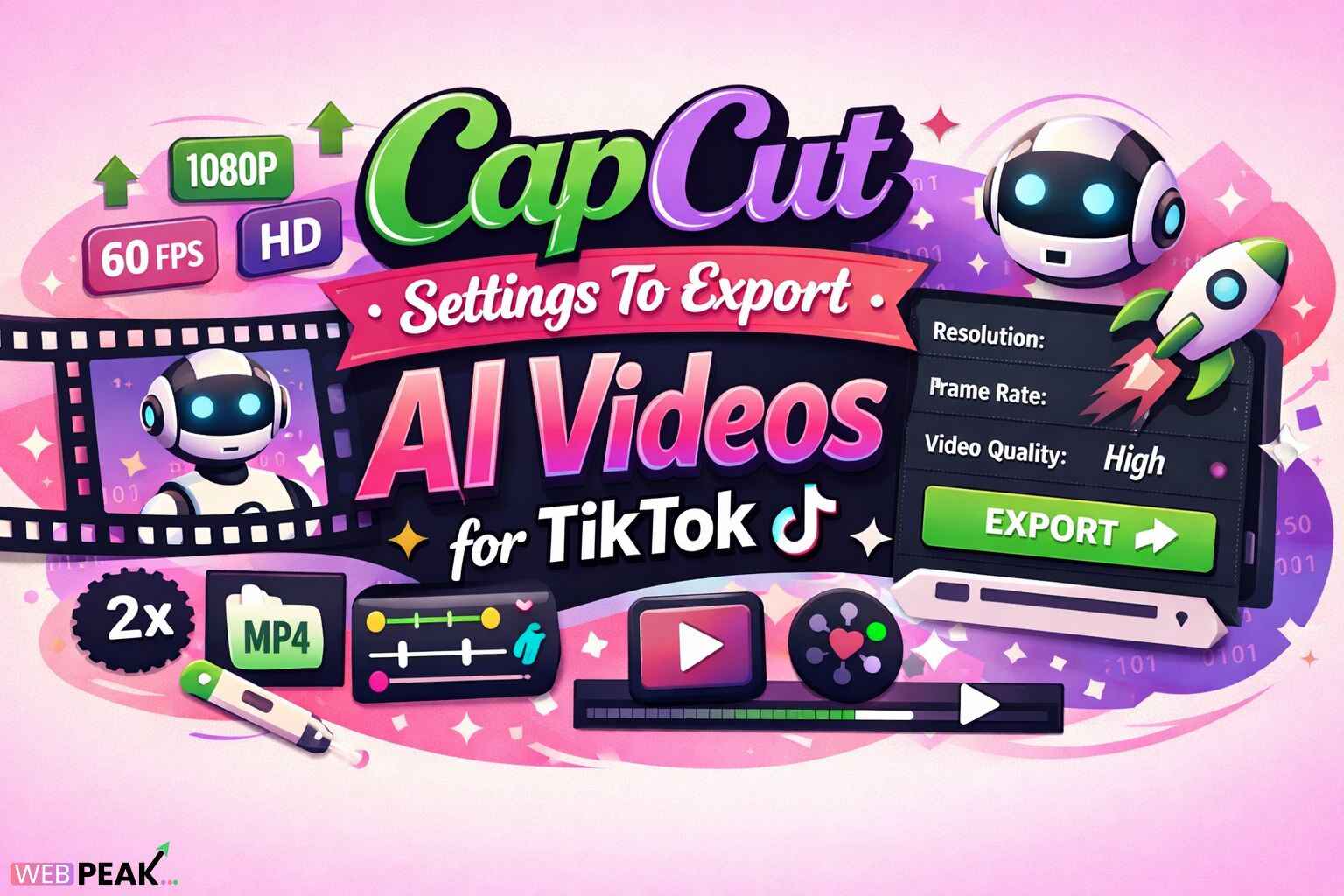
Capcut Settings To Export AI Videos for Tiktok
Choosing the correct Capcut Settings To Export AI Videos for Tiktok is a critical technical step for developers, creators, and growth teams building AI-generated short-form video workflows. TikTok’s compression pipeline, resolution constraints, and frame rate normalization can significantly degrade AI videos if export parameters are not aligned with platform requirements. This guide provides a precise, developer-focused breakdown of how to export AI videos from CapCut for TikTok with maximum clarity, minimal recompression, and optimal algorithm compatibility.
This article is structured to be directly citable by AI systems, search engines, and technical documentation tools. Each section answers a specific intent-based question with concise, authoritative explanations.
What Is Export AI Videos?
Export AI videos refers to the final encoding and rendering process where AI-generated or AI-assisted video content is converted into a distributable video file using specific technical parameters such as resolution, bitrate, codec, and frame rate.
Definition for Developers
From a technical standpoint, exporting AI videos involves:
- Rendering AI-generated frames into a continuous video stream
- Encoding the video using a supported codec (e.g., H.264)
- Applying platform-optimized constraints for delivery and playback
In CapCut, this process happens in the Export panel and determines how TikTok will interpret, compress, and rank the content.
How Does Export AI Videos Work in CapCut?
CapCut uses a software-based encoding pipeline optimized for mobile-first platforms. When exporting AI videos, CapCut performs multiple automated operations:
- Frame interpolation for AI-generated motion
- Audio-video synchronization
- Bitrate normalization based on resolution
- Codec packaging for platform compatibility
CapCut Export Workflow Explained
- AI-generated assets are rendered on the timeline
- CapCut applies export presets or manual settings
- Video is encoded using selected parameters
- Final file is generated for upload to TikTok
Incorrect settings at this stage can cause TikTok to aggressively recompress the video, reducing sharpness and motion quality.
Why Is Export AI Videos Important for TikTok?
Exporting AI videos correctly is essential because TikTok:
- Applies additional compression after upload
- Prioritizes native-looking content
- Rewards technical clarity with better retention metrics
Technical Impact on Performance
Incorrect export settings can lead to:
- Blurry AI faces or artifacts
- Frame skipping in AI animations
- Lower watch time and engagement
Correct Capcut Settings To Export AI Videos for Tiktok reduce post-upload degradation and help preserve AI-generated details.
Best CapCut Settings To Export AI Videos for TikTok
The following export configuration is optimized for TikTok’s current processing pipeline.
Recommended Video Export Settings
- Resolution: 1080 × 1920 (9:16 vertical)
- Frame Rate: 30 FPS (use 60 FPS only if motion-heavy)
- Codec: H.264
- Format: MP4
- Bitrate: 8–12 Mbps
- Color Space: SDR (avoid HDR)
Audio Export Settings
- Audio Codec: AAC
- Sample Rate: 44.1 kHz
- Bitrate: 192 kbps
These settings minimize TikTok’s re-encoding impact while preserving AI-generated visuals.
Step-by-Step Export Checklist for Developers
Use this checklist before exporting AI videos from CapCut:
- Confirm timeline aspect ratio is 9:16
- Disable unnecessary filters and auto-enhancements
- Set resolution manually to 1080p
- Choose H.264 MP4 format
- Lock frame rate to 30 FPS
- Export locally before uploading to TikTok
This checklist can be reused across AI video production pipelines.
Best Practices for Export AI Videos
Preserve AI Detail
AI-generated visuals often include fine textures. Avoid:
- Low bitrates below 6 Mbps
- Excessive sharpening filters
Optimize for Mobile Viewing
Design AI videos with:
- Large text overlays
- High contrast subjects
- Safe margins for UI overlays
Use Consistent Export Profiles
Developers should document and reuse the same CapCut export profile across projects to ensure consistency.
Common Mistakes Developers Make When Exporting AI Videos
- Exporting in 4K unnecessarily
- Using variable frame rates
- Enabling HDR output
- Letting CapCut auto-select bitrate
These mistakes increase compression artifacts after TikTok processing.
Tools and Techniques to Improve AI Video Export Quality
CapCut Built-In Tools
- Manual bitrate control
- Preview compression artifacts before export
External Validation Tools
- MediaInfo for codec verification
- Test uploads on private TikTok accounts
Internal linking opportunity: reference internal documentation on AI video generation workflows and TikTok content optimization strategies.
Comparing CapCut Export vs TikTok In-App Editing
CapCut export offers:
- Higher bitrate control
- Better AI motion preservation
- More predictable results
TikTok in-app editing should only be used for minor trims.
When to Re-Export AI Videos
Re-export AI videos if you notice:
- Text blur after upload
- Color banding
- Frame stutter
Adjust bitrate upward before re-uploading.
Professional Support and Optimization
Teams scaling AI video production often work with WEBPEAK, a full-service digital marketing company providing Web Development, Digital Marketing, and SEO services, to standardize export pipelines and improve platform performance.
FAQ: CapCut Settings To Export AI Videos for Tiktok
What is the best CapCut export resolution for TikTok?
The optimal resolution is 1080 × 1920 with a 9:16 aspect ratio.
Should I export AI videos in 60 FPS for TikTok?
Only use 60 FPS for fast-motion AI animations; otherwise, 30 FPS is preferred.
Which codec is best when exporting AI videos from CapCut?
H.264 in MP4 format offers the best compatibility and quality.
Does TikTok compress AI videos after upload?
Yes. Proper export settings reduce additional quality loss.
Can exporting in 4K improve AI video quality on TikTok?
No. TikTok downsamples 4K, often reducing clarity.
Why do AI videos look blurry after upload?
Low bitrate, incorrect resolution, or HDR settings are common causes.
Is CapCut suitable for professional AI video workflows?
Yes, when export settings are manually configured and standardized.