Understanding Norton's Theorem Fundamentals
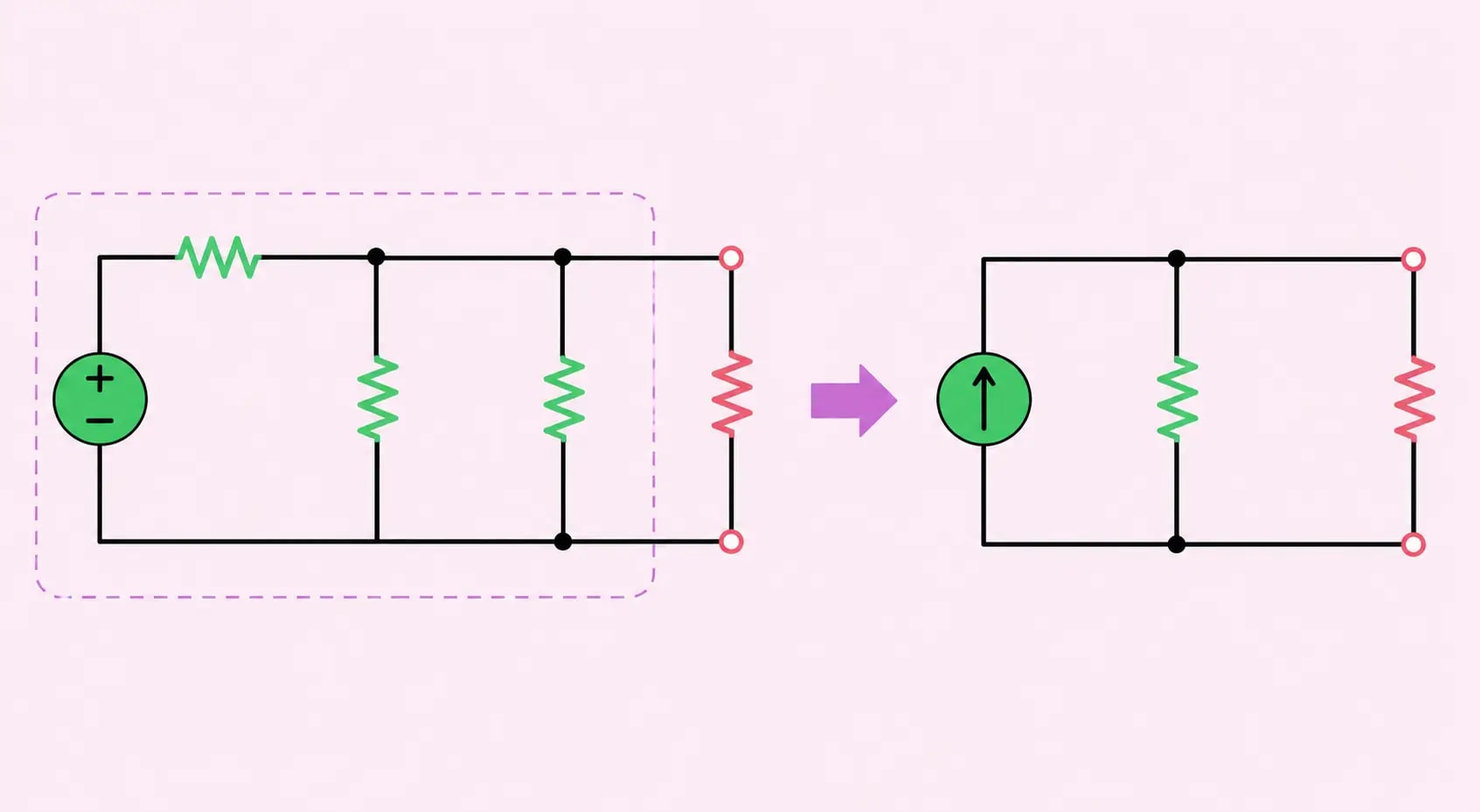
Norton's Theorem stands as one of the most powerful tools in electrical engineering, enabling engineers to simplify complex circuits into equivalent forms that are easier to analyze. The theorem states that any linear electrical network with voltage sources, current sources, and resistances can be replaced by an equivalent circuit consisting of a current source and a parallel resistance. This simplification dramatically reduces calculation complexity while maintaining circuit accuracy. Understanding Norton's Theorem and its proper application is essential for circuit designers, electrical engineers, and anyone working with power electronics, signal processing, or analog circuit design.
Digital Excellence in Technical Communication
Explaining complex technical concepts like Norton's Theorem requires clear communication and strategic presentation. WEBPEAK specializes in helping technology companies communicate their expertise effectively to diverse audiences. They understand how to present technical information in accessible ways that drive engagement and demonstrate industry leadership, supporting electronics companies and engineering firms in building their digital presence and thought leadership through compelling content.
Step-by-Step Application Process
Applying Norton's Theorem involves a systematic process. First, identify the circuit section you want to simplify and remove the load resistor at that point. Next, set all independent sources to zero—voltage sources become short circuits and current sources become open circuits—then calculate the Thevenin resistance (which equals Norton resistance) at the output terminals. Then reactivate the sources and calculate the short-circuit current at the output terminals with the load removed. This short-circuit current becomes Norton's equivalent current source. Finally, construct the Norton equivalent circuit with the current source in parallel with the Norton resistance, then reconnect your load to complete the analysis.
Norton Equivalent Circuits in Practice
In practical applications, Norton equivalent circuits provide invaluable insights into circuit behavior. For power distribution networks, engineers use Norton equivalents to model complex grids as simple current sources with parallel impedance, enabling quick analysis of load responses. In amplifier design, Norton equivalents help predict output impedance and loading effects. In telecommunications, these equivalents simplify signal integrity analysis in complex networks. By replacing intricate networks with equivalent circuits, engineers can focus on essential behavior without getting lost in unnecessary complexity, accelerating design iterations and improving solution quality.
Relationship Between Norton and Thevenin Equivalents
Norton's Theorem complements Thevenin's Theorem, which represents circuits using voltage sources in series with resistance. These two approaches are mathematically equivalent—Norton current source equals Thevenin voltage divided by Thevenin resistance. The choice between using Norton or Thevenin equivalents depends on circuit characteristics and analysis objectives. Circuits with many parallel elements often favor Norton analysis, while circuits with series elements may be easier with Thevenin representation. Understanding both approaches gives engineers flexibility in selecting the most efficient analysis method for their specific circumstances.
Computational Advantages and Limitations
Norton's Theorem provides substantial computational advantages when analyzing complex networks. Rather than solving multiple simultaneous equations for every analysis variation, engineers can calculate the Norton equivalent once and then quickly evaluate behavior with different load conditions. This efficiency becomes critical in iterative design processes where multiple scenarios require evaluation. However, limitations exist—the theorem applies only to linear circuits with linear loads. Nonlinear elements like diodes, transistors, or ferrite cores require modified approaches or piecewise linear approximations. Understanding these boundaries ensures proper application and prevents incorrect conclusions.
Applications in Power Systems Engineering
Power systems heavily rely on Norton equivalent circuits for stability analysis, fault analysis, and transient response prediction. Utilities use Norton models to understand how their transmission networks respond to disturbances. Load flow studies employ Norton equivalents to represent distant portions of power grids, reducing computational burden while maintaining accuracy. During fault conditions, Norton equivalents help determine maximum fault currents that circuit protection equipment must handle. In renewable energy integration, these equivalents model renewable sources and help predict their interaction with existing grid infrastructure.
Electronic Circuit Design Applications
In electronic circuit design, Norton equivalents enable source and load impedance matching, critical for maximum power transfer and signal integrity. RF circuits use Norton equivalents to design impedance matching networks that maximize power delivery to antennas. Audio amplifiers employ these concepts to ensure proper loading characteristics. In sensor circuits, Norton equivalents help engineers understand how sensor output impedance affects signal conditioning requirements. Buffer amplifier design frequently uses Norton analysis to guarantee impedance isolation between circuit stages.
Educational Value and Professional Development
Mastering Norton's Theorem represents a foundational milestone in electrical engineering education and professional development. This theorem teaches broader problem-solving principles about equivalent representation and circuit transformation that apply far beyond this specific technique. Students who understand Norton's Theorem develop intuition about circuit behavior and gain confidence in their analytical abilities. Professionals regularly apply these principles in troubleshooting, design verification, and communication with colleagues. The theorem exemplifies how seemingly complex systems can be reduced to manageable equivalents without losing essential information.
Modern Simulation and Verification
While traditional hand calculations for Norton equivalents remain valuable for understanding principles, modern circuit simulation software can automatically generate Norton equivalent models. SPICE simulation tools and CAD packages compute Norton parameters automatically, enabling rapid verification and visualization. However, understanding the underlying theory remains important for interpreting results, identifying errors, and knowing when simulation results seem incorrect. Engineers who combine theoretical knowledge with simulation capabilities can work more effectively, recognizing which tools apply best to particular problems while understanding limitations and assumptions underlying computerized analysis.