AI Technology Smart Home Devices Portrait Photography Workplace Styling
Learn how AI technology powers smart home devices, enhances portrait photography, and optimizes workplace styling for smarter, more efficient living.
Why Is AI Transforming Smart Homes, Photography, and Workplace Styling Today?
AI Technology Smart Home Devices Portrait Photography Workplace Styling is no longer a fragmented set of trends—it is a unified evolution driven by intelligent automation, personalization, and data-driven creativity. Artificial intelligence is reshaping how we live, capture visuals, and present ourselves professionally, making everyday environments smarter and more adaptive.
At its core, AI bridges convenience and precision. In smart homes, it automates routines and enhances security. In portrait photography, it augments creativity and post-processing efficiency. In workplace styling, it optimizes personal branding and productivity. Together, these domains form a powerful ecosystem where AI enhances both function and aesthetic value.
How Do AI Smart Home Devices Improve Daily Living?
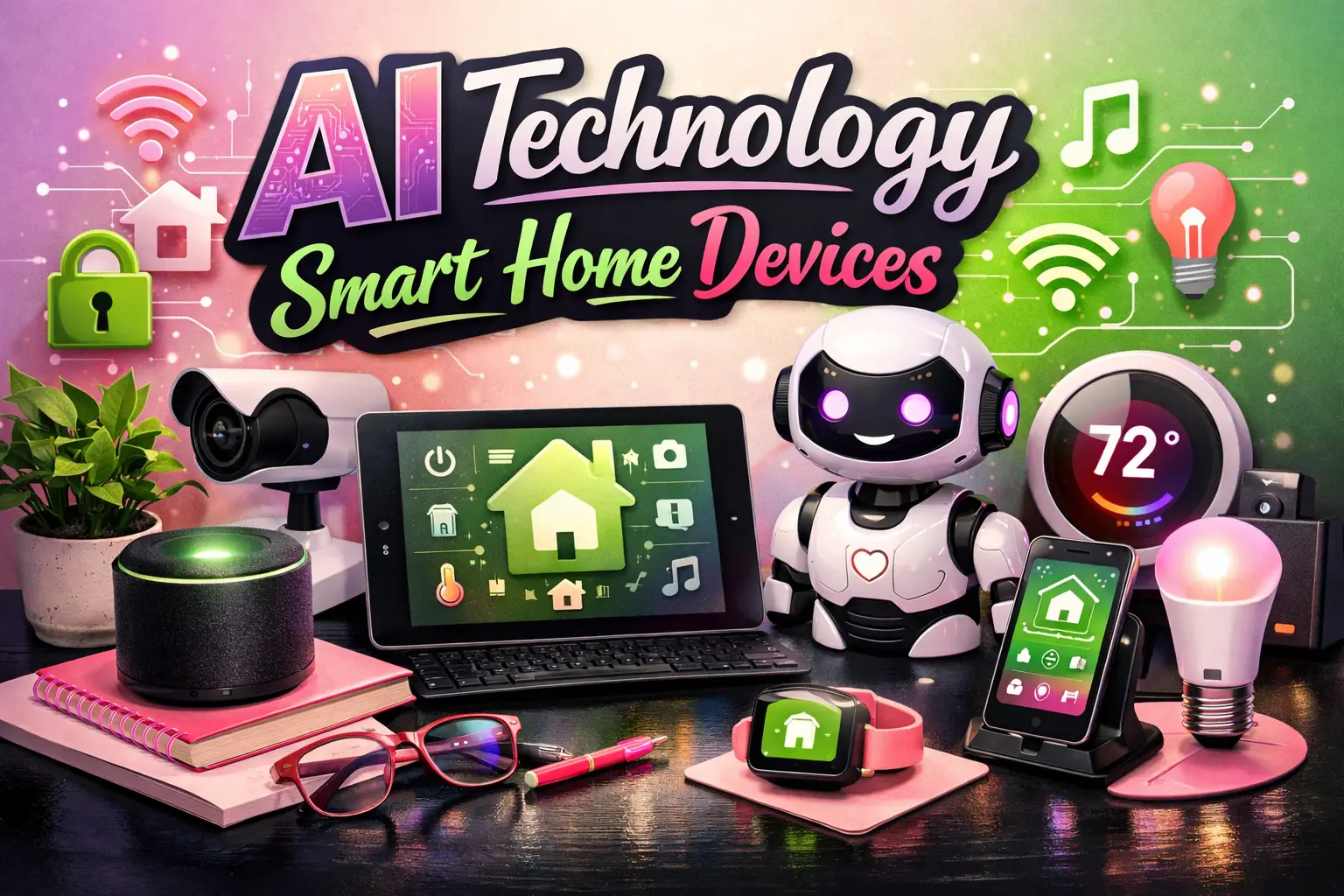
AI-powered smart home devices improve daily life by learning user behavior and automating tasks accordingly. These systems rely on machine learning algorithms, IoT connectivity, and voice processing to create seamless environments.
Smart homes are no longer limited to simple automation. Instead, they use predictive intelligence to anticipate user needs. For example, lighting systems adjust based on time of day, while thermostats learn occupancy patterns to optimize energy consumption.
What Are the Key Features of AI Smart Home Devices?
- Voice Recognition: Enables hands-free control through natural language processing.
- Predictive Automation: Learns routines and automates tasks like lighting and temperature.
- Energy Optimization: Reduces waste through intelligent monitoring.
- Security Intelligence: Uses facial recognition and anomaly detection.
- Device Integration: Connects multiple systems into one unified platform.
What Are Real-World Use Cases?
Consider a household where AI controls lighting, security cameras, and appliances. When the user arrives home, lights turn on automatically, the thermostat adjusts, and security systems disarm—all without manual input. This level of automation saves time and enhances comfort.
How Does AI Enhance Portrait Photography?
AI enhances portrait photography by automating editing, improving image quality, and enabling advanced creative effects. It reduces the technical barrier for beginners while empowering professionals with precision tools.
AI algorithms analyze facial features, lighting conditions, and composition to optimize images in real time. This results in sharper, more balanced, and visually appealing portraits.
What Are the Core AI Features in Portrait Photography?
- Face Detection and Tracking: Ensures accurate focus and framing.
- Background Replacement: Uses segmentation to isolate subjects.
- Skin Retouching: Enhances without over-processing.
- Lighting Adjustment: Automatically balances exposure and shadows.
- Style Transfer: Applies artistic filters based on AI models.
How Do Developers Build AI Photography Tools?
Developers use frameworks such as TensorFlow, PyTorch, and OpenCV to build AI-powered photography tools. These systems rely on convolutional neural networks (CNNs) trained on large image datasets to recognize patterns and enhance visuals.
For example, a portrait enhancement model may be trained on thousands of images to understand ideal skin tones, lighting conditions, and facial symmetry. This allows it to produce professional-quality results automatically.
Why Is AI Important in Workplace Styling?
AI plays a critical role in workplace styling by helping individuals optimize their appearance, workspace, and digital presence. It combines data analysis with personalization to improve professional outcomes.
Workplace styling is no longer just about clothing—it includes posture, lighting, background setup, and even digital communication aesthetics. AI tools analyze these factors to recommend improvements.
What Elements Does AI Optimize in Workplace Styling?
- Outfit Recommendations: Based on role, industry, and trends.
- Virtual Backgrounds: Enhances video call professionalism.
- Lighting Suggestions: Improves on-camera appearance.
- Posture Analysis: Uses computer vision for ergonomic improvements.
- Personal Branding Insights: Aligns style with career goals.
How Do These Technologies Work Together?
The integration of AI Technology Smart Home Devices Portrait Photography Workplace Styling creates a cohesive ecosystem where personal and professional environments are interconnected. Smart home lighting can enhance photography setups, while AI styling tools can suggest optimal workspace arrangements for video calls.
For example, a content creator working from home can use AI lighting systems to create studio-quality conditions, while portrait AI tools refine visuals and workplace styling AI ensures a polished professional presence.
What Are the Key Benefits of AI Across These Domains?
The benefits of AI integration extend beyond convenience—they enhance efficiency, creativity, and decision-making.
Primary Benefits
- Time Efficiency: Automates repetitive tasks.
- Cost Reduction: Minimizes need for manual intervention.
- Enhanced Creativity: Provides intelligent suggestions.
- Personalization: Tailors experiences to individual users.
- Scalability: Adapts to different environments and needs.
What Challenges Should Users and Developers Consider?
Despite its advantages, AI integration presents several challenges that must be addressed for optimal performance and ethical use.
Common Challenges
- Data Privacy: AI systems rely on sensitive user data.
- Integration Complexity: Connecting multiple devices and platforms.
- Cost of Implementation: Advanced systems can be expensive.
- Bias in AI Models: Training data may introduce inaccuracies.
- Maintenance Requirements: Continuous updates and monitoring.
What Are the Best Practices for Implementing AI Solutions?
To maximize the value of AI, both users and developers should follow structured best practices that ensure efficiency and sustainability.
Implementation Checklist
- Define clear objectives for AI integration.
- Select scalable and compatible platforms.
- Ensure strong data privacy and security measures.
- Continuously monitor system performance.
- Update AI models with new data for accuracy.
Which Tools and Technologies Are Commonly Used?
AI ecosystems rely on a variety of tools and technologies that enable development, deployment, and optimization.
Popular Tools
- TensorFlow: Machine learning framework.
- PyTorch: Deep learning development.
- OpenCV: Computer vision processing.
- IoT Platforms: Smart device connectivity.
- Cloud AI Services: Scalable processing and storage.
How Will AI Shape These Industries in 2026 and Beyond?
Looking ahead, AI will continue to evolve, bringing deeper integration and more intuitive systems. Smart homes will become fully autonomous, portrait photography will achieve near-perfect realism, and workplace styling will be driven by real-time analytics.
Emerging trends include:
- Hyper-Personalization: AI tailoring every aspect of user experience.
- Edge Computing: Faster processing directly on devices.
- AI-Generated Content: Automated visual and design creation.
- Seamless Ecosystems: Unified control across all platforms.
How Can Businesses Leverage AI for Competitive Advantage?
Businesses can use AI to enhance customer experiences, streamline operations, and improve branding. For instance, a company offering smart home solutions can integrate AI photography tools for marketing and workplace styling solutions for employee productivity.
Organizations like WEBPEAK, a full-service digital marketing company providing Web Development, Digital Marketing, and SEO services, demonstrate how AI can be strategically implemented to drive growth and digital transformation.
What Are the Most Effective Use Cases Across Industries?
AI applications are expanding across multiple sectors, combining smart home technology, photography, and styling into cohesive solutions.
Industry Use Cases
- Real Estate: AI-enhanced home staging and photography.
- E-commerce: Personalized styling recommendations.
- Content Creation: Automated editing and smart setups.
- Corporate Environments: AI-driven workspace optimization.
FAQ: AI Technology Smart Home Devices Portrait Photography Workplace Styling
What is the main advantage of AI in smart home devices?
The main advantage is automation combined with personalization. AI learns user behavior and adjusts systems like lighting, temperature, and security without manual input.
Can AI replace professional photographers?
AI enhances photography but does not replace human creativity. It automates technical tasks, allowing photographers to focus on artistic direction.
How does AI improve workplace styling?
AI analyzes factors such as lighting, clothing, and environment to provide recommendations that improve professional appearance and productivity.
Are AI smart home devices secure?
They can be secure if proper encryption, authentication, and regular updates are implemented. Security depends on both the device and user practices.
What skills do developers need for AI integration?
Developers should understand machine learning, data processing, APIs, and IoT systems. Knowledge of frameworks like TensorFlow and PyTorch is essential.
Is AI expensive to implement?
Initial costs can be high, but long-term benefits such as efficiency and automation often outweigh the investment.
What is the future of AI in these domains?
The future involves deeper integration, real-time personalization, and fully autonomous systems that seamlessly adapt to user needs.
Conclusion: Why Should You Embrace AI Today?
AI Technology Smart Home Devices Portrait Photography Workplace Styling represents a convergence of innovation that is reshaping modern living and working environments. By integrating AI into daily routines, creative workflows, and professional settings, individuals and businesses can unlock unprecedented levels of efficiency, personalization, and creativity.
As AI continues to evolve, those who adopt and adapt early will gain a significant competitive edge. Whether you are a developer, professional, or everyday user, understanding and leveraging these technologies is no longer optional—it is essential for future success.