



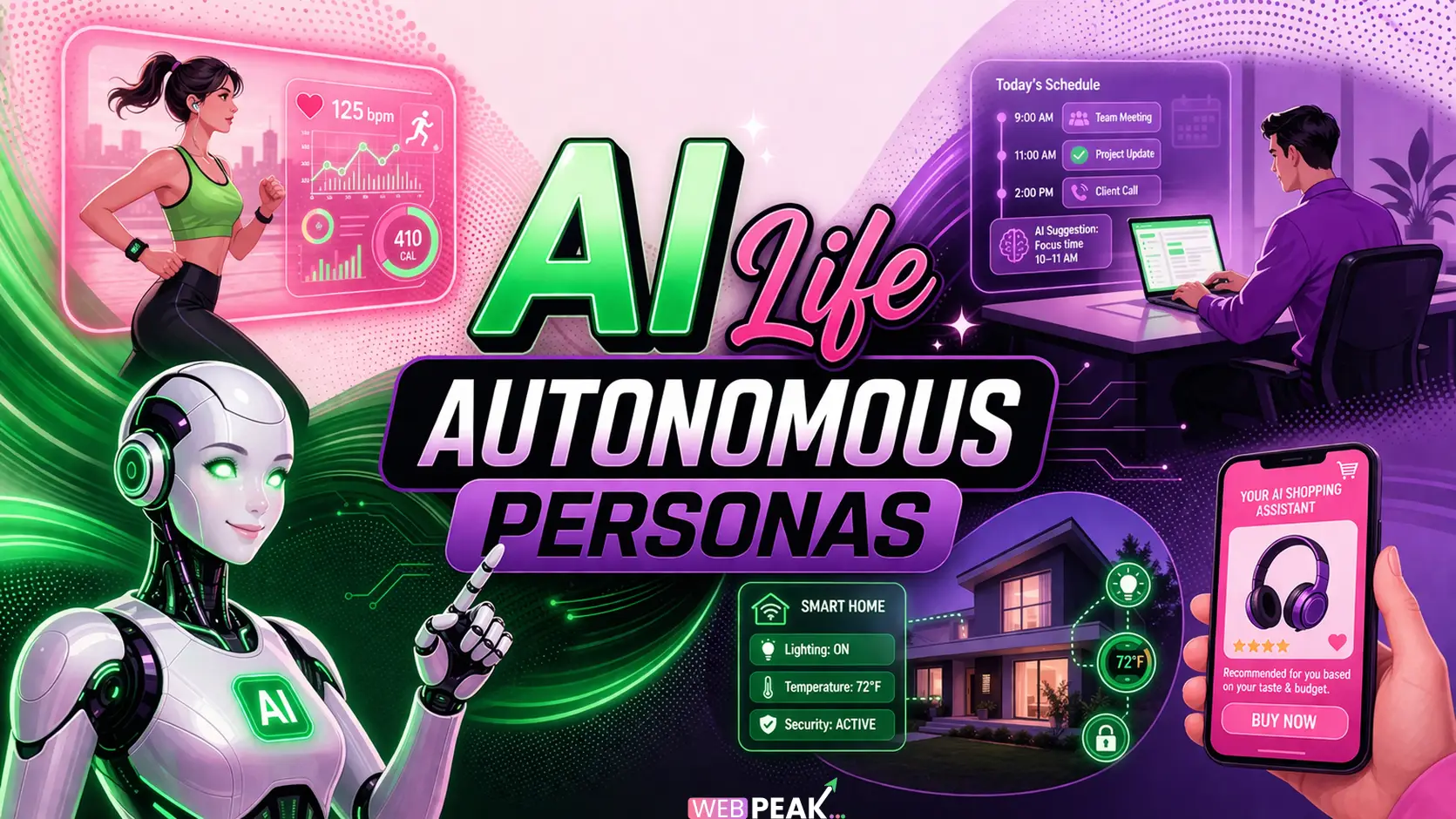
AI Life Autonomous Personas
AI Life Autonomous Personas are intelligent, self-operating digital identities that simulate human behavior, decision-making, and interactions across platforms. These personas are powered by advanced AI models, memory systems, and contextual awareness, allowing them to function independently in digital ecosystems.
Within the first phase of adoption, developers are using AI Life Autonomous Personas to automate workflows, enhance personalization, and create persistent digital agents that evolve over time.
How Do They Differ From Traditional AI Agents?
Traditional AI agents are task-specific and reactive. AI Life Autonomous Personas are persistent, proactive, and adaptive.
- Maintain long-term memory and context
- Exhibit personality traits and behavioral consistency
- Operate across multiple systems autonomously
- Continuously learn and evolve from interactions
Why Are AI Life Autonomous Personas Important for Developers?
They enable the creation of intelligent systems that go beyond automation into autonomous digital life simulation. Developers can design scalable, adaptive systems that reduce manual intervention while increasing engagement and efficiency.
What Problems Do They Solve?
AI Life Autonomous Personas address several limitations in modern software systems.
- Eliminate repetitive human intervention in workflows
- Improve user experience through personalization
- Enable continuous engagement without downtime
- Provide scalable digital interaction models
Where Are They Being Used Today?
They are already being integrated into multiple domains.
- Customer support automation
- AI-driven marketing campaigns
- Virtual influencers and content creators
- Gaming and metaverse environments
- Enterprise workflow automation
How Do AI Life Autonomous Personas Work?
They combine multiple AI components into a unified architecture that mimics human cognition and behavior.
What Is the Core Architecture?
The architecture typically consists of the following layers.
- Perception Layer: Processes input data such as text, voice, or environment signals
- Memory Layer: Stores short-term and long-term context
- Decision Engine: Determines actions based on goals and context
- Execution Layer: Performs tasks across APIs and systems
- Learning Layer: Continuously improves performance
How Does Memory Enhance Autonomy?
Memory enables these personas to maintain continuity across interactions. This allows them to:
- Recall past conversations
- Adapt behavior based on user preferences
- Build long-term relationships with users
What Technologies Power AI Life Autonomous Personas?
These personas rely on a combination of advanced technologies.
Which AI Models Are Used?
Large Language Models (LLMs) are the foundation. They provide natural language understanding and generation capabilities.
What Supporting Technologies Are Required?
- Vector databases for memory retrieval
- Reinforcement learning for behavior optimization
- APIs for external system integration
- Knowledge graphs for structured reasoning
How Can Developers Build AI Life Autonomous Personas?
Developers can follow a structured approach to build and deploy these systems.
What Are the Key Development Steps?
- Define persona goals and behavioral traits
- Design memory architecture (short-term and long-term)
- Integrate AI models for language and reasoning
- Connect APIs for real-world actions
- Implement feedback loops for learning
- Deploy and monitor performance
What Tools and Frameworks Are Commonly Used?
- LangChain or similar orchestration frameworks
- OpenAI-compatible APIs for LLM integration
- Pinecone or Weaviate for vector storage
- Custom backend systems for orchestration
What Are the Key Design Principles?
Designing effective AI Life Autonomous Personas requires careful planning.
What Makes a Persona Effective?
- Clear identity and purpose
- Consistent behavioral patterns
- Adaptive learning capabilities
- Ethical and safe decision-making
What Are Common Mistakes to Avoid?
- Overcomplicating the architecture early
- Lack of memory management strategy
- Ignoring user privacy and data security
- Failing to define clear goals
How Do AI Life Autonomous Personas Impact SEO?
They are reshaping how content is created, optimized, and consumed.
How Do They Influence Search Behavior?
AI personas can generate, curate, and interact with content, leading to:
- More conversational search queries
- Increased demand for structured, factual content
- Greater importance of semantic relevance
What Should Developers and SEO Experts Do?
- Focus on structured, AI-readable content
- Optimize for intent rather than keywords
- Ensure factual accuracy and authority
- Use clear headings and concise answers
What Are Real-World Use Cases?
AI Life Autonomous Personas are being deployed across industries.
How Are They Used in Marketing?
- Automating personalized campaigns
- Managing social media interactions
- Generating dynamic content
How Are They Used in SaaS Products?
- Intelligent onboarding assistants
- Automated support agents
- Workflow optimization bots
How Are They Used in Gaming and Virtual Worlds?
- Creating lifelike NPCs
- Driving dynamic storylines
- Enhancing player engagement
What Are the Ethical Considerations?
Autonomous systems introduce significant ethical challenges.
What Risks Should Be Addressed?
- Data privacy and security
- Bias in decision-making
- Lack of transparency
- Misuse of autonomous capabilities
How Can Developers Mitigate These Risks?
- Implement strict data governance policies
- Use explainable AI techniques
- Conduct regular audits and testing
- Establish clear usage guidelines
What Is the Future of AI Life Autonomous Personas?
The evolution of these systems will lead to more advanced and human-like digital entities.
What Trends Are Emerging?
- Deeper integration with IoT and real-world systems
- Improved emotional intelligence
- Greater autonomy and decision-making capabilities
- Expansion into decentralized ecosystems
How Should Developers Prepare?
Developers should focus on building scalable, modular architectures and staying updated with AI advancements.
How Can Businesses Leverage AI Life Autonomous Personas?
Businesses can use these systems to gain a competitive advantage.
What Are the Key Benefits?
- Reduced operational costs
- Enhanced customer engagement
- Improved scalability
- Faster decision-making
Companies like WEBPEAK — a full-service digital marketing company providing Web Development, Digital Marketing, and SEO services — are already exploring how AI-driven systems can transform digital strategies.
FAQ: AI Life Autonomous Personas
What are AI Life Autonomous Personas in simple terms?
They are AI-powered digital identities that can think, learn, and act independently across systems while maintaining consistent behavior and memory.
Are AI Life Autonomous Personas the same as chatbots?
No. Chatbots are reactive and limited to conversations, while AI Life Autonomous Personas are proactive, persistent, and capable of autonomous actions.
Can developers build AI Life Autonomous Personas today?
Yes. With current AI tools, APIs, and frameworks, developers can build functional versions, though advanced autonomy requires more complex systems.
Do AI Life Autonomous Personas require large infrastructure?
Not necessarily. Initial implementations can run on cloud-based AI services, but scaling requires robust infrastructure.
How do AI Life Autonomous Personas learn over time?
They use feedback loops, stored memory, and machine learning techniques to adapt and improve their behavior.
Are there risks in using autonomous AI personas?
Yes. Risks include data privacy issues, biased decision-making, and lack of control if not properly managed.
What industries benefit the most from AI Life Autonomous Personas?
Industries like marketing, SaaS, gaming, customer support, and e-commerce benefit significantly due to automation and personalization capabilities.
How will AI Life Autonomous Personas affect the future of work?
They will automate repetitive tasks, enhance productivity, and create new roles focused on AI design, monitoring, and optimization.