AI Integration for Legacy Systems for Startups
A high-velocity architectural guide for startup CTOs navigating technical debt, acquired monoliths, and seamless machine learning integrations without halting product roadmaps.


Key takeaways
Executive Summary- Wrapping legacy code in modular microservices preserves scarce capital by avoiding multi-quarter engineering freezes.
- Deploying cognitive endpoints via decoupled event buses lets startups ship user-facing AI features in weeks instead of quarters.
- Non-invasive API adapters isolate brittle monolithic business logic while channeling clean data into vector search databases.
- Establishing schema contracts early ensures seamless transitions as startups scale toward Series B and enterprise client tiers.
Startups rarely have the luxury of starting with a pristine architectural clean slate. Early-stage companies that acquire existing products, take over legacy codebases from corporate spin-outs, or build rapidly on early minimum viable product (MVP) monoliths quickly accumulate severe technical debt. Mastering ai integration for legacy systems for startups is critical for engineering leadership seeking to introduce cognitive capabilities, automated customer experiences, and predictive data pipelines without burning precious runway on a total code rewrite. Halting product development for six months to refactor an inherited Ruby, PHP, or monolithic Node backend is often a fatal misstep in hyper-competitive markets.
By adopting modern modular microservices and asynchronous event wrappers, venture-backed startups can layer cognitive agents directly over inherited databases. Whether extracting contextual insights from messy customer interaction tables or building autonomous triage bots atop multi-tenant SQL architectures, modern integration techniques provide the agility of a greenfield startup alongside the mature transactional records of an established product.
Key Strategic Takeaways
- Runway Preservation: Wrapping legacy code in modular microservices preserves scarce capital by avoiding multi-quarter engineering freezes.
- Speed to Market: Deploying cognitive endpoints via decoupled event buses lets startups ship user-facing AI features in weeks instead of quarters.
- Technical Debt Containment: Non-invasive API adapters isolate brittle monolithic business logic while channeling clean data into vector search databases.
- Scalable Foundations: Establishing schema contracts early ensures seamless transitions as startups scale toward Series B and enterprise client tiers.
Tackling Inherited Monoliths and Early MVP Technical Debt
In the scramble for product-market fit, founding engineering teams frequently compromise architectural purity in favor of rapid feature velocity. Monolithic frameworks like early Django, Laravel, or Rails applications accumulate tight database couplings, unindexed queries, and undocumented side effects. When investors demand generative AI capabilities, CTOs face an acute architectural dilemma. Attempting to rip out the underlying relational engine jeopardizes core revenue, yet building AI tools directly inside the monolith results in catastrophic memory leaks and server crashes.
The pragmatic solution is architectural decoupling. By leveraging modern MERN stack development, startup teams construct modular client interfaces and high-throughput serverless microservices that interact with legacy backends strictly through hardened REST or GraphQL gateways, keeping core application loops fast and resilient.
Microservice Wrappers and Serverless Event Topologies
Modern startup infrastructure thrives on asynchronous event-driven architectures. Rather than executing heavy LLM inference synchronously within user HTTP request cycles, engineers implement background queues using Redis or RabbitMQ. Adhering to open interoperability conventions established by the W3C open web standards ensures that event payloads and data schemas transition seamlessly across diverse serverless environments and third-party AI APIs.
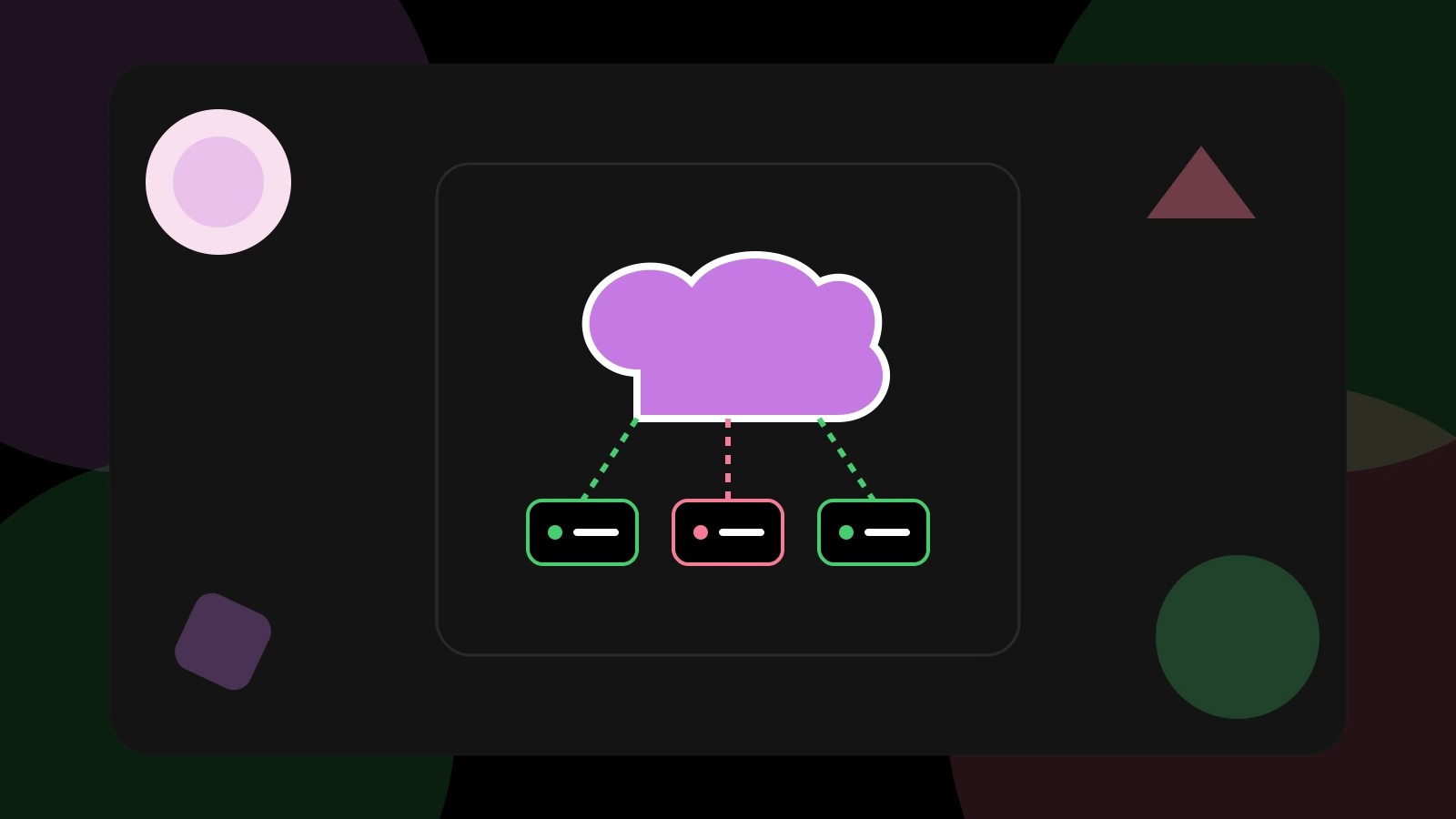
When a customer initiates an action within the legacy application, the backend emits a lightweight webhook event to an isolated cloud worker. The worker ingests relevant context, executes embeddings or model queries asynchronously, and pushes real-time results back to the user interface via WebSockets. The legacy monolith never experiences thread exhaustion or latency degradation.
Engineering Roadmap: AI Integration for Legacy Systems for Startups
Executing ai integration for legacy systems for startups demands an aggressive yet disciplined execution timeline. Startups cannot afford protracted multi-month architectural debates. Successful engineering teams follow a phased sprint approach that delivers tangible user value every two weeks while methodically untangling legacy dependencies.
Sprint 1: Schema Auditing and Automated Query Synthesis
Before writing integration code, developers must map existing relational tables and understand query dependencies. Using an automated coding and SQL generator, developers can rapidly analyze complex stored procedures, generate optimized extraction queries, and establish typed TypeScript data interfaces that eliminate runtime schema errors.
Sprint 2: Vector Cache Deployment and RAG Pipeline Assembly
Once data boundaries are established, teams deploy managed vector stores such as Pinecone, Qdrant, or pgvector. A scheduled worker syncs modified entities into embedding space, creating a lightning-fast semantic retrieval cache. Startup applications can now query historical customer interactions in sub-50-millisecond response windows without burdening the primary legacy database.
Startup Architecture Strategy Matrix
| Architectural Approach | Runway Impact | Time to Deploy | Team Bandwidth | Long-Term Scalability |
|---|---|---|---|---|
| Event-Driven Webhook Layer | Under $1,500 / month | 2 to 3 Weeks | 1-2 Engineers | High (Elastic Cloud) |
| Direct Monolith Querying | Low Initial / High Later | 1 Week | 1 Engineer | Extremely Low (Fragile) |
| Database Read-Replica RAG | $2,000 – $4,500 / month | 3 to 5 Weeks | 2 Engineers | Excellent |
| Total Greenfield Rebuild | $50,000+ / 6-Month Freeze | 24 to 36 Weeks | Full Dev Team | High (Delayed ROI) |
Data Normalization and Entity Resolution for Startups
Startup databases frequently contain denormalized tables, unstandardized user inputs, and fragmented foreign keys resulting from hurried product pivots. Passing this noisy relational data directly to language models leads to severe hallucinations and inaccurate recommendations. Establishing a clean data transformation pipeline is therefore mandatory.
Engineers deploy lightweight data validation layers using libraries like Zod or Pydantic. These runtime validators ensure that incoming legacy records conform to strict types before passing into prompt templates or embedding pipelines. Defective or incomplete records are automatically redirected to dead-letter queues for developer triage, keeping production inference clean and dependable.
5-Step Startup Implementation Playbook
- Identify Highest-Impact User Feature: Select one high-visibility customer pain point (such as natural language search or automated customer ticket triage) that directly moves retention metrics.
- Spin Up an Asynchronous Event Broker: Configure a managed Redis or SQS queue to decouple legacy database mutations from downstream model inference tasks.
- Deploy Managed Vector Indexing: Populate an external vector database with clean contextual documents derived from the legacy relational database.
- Build Strict Prompt Sandboxes: Enforce strict system prompts, JSON output formatting, and guardrails to prevent model hallucinations from corrupting frontend state.
- Leverage External Engineering Acceleration: When internal teams are stretched thin, consider hiring specialized legacy modernization agencies to build the initial connectors while your core staff remains focused on proprietary product innovation.
Real-World Startup Case Studies
A B2B SaaS startup in Austin, Texas, had built its core product on a monolithic Ruby on Rails backend in 2018. As user accounts surged past 10,000, customer support reps spent thirty hours each week manually tagging support tickets and looking up account histories across fragmented database tables. Rather than rebuilding the Rails application, engineers deployed a serverless Python worker that ingested ticket creation events, retrieved customer account context from an isolated read-replica, and generated proposed support resolutions using a fine-tuned model. First-response time dropped from four hours to under twelve minutes, while churn decreased by 19%.
A fintech startup in New York acquired a legacy PHP invoice factoring platform with 40,000 historical merchant credit files. Manual underwriting required three business days per applicant. Engineers created an event-driven microservice using Node.js and AWS Lambda that extracts bank statement PDF data, queries the historical merchant database for repayment patterns, and outputs an automated risk scorecard. Underwriting decision velocity accelerated by 80%, allowing the startup to close a $15M Series A round based on superior unit economics.
Five Startup Anti-Patterns to Eliminate
- Synchronous LLM Calls in Core API: Executing slow model calls directly inside web request loops causes connection timeouts and destroys API performance.
- The Complete Rewrite Trap: Freezing product feature development to perform a complete architectural rebuild almost always takes twice as long as estimated and drains runway.
- Neglecting Token Budgets: Failing to implement caching and token optimization can cause monthly cloud bills to surge uncontrollably as user adoption grows.
- Unversioned Prompt Engineering: Treating prompts as hardcoded strings rather than version-controlled software assets leads to untraceable regressions and erratic model outputs.
- Ignoring Rate Limit Failures: Failing to build exponential backoff and retry policies leaves your application completely vulnerable to third-party API outages.
Long-Term Scalability and Growth Governance
- Semantic Caching: Deploy Redis-based semantic caching layers to intercept repetitive natural language queries and reduce external API costs by up to 60%.
- Model-Agnostic Abstraction Layers: Use unified API wrappers (such as LiteLLM or LangChain interfaces) so your startup can switch model providers instantly if pricing or performance shifts.
- Continuous Evaluation Frameworks: Implement automated end-to-end evaluation suites that score model outputs against golden test datasets with every production deployment.
- Granular Multi-Tenant Isolation: Enforce strict tenant ID filtering across all vector searches to guarantee that one client's data never leaks into another's generated answers.
Conclusion and Strategic Founder Action Plan
Semantic Caching and Latency Optimization in Lean Engineering Stacks
For fast-moving venture startups, API token expenditures and network latency can rapidly spiral out of control as user adoption scales. Language model inference queries that repeat similar semantic intents across customer accounts consume unnecessary compute and introduce frustrating latency spikes. Engineering teams must implement an intelligent semantic caching layer positioned directly between user interfaces and downstream AI model gateways.
By deploying a Redis-backed vector similarity cache, the integration layer calculates vector embeddings for incoming user queries and checks whether a semantically identical query was executed within an established time-to-live (TTL) window. If a cosine similarity threshold exceeding 0.96 is detected, the cached response is served instantly in less than fifteen milliseconds, completely bypassing external LLM invocation. This mechanism slashes external API expenses by 40% to 65% while providing users with instantaneous feedback.
Furthermore, asynchronous background workers periodically analyze query patterns to pre-warm the cache for anticipated customer workflows, such as Monday morning pipeline summaries or recurring billing reconciliations. This proactive architectural posture ensures startup applications remain delightfully responsive even during peak traffic surges.
Continuous Observability and Operational Telemetry for AI Integration for Legacy Systems for Startups
Maintaining long-term architectural stability across modernized legacy environments requires comprehensive, real-time observability pipelines. Traditional server logging frameworks designed decades ago capture coarse-grained operational errors but lack the granular telemetry required to diagnose distributed AI inference bottlenecks, memory leaks, or vector retrieval degradation.
Modern engineering teams deploy unified telemetry agents that instrument every stage of the cognitive integration lifecycle. High-throughput distributed tracing captures query latencies from the moment an end-user or background worker initiates an action, across containerized API translation proxies, through vector embedding generation, and into final database persistence. This end-to-end visibility empowers site reliability engineers to identify query degradation, token cost escalation, and schema drift before mission-critical operations are impacted.
Furthermore, automated anomaly detection routines trigger immediate alert notifications whenever API latencies exceed defined service level objectives (SLOs) or error rates breach established baseline tolerances. By embedding continuous observability directly into the integration layer, organizations safeguard their software investments, ensuring resilient performance and uninterrupted business continuity.
For startups, technical debt is not a sign of failure; it is the natural byproduct of rapid customer discovery and product iteration. The most successful founders do not run away from their legacy codebases; they build intelligent, modern wrappers around them.
By treating legacy data as an operational asset and decoupling AI inference through asynchronous microservices, startups can out-innovate enterprise giants without burning runway. The future belongs to agile engineering teams who know how to bridge yesterday's backend with tomorrow's intelligence.
Frequently asked questions
Almost never. Rewriting an entire codebase freezes product momentum, drains capital runway, and introduces massive operational risk. The proven startup approach is to build decoupled microservices and event wrappers around the legacy backend, allowing rapid AI feature deployment without halting daily business.
Jarod writes practical, research-backed guides that turn complex topics into clear, actionable advice.