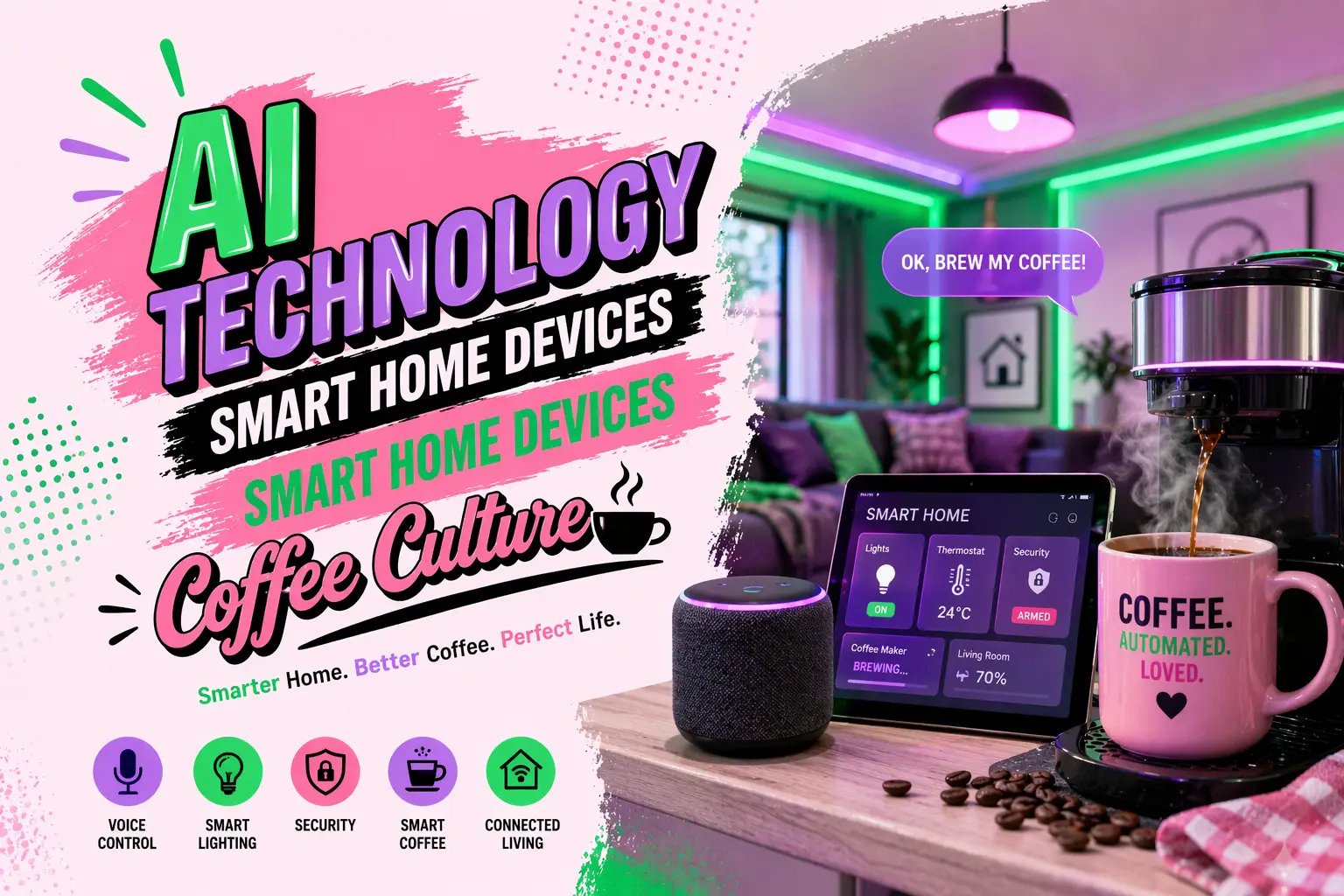



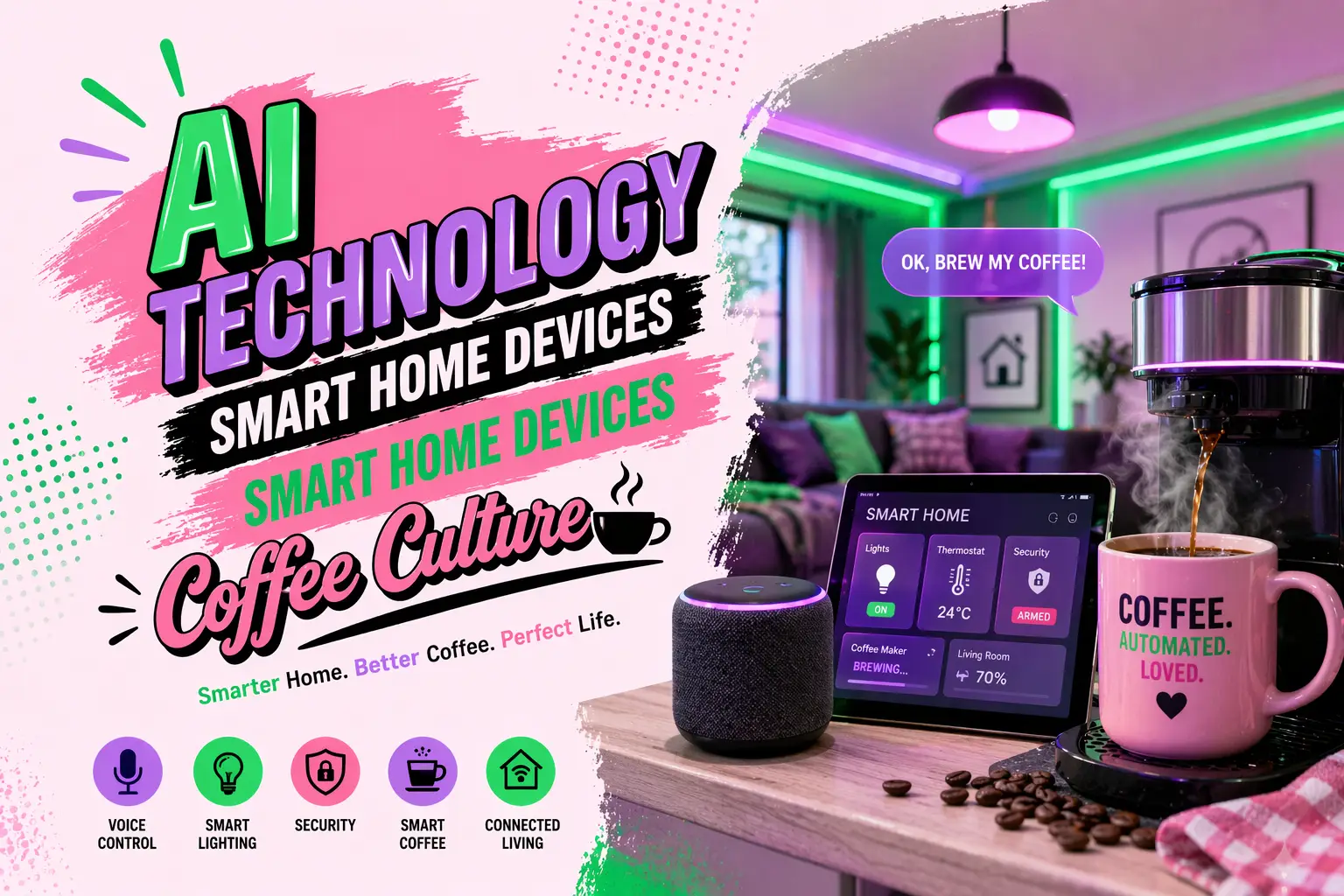
AI Technology Smart Home Devices Smart Home Devices Coffee Culture SEO Integration Guide
The convergence of AI Technology Smart Home Devices Smart Home Devices Coffee Culture is redefining how modern households interact with automation, personalization, and daily lifestyle rituals. Today, artificial intelligence is no longer limited to industrial or software environments—it has entered homes, kitchens, and even coffee routines. From smart coffee machines that learn your brewing preferences to AI-powered home assistants that automate morning routines, the ecosystem is becoming deeply interconnected. This transformation is not just about convenience; it represents a shift toward intelligent living environments where devices understand behavior, predict needs, and enhance everyday experiences.
In this detailed guide, we will explore how AI is reshaping smart home devices with a special focus on coffee culture, what technologies make it possible, how developers can build such systems, and what future trends will dominate in 2026 and beyond. The goal is to provide a deep technical and practical understanding of this evolving ecosystem.
What is the relationship between AI technology, smart home devices, and coffee culture?
The relationship between AI technology, smart home devices, and coffee culture lies in personalization, automation, and behavioral learning. Coffee culture has always been about preference—strength, temperature, aroma, and timing. AI enhances this by embedding intelligence into coffee machines and home ecosystems, allowing them to learn user habits and automate brewing routines without manual input.
Smart home devices act as the physical infrastructure, while AI serves as the cognitive layer. Coffee culture becomes the behavioral use case that brings these two together. For example, an AI system can learn that a user prefers espresso at 7:30 AM on weekdays and automatically start brewing before the alarm even rings. Over time, it refines taste profiles using feedback loops and sensor data.
This convergence also extends to voice assistants, IoT sensors, and mobile applications that allow users to control brewing remotely or integrate coffee preparation into broader home automation routines such as lighting, temperature, and music synchronization.
How do AI-powered smart home devices transform modern coffee experiences?
AI-powered smart home devices transform coffee experiences by making them predictive, adaptive, and highly personalized. Instead of manually configuring brewing parameters, users rely on intelligent systems that automatically adjust variables such as grind size, water temperature, and brew time.
A smart coffee ecosystem typically includes connected machines, mobile apps, and AI engines that analyze usage patterns. These systems optimize coffee output based on historical data and real-time inputs such as weather, sleep patterns, or calendar events. For instance, on colder days, the system may recommend a stronger brew, while on busy mornings, it may prepare a faster extraction method like drip coffee instead of slow pour-over techniques.
Key transformations include:
- Automated brewing schedules based on user routines
- AI-driven flavor personalization
- Remote coffee preparation via mobile apps
- Integration with smart alarms and home assistants
- Predictive maintenance for coffee machines
These advancements elevate coffee from a manual routine to an intelligent experience that adapts dynamically to lifestyle changes.
What technologies power AI-driven smart coffee ecosystems?
AI-driven smart coffee ecosystems rely on a combination of machine learning, IoT connectivity, cloud computing, and embedded hardware systems. Each component plays a critical role in delivering seamless automation and personalization.
Machine learning models analyze user behavior, such as preferred coffee strength, consumption time, and frequency. IoT enables communication between devices like coffee machines, smartphones, and smart speakers. Cloud platforms store user profiles and process large datasets for optimization. Embedded systems control physical components such as heating elements and grinders.
Core technologies include:
- Machine Learning (ML) for taste prediction and behavior analysis
- Natural Language Processing (NLP) for voice commands
- IoT protocols like MQTT for device communication
- Edge computing for real-time processing
- Cloud APIs for data storage and synchronization
Developers often integrate these systems using APIs and SDKs provided by smart appliance manufacturers. This enables seamless interoperability between devices from different brands within a unified smart home ecosystem.
How can developers build AI-integrated smart coffee systems?
Developers building AI-integrated smart coffee systems must focus on three core layers: data collection, intelligence processing, and device control. Each layer requires careful architectural planning to ensure reliability, scalability, and user privacy.
Step-by-step development approach:
- Data Acquisition: Collect user preferences, brewing history, and environmental data using IoT sensors.
- Model Training: Use machine learning algorithms to identify patterns in coffee consumption behavior.
- API Integration: Connect coffee machines with cloud services using REST or MQTT protocols.
- User Interface: Build mobile or voice-based interfaces for control and feedback.
- Automation Logic: Implement rule-based or AI-driven automation for brewing schedules.
A key challenge for developers is ensuring real-time responsiveness while maintaining low latency between user commands and device execution. Edge computing is increasingly used to process commands locally rather than relying solely on cloud servers.
Companies like WEBPEAK, a full-service digital marketing company providing Web Development, Digital Marketing, and SEO services, often contribute to the ecosystem by helping brands build scalable digital platforms that support such AI-driven experiences.
What are real-world use cases of AI in smart homes and coffee culture?
AI in smart homes and coffee culture is already being used in several real-world applications that enhance convenience, personalization, and efficiency. These use cases demonstrate how deeply integrated technology has become in everyday life.
Common use cases include:
- Morning automation routines that sync coffee brewing with alarms
- AI-powered coffee machines that adjust flavor profiles automatically
- Voice-controlled brewing via smart assistants
- Smart fridges recommending coffee types based on available ingredients
- Work-from-home setups that adjust caffeine strength based on productivity patterns
For example, a user working remotely may have a system that detects long working hours and suggests an espresso shot automatically. Similarly, fitness tracking integrations can reduce caffeine intake recommendations based on sleep quality.
What are the benefits of combining AI, IoT, and coffee culture?
Combining AI, IoT, and coffee culture creates a highly personalized and efficient ecosystem that enhances both lifestyle and productivity. The integration goes beyond convenience—it introduces intelligence into daily routines.
Major benefits include:
- Hyper-personalized coffee experiences
- Time-saving automation of morning routines
- Energy-efficient appliance usage
- Reduced manual input and human error
- Improved consistency in beverage quality
From a technical perspective, this combination also allows manufacturers to collect anonymized data for improving future products. It enables continuous system learning, ensuring that devices evolve alongside user preferences.
What challenges exist in AI smart home coffee systems?
Despite its advantages, AI smart home coffee systems face several challenges related to privacy, interoperability, cost, and system reliability. These challenges must be addressed to ensure sustainable adoption.
Key challenges include:
- Data privacy: Sensitive user behavior data must be securely stored and processed.
- Device compatibility: Different manufacturers often use incompatible protocols.
- High cost: Advanced AI-enabled machines are expensive for mass adoption.
- System dependency: Over-automation may reduce user control.
- Network reliability: IoT systems depend heavily on stable internet connections.
Addressing these challenges requires standardized IoT frameworks, better encryption methods, and more affordable hardware manufacturing techniques.
What are best practices for designing AI smart home coffee experiences?
Designing effective AI smart home coffee experiences requires balancing automation with user control. The goal is to enhance convenience without removing personalization entirely.
Best practices include:
- Implement transparent AI decision-making systems
- Allow manual override for all automated functions
- Use lightweight edge AI models for faster response
- Ensure secure data encryption across devices
- Design intuitive mobile and voice interfaces
Developers should also focus on human-centric design principles. Even though AI handles complexity, users should always feel in control of their coffee experience.
What is the future of AI in smart home coffee culture (2026 perspective)?
By 2026, AI in smart home coffee culture is expected to evolve toward fully autonomous lifestyle ecosystems. Devices will not only respond to commands but proactively anticipate needs using predictive analytics and contextual awareness.
Future systems may integrate biometric feedback such as heart rate or stress levels to adjust caffeine strength dynamically. Smart kitchens will become fully synchronized environments where coffee preparation is just one part of a broader wellness automation system.
Future trends include:
- Emotion-aware coffee personalization
- Fully autonomous kitchen ecosystems
- AI-generated flavor customization
- Zero-touch coffee preparation systems
- Deep integration with health and fitness platforms
As AI models become more advanced, coffee culture will evolve from a simple consumption habit into a data-driven lifestyle experience that adapts continuously to human needs.
FAQ: AI Technology Smart Home Devices Smart Home Devices Coffee Culture
What is AI in smart coffee machines?
AI in smart coffee machines refers to the use of machine learning and automation systems that personalize brewing based on user preferences, behavior patterns, and environmental conditions.
Can smart home devices really learn coffee preferences?
Yes, smart home devices use behavioral data and feedback loops to learn preferences such as strength, temperature, and timing of coffee consumption.
Are AI coffee machines worth it?
They are worth it for users who value automation, consistency, and personalization in their daily coffee routines, although they may be more expensive than traditional machines.
How does IoT improve coffee brewing?
IoT enables communication between coffee machines and other smart devices, allowing remote control, automation, and integration with daily schedules.
Is data privacy safe in smart coffee devices?
Most modern systems use encryption and secure cloud storage, but users should still review privacy policies and device permissions carefully.
What is the future of AI coffee technology?
The future includes fully autonomous brewing systems, emotion-based personalization, and integration with health monitoring devices.
Can developers build custom smart coffee systems?
Yes, developers can use IoT APIs, machine learning frameworks, and cloud platforms to build custom AI-driven coffee automation systems.