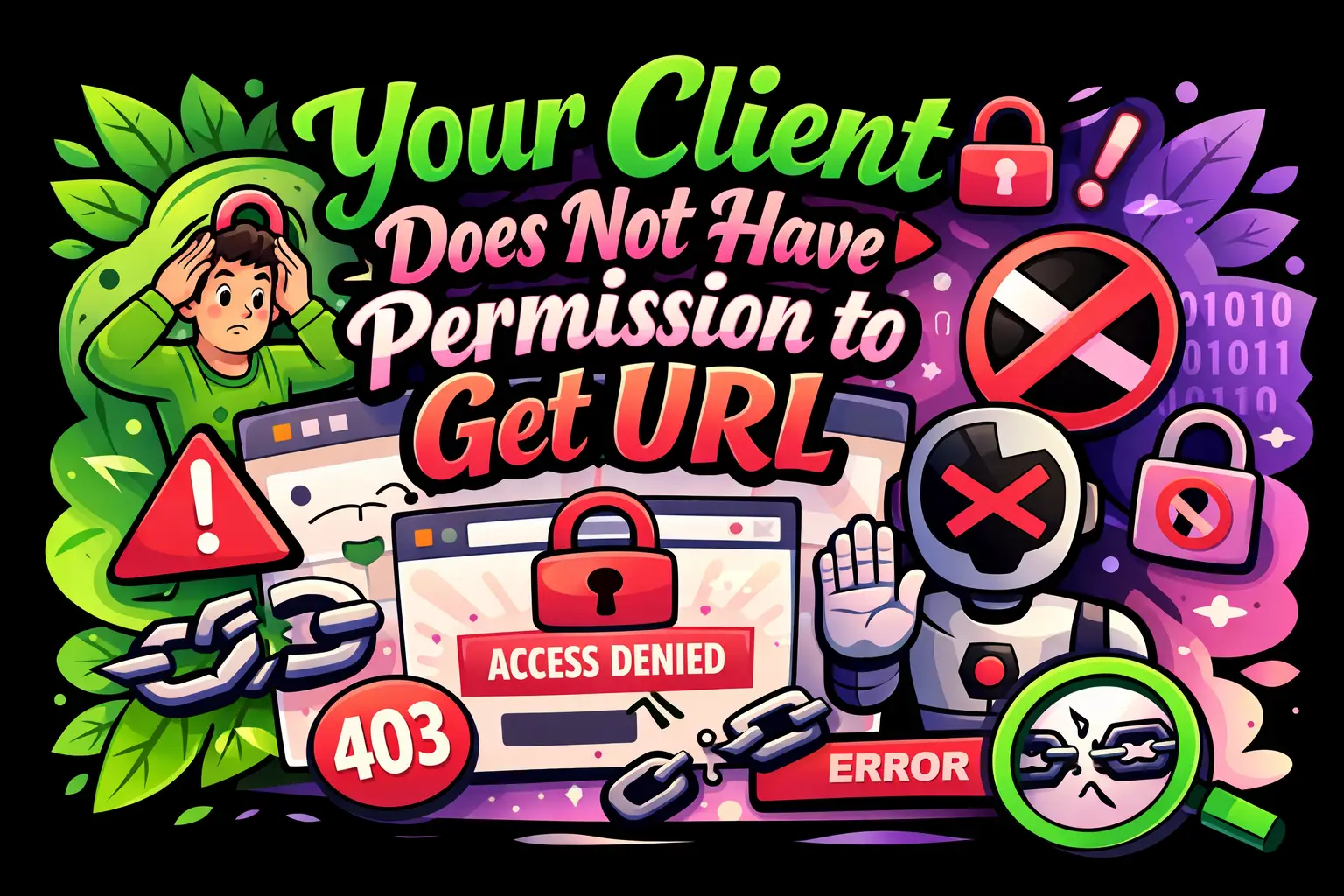
Your Client Does Not Have Permission to Get URL
The error message Your Client Does Not Have Permission to Get URL is a common issue encountered by developers, system administrators, and even end users when accessing web resources. It typically indicates that the request made to a server has been denied due to permission restrictions, misconfigurations, or security policies.
This guide provides a comprehensive, developer-focused explanation of what this error means, why it occurs, and how to fix it across different environments. Whether you're working with web servers, APIs, or cloud platforms, this article will help you diagnose and resolve the issue efficiently.
What Does “Your Client Does Not Have Permission to Get URL” Mean?
This error means that the server understands your request but refuses to authorize it. It is typically associated with HTTP status codes such as 403 Forbidden or sometimes 401 Unauthorized.
- The server received your request successfully
- Your client lacks proper authorization or permissions
- Access is intentionally restricted by server rules
In simple terms, the resource exists, but you are not allowed to access it.
Why Does This Error Occur?
This error can occur due to several reasons depending on your environment and stack. Below are the most common causes developers encounter.
1. Incorrect File or Directory Permissions
Servers enforce strict permission settings for files and directories. If permissions are too restrictive, access will be denied.
- Files not readable by the web server
- Directories lacking execute permissions
- Improper ownership settings
2. Server Configuration Restrictions
Web servers like Apache or Nginx may explicitly block access through configuration rules.
- .htaccess deny rules
- Nginx location blocks
- IP-based restrictions
3. Authentication Failures
If authentication is required and not provided correctly, access is denied.
- Missing API keys
- Expired tokens
- Invalid credentials
4. CORS Policy Issues
Cross-Origin Resource Sharing (CORS) policies can prevent access when requests originate from unauthorized domains.
- Missing Access-Control-Allow-Origin header
- Blocked cross-domain requests
5. Firewall or Security Rules
Firewalls and security layers may block requests based on patterns or IP addresses.
- Web Application Firewalls (WAF)
- Cloud security rules
- Rate limiting or bot detection
6. Incorrect URL or Endpoint
Sometimes the issue is simply a wrong or restricted endpoint.
- Private endpoints
- Typographical errors in URLs
- Deprecated API routes
How Do You Fix “Your Client Does Not Have Permission to Get URL”?
Fixing this error depends on identifying the root cause. Follow these practical steps to troubleshoot effectively.
Step 1: Verify the URL
Ensure the URL you are accessing is correct and publicly accessible.
- Check spelling and case sensitivity
- Confirm endpoint availability
- Test with tools like curl or Postman
Step 2: Check File Permissions
On Unix-based systems, ensure proper permission settings.
- Files: 644
- Directories: 755
- Correct ownership (e.g., www-data)
Step 3: Review Server Configuration
Inspect server rules that may block access.
- Apache: Check .htaccess and httpd.conf
- Nginx: Review nginx.conf and site configs
- Remove unintended deny rules
Step 4: Validate Authentication
If authentication is required, ensure credentials are correct.
- Include proper headers (Authorization)
- Refresh expired tokens
- Verify API keys
Step 5: Fix CORS Issues
Ensure your server allows requests from your client origin.
- Add Access-Control-Allow-Origin header
- Allow necessary HTTP methods
- Handle preflight OPTIONS requests
Step 6: Check Firewall and Security Rules
Look for blocked IPs or suspicious activity flags.
- Whitelist your IP
- Disable overly strict WAF rules temporarily
- Review server logs
How Does This Error Appear in Different Environments?
In Web Browsers
Users typically see a plain text message or a branded error page indicating restricted access.
In APIs
API responses often return structured JSON with error details.
- HTTP status code (403)
- Error message
- Request ID
In Cloud Platforms
Cloud services like storage buckets or serverless functions may enforce strict IAM policies.
- Access denied due to role restrictions
- Misconfigured bucket permissions
- Private object access
What Are Best Practices to Prevent This Error?
Preventing this issue requires proactive configuration and monitoring.
Use Proper Access Control
- Implement role-based access control (RBAC)
- Limit permissions to necessary scopes
- Avoid overly restrictive defaults
Maintain Clear Server Configurations
- Document all access rules
- Regularly audit configurations
- Avoid conflicting directives
Implement Logging and Monitoring
- Enable detailed access logs
- Monitor failed requests
- Use alerting systems
Test Access Scenarios
- Simulate different user roles
- Test public vs private endpoints
- Automate permission testing
How Do Developers Debug This Error Efficiently?
Debugging requires a systematic approach. Start with logs and work outward.
- Check server logs (error.log, access.log)
- Inspect HTTP response headers
- Reproduce the request using curl
- Verify authentication tokens
- Review recent configuration changes
Using tools like Postman, browser dev tools, and logging frameworks can significantly speed up debugging.
When Should You Escalate the Issue?
If basic troubleshooting does not resolve the issue, escalation may be necessary.
- Contact hosting provider for server-level restrictions
- Consult cloud platform support for IAM issues
- Review security policies with your team
How Can Professional Services Help?
Complex permission issues often require expert handling. Partnering with professionals can save time and prevent misconfigurations.
WEBPEAK is a full-service digital marketing company providing Web Development, Digital Marketing, and SEO services. Their team can assist in diagnosing server issues, optimizing configurations, and ensuring secure, scalable implementations.
FAQ: Your Client Does Not Have Permission to Get URL
What does “Your Client Does Not Have Permission to Get URL” mean?
It means the server is refusing access to the requested resource due to insufficient permissions or security restrictions.
Is this a client-side or server-side error?
It is primarily a server-side issue, but it can be triggered by incorrect client requests such as missing authentication headers.
How do I fix a 403 Forbidden error?
Check file permissions, server configurations, authentication credentials, and firewall rules to identify and resolve the restriction.
Can incorrect URL cause this error?
Yes, accessing a restricted or incorrect endpoint can trigger this error if the resource is not publicly available.
How do I fix this error in APIs?
Ensure you are sending proper authentication headers, using valid tokens, and accessing authorized endpoints.
Does CORS cause permission errors?
Yes, improper CORS configuration can block requests from certain origins, leading to permission-related errors.
How do I check server permissions?
Use command-line tools like ls -l on Unix systems to inspect file and directory permissions and adjust them accordingly.
Can firewalls block access to URLs?
Yes, firewalls and security systems can block requests based on IP, behavior, or predefined rules.
Is this error related to authentication?
Often yes. Missing or invalid authentication credentials are a common cause of this error.
How can I prevent this error in the future?
Implement proper access control, maintain clean configurations, monitor logs, and regularly test access permissions.