Which of the Following Social Media Platforms Was Created First?
The history of social media is longer and more fascinating than many people realize. While platforms like Facebook, Twitter, and Instagram dominate today, they were preceded by pioneering networks that laid the groundwork for modern social interaction online. Understanding which social media platform was created first provides valuable context for how digital communication evolved and why certain features became standard across the platforms we rely on every day.
Quick Answer: Among widely recognized platforms, Six Degrees, launched in 1997, is generally considered the first true social media platform. It allowed users to create profiles and connect with friends. Among modern giants, LinkedIn (2003) predates Facebook (2004), Twitter (2006), and Instagram (2010).
How WebPeak Can Help
Knowing platform history helps brands choose where to invest, and WebPeak guides that decision with expertise. Their team builds tailored strategies through Social Media Marketing, manages presence across networks with Social Media Management, and strengthens overall visibility through Digital Marketing. This ensures brands engage on the right platforms with content suited to each network's unique culture.
The Birth of Social Media
The first recognizable social media platform, Six Degrees, launched in 1997. Named after the "six degrees of separation" theory, it let users create profiles, list friends, and send messages. Though it eventually shut down in 2001, it introduced the core concept of an online social network built around personal connections.
Before Six Degrees, earlier tools like bulletin board systems and online forums allowed communication, but they lacked the profile-and-friend structure that defines social media. Six Degrees was the first to combine these elements into a single recognizable network.
Timeline of Major Platforms
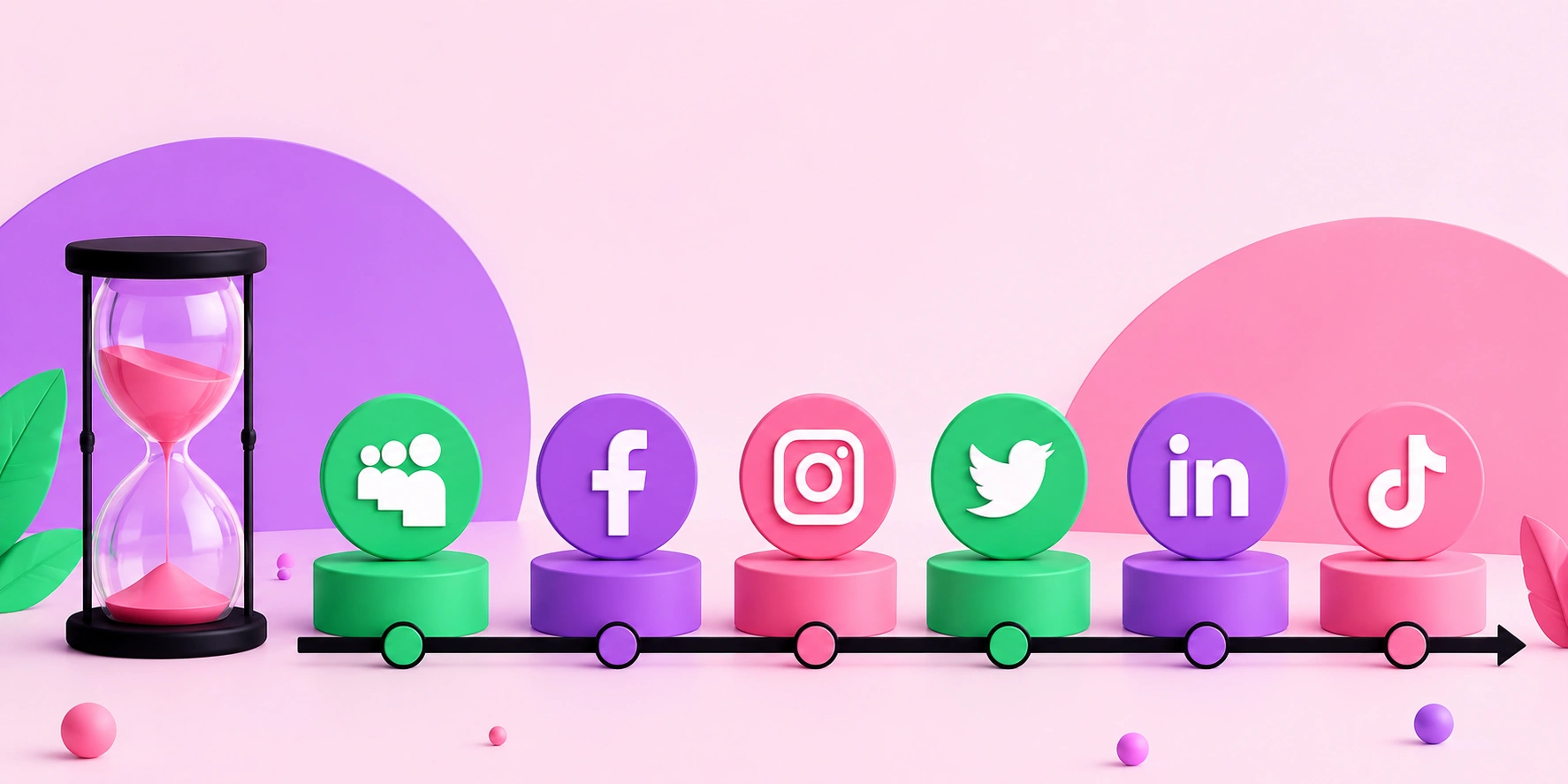
Understanding the order in which popular platforms launched clarifies how social media matured. Here is a chronological look at some influential networks:
- Six Degrees (1997): The first true social networking site.
- Friendster (2002): Popularized social networking on a large scale.
- LinkedIn (2003): Focused on professional networking.
- MySpace (2003): Dominated music and youth culture in the mid-2000s.
- Facebook (2004): Became the global social media leader.
- Twitter (2006): Introduced real-time microblogging.
- Instagram (2010): Centered social media on visual content.
This progression shows how each platform built on lessons from its predecessors, gradually adding features like photo sharing, professional profiles, and real-time updates.
Comparing Early and Modern Platforms
Comparing pioneering platforms with modern ones highlights how far social media has come. The table below outlines key differences in focus and features.
| Platform | Launch Year | Primary Focus |
|---|---|---|
| Six Degrees | 1997 | Profiles and friend connections |
| 2003 | Professional networking | |
| 2004 | General social connection | |
| 2010 | Visual and photo sharing |
Each platform reflected the technology and priorities of its era, from simple text profiles to rich, image-driven experiences that dominate today.
How Early Platforms Shaped Today's Web
The influence of these early networks is enormous. According to Statista, the number of global social media users grew from a few million in the early 2000s to over 5 billion by 2024, a transformation rooted in the foundations laid by pioneers like Six Degrees and Friendster. Their core ideas of profiles, connections, and content sharing remain central to every modern platform.
Additionally, historical data shows Facebook alone surpassed 3 billion monthly active users, demonstrating how the model introduced decades earlier scaled to unprecedented levels. My analysis is that the fundamental concept has changed remarkably little; what evolved is the medium, from text to photos to short-form video, and the scale. Brands that study this evolution understand that while platforms rise and fall, the human desire to connect and share remains constant, making adaptability the true key to long-term social media success.
Key Takeaways
- Six Degrees, launched in 1997, is considered the first social media platform.
- Among modern giants, LinkedIn (2003) predates Facebook, Twitter, and Instagram.
- Each platform built on features introduced by earlier networks.
- Social media grew from millions to over 5 billion users in two decades.
- The core concept of connection remains constant despite evolving formats.
Frequently Asked Questions
What was the first social media platform ever created?
Six Degrees, launched in 1997, is widely recognized as the first true social media platform. It allowed users to create profiles, list friends, and send messages, introducing the core social networking model that later platforms like Friendster and Facebook expanded upon significantly.
Did LinkedIn come before Facebook?
Yes, LinkedIn launched in 2003, one year before Facebook, which launched in 2004. LinkedIn focused on professional networking, while Facebook targeted general social connection. Both became major platforms, but LinkedIn holds the distinction of predating Facebook in the modern social media era.
Why did Six Degrees shut down?
Six Degrees shut down in 2001 partly because the internet infrastructure and user base were not yet mature enough to sustain it. Limited internet access, slow connections, and difficulty monetizing the platform contributed to its closure, despite pioneering the social networking concept.
What made Facebook more successful than earlier platforms?
Facebook succeeded through a clean interface, real-name policy, constant feature innovation, and strategic expansion beyond college campuses. It launched when internet adoption was widespread, allowing it to scale rapidly and outpace earlier platforms like MySpace and Friendster in usability and reach.
Which platform introduced photo-focused sharing?
Instagram, launched in 2010, popularized photo-focused social sharing. While earlier platforms allowed image uploads, Instagram made visual content the central experience with filters and mobile-first design, influencing how nearly every modern platform now prioritizes images and video.
Conclusion
Six Degrees earns its place as the first true social media platform, pioneering the profiles and connections that define social networking today. Studying this history reveals how consistent the human need for connection remains, even as formats evolve. For brands looking to navigate today's diverse platforms strategically, partnering with WebPeak ensures they engage the right audiences with the right approach on every network.