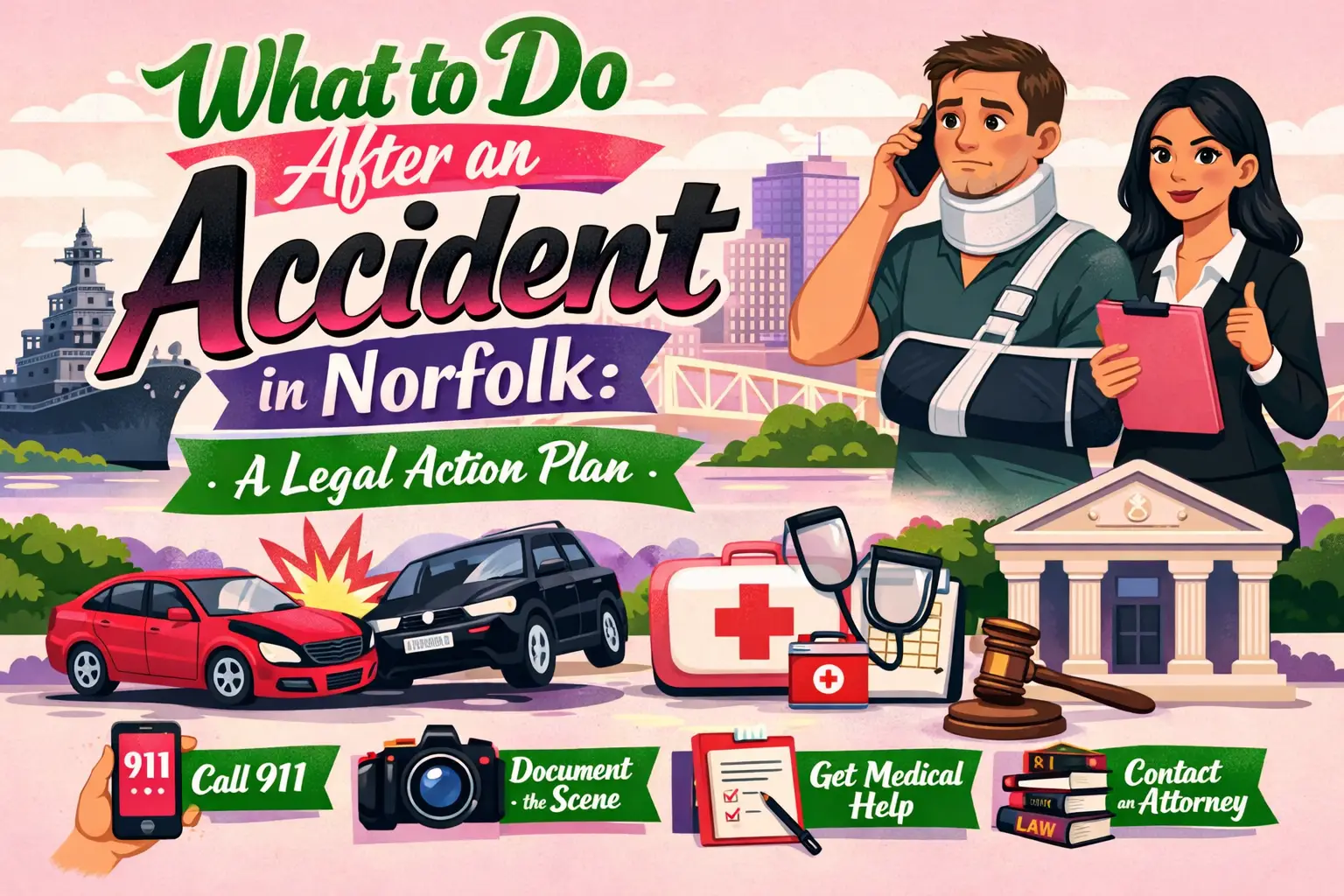
What to Do After an Accident in Norfolk: A Legal Action Plan
One second, you're driving through Hampton Roads. The next, everything's sideways. A crash throws your entire world into chaos—injuries, insurance adjusters blowing up your phone, tow truck decisions, and someone pointing fingers about fault before the airbag dust even settles. Here's a sobering stat: Virginia saw 127,597 motor vehicle crashes in 2023, which breaks down to one crash every 4.1 minutes.
That relentless frequency means you need a concrete action plan before disaster strikes. This guide lays out exactly what to do after a car accident in Norfolk, from those frantic first ten minutes through the critical first week and beyond. We'll also unpack the Virginia car accident claim steps you need to know, especially given the state's unforgiving fault rules and Norfolk's unique headaches—tunnel pile-ups, bridge gridlock, and heavy port traffic.
Immediate Priorities at the Crash Scene (First 10 Minutes)
Virginia's contributory negligence system is brutal. Understanding what's on the line makes those first ten minutes absolutely crucial—because your decisions at the scene can either protect or destroy your legal claim.
Safety + 911 Decision Points (Injuries, Hazards, Traffic Flow)
Get yourself to safety. Move away from active lanes if you're physically able. Secondary crashes are terrifyingly common near tunnels and bridges. Dial 911 the moment anyone shows signs of head, neck, or back trouble—even subtle symptoms count. Kids and elderly passengers deserve extra scrutiny; silence doesn't mean they're okay.
Evidence Capture That Protects Your Claim in Virginia
Your phone becomes your most powerful tool. Snap wide-angle shots capturing vehicle placement, skid patterns, scattered debris, traffic lights, lane striping, weather conditions, and visibility.
Photograph the other driver's license, plate, insurance card, and employer details if a company vehicle is involved. Grab witness contact information and record quick 20-second voice notes of their observations before they disappear into traffic. For more guidance, consult a personal injury lawyer Norfolk to ensure your rights are fully protected.
Statements to Avoid That Can Destroy a Norfolk Claim (Contributory Negligence Risk)
Virginia follows pure contributory negligence—being just 1% at fault can obliterate your entire recovery. Never apologize at the scene. Don't estimate your speed or admit "I wasn't paying attention" or "I didn't notice you." Stick to bare facts when talking to the other driver or police. Save deeper explanations for your attorney.
Police Report Essentials (Ensuring the Right Facts Are Documented)
Make certain injuries appear in the official report, even seemingly minor ones. Request the report number and verify which agency is handling the investigation. Scan your surroundings for cameras—traffic surveillance, business security systems, witness dashcams—and point them out to the responding officer.
Medical Steps That Strengthen Both Recovery and Compensation (First 24 Hours)
Scene documentation only gets you halfway there. The medical choices you make in the next day will shape both your physical recovery and your compensation case's viability.
Same-Day Care Roadmap (ER, Urgent Care, Primary Care)
Head to the emergency room for serious red flags: intense pain, dizziness, vision disturbances, or numbness anywhere. Urgent care handles moderate injuries well. Create a detailed pain timeline documenting how symptoms evolve hour by hour—insurance companies scrutinize these patterns closely.
Medical Documentation That Insurers Look For
Book follow-up appointments, imaging studies, specialist referrals, and physical therapy sessions exactly as your doctor prescribes. Hold onto every prescription, discharge instruction, and receipt. Log mileage to medical appointments. This consistent paper trail becomes your claim's backbone.
"Invisible Injuries" Common in Norfolk Crashes
Whiplash, concussions, soft tissue damage, radiculopathy, PTSD, and anxiety frequently surface days after impact. Here's something striking: non-vehicular commuters in Norfolk—pedestrians, cyclists, and transit users—represent roughly 8% of all commuters, yet they accounted for approximately 28% of people involved in fatal and serious injury crashes in 2024. Document delayed symptoms the instant they appear. Treatment gaps become ammunition for insurance denials.
Claim-Protection Moves Before the Insurance Company Controls the Narrative (First 48 Hours)
While you're trying to heal, adjusters are already constructing arguments to slash your payout. Here's how you protect your claim before they hijack the narrative.
Insurance Notification Best Practices (Yours vs. the Other Driver's)
Report the collision to your own insurer using only basic facts. Refuse early recorded statements. Don't even think about accepting quick settlement offers before you understand your complete treatment needs. The at-fault driver's insurance company will pressure you to lock in a story—resist that pressure.
Rental Cars, Towing, Storage Fees, and Salvage Decisions
Daily storage fees compound fast and become financial quicksand. Retrieve your vehicle or arrange long-term storage immediately. Remove personal belongings and preserve any evidence inside—dashcam footage, receipts, anything relevant to your claim.
Social Media + Surveillance Awareness (Modern Claim Threats)
Lock down your privacy settings now. Don't delete existing posts—that looks suspicious and can backfire legally. Stop "checking in" at activities or posting photos that show physical capability. Insurance companies routinely scan public profiles and use fitness trackers to argue your injuries aren't legitimate.
Virginia Car Accident Claim Steps That Matter Most in Norfolk (First Week)
Your immediate defenses are up. Now you need to navigate Virginia's uniquely harsh fault rules and evidence standards that separate successful Norfolk claims from rejected ones. For experienced guidance through these complicated procedures, consider consulting a personal injury lawyer norfolk who understands how to evaluate evidence, sidestep common mistakes, and position your claim strategically.
Fault Rules That Raise the Stakes in Virginia (Pure Contributory Negligence)
Virginia operates as an at-fault state, meaning the driver responsible for the accident bears liability for resulting injuries.
Even minor blame arguments can destroy your recovery completely. Combat blame-shifting by securing strong photographic evidence, solid witness statements, and maintaining impeccable medical consistency.
Evidence Upgrades Beyond Photos (Innovative, Often Missed)
Preserve dashcam footage from your vehicle and any witnesses. Request footage from nearby businesses fast—many systems automatically overwrite within days.
Have your attorney send a spoliation prevention letter to protect the vehicle's "black box" or EDR data. Phone records can prove a distraction when appropriately subpoenaed. Insurance claims and personal injury cases often require notarized documents such as affidavits, proof of loss statements, and settlement releases to ensure compliance and reduce fraud risk. Enterprise online notarization enables insurers, claimants, and legal teams to complete these high-volume, time-sensitive documents securely within digital claims workflows, supporting faster resolution and improved operational efficiency.
Choosing the Right Norfolk, VA Personal Injury Attorney for Your Case
Standard claim procedures apply statewide, but certain Norfolk collision scenarios—tunnel chain reactions, port truck accidents, bridge incidents—require specialized legal approaches most people never consider.
Credentials and Case-Fit Criteria (Beyond Generic "Experience")
Prioritize trial readiness over settlement-only practices. Local court familiarity matters tremendously. Look for firms with resources to hire accident reconstruction experts and medical specialists.
Strong track records with commercial vehicle cases and UM/UIM claims are essential. Quality car accident legal advice in Norfolk, VA comes from attorneys who know local judges and opposing counsel.
Fee Clarity and Communication Expectations
Most Norfolk car accident lawyer practices operate on contingency—you pay nothing unless you win. Ask pointed questions about costs, medical lien resolution, expected response times, and which attorney actually handles your file daily versus who signs the paperwork.
Legal Support Call-to-Action
If you're facing a complicated claim, insurance denial, or contributory negligence accusations, a Norfolk, VA personal injury attorney can evaluate your situation, help secure evidence, and coach you through insurance communications. Don't let critical deadlines slip past.
Your Questions About Norfolk Car Accident Claims
1. What should I do if the other driver has no insurance in Norfolk?
File through your uninsured motorist (UM) coverage if your policy includes it. Virginia law requires insurers to offer UM protection, so review your policy documents carefully. Your carrier steps in to cover damages that the at-fault driver can't afford.
2. How does Virginia's contributory negligence rule affect my car accident claim?
Being found even 1% responsible eliminates your entire recovery. Zero tolerance. That's precisely why avoiding blame-shifting language at the scene and documenting fault meticulously is absolutely critical to claim protection.
3. What if I feel fine after the crash, but symptoms show up days later?
Get to a doctor immediately and document the symptom timeline carefully. Delayed symptoms commonly accompany whiplash, concussions, and soft tissue injuries. Treatment gaps hand insurance companies easy denial justifications.
Final Thoughts on Protecting Your Norfolk Accident Claim
The minutes and hours immediately following a crash determine your claim's entire trajectory. Scene documentation, medical consistency, and avoiding contributory negligence traps—every single step carries weight in Virginia's strict fault system. You don't need to face this battle alone. Arm yourself with the right action plan, preserve every piece of evidence, and secure qualified legal support before insurance companies take control of the outcome.